826 Photos and videos





🚨 XLM, XRP & BlackRock: A Hidden Institutional Web? 👀
As the tokenization of real-world assets (RWAs) accelerates, three names continue to surface in the same conversations: BlackRock, XRP, and Stellar ($XLM). 🌐💰
While no direct relationships have been officially confirmed, emerging data surrounding interoperability infrastructure is fueling speculation about how the next generation of financial markets could be built. 🔍🏦
🕸️ The Institutional Architecture Taking Shape
According to on-chain researcher SMQKE, parts of the modern RWA ecosystem may already be indirectly connected through shared infrastructure layers.
One of the key pieces of this puzzle is Wormhole — an interoperability protocol designed to enable communication and asset transfers across multiple blockchains. 🔗⚙️
As financial institutions increasingly experiment with tokenized assets — including money market funds, bonds, and treasury products — the ability to move value seamlessly between networks is becoming essential.
The future of finance likely won't run on a single blockchain. Instead, it may rely on an interconnected ecosystem of specialized networks working together. 🌍🚀
🔄 Wormhole and the Rise of Multi-Chain Liquidity
Wormhole has been linked to several high-profile tokenization initiatives and institutional workflows.
Analysts have also highlighted its relevance in facilitating cross-chain asset movement, including the expansion of RLUSD, Ripple's stablecoin, which now spans more than 40 blockchains. 💵🌉
This growing emphasis on interoperability reflects a broader trend: institutional finance is increasingly embracing a multi-chain future.
As tokenized markets evolve, protocols capable of connecting fragmented liquidity pools may become critical pillars of global finance. 📈🏛️
⚡ XRP and XLM Remain Part of the Conversation
Within this evolving landscape, XRP and Stellar ($XLM) continue to attract attention.
The XRP Ledger is widely recognized for its fast settlement capabilities and low transaction costs, features often highlighted in discussions surrounding cross-border payments and liquidity solutions. 🌎⚡
Meanwhile, Stellar has built its reputation around financial inclusion, efficient value transfers, and digital asset issuance. Its infrastructure is specifically designed to facilitate the movement of value across different financial systems. ⭐💫
As institutional adoption of tokenization grows, many observers believe networks offering scalability, efficiency, and interoperability could become increasingly relevant.
🏦 The BlackRock Effect
BlackRock's growing involvement in digital asset initiatives has added another layer of interest to the discussion.
As the world's largest asset manager explores tokenized financial products, it sends a powerful signal: blockchain technology is no longer viewed as a niche experiment but as a potential upgrade to traditional financial infrastructure. 📊💼
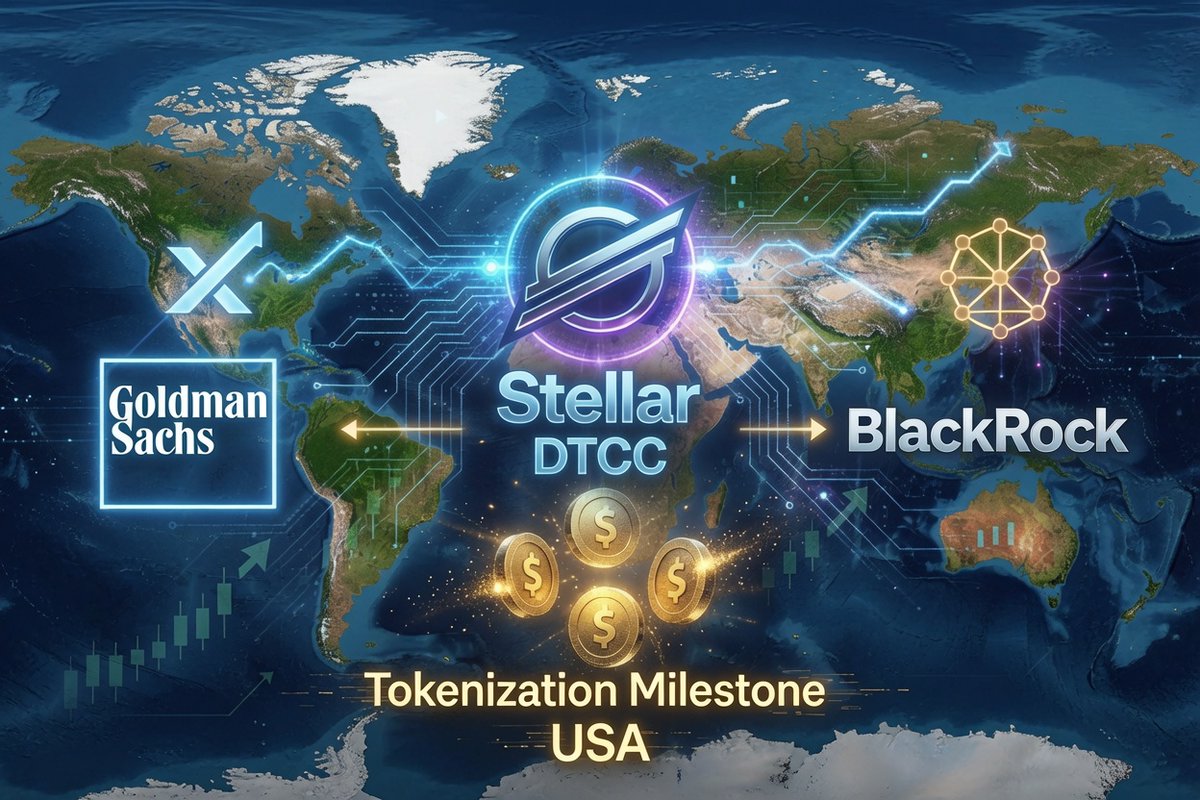
At the same time, the DTCC's tokenization roadmap continues to fuel conversations around how future settlement systems might eventually interact with distributed ledger technologies (DLTs).
This possibility has led some analysts to speculate that networks such as the XRP Ledger and Stellar could one day play a role within broader institutional ecosystems. 🤝🔮
⚠️ Important Reality Check
It's important to separate facts from speculation.
There is currently no official evidence confirming a direct partnership between BlackRock and either XRP or Stellar.
Likewise, there is no confirmation that BlackRock holds XRP or XLM as part of its investment activities.
The discussion revolves around infrastructure overlap, shared technological requirements, and emerging market architecture — not established business relationships. 🧩📌
🔥 The Tokenization Race Is Accelerating
One thing, however, is becoming increasingly clear:
The race to tokenize real-world assets is speeding up.
Institutions are searching for solutions that offer speed, interoperability, security, and access to global liquidity. Networks capable of delivering these qualities are naturally becoming part of the conversation.
Whether XRP and XLM ultimately emerge as core pillars of this transformation remains to be seen.
But their continued presence in discussions surrounding the future of tokenized finance highlights a growing recognition of their real-world utility and technological potential. 🚀🌍
As the lines between traditional finance and decentralized infrastructure continue to blur, the next generation of financial markets may be more connected, more programmable, and undeniably multi-chain. 🌐🏛️⚡
Disclaimer: This article is for informational purposes only and does not constitute financial advice or an investment recommendation.
#XRP #XLM #BlackRock #RLUSD #Wormhole #Tokenization #RWA #RealWorldAssets #XRPL #Stellar #StellarLumens #Crypto #Cryptocurrency #Blockchain #DLT #DigitalAssets #InstitutionalAdoption #TradFi #DeFi #Finance #Fintech #Liquidity #CrossBorderPayments #Interoperability #Web3 #TokenizedAssets #Stablecoins #Ripple #CryptoNews #Altcoins #FutureOfFinance #BlockchainTechnology #Payments #AssetTokenization #OnChain #CryptoCommunity #XRPCommunity #XLMCommunity #Bullish #DigitalEconomy #FinancialInnovation #CryptoUpdate #Markets #Investing #TokenEconomy #MassAdoption #Utility #BlockchainInnovation
1
2
19
392
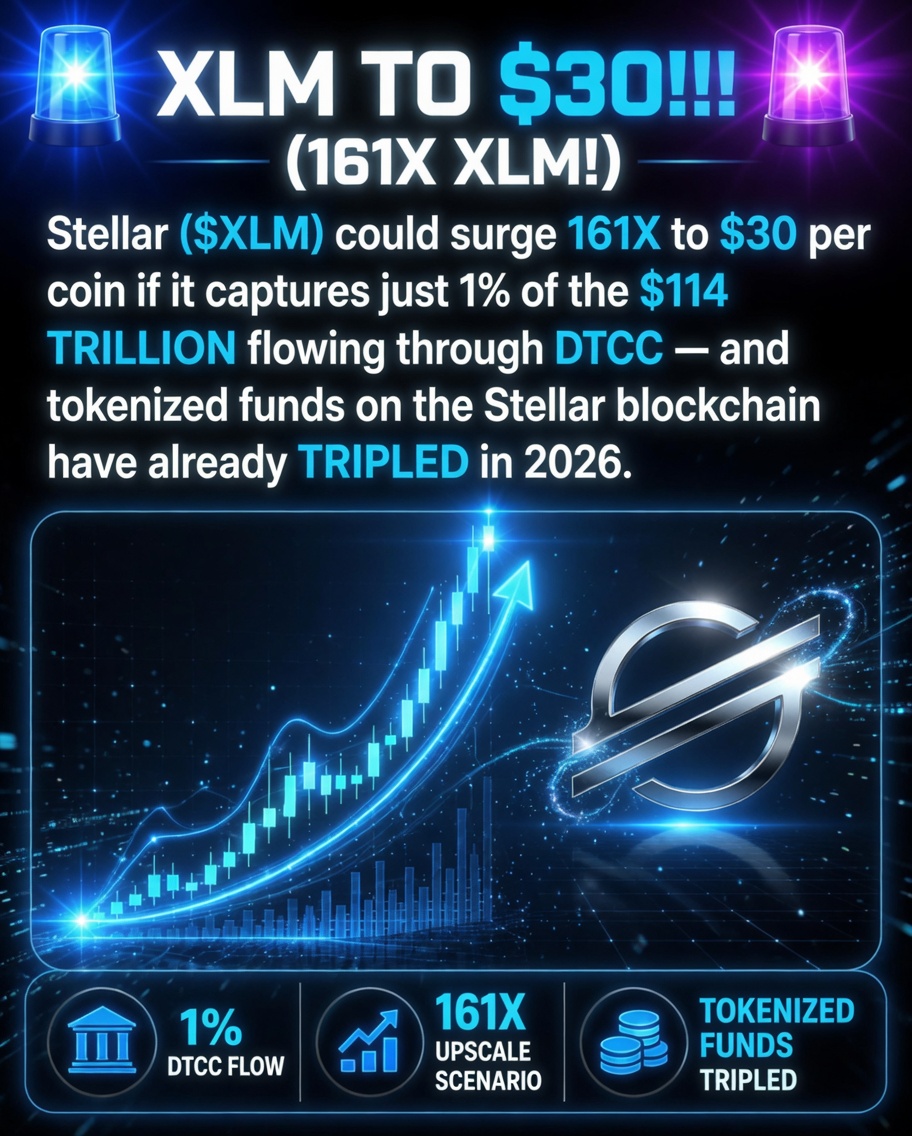
🚨 XLM to $30? Speculation… or a Historic Opportunity? 👀
At first glance, the idea sounds outrageous.
Could Stellar Lumens ($XLM) really reach $30?
For many investors, such a scenario seems far-fetched. But behind this eye-catching number lies a much bigger story about the future of global finance—and the role Stellar could potentially play in it. 🌍💸
🚀 This Isn't Just Another Crypto Pump
The conversation around XLM goes far beyond social media hype and speculative trading.
What has analysts paying attention is the ongoing transformation of the financial system itself.
We are entering an era defined by:
🔹 Tokenized assets
🔹 Instant institutional settlement
🔹 Digital financial infrastructure
🔹 Cross-border efficiency
🔹 Real-world blockchain adoption
Several blockchain networks are competing to become the rails of tomorrow's financial ecosystem.
Stellar is one of them. ⭐
🏦 The Market Stellar Is Trying to Capture
Stellar was designed with a clear mission: enabling fast, low-cost global transactions while serving as infrastructure for digital assets.
Today, the opportunity extends far beyond peer-to-peer payments.
Financial institutions are increasingly exploring:
💰 Tokenized investment funds
📈 Digital bonds
🪙 Fiat-backed stablecoins
🏛️ Interbank settlements
🔄 Clearing and settlement infrastructure
Major players such as the DTCC (Depository Trust & Clearing Corporation) already process staggering volumes of financial activity worth quadrillions of dollars annually.
The real question becomes:
How much of these future flows could Stellar capture?
📊 The $30 Scenario
Supporters of this thesis point to a simple calculation.
If Stellar were able to capture just 1% of the massive institutional settlement and tokenized asset flows expected to move through future financial systems, the impact on XLM's valuation could be enormous.
Some estimates circulating within the crypto community suggest this could represent a potential 161x increase, theoretically pushing XLM toward the $30 mark. 🚀🌕
Of course, this figure remains highly speculative.
It is neither a prediction nor a guarantee.
It is simply a valuation exercise built upon optimistic assumptions regarding institutional adoption.
👀 Why Investors Are Watching Stellar
Several factors explain the growing interest surrounding XLM.
⚡ Built for Payments
Stellar offers fast transactions, extremely low fees, and energy-efficient operations compared to traditional proof-of-work networks.
🏢 Institutional Focus
Unlike some projects primarily targeting decentralized finance, Stellar actively seeks partnerships with enterprises, financial institutions, and regulated asset issuers.
🌐 The Rise of Tokenization
Many experts believe tokenization could become one of the largest financial trends of the next decade.
If that thesis proves correct, networks capable of supporting these flows may experience significant value creation.
⚠️ The Risks Can't Be Ignored
Excitement should always be balanced with realism.
Stellar operates in an increasingly competitive environment.
Ethereum, XRP Ledger, and even institution-built infrastructures are all fighting for a share of this emerging market.
Institutional adoption will depend on multiple factors:
🔸 Regulatory developments
🔸 Security and reliability
🔸 Technological choices made by major institutions
🔸 Trust in public blockchain networks
A massive market opportunity does not automatically guarantee market dominance.
🎯 The Opportunity Matters More Than the Number
Could XLM hit $30?
Maybe.
Maybe not.
But the bigger question captivating investors today is this:
Can Stellar become a critical piece of the tokenized financial system?
If the answer is yes, today's valuations may look surprisingly modest in hindsight.
If the answer is no, the most bullish projections will remain nothing more than speculation.
One thing is certain:
As traditional finance and blockchain continue to converge, Stellar remains one of the projects the market will be watching very closely. 👁️✨
The number is speculative. The opportunity is why people are paying attention.
#XLM #Stellar #StellarLumens #Crypto #Cryptocurrency #CryptoNews #CryptoMarket #Altcoins #BullRun #Tokenization #RWA #RealWorldAssets #DigitalAssets #Blockchain #Web3 #DeFi #Fintech #Payments #InstitutionalAdoption #Finance #Investing #CryptoInvesting #XRP #Ethereum #Bitcoin #BTC #Altseason #CryptoTwitter #XFinance #FutureOfFinance #Money #CryptoCommunity #HODL #DYOR #Moon #XLMArmy #StellarNetwork #TokenizedAssets #FinancialFreedom 🚀🌕📈
5
17
87
2,594

Jun 12
🌍💵 MGUSD: How MoneyGram Is Reinventing Global Finance Through Stablecoins
For more than 80 years, MoneyGram has helped millions of people move money across borders. But while technology has evolved, one reality hasn't changed:
People still work abroad and support loved ones back home. Families still rely on fast and reliable remittances. Billions of people still lack access to the financial services many of us take for granted.
Today, MoneyGram is taking a major step forward with MGUSD — and it's about much more than launching another stablecoin.
🚀 Not Just Another Stablecoin
MGUSD isn't a speculative crypto project designed to compete for market share.
It's MoneyGram's strategy to give millions of customers access to a stable, dollar-denominated digital balance, directly inside the MoneyGram app.
The mission is simple:
👉 Use stablecoin technology to solve real-world problems.
Not create a token for the sake of creating a token.
💳 Turning Transactions into Financial Relationships
Historically, MoneyGram's role ended when a transaction was completed.
Send money. Receive money. Pay a bill.
With MGUSD, that changes.
Customers will be able to:
✅ Hold stable dollar value
✅ Receive international payments
✅ Decide when to convert funds
✅ Spend digitally
✅ Access cash when needed
✅ Benefit from future financial services
For many consumers living in volatile economies, this means protection against currency fluctuations that can erode the value of money within days.
MGUSD gives people something many have never truly had before:
Choice and control.
🌎 Financial Inclusion for the Underbanked
Billions of people remain underbanked or entirely excluded from traditional financial systems.
Some rely solely on cash.
Others use expensive prepaid cards.
Many have mobile wallets but no easy way to preserve dollar value.
MGUSD aims to bridge that gap.
By providing:
🔹 Stability
🔹 Transparency
🔹 Transaction visibility
🔹 Digital payment capabilities
🔹 Direct ownership of funds
MoneyGram is extending benefits traditionally reserved for bank account holders to millions of underserved consumers worldwide.
⛓️ Blockchain Without the Complexity
Most customers don't care about blockchains.
They care about outcomes.
Can they trust the service?
Can they access their money?
Can they use it when they need it?
MGUSD runs on the Stellar blockchain, but the technology stays behind the scenes.
Blockchain simply becomes infrastructure that enables:
⚡ 24/7 movement of value
⚡ Faster settlement
⚡ Improved efficiency
⚡ Better customer experiences
MoneyGram didn't ask:
"How do we get the world to adopt another stablecoin?"
Instead, it asked:
"How can stablecoin technology solve real problems for our customers?"
That distinction changes everything.
🔐 Why Self-Custody Matters
MGUSD uses a self-custodial wallet architecture.
Customers maintain control of their digital assets while benefiting from MoneyGram's trusted experience.
This isn't designed for crypto power users chasing DeFi opportunities.
It's designed for everyday people who need to:
💵 Send $200 home
🛡️ Keep it safe
📈 Hold value
💱 Convert when needed
🏧 Access it through a trusted network
Simplicity meets empowerment.
🌐 Bridging the Digital and Physical Worlds
MoneyGram possesses something few crypto-native companies can replicate:
A massive global physical network.
Because for billions of people...
Cash still matters.
MGUSD becomes exponentially more useful because customers can convert digital balances into:
🏧 Cash
💱 Local currency
💸 Remittances
🧾 Bill payments
💳 Card transactions
Digital finance finally connects with real-world needs.
🛡️ Compliance as a Competitive Advantage
MoneyGram isn't bolting compliance onto a crypto product.
Compliance is already embedded in its DNA.
MGUSD is built around:
✔️ KYC procedures
✔️ Sanctions screening
✔️ Transaction monitoring
✔️ Consumer protection
✔️ Global regulatory standards
Trust isn't an afterthought.
It's part of the product.
💼 Modernizing Global Treasury Operations
MGUSD also powers MoneyGram's internal transformation.
The company is already integrating stablecoins into:
📊 Treasury operations
💱 FX trading
💰 Liquidity management
🤝 Partner settlements
MoneyGram reports it is on pace to process approximately $2 billion annually in FX trading using stablecoins.
Blockchain moves from hype to infrastructure.
Reducing friction.
Improving efficiency.
Modernizing global finance.
⚡ Building at Startup Speed
Technology alone wasn't enough.
MoneyGram transformed how it builds products.
Cross-functional teams now work in agile "Pods," combining expertise from:
👨💻 Engineering
📈 Product
🎨 Design
📊 Data
🔒 Cybersecurity
⚖️ Compliance
⚙️ Operations
The result?
Faster execution without sacrificing the discipline required of a regulated financial institution.
🤝 Strategic Partnerships Driving Innovation
MGUSD was developed alongside industry-leading partners:
🔹 Stablecoin (a Stripe company)
🔹 Crossmint
🔹 Fireblocks
🔹 M0
🔹 Stellar
Together, they helped MoneyGram build an entirely new wallet, treasury, and settlement ecosystem in roughly one year.
🔮 What Comes Next?
MGUSD is still in its early stages.
Regulation will evolve.
Customer expectations will evolve.
The product itself will evolve.
But one thing is becoming increasingly clear:
People everywhere need access to stable value, better financial services, and greater control over how they store, move, and use money.
MGUSD isn't a coin created for speculation.
It's a new financial experience built around real human needs.
Built on a network people already know.
Built on trust.
Built for the future of money.
#MGUSD #MoneyGram #Stablecoins #Crypto #Blockchain #Fintech #Payments #Remittances #DigitalDollar #FinancialInclusion #CrossBorderPayments #Web3 #Stellar #DigitalAssets #FinServ #FutureOfFinance #CryptoPayments #Treasury #Innovation #FintechNews #DeFi #TradFi #GlobalPayments #FinancialServices #Stablecoin #CryptoAdoption #EmergingMarkets #Banking #PaymentInnovation #DigitalTransformation #BlockchainTechnology #Finance #MoneyMovement #CrossBorder #TreasuryManagement #Dollarization #FinancialFreedom #Inclusion #Web3Payments #CryptoNews
5
35
626
Jun 12
🚀 XLM Targets a $1.70 Rally as Key Resistance Levels Come Into Focus While Mastercard Expands Stellar Adoption
Could Stellar (XLM) be preparing for a major bullish breakout? 📈
Despite a slight pullback over the past 24 hours, both technical indicators and fundamental developments suggest that XLM may still have significant upside potential. With a favorable long-term chart structure and increasing institutional adoption through partnerships involving major players like Mastercard, investors are closely watching several critical price levels.
💰 XLM Maintains a Long-Term Bullish Structure
At the time of writing, XLM is trading at $0.1878, with:
🔹 Market capitalization: $6.34 billion
🔹 24-hour trading volume: $207.32 million
🔹 24-hour performance: -1.06%
While this short-term decline may concern some traders, it does not invalidate the broader market structure visible on higher timeframes.
According to crypto analyst "chief of overthinking," many market participants remain overly focused on the sub-$0.20 price action, while the bigger picture suggests that the most important levels lie much higher.
⚠️ Two Major Resistance Levels: $0.63 and $0.79
Technical analysis highlights two critical resistance zones for XLM:
🎯 $0.63
🎯 $0.79
These areas previously acted as distribution zones, where significant selling pressure emerged.
In technical terms, these supply zones often attract liquidity and tend to be revisited before a market establishes its next major move. They can temporarily cap price advances, but successfully reclaiming them often signals renewed bullish momentum.
As long as these levels remain unbroken, caution is warranted. However, a decisive breakout above them could dramatically improve XLM's outlook.
🚀 Could XLM Reach $1.70?
If Stellar manages to absorb the selling pressure around $0.63 and $0.79, the path toward much higher targets may open.
According to the analyst, such a breakout could pave the way for a retest of the previous cycle highs from 2021, near $1.70. 📊🔥
A move toward that level would represent a substantial gain from current prices and confirm that Stellar's broader bullish structure remains intact despite ongoing market volatility.
That said, cryptocurrency markets remain highly sensitive to macroeconomic conditions, investor sentiment, and Bitcoin's overall performance.
🌐 Mastercard Strengthens Stellar-Based Settlement Infrastructure
Beyond the charts, Stellar's fundamentals continue to improve.
According to information shared by Stellar, Mastercard is now incorporating regulated stablecoin systems built on Stellar to facilitate intraday settlements, weekend transactions, and holiday payments.
This innovation enables:
✅ Transactions outside traditional banking hours
✅ Weekend payment processing
✅ Holiday settlements
✅ Faster global liquidity transfers
✅ Near-instant cross-border transactions
⚡ Programmable Payments and 24/7 Settlements
Powered by Stellar's infrastructure, Mastercard can reduce reliance on traditional banking systems that are constrained by batch processing schedules and limited operating hours.
The stablecoin-based settlement framework enables:
💸 Faster value transfers
🔍 Greater transparency
🤖 Automated and programmable payments
🌎 Continuous 24/7 settlement capabilities
For banks, merchants, and international businesses, this represents a major leap forward in efficiency and liquidity management.
Mastercard appears to be positioning itself for a future where money moves seamlessly around the clock.
🔥 Why Stellar Is Drawing Attention
Stellar's recent developments highlight a broader trend: payment-focused blockchain networks are increasingly attracting institutional interest.
On one hand, technical analysis suggests that XLM could experience a major upside move if key resistance levels are reclaimed.
On the other, Mastercard's use of Stellar-based stablecoin infrastructure reinforces the network's real-world utility and growing credibility.
This combination of strong fundamentals and bullish technical structure explains why many investors continue to monitor XLM closely.
📝 Final Thoughts
Stellar is currently approaching a pivotal moment.
Although XLM remains below $0.20, the resistance levels at $0.63 and $0.79 could determine the asset's next major trend.
If buyers successfully reclaim these zones, a move back toward the previous cycle highs near $1.70 cannot be ruled out. 🚀🌕✨
At the same time, Mastercard's integration of Stellar-powered settlement solutions demonstrates increasing institutional confidence in the ecosystem.
As always, investors should remember that cryptocurrencies remain highly volatile assets.
⚠️ This article contains market analysis and price projections that are not guarantees of future performance. Always do your own research (DYOR) before making any investment decisions. This is not financial advice.
#XLM #Stellar #StellarLumens #XLMArmy #XLMCommunity #Bullish #Crypto #Cryptocurrency #CryptoNews #Altcoins #AltcoinSeason #Blockchain #DigitalAssets #Bitcoin #BTC #Ethereum #ETH #Mastercard #Stablecoins #Payments #CrossBorderPayments #Fintech #CryptoTrading #TechnicalAnalysis #PricePrediction #CryptoMarket #Investing #DYOR #NotFinancialAdvice #Web3 #DeFi #CryptoInvestor #CryptoUpdate #CryptoAnalysis #CryptoCommunity #Trading #HODL #Moon #ToTheMoon #XRP #XLMPrice #StellarNetwork #InstitutionalAdoption #GlobalPayments #RealTimePayments #MarketUpdate #CryptoTrends #Finance #FutureOfMoney #BlockchainTechnology
4
19
104
2,446
Jun 11
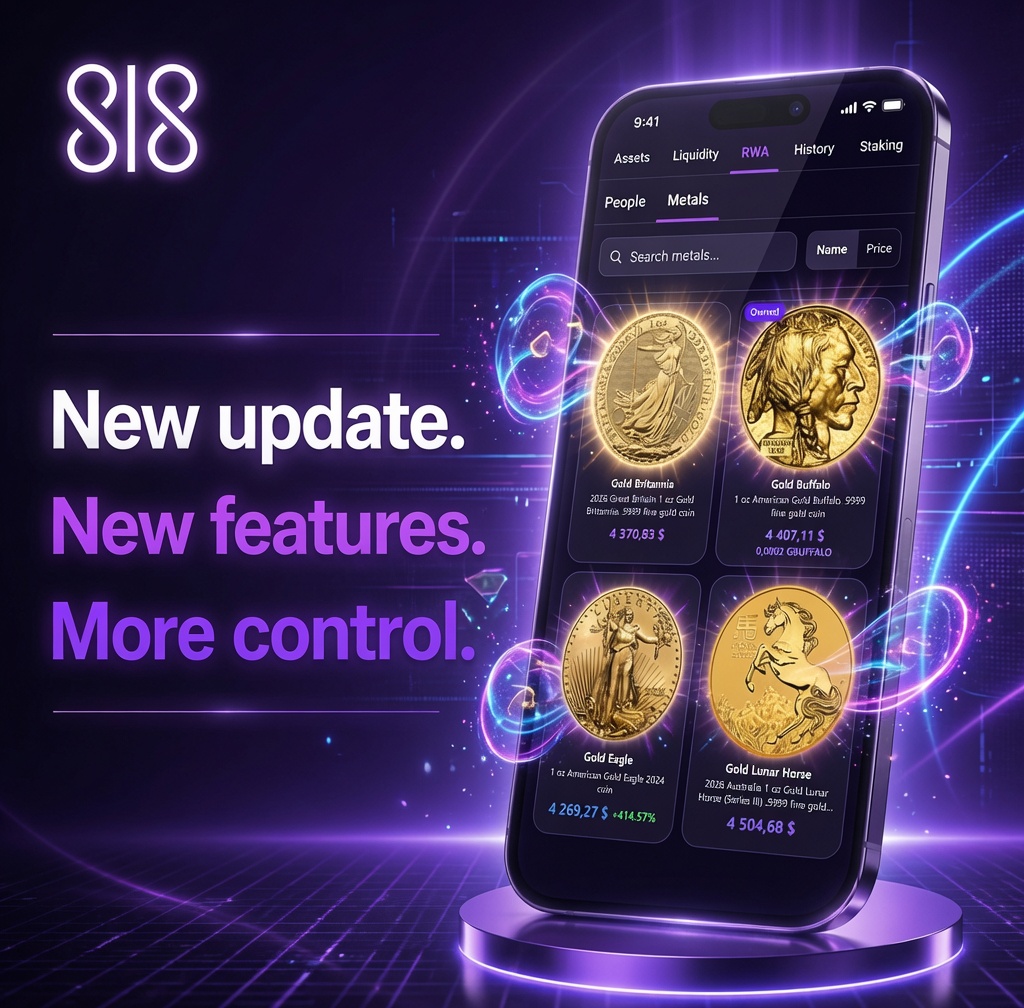
# 🚀 Major Sl8 Wallet Update: Fully Redesigned Experience New RWA Features
The Sl8 Wallet has rolled out a significant update, bringing major improvements to user experience, asset management, and investment capabilities. This new version aims to make crypto handling smoother, more intuitive, and more powerful — while also expanding access to real-world assets (RWA).
---
## 🎨 Completely Redesigned Asset Interface
The asset screen has been fully rebuilt to deliver a cleaner and more interactive experience. Each asset now opens into a dedicated interface featuring:
* 📈 A 24-hour price chart
* 💰 Current price
* 🔺 24h high and low
* 📊 Trading volume
* 🧮 Market capitalization
* 🔄 Circulating supply
* 📉 Bid/ask spread
* 💧 Liquidity data and more
All data is neatly organized into tabs for easier navigation and analysis. Meanwhile, **Send** and **Swap** functions remain always accessible for quick actions ⚡
📌 Note: The 24h chart will display correctly 24 hours after updating.
---
## 🪙 Precious Metals Added via RWA Section
A major highlight of this update is the expansion of the **Real-World Assets (RWA)** section.
Users can now purchase precious metals such as:
* 🟡 Gold
* ⚪ Silver
* 💎 Other tokenized real-world assets
These can be bought using **USDC, XLM, or other supported tokens**.
Even better, users can send these assets directly into staking with a single tap 🔒💰, making passive yield strategies easier than ever.
---
## 📇 Synced Address Book Across Devices
The wallet now includes a fully synchronized address book linked to your account.
You can:
* ➕ Add new addresses
* ✏️ Edit existing ones
* 🏷️ Rename saved contacts
All entries automatically sync across every connected device — ensuring a seamless multi-device experience 📱💻
---
## 🙈 Hide Unused Tokens
Users can now hide tokens they no longer use, helping declutter the wallet interface.
However:
* ❌ Tokens in staking cannot be hidden
* ❌ Liquidity pool assets remain visible
This ensures transparency for active positions.
---
## 💧 Improved Liquidity Pool Deposit Screen
The liquidity provision process has been redesigned to be more intuitive and user-friendly.
New improvements include:
* ⚙️ Easier deposit flow
* 📉 Advanced slippage configuration options
* 🧠 Better transaction clarity
This gives users more control when entering DeFi liquidity pools.
---
## 🔁 Automatic Staking Renewal
A new optional feature allows users to enable **automatic staking renewal** once the staking period expires.
This helps maintain continuous yield generation without manual intervention 🔄💸
---
## 🛠️ Fixes and Improvements
This update also includes several important bug fixes and stability improvements:
* 🔘 Improved reliability of popup buttons on mobile devices
* 📭 Fixed brief “No assets” message during wallet loading
* 📊 Fixed asset display shifting during price updates
* 💰 Correct display of small staking amounts
## 🌐 Official Links
* Sl8 (Slate): [sl8.online/invite/za2mxN]
* Telegram News: [t.me/Sl8_News]
* Telegram Community: [t.me/Sl8_Community]
* X (Twitter): [x.com/cassator]
* Instagram: [instagram.com/sl8.online?igs…]
* Facebook: [facebook.com/share/12FQLC5G3…]
* CoinMarketCap (SSLX): [coinmarketcap.com/currencies…]
---
#️⃣ Hashtags
#Crypto #Cryptocurrency #Blockchain #DeFi #Web3 #RWA #RealWorldAssets #Tokenization #Gold #Silver #PreciousMetals #Staking #YieldFarming #LiquidityPool #DEX #CEX #Wallet #CryptoWallet #Fintech #DigitalAssets #Altcoins #Bitcoin #Ethereum #XLM #Stellar #USDC #Stablecoin #Trading #CryptoTrading #MarketData #Charts #Finance #Investing #PassiveIncome #CryptoUpdate #TechNews #Innovation #Sl8 #Slate #SSLX #CryptoNews #Web3Finance #OnChain #SmartContracts #CryptoMarket #BullRun #BearMarket
1
3
26
1,204
Jun 11
⭐ XLM Under Pressure After an 18% Weekly Drop: What the Charts Are Saying 📉
Stellar Lumens (XLM) is going through a challenging phase. After benefiting from renewed optimism driven by institutional adoption narratives and ecosystem developments, the token is now facing a significant correction. Over the past week, XLM has lost nearly 18% of its value, reflecting both broader crypto market weakness and a shift in short-term momentum. ⚠️📊
However, beyond the volatility, the Stellar network continues to evolve at full speed. Between bearish technical signals and major protocol upgrades, XLM finds itself at a pivotal moment in its journey. 🚀🌌
📈 From a Massive Rally to a Sharp Pullback
Before entering this corrective phase, Stellar experienced an impressive surge. XLM rallied more than 103%, fueled by optimism surrounding blockchain infrastructure initiatives and growing interest in solutions that could support institutional financial systems, particularly amid discussions related to the DTCC (Depository Trust & Clearing Corporation). 🏦🔗
That bullish momentum eventually hit a wall.
After peaking near $0.297, buyers lost strength, and the rejection at this level triggered sustained selling pressure. As a result, XLM has fallen back into the $0.18–$0.19 range, with volatility increasing noticeably. 📉💥
📊 A Bearish Technical Signal Is Flashing
Technical analysts are closely monitoring the appearance of a well-known indicator: a short-term "death cross" on the 2-hour chart. ⚠️
This pattern occurs when the 50-period moving average crosses below the 200-period moving average, often signaling weakening momentum and the possibility of continued downside in the near term. 📉
While a death cross doesn't guarantee further losses, it typically reflects deteriorating market sentiment and a temporary shift in control toward sellers. 🐻
🔎 Key Price Levels to Watch
🛡️ $0.188: The Critical Support Zone
The $0.188 level has become a major area of interest.
This zone represents a key support level and aligns with a former daily moving average region. If buyers manage to defend it, XLM could stabilize and attempt a rebound.
However, a decisive breakdown below this level could accelerate selling pressure and expose the asset to deeper corrections. 📉
🚀 $0.21: The Recovery Trigger
A sustained move above $0.21 would provide the first encouraging sign for bulls.
Reclaiming this level could indicate renewed buying interest and potentially restore short-term confidence in the market. 🐂📈
⛰️ $0.27–$0.29: Major Resistance Ahead
If momentum returns, XLM will still face a significant challenge.
The $0.27 to $0.29 range represents the resistance area where the previous rally stalled. Breaking above this zone would signal a meaningful shift in market structure and could reopen the path toward higher levels. 🔥
⚙️ Stellar Keeps Building Despite Market Volatility
Price fluctuations haven't slowed development within the Stellar ecosystem.
🔐 Protocol 27 Is on the Horizon
One of the most anticipated upgrades is Protocol 27, which introduces several important improvements to the network.
Among them is CAP-0071-01, a feature enabling delegated identity authorization. This enhancement gives accounts greater flexibility, improved security options, and more control over permissions. 🛡️🔑
The upgrade is designed to strengthen user experience while addressing increasing demands for security and compliance.
⚛️ Preparing for the Quantum Era
Stellar is also advancing its ambitious Quantum Preparedness Plan.
As quantum computing capabilities continue to evolve, the network is actively working toward implementing quantum-resistant cryptographic solutions. 🧠⚛️
According to the current roadmap:
📅 2026: Initial quantum-resistance upgrades begin.
📅 2027: Full network readiness is targeted.
This proactive approach highlights Stellar's commitment to building an infrastructure capable of meeting tomorrow's technological challenges. 🌍🛡️
🌟 Short-Term Weakness, Long-Term Vision
XLM's current situation illustrates a common paradox within the cryptocurrency market: short-term price pressure can coexist with strengthening long-term fundamentals.
Today, Stellar remains positioned at the intersection of several major themes:
🔗 Blockchain infrastructure development
🏦 Institutional integration narratives
⚙️ Continuous protocol innovation
🛡️ Next-generation cybersecurity preparedness
While the market structure has clearly weakened in the short term, Stellar's underlying development efforts continue uninterrupted.
The coming weeks will determine whether XLM can defend its current support levels and rebuild bullish momentum.
One thing remains certain: market volatility may come and go, but development doesn't slow down. 🚀✨
#XLM #Stellar #StellarLumens #XLMArmy #StellarNetwork #Crypto #Cryptocurrency #Altcoin #Altcoins #Blockchain #DigitalAssets #CryptoNews #CryptoUpdate #CryptoTrading #TechnicalAnalysis #DeathCross #BullMarket #BearMarket #PriceAnalysis #CryptoMarket #DeFi #Fintech #InstitutionalAdoption #Payments #CrossBorderPayments #Tokenization #DTCC #Protocol27 #CAP007101 #QuantumReady #QuantumResistance #Web3 #CryptoInvestor #CryptoCommunity #HODL #DYOR #Investing #Trading #CryptoAnalyst #BlockchainTechnology #FutureOfFinance #FintechInnovation #XLMCommunity #StellarDevelopment #CryptoAlerts #MarketUpdate #Altseason #CryptoTrends #XLMNews #StellarEcosystem 🚀🌌📈📉🔐⚛️
6
11
77
1,673
Jun 11
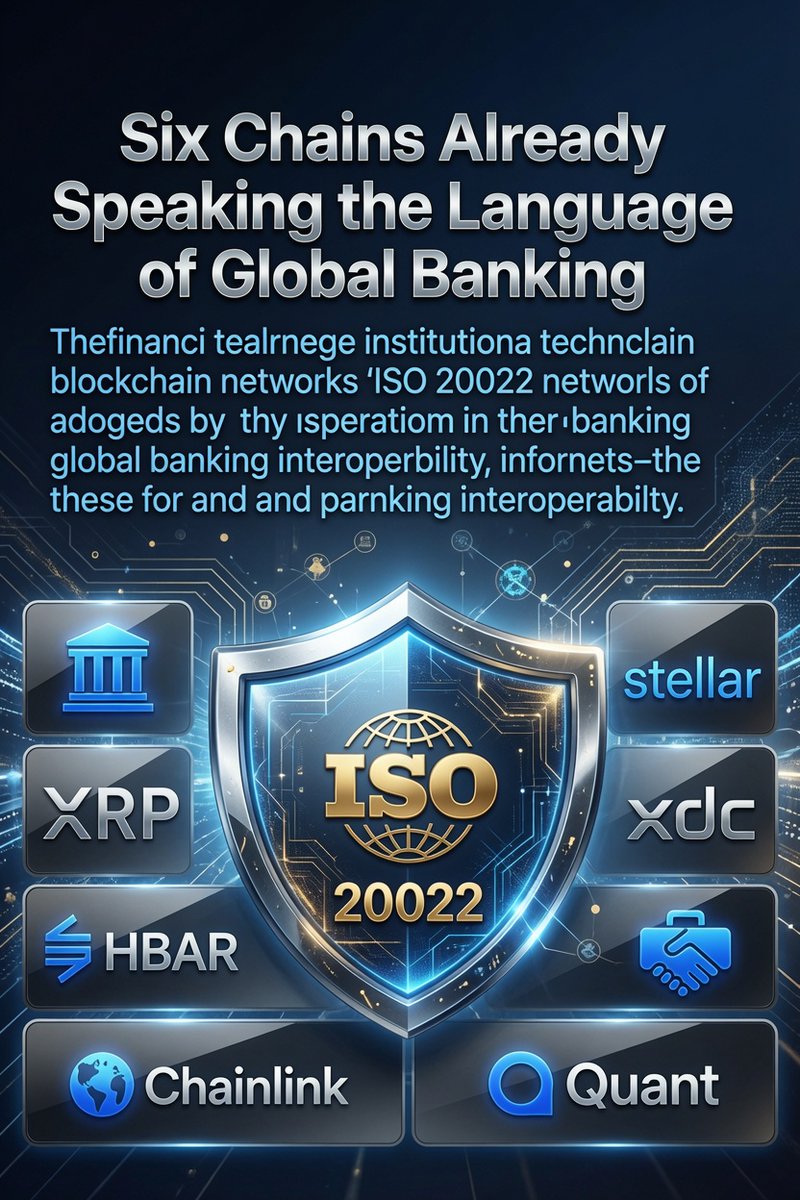
ISO 20022: The Next Institutional Wave in Crypto Could Reshape the Market 🏦🌐
As the cryptocurrency industry evolves beyond its early retail-driven phase, a new chapter appears to be unfolding: mass institutional adoption. Banks, asset managers, global payment networks, and financial market infrastructures are increasingly exploring blockchain-based systems for payments, settlement, and tokenization.
At the center of this transition is a relatively overlooked but critical standard: ISO 20022.
Many analysts believe that blockchain networks aligned with or compatible with ISO 20022 could become key beneficiaries of institutional capital inflows in the coming years.
What is ISO 20022? 📊
ISO 20022 is a global financial messaging standard designed to unify communication between financial institutions.
It is being adopted by major global payment and settlement systems, including:
SWIFT 🌍
Central banks 🏛️
International payment networks 💳
Clearing houses
Interbank settlement systems
Unlike legacy messaging formats, ISO 20022 enables richer, structured, and more data-intensive communication. Its goal is simple: improve interoperability across the global financial system.
In this context, blockchain networks that align with this standard may have a strategic advantage when integrating with traditional finance.
XRP: A long-standing institutional-focused ecosystem 💱
Among the most frequently mentioned ISO 20022-aligned crypto assets is XRP, developed by Ripple.
From its early stages, Ripple focused on improving cross-border payments and reducing friction in global banking infrastructure.
RLUSD expansion 💵
A recent key development is RLUSD, Ripple’s stablecoin initiative. Its gradual adoption in institutional environments, along with educational and research collaborations, strengthens Ripple’s positioning as a bridge between traditional finance and digital assets.
If this trajectory continues, XRP could remain a strong contender in institutional payment rails.
Chainlink (LINK): The data layer of institutional finance 🔗📡
Institutional adoption requires more than payments — it requires trusted external data.
This is where Chainlink plays a critical role.
Chainlink’s decentralized oracle network provides secure off-chain data to smart contracts, including:
Market prices 📈
Financial data feeds
Reserve proofs
External event verification
Institutional integrations 🏦
Chainlink has been associated with experiments and collaborations involving major financial entities such as:
SWIFT
DTCC
Global asset managers
Each integration reinforces Chainlink’s role as a core infrastructure layer for tokenized finance.
Quant (QNT): Interoperability at the institutional level 🔀
One of the biggest challenges in blockchain adoption is fragmentation across multiple networks.
Quant addresses this through its Overledger technology, designed to connect different blockchains and legacy systems.
Multi-chain connectivity 🌐
Quant enables interoperability across dozens of blockchains (reportedly 70 ecosystems), allowing institutions to operate across multiple environments simultaneously.
It also gained attention through involvement in UK initiatives exploring tokenized sterling systems, alongside major financial institutions.
Stellar (XLM): Tokenization and efficient transfers ⚡
Stellar focuses on fast and low-cost value transfers, particularly in cross-border payments and asset tokenization.
It has been linked to initiatives involving DTCC and tokenized asset experimentation, highlighting its role in early-stage institutional blockchain exploration.
Key strengths:
Low transaction costs 💸
Fast settlement times ⚡
Designed for financial inclusion and cross-border flows
XDC Network: Trade finance modernization 📦📑
Global trade finance remains heavily paper-based and inefficient.
XDC Network aims to digitize and streamline this sector through hybrid blockchain infrastructure.
Use cases include:
Digital letters of credit 📄
Trade documentation
Supply chain financing
Automated settlement workflows
Its focus is strongly aligned with real-world enterprise adoption.
Hedera (HBAR): Enterprise governance and trust infrastructure 🏢
Hedera takes a different approach through its governance model, which is managed by a council of global enterprises.
This structure is designed to provide stability and regulatory confidence for institutional users.
Enterprise-focused use cases:
Tokenization
Digital identity
Asset custody solutions
Enterprise-grade trust layers
Hedera’s Hashgraph technology also differentiates it from traditional blockchain architectures.
Which ISO 20022 chain will attract the most institutional capital? 💰🔥
The institutional wave is building, and ISO 20022-aligned networks may be among the early beneficiaries.
Each project offers a different angle:
XRP → payments & banking integration 💱
LINK → data infrastructure for tokenized finance 📡
QNT → cross-chain interoperability 🔀
XLM → payments tokenization ⚡
XDC → trade finance modernization 📦
HBAR → enterprise governance & infrastructure 🏢
The outcome is still uncertain. Rather than a single winner, the future may involve multiple specialized layers of institutional blockchain infrastructure working together.
Final thought 🧠
Institutional adoption is no longer theoretical — it is gradually unfolding through pilots, partnerships, and infrastructure upgrades. ISO 20022 may become one of the key alignment standards shaping which networks integrate most effectively into global finance.
#Hashtags for X 🧵🔥
#Crypto #Cryptocurrency #Blockchain #ISO20022 #Ripple #XRP #Chainlink #LINK #Quant #QNT #Stellar #XLM #XDC #Hedera #HBAR #DeFi #TradFi #Tokenization #RealWorldAssets #RWA #InstitutionalCrypto #Web3 #FinTech #DigitalAssets #CryptoNews #CryptoMarket #Altcoins #AltcoinSeason #SWIFT #DTCC #CBDC #Payments #CrossBorderPayments #Interoperability #OracleNetworks #SmartContracts #EnterpriseBlockchain #TradeFinance #FinancialInfrastructure #OnChainFinance #CryptoAdoption #Banking #GlobalFinance
2
13
46
768
Jun 11
# 🚀 XLM Under $1: A Historic Opportunity? The Numbers Behind Stellar 🌟
The cryptocurrency market has a habit of rewarding those who can separate noise from genuine signals. While many projects still rely on ambitious promises and future roadmaps, some networks are already demonstrating real institutional adoption.
**Stellar (XLM)** is one of them.
For some investors, seeing **XLM trading below the symbolic $1 mark** feels like buying Amazon stock in the early 2000s. It's a bold comparison—but what do the numbers actually say? 📊
## 🌍 Stellar: Much More Than a Payments Blockchain
Founded in 2014, Stellar has long been associated with fast, low-cost cross-border payments. But over the years, the network has evolved into a serious infrastructure for the **tokenization of real-world assets (RWAs).**
Today, that positioning is attracting some of the largest financial institutions on the planet.
And unlike many crypto narratives, this is no longer about future potential.
It's already happening. ✅
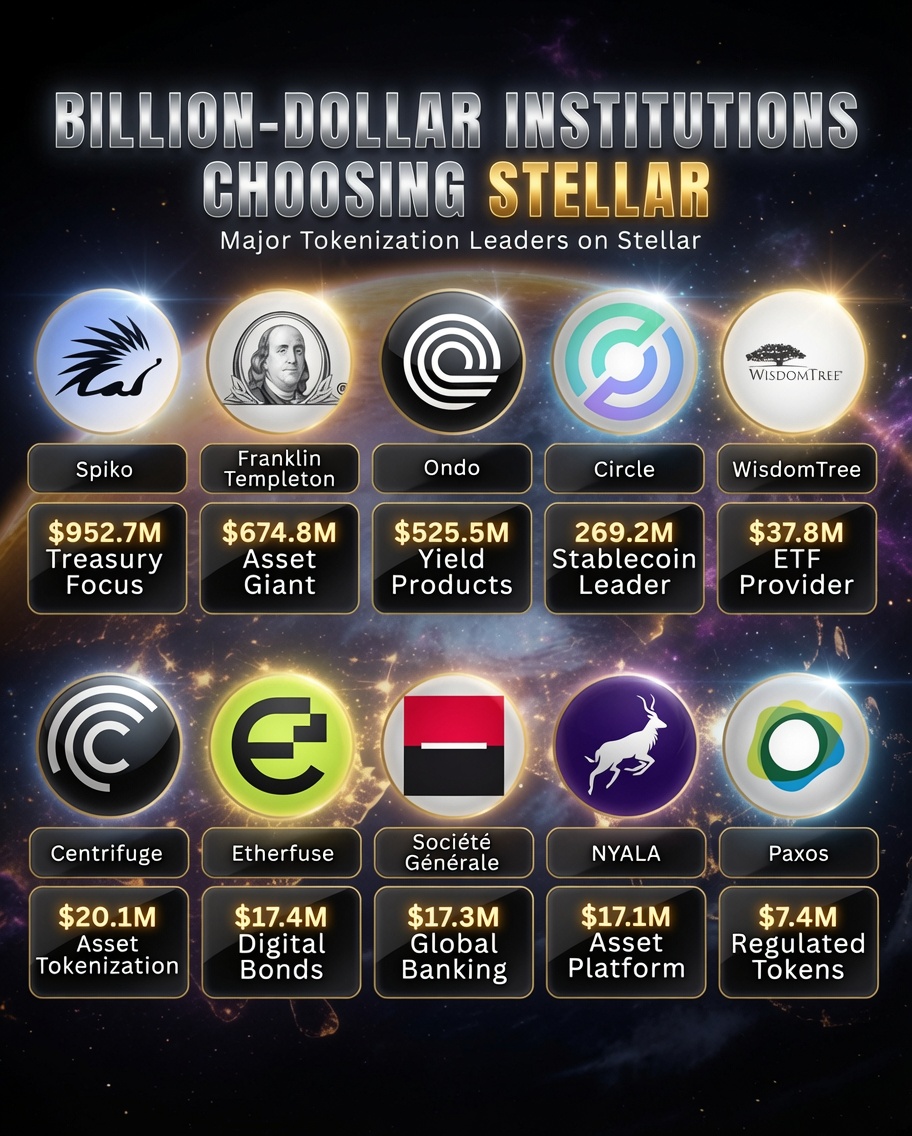
## 💰 More Than $2.8 Billion in Assets Already Tokenized on Stellar
According to figures reported by the various issuers, **nearly $2.8 billion in real-world assets have already been deployed on Stellar.**
These aren't announcements.
They're live.
### 🏛️ Spiko: $952.7 Million
Spiko, a platform specializing in tokenized money market funds, currently holds **$952.7 million** in tokenized U.S. and European government debt on Stellar.
This gives investors blockchain-based access to instruments traditionally reserved for conventional financial markets.
### 📈 Franklin Templeton: $674.8 Million Through BENJI
One of the most impressive names on the list is undoubtedly **Franklin Templeton**.
The asset management giant, overseeing more than **$1 trillion**, currently operates approximately **$674.8 million** through its tokenized fund, **BENJI**.
Even more noteworthy:
**Stellar was the very first public blockchain Franklin Templeton chose for this initiative.**
### 🏦 Ondo Finance: $525.5 Million
Another major player is **Ondo Finance**, widely regarded as one of the leaders in tokenized U.S. Treasuries.
The company has deployed **$525.5 million** on Stellar and reportedly controls a dominant share of the global tokenized Treasury market.
### 🔵 Circle: $269.2 Million
Stablecoin issuer **Circle** maintains approximately **$269.2 million** in USDC-related infrastructure on Stellar.
With the launch of the **Cross-Chain Transfer Protocol (CCTP)**, native cross-chain transfers are now possible, further strengthening Stellar's interoperability.
## 🤝 A Growing Institutional Ecosystem
Beyond these figures, Stellar's ecosystem includes initiatives involving major financial players such as:
* 🌳 WisdomTree
* 🇫🇷 Société Générale's FORGE division
* 🔗 Centrifuge
* 💵 Etherfuse
* 🌐 Nyala
* 🥇 Paxos and its tokenized gold products
Institutional interest in Stellar is clearly not limited to a handful of isolated experiments.
## 🏛️ The Biggest Catalyst: DTCC
Perhaps the strongest argument made by Stellar supporters involves an institution that many retail investors have never heard of:
**DTCC (Depository Trust & Clearing Corporation).**
Its role in global finance is enormous.
DTCC provides clearing, settlement, and custody services for approximately **$114 trillion worth of securities.**
According to available information, DTCC selected **Stellar as its first public blockchain initiative for tokenized securities.**
The assets potentially involved include:
* 📊 Russell 1000 stocks
* 📈 ETFs
* 🇺🇸 U.S. Treasuries
Deployment is reportedly targeted for **the first half of 2027.**
If implemented at scale, this could become one of the most significant institutional milestones in Stellar's history.
## 🌐 Real-World Use Cases Already Live
Beyond tokenization, Stellar is already powering payment infrastructure around the world.
### 💸 MoneyGram
MoneyGram's stablecoin services, accessible to approximately **60 million customers**, are already operating on Stellar.
The solution enables cash-to-crypto and crypto-to-cash transactions across multiple jurisdictions.
### 🇧🇲 Bermuda's National Payment System
The Government of Bermuda also utilizes Stellar as part of its payment infrastructure strategy.
### 🇪🇺 21X: Europe's First Regulated DLT Exchange
**21X**, described as the European Union's first regulated DLT-based securities exchange, has likewise chosen Stellar as its underlying infrastructure.
## 🚀 XLM Below $1: Undervalued or Overly Optimistic?
All of these developments support a clear investment thesis:
The current market price of XLM may not yet reflect the scale of Stellar's institutional adoption.
Supporters argue that many investors still view Stellar solely as a payments network, overlooking its growing role as a foundation for the tokenization of financial assets.
However, it's important to remember that:
* ⚠️ Institutional adoption does not automatically translate into token price appreciation.
* ⚠️ Some initiatives remain subject to deployment timelines and execution risks.
* ⚠️ The cryptocurrency market remains highly volatile.
## 🔥 Final Thoughts
Stellar is no longer just a technological promise.
The network already hosts billions of dollars in tokenized assets, collaborates with major financial institutions, and participates in initiatives that could reshape the infrastructure of traditional finance.
For investors who believe tokenization is one of the biggest trends of the coming decade, **XLM trading below $1 may represent a rare opportunity.**
Will this conviction prove as visionary as buying Amazon in the early 2000s?
Only time will tell.
But one thing is certain:
Markets occasionally offer opportunities that most people ignore—only for everyone to recognize them once they've already played out. ✨
---
⚠️ **Disclaimer:** This article is for informational purposes only and should not be considered financial advice. Always conduct your own research and assess your risk tolerance before making any investment decisions.
#XLM #Stellar #StellarLumens #Lumens #Crypto #Cryptocurrency #Blockchain #RWA #RealWorldAssets #Tokenization #TokenizedAssets #DigitalAssets #FutureOfFinance #FinTech #Web3 #DeFi #InstitutionalAdoption #USDC #Circle #FranklinTempleton #BENJI #OndoFinance #Spiko #MoneyGram #DTCC #TokenizedTreasuries #Treasuries #ETF #Russell1000 #Paxos #WisdomTree #SociétéGénérale #FORGE #Centrifuge #Etherfuse #Nyala #21X #CrossBorderPayments #Payments #Stablecoins #CCTP #CryptoNews #Altcoins #Bullish #XLMArmy #CryptoCommunity #HODL #DYOR #Altseason
9
7
55
1,291
Jun 11
⚡️ Stellar Unveils a Three-Stage Roadmap to Prepare Its Network for the Quantum Era 🔐🚀
The Stellar Development Foundation (SDF) has announced a major new initiative aimed at strengthening the security of the Stellar ecosystem against an emerging technological threat that is increasingly being taken seriously: quantum computing 🧠⚛️.
According to the organization, Stellar has introduced a three-stage quantum preparedness roadmap designed to gradually transition the network toward post-quantum cryptography (PQC).
The goal is clear: ensure that Stellar's infrastructure and the digital assets moving across its network remain secure in a future where quantum computers could challenge today's cryptographic standards. 🌐🛡️
🤔 Why Does Quantum Computing Matter?
Most blockchains today rely on traditional cryptographic systems to secure wallets and authenticate transactions. While these mechanisms are considered highly secure with current computing capabilities, sufficiently powerful quantum computers could eventually compromise some forms of public-key cryptography used across the industry. ⚠️🔑
Although experts generally agree that this threat is not immediate, many blockchain projects are choosing to prepare now rather than react later.
By taking proactive steps today, Stellar aims to position itself among the most quantum-ready blockchain networks in the industry. 🚀🌟
🛠️ A Three-Phase Transition Strategy
The roadmap unveiled by the Stellar Development Foundation consists of three successive stages, enabling a gradual migration without disrupting network operations.
1️⃣ Preparation and Development 🧪👨💻
The first phase focuses on building the technical foundations required for post-quantum integration. This includes:
🔹 Evaluating the most robust post-quantum standards.
🔹 Developing tools compatible with the Stellar network.
🔹 Conducting comprehensive security audits.
🔹 Collaborating with enterprises and institutional participants already operating on Stellar.
The objective is to ensure that future implementations deliver strong security while maintaining network efficiency and usability.
2️⃣ Enterprise Wallet Migration in 2026 🏢🔐
The second phase introduces a significant milestone beginning in 2026.
Enterprise wallets operating on Stellar will begin migrating to post-quantum cryptographic systems.
This is particularly important because institutions and businesses often manage substantial amounts of digital assets. Their adoption will allow the ecosystem to test the new infrastructure at scale while improving overall resilience. 📈🛡️
By prioritizing enterprise use cases first, Stellar adopts a cautious and strategic approach that minimizes operational risks while gathering valuable real-world feedback.
3️⃣ Upgradeability for All Accounts by the End of 2027 🌍⏳
According to the announced timeline, all Stellar accounts will be upgradeable by the end of 2027.
In practical terms, this means that every user on the network will have a migration path toward cryptographic standards specifically designed to withstand future quantum capabilities. 🔄🔒
This strategy aims to prevent accounts from remaining locked into potentially outdated or vulnerable signature methods.
🌐 A Growing Industry Trend
Stellar's announcement reflects a broader movement across the digital asset sector.
As advances in quantum computing accelerate, several blockchain projects have begun exploring ways to integrate quantum-resistant technologies. The work conducted by the National Institute of Standards and Technology (NIST), which has been standardizing post-quantum algorithms, serves as a key reference point for the industry. 📚🏛️
For blockchain networks, the challenge lies in implementing these new standards without sacrificing decentralization, performance, or user experience.
📢 A Strong Signal to Developers and Investors
With this roadmap, the Stellar Development Foundation is sending a powerful message: long-term security is a strategic priority.
This proactive stance could strengthen confidence among developers, enterprises, institutions, and users building on Stellar. In an increasingly competitive market, a network's ability to anticipate major technological shifts may become a significant competitive advantage. 💡📊
✅ Conclusion
By unveiling a three-stage quantum preparedness roadmap, the Stellar Development Foundation is choosing anticipation over reaction.
The migration of enterprise wallets to post-quantum cryptography beginning in 2026, followed by the ability for all Stellar accounts to upgrade by the end of 2027, demonstrates a clear commitment to protecting the ecosystem for decades to come. 🔐🌌
While quantum computing may not pose an immediate threat to blockchain networks today, Stellar's initiative highlights the growing maturity of the industry and the importance of future-proofing critical financial infrastructure.
⚡️ The quantum era may still be on the horizon—but Stellar is already getting ready. 🚀✨
#Stellar #XLM #StellarDevelopmentFoundation #QuantumComputing #PostQuantum #PostQuantumCryptography #PQC #QuantumReady #Blockchain #Crypto #Cryptocurrency #DigitalAssets #Web3 #FinTech #DeFi #BlockchainSecurity #CyberSecurity #QuantumResistance #FutureOfFinance #Innovation #CryptoNews #Altcoins #XLMArmy #StellarNetwork #CryptoUpdate #TechNews #NIST #EnterpriseBlockchain #Decentralization #CryptoCommunity #Finance #Payments #CrossBorderPayments #Tokenization #DLT #DistributedLedger #CryptoInnovation #QuantumSecurity #NextGenTech #BlockchainTechnology #CryptoInvestor #CryptoMarket #CryptoTrends #Web3Innovation #SecureFinance #FutureTech #DigitalFinance #CryptoAlert #BreakingNews 🚀⚡️🔐🌍
8
10
78
1,279
Jun 10
🚨 Mastercard Expands Settlement Capabilities with Regulated Stablecoins: A New Era of 24/7 Payments 🌍💳
Global payments giant Mastercard is taking another major step toward blockchain adoption. The company has announced the expansion of its card settlement capabilities through the use of regulated stablecoins, enabling intraday, weekend, and holiday settlements.
This development could significantly reshape the global payments infrastructure and further strengthen the role of blockchain technology within traditional finance. 🚀
💸 Payments That Never Sleep
Traditional settlement systems typically depend on banking hours and business days. As a result, transaction settlements can be delayed outside standard operating periods, especially during weekends and public holidays.
With this latest initiative, Mastercard aims to move closer to truly continuous payments. By leveraging regulated stablecoins, the company will be able to process settlements:
✅ Multiple times throughout the day
✅ 24 hours a day
✅ 7 days a week
✅ Including weekends and public holidays
This approach reduces operational friction and improves liquidity and treasury management across its network. ⚡
🪙 Regulated Stablecoins at the Core
Stablecoins are digital assets designed to maintain a stable value, typically pegged to fiat currencies such as the U.S. dollar. Their main advantage is providing the efficiency of digital assets while minimizing the volatility associated with traditional cryptocurrencies.
However, Mastercard is specifically focusing on regulated stablecoins. These assets operate under strict compliance standards regarding transparency, reserve management, and regulatory oversight.
For businesses and financial institutions, this represents an opportunity to benefit from blockchain speed and efficiency while operating within a trusted and compliant framework. 🏦🔒
✨ Stellar Powers Always-On, Programmable Payments
This expansion of Mastercard's settlement capabilities is being enabled by the Stellar network, a blockchain designed for fast and cost-effective value transfers.
According to the Stellar ecosystem, programmable, always-on payments are now becoming a reality through this integration.
Stellar offers several advantages that align with institutional needs:
🌟 Transaction finality within seconds
🌟 Extremely low transaction fees
🌟 Continuous network availability
🌟 Programmability features that automate financial processes
Its adoption highlights the growing interest from major financial players in blockchain networks capable of supporting institutional-grade operations at scale.
📈 A Strong Signal for Institutional Adoption
Mastercard's announcement represents another milestone in the convergence between traditional finance and digital assets.
After years of experimentation with cryptocurrencies and digital currencies, large institutions are increasingly focusing on practical use cases aimed at improving payment efficiency.
Potential benefits include:
🔹 Faster financial flows
🔹 Enhanced liquidity management
🔹 Reduced settlement delays
🔹 Improved experience for network participants
🔹 Modernization of the global payments infrastructure
This move could encourage other payment providers and financial institutions to explore stablecoin-based settlement solutions.
🌐 Toward the Next Generation of Payments
The integration of regulated stablecoins into Mastercard's settlement processes marks an important evolution in the global financial system.
By leveraging Stellar to deliver instant, programmable, and always-available payments, Mastercard demonstrates that blockchain technology is no longer merely experimental—it is increasingly becoming an operational tool supporting real-world applications at scale.
If adopted more broadly, this initiative could redefine the standards of international payments, bringing the industry closer to a future where money moves as seamlessly and continuously as the internet itself. 🔥🌎💰
#Mastercard #Stellar #XLM #Stablecoins #Crypto #Cryptocurrency #Blockchain #DigitalAssets #Fintech #Payments #Web3 #TradFi #DeFi #Tokenization #Finance #CryptoNews #BreakingNews #Bullish #InstitutionalAdoption #PaymentsInnovation #FutureOfFinance #CryptoAdoption #MoneyMovement #FinancialInnovation #24x7Payments #AlwaysOnPayments #RegulatedStablecoins #StellarNetwork #XRP #Bitcoin #Ethereum #Altcoins #CryptoCommunity #FinTechNews #BlockchainTechnology #DigitalFinance #Banking #GlobalPayments #CryptoX #XNews
2
26
155
3,256
Jun 10
⚛️ XLM Faces the Quantum Era: Stellar Unveils Its Three-Step Plan to Secure the Network 🛡️
As quantum computing continues to advance at an accelerating pace, the blockchain industry is beginning to take seriously a threat that was once considered purely theoretical: "Q-Day" — the moment when quantum computers become powerful enough to break the cryptographic systems securing today's decentralized networks. ⚡🔬
In response to this emerging challenge, the Stellar Development Foundation (SDF) has introduced an ambitious Quantum Preparedness Plan (QPP) — a three-stage roadmap designed to strengthen the resilience of the Stellar ($XLM) network against the post-quantum future. 🌍🚀
🌐 A Threat That Concerns the Entire Crypto Industry
The security of blockchain networks relies heavily on public-key cryptography. These mechanisms protect transactions, user identities, and validator operations.
However, future breakthroughs in quantum computing could fundamentally challenge these foundations. ⚠️
Experts have identified two major risks:
🔓 1. Forged Validator Signatures
Validators play a critical role in maintaining Stellar's consensus process. If quantum computers were able to break today's signature algorithms, malicious actors could potentially forge validator signatures and disrupt network operations.
This represents a network-level threat. 🌐💥
🔑 2. Private Key Extraction From Public Keys
This scenario is considered the most critical.
Public keys are visible on most blockchain networks. A sufficiently advanced quantum computer could theoretically use algorithms such as Shor's Algorithm to derive private keys from public ones.
The consequences could be severe:
💸 Account takeovers
🏴 Theft of digital assets
🚨 Compromised wallet security
📉 Loss of trust across the ecosystem
This is the primary threat Stellar's Quantum Preparedness Plan aims to address.
🌟 Why Stellar Has a Structural Advantage
One of Stellar's unique features is the separation between account identity and signing keys.
Unlike many blockchains where addresses are tightly linked to the underlying cryptographic scheme, Stellar allows signers to be replaced or upgraded without changing the account address itself.
This architecture offers several major advantages:
✅ Users can migrate to quantum-safe security without changing addresses.
✅ Institutions won't need to move funds into new wallets.
✅ Migration can happen gradually.
✅ Existing integrations can continue operating with minimal disruption.
This flexibility could prove invaluable if the crypto industry needs to transition rapidly toward post-quantum standards.
🛠️ Stellar's Quantum Preparedness Roadmap
The QPP is built around three major phases.
📅 2026: Soroban Leads the Transition
The first stage introduces post-quantum signature support within Soroban, Stellar's smart contract platform.
This will allow:
🏢 Enterprises
👛 Institutional wallet providers
👨💻 Developers
to begin experimenting with and deploying quantum-resistant solutions.
The objective is simple: prepare the ecosystem before network-wide adoption.
🔗 2027: Protocol Upgrade for All XLM Accounts
The second phase represents the core of the initiative.
A protocol upgrade will enable every Stellar account to add quantum-safe signers.
In practice, users will be able to strengthen their security without changing addresses or moving their assets.
This seamless migration process is designed to encourage broad adoption while minimizing friction. ⚙️🛡️
⏳ Final Phase: Gradual Retirement of Current Cryptography
The final step involves the deprecation of today's cryptographic standards.
However, Stellar has intentionally avoided setting a fixed deadline.
The timeline will depend on several factors:
📈 The pace of quantum computing development
🏛️ Recommendations from standards organizations
🌍 Ecosystem readiness
🤝 Adoption rates of post-quantum solutions
This pragmatic approach aims to balance security with operational stability.
❓ One Major Challenge Remains: Dormant Accounts
Despite the comprehensive roadmap, an important question remains unanswered:
What happens to inactive or abandoned accounts that never migrate to quantum-safe security?
If account holders lose access to their credentials or fail to upgrade before a significant quantum threat materializes, those accounts could become vulnerable.
According to the Stellar Development Foundation, the broader Stellar community will ultimately help determine the best path forward. 🗳️
🚨 The Sense of Urgency Is Growing
While Q-Day may not arrive tomorrow, several indicators suggest that preparation can no longer be postponed.
Among the signals frequently cited:
📌 The NIST now highlights a potential risk window beginning around 2029.
📌 Google is targeting 2029 for post-quantum readiness.
📌 Researchers estimate that Q-Day could emerge around 2030.
These dates remain projections rather than certainties, but they are increasingly motivating organizations to act today rather than react tomorrow. ⏰
🌍 Stellar Is Playing the Long Game
In a cryptocurrency market often dominated by short-term price action and speculation, Stellar appears focused on something far more enduring:
🔹 Technological resilience
🔹 Institutional-grade security
🔹 Proactive risk management
🔹 Long-term infrastructure sustainability
No one knows exactly when Q-Day will arrive.
But one thing is becoming increasingly clear: the race toward post-quantum security has already begun.
And with its Quantum Preparedness Plan, Stellar ($XLM) intends to be among the first blockchain networks ready for the next generation of financial infrastructure. ⚛️✨🚀
#XLM #Stellar #StellarLumens #QuantumComputing #QuantumSecurity #PostQuantum #PostQuantumCryptography #Crypto #Cryptocurrency #Blockchain #Web3 #DigitalAssets #Fintech #Soroban #SDF #StellarDevelopmentFoundation #CryptoNews #Altcoins #CryptoMarket #DeFi #FutureOfFinance #QDay #CyberSecurity #CryptoSecurity #Innovation #Tech #QuantumReady #InstitutionalAdoption #Tokenization #Payments #CrossBorderPayments #Finance #CryptoCommunity #BlockchainTechnology #CryptoUpdate #XLMArmy #Bullish #HODL #DYOR #AltcoinSeason #Web3Security #NextGenFinance #CryptoInvesting #FintechInnovation #Decentralization #DistributedLedger #DLT #FinancialInfrastructure #QuantumRace #FutureTech
11
71
1,332
Jun 10
🚀 XLM Leads the Way in Real-World Asset Inflows as Stellar Strengthens Its Institutional Position
The Real-World Asset (RWA) sector continues to gain momentum across the crypto industry, and one blockchain network is standing out from the crowd: Stellar (XLM). According to the latest data from RWA.xyz, Stellar recorded approximately $604 million in implied net inflows over the past 30 days, making it one of the strongest-performing ecosystems in the rapidly expanding tokenized asset market. 📈🌍
💰 Stellar's RWA Ecosystem Sees Explosive Growth
Based on RWA.xyz metrics, the total value of real-world assets issued and distributed on the Stellar network has climbed to approximately $2.28 billion. This represents a remarkable 37.7% monthly increase, ranking among the fastest growth rates across all tracked blockchain networks. 🚀📊
The figures highlight a growing confidence in Stellar as a blockchain infrastructure capable of supporting regulated financial products and institutional-grade applications.
🏦 Institutional Products Are Driving the Momentum
A significant portion of this expansion has been fueled by major tokenized financial products designed for institutional investors. Key contributors include:
💼 Spiko – approximately $984 million
🏛️ Franklin Templeton Benji – around $675 million
📊 Ondo Finance – approximately $526 million
In addition, Stellar hosts products and initiatives from several notable issuers, including:
🔵 Circle
🌳 WisdomTree
⚙️ Centrifuge
💱 Etherfuse
🇫🇷 Société Générale FORGE
The presence of these established players reinforces Stellar's growing credibility among institutions seeking blockchain solutions that align with regulatory standards and operational efficiency.
🌐 Stellar Is Evolving Beyond Speculation
For years, Stellar has been recognized primarily for its fast and low-cost payment capabilities. Today, however, the network appears to be entering a new phase of maturity. 🔄
The recent surge in RWA inflows suggests that XLM is increasingly associated with regulated financial instruments, including:
📌 Tokenized money market funds
📌 Digital Treasury products
📌 Institutional settlement infrastructure
📌 Compliant value-transfer mechanisms
This shift indicates that Stellar is no longer viewed solely through the lens of speculative crypto activity. Instead, it is increasingly emerging as a potential foundation for the next generation of global financial infrastructure. 🏗️💳
🔗 The RWA Revolution Is Becoming Multi-Chain
The rise of real-world asset tokenization is not exclusive to Stellar. Capital continues to flow across multiple blockchain ecosystems as the RWA market matures. 🌎
Networks such as Ethereum, Solana, Avalanche, and other specialized chains are also attracting institutional projects and tokenized products.
However, Stellar's recent performance stands out because of its scale and speed. The $604 million in implied net inflows within just 30 days points to strong chain-specific demand rather than a simple reflection of broader market expansion. 📈🔥
🤔 The Next Big Question: Can Stellar Sustain This Growth?
The real test lies ahead.
Will these inflows translate into meaningful, long-term network usage?
Several indicators will be worth monitoring in the coming months:
🔄 Increased transfer activity across the Stellar network
💵 Growth in collateral and liquidity flows tied to tokenized assets
🏛️ Deeper integration with traditional financial institutions
📈 Expansion of real-world settlement and asset management use cases
If these trends continue to develop, Stellar could solidify its position as one of the leading infrastructures powering the tokenized economy of the future. 🌟
📝 Conclusion
With $604 million in implied net inflows over the last 30 days and approximately $2.28 billion in RWA value hosted on its network, Stellar has delivered one of the most impressive performances in the real-world asset sector. 🚀💎
Supported by globally recognized institutions and regulated financial products, the network is increasingly positioning itself at the intersection of traditional finance and blockchain innovation.
The challenge now is converting this capital influx into sustainable adoption and real economic activity. If successful, XLM could become a cornerstone of tomorrow's financial infrastructure, proving that blockchain technology has a role far beyond speculation. 🌍🏦✨
Source: RWA.xyz data.
#XLM #Stellar #StellarLumens #RWA #RealWorldAssets #Tokenization #TokenizedAssets #Crypto #Cryptocurrency #Blockchain #DigitalAssets #InstitutionalAdoption #TradFi #DeFi #Finance #Fintech #TokenizedTreasuries #MoneyMarkets #Ondo #FranklinTempleton #Benji #Spiko #Circle #WisdomTree #Centrifuge #Etherfuse #SocieteGeneraleFORGE #Treasuries #Payments #Settlement #Web3 #CryptoNews #Altcoins #Bullish #InstitutionalFinance #AssetTokenization #FutureOfFinance #XLMArmy #StellarNetwork #BlockchainTechnology #DigitalFinance #CryptoMarket #RWAxyz #FinancialInnovation #Adoption #CryptoInvesting #Altseason #TokenEconomy #GlobalPayments #NextGenFinance
1
21
119
2,378
🚀 Stellar Unveils Its Quantum Preparedness Plan: A Roadmap for the Post-Quantum Era 🔐⚛️
The Stellar Development Foundation (SDF) has officially introduced the Quantum Preparedness Plan (QPP), an ambitious initiative designed to prepare the Stellar network for the arrival of quantum computers capable of breaking today's cryptographic standards.
The objective is clear: by the end of 2027, every Stellar account will be able to adopt quantum-resistant security without changing its address or losing its transaction history. 🌟
This move positions Stellar among the most proactive blockchain ecosystems tackling what many experts now consider an inevitable challenge.
⚠️ Why Stellar Is Preparing for the Quantum Future Now
For years, elliptic curve cryptography has been the foundation of blockchain security. Stellar, like Bitcoin and Ethereum, relies heavily on Ed25519 signatures to secure transactions and validate ownership.
However, sufficiently powerful quantum computers could eventually change everything.
Using Shor's algorithm, future quantum machines could theoretically derive private keys from public keys, rendering current elliptic curve cryptography obsolete.
For Stellar, this threat is no longer viewed as a distant possibility.
The question is no longer if quantum computers will break today's cryptographic systems—but when. ⏳⚛️
🌍 A Threat That Extends Beyond Blockchain
The post-quantum challenge impacts the entire digital economy.
Today's cryptographic standards secure:
🔹 HTTPS/TLS internet communications
🔹 SSH access systems
🔹 Software code signing
🔹 Banking infrastructures
🔹 Telecommunications networks
🔹 Healthcare systems
🔹 Defense and national security infrastructures
This global concern has accelerated the development of post-quantum solutions.
In 2024, the National Institute of Standards and Technology (NIST) finalized its first post-quantum standards:
✅ ML-DSA for digital signatures
✅ ML-KEM for secure key exchange
The building blocks for migration are now available.
📈 The Timeline Is Accelerating
Recent scientific breakthroughs have increased the urgency.
In early 2026, researchers from INRIA demonstrated that breaking 256-bit elliptic curves—the family used by Ed25519—would require approximately 1,193 logical qubits, representing a 44% reduction compared to previous estimates.
Meanwhile, advances in quantum error correction architectures have significantly reduced the physical qubits required for cryptographic attacks.
As a result:
🧠 NIST now considers the danger zone to begin around 2029 .
🤖 Google has set 2029 as its internal deadline for post-quantum readiness.
The blockchain industry is also beginning to respond:
⚙️ Ethereum has drafted an emergency hard fork strategy.
🟠 Bitcoin is discussing BIP-360.
🛡️ Algorand has already deployed Falcon-based state proofs.
For Stellar, acting early is preferable to reacting during a crisis.
🚨 The Two Major Quantum Threats Facing Stellar
The Quantum Preparedness Plan identifies two distinct risks.
1️⃣ Network Integrity Risk
Validators authenticate Stellar Consensus Protocol (SCP) messages using Ed25519 signatures.
If a quantum attacker could forge enough validator signatures, they could potentially compromise network consensus.
Although serious, this challenge is relatively manageable because it involves coordinating hundreds of validators rather than millions of users.
A future SCP protocol upgrade will address this issue.
2️⃣ Account Takeover Risk
This is the core focus of the QPP.
Unlike Bitcoin and Ethereum, where addresses are generally hashes of public keys, Stellar addresses (starting with G...) directly encode the Ed25519 public key.
The consequence is significant:
Every Stellar account becomes a potential target—including dormant accounts that have never executed a transaction. 🎯
This is the problem Stellar intends to solve first.
🌟 Stellar's Structural Advantage
Stellar possesses a unique architectural benefit.
On many blockchains, rotating keys requires:
🔄 Creating a new wallet.
💸 Moving funds.
🔗 Updating every external system referencing the previous address.
Stellar works differently.
The identity of a Stellar account is separated from its signing keys.
This means:
✅ The G... address remains unchanged.
✅ Signing keys can be updated.
✅ Key rotation already exists through the set_options operation.
To become quantum-safe, users will simply need to:
1️⃣ Add a quantum-safe signer.
2️⃣ Assign appropriate signer weights.
3️⃣ Remove the legacy Ed25519 signer.
No new account.
No balance migration.
No change of address.
The missing piece today is native support for quantum-safe signer types.
🛣️ The Quantum Preparedness Plan Roadmap
🔹 Stage 1: Building Blocks and Soroban Accounts (2026)
The first phase introduces post-quantum signature verification into Soroban, Stellar's smart contract platform.
Supported standards include:
🔐 ML-DSA-44
🔐 ML-DSA-65
These capabilities will enable Soroban contract accounts to implement quantum-safe authentication.
Enterprise wallets will be able to migrate as early as 2026.
Additional schemes may follow, including:
🦅 FN-DSA (Falcon)
☁️ HSM integrations for cloud deployments.
🔹 Stage 2: Protocol-Level Integration (2027)
In 2027, Stellar plans to introduce a Core Advancement Proposal.
This upgrade will make post-quantum signers native to traditional Stellar accounts.
Every existing account will be able to:
✅ Keep the same address.
✅ Add a quantum-safe signer.
✅ Transition gradually.
✅ Eventually remove Ed25519.
The broader ecosystem will also need upgrades:
🛠️ Wallets
🛠️ SDKs
🛠️ Anchors
🛠️ SEP standards
All must support post-quantum key generation, signing, and verification.
🔹 Stage 3: Deprecating Ed25519
The final phase depends on the evolution of the quantum threat.
Stellar expects readiness work to be completed by the end of 2027.
The decision to stop accepting Ed25519 for new transaction authorization will depend on:
📊 Quantum computing advancements.
🤝 Ecosystem preparedness.
🗣️ Community discussions.
💤 The Dormant Account Dilemma
A particularly sensitive issue remains.
Stellar hosts a large number of inactive accounts whose owners may no longer be reachable.
A mandatory cutoff for Ed25519 signatures could force the community to choose between:
🔑 Implementing recovery mechanisms using seed-based proofs.
OR
🔒 Accepting that some dormant accounts become permanently inaccessible.
The SDF plans to open this debate to the community rather than imposing a unilateral decision.
🧩 The Zero-Knowledge Challenge
The QPP does not yet solve another critical issue: zero-knowledge protocols.
Many ZK systems rely on SNARK constructions using curves such as:
⚡ BN254
⚡ BLS12-381
Unfortunately, Shor's algorithm threatens these cryptographic foundations as well.
Unlike digital signatures, there is currently no drop-in post-quantum replacement offering similar performance.
Potential alternatives include:
🔍 STARKs
🧮 Lattice-based proof systems
Each comes with significant trade-offs.
Stellar intends to collaborate with ZK teams to establish a shared research roadmap.
🤝 An Ecosystem-Wide Effort
The Stellar Development Foundation emphasizes that this transition cannot be accomplished alone.
Success will require the participation of:
🌐 Validators
👨💻 Soroban developers
👛 Wallet providers
🏦 Custodians
🌉 Anchors
🧰 SDK maintainers
In the coming weeks, Stellar plans to publish detailed technical specifications and launch community discussions that will shape this historic migration.
🚀 Stellar Is Preparing for the Post-Quantum Era
With the Quantum Preparedness Plan, Stellar is choosing preparation over reaction.
By leveraging its unique architecture—where account identity is separated from signing keys—the network enjoys a major advantage in the race toward quantum resilience.
While the exact timeline of the threat remains uncertain, one reality is becoming increasingly clear:
The migration to post-quantum cryptography is no longer a theoretical exercise—it is rapidly becoming one of the most important challenges facing the entire blockchain industry. ⚛️🔐🌍
By acting early, Stellar hopes to deliver a smooth transition that protects users without disrupting their existing accounts or identities.
#️⃣ #Stellar #XLM #Quantum #QuantumComputing #PostQuantum #PostQuantumCryptography #Crypto #Cryptocurrency #Blockchain #Web3 #Soroban #StellarNetwork #SDF #DeFi #Fintech #DigitalAssets #CryptoNews #BlockchainNews #CryptoUpdate #NIST #MLDSA #Falcon #QuantumSafe #FutureOfFinance #Innovation #CryptoCommunity #XLMArmy #CryptoTwitter #X #Altcoins #SmartContracts #Tokenization #Payments #QuantumReady #Decentralization #DLT #FinServ #NextGenFinance #FinTechInnovation #OpenFinance #QuantumThreat #CryptoAdoption #Web3Security #PostQuantumSecurity #DigitalFinance
1
6
50
1,033
🇧🇲 How a Stellar-Powered Onchain Economy Could Transform Bermuda’s Financial Future
Bermuda, a territory known for its strong financial sector and forward-thinking regulatory approach, is facing an unexpected challenge. Despite having a relatively sophisticated economy, Bermudians continue to deal with the consequences of outdated payment infrastructure—high processing fees, limited access to modern financial tools, and a lack of mobile money applications.
In a world where instant payments and digital wallets have become the norm, these limitations are increasingly holding back economic potential. 🚧💳
However, a new model could dramatically reshape this reality: an onchain economy powered by the Stellar network. ✨🌐
💸 Outdated Financial Infrastructure Comes at a Cost
Many Bermudians face payment processing costs that are significantly higher than those in other markets. Businesses see their margins reduced by transaction fees, while consumers have limited access to convenient mobile financial solutions.
The absence of a robust mobile payments ecosystem creates several challenges:
📌 Higher transaction costs for individuals and businesses
📌 Slower and less efficient money transfers
📌 Increased dependence on traditional banking systems
📌 Limited access to innovative financial services
📌 Fewer opportunities for entrepreneurship and economic expansion
In an increasingly digital world, these obstacles can slow innovation and restrict economic growth. 📉
🔗 What Is an Onchain Economy?
The term "onchain" refers to economic activity that takes place directly on a blockchain network. Transactions are recorded, verified, and settled using decentralized infrastructure rather than relying heavily on traditional intermediaries.
This approach enables a new generation of financial services:
⚡ Instant payments
🌍 Simplified cross-border transfers
📱 Mobile-first digital wallets
💰 Lower operational costs
🤝 Greater interoperability between financial participants
By reducing friction in the movement of money, onchain systems can make financial services more efficient, accessible, and inclusive.
⭐ Why Stellar?
Built specifically for moving value across borders, Stellar is a blockchain designed to enable fast, affordable, and accessible payments.
Here are some of its key advantages:
💵 Ultra-Low Transaction Fees
Stellar transactions cost only a fraction of traditional payment processing fees. This can directly benefit both merchants and consumers by reducing unnecessary expenses.
⚡ Near-Instant Settlement
Transactions on Stellar are typically confirmed within seconds, creating a smoother experience for everyday payments and business operations.
📲 Financial Access Through Mobile Devices
Digital wallets built on Stellar can provide users with easy access to financial services directly from their smartphones, eliminating many barriers associated with legacy systems.
🪙 Support for Digital Assets
Stellar enables the issuance and transfer of tokenized assets, opening the door to innovative financial products and new economic opportunities.
🚀 What Could This Mean for Bermuda?
A gradual transition toward a Stellar-powered onchain economy could generate substantial benefits across the island.
💳 Lower Payment Costs
Reducing transaction fees would allow businesses to improve profitability while helping consumers retain more of their purchasing power.
💡 Encouraging Financial Innovation
A thriving mobile payments ecosystem could foster the growth of local fintech startups and attract international innovators.
🤝 Expanding Financial Inclusion
Simple, smartphone-based solutions could make financial services more accessible to a broader segment of the population.
📈 Boosting Economic Growth
Faster and cheaper transactions increase the efficiency of commerce and support entrepreneurial activity throughout the economy.
🌎 Improving Cross-Border Payments
As an internationally connected jurisdiction, Bermuda could benefit from faster and more affordable international transactions, strengthening its position in the global economy.
🛡️ Challenges to Address
Like any major transformation, building an onchain economy requires thoughtful implementation.
Key considerations include:
🔹 User education and awareness
🔹 Cybersecurity and data protection
🔹 Regulatory compliance
🔹 Integration with existing financial institutions
🔹 Building public trust in emerging technologies
Success will depend on collaboration between policymakers, financial institutions, developers, businesses, and citizens.
🌟 A Strategic Opportunity for the Future
Bermuda has already demonstrated a willingness to embrace innovation in the digital asset space. By leveraging infrastructure such as Stellar, the island has an opportunity to take the next step in modernizing its financial ecosystem.
An onchain economy is more than a technological upgrade. It represents a chance to make payments more accessible, stimulate economic growth, and foster an environment where innovation can thrive. 🌱📲
For Bermudians, it could mean an end to excessive fees and outdated limitations. For Bermuda, it could be the opportunity to become a global benchmark for efficient, inclusive, and future-ready digital finance. 🇧🇲✨
#Bermuda #Stellar #XLM #StellarNetwork #OnchainEconomy #Blockchain #Crypto #Fintech #DigitalFinance #Payments #MobileMoney #FinancialInclusion #CrossBorderPayments #Web3 #Tokenization #DigitalAssets #Innovation #FutureOfFinance #FinancialFreedom #Banking #CryptoNews #BlockchainTechnology #CryptoCommunity #Decentralization #FintechInnovation #GlobalPayments #EconomicGrowth #MoneyMovement #FintechNews #Web3Economy #BuildOnStellar #CryptoAdoption #BlockchainForGood #DigitalTransformation #FinancialInnovation #CryptoX #XLMCommunity #StellarEcosystem #Onchain #FutureOfPayments #BermudaBusiness #EmergingTech #CryptoUpdate #Finance #Tech #Adoption #PaymentsReimagined #EconomicInnovation #NextGenFinance
1
4
55
1,072
🚀 Stellar Price Prediction 2026: Strong Upside Potential Toward the $0.681 Level
The cryptocurrency market rarely moves in a straight line. After posting solid gains in recent sessions, Stellar (XLM) is currently experiencing a period of short-term weakness. However, despite this temporary slowdown, the broader market structure remains bullish, suggesting that a much larger move could still be on the horizon.
According to some analysts, XLM could eventually target the $0.681 level, representing a potential upside of more than 224% from current prices. 📈🔥
🔍 What You Need to Know
✅ Stellar is showing short-term weakness, but its long-term structure remains bullish.
✅ Momentum indicators such as RSI and MACD suggest a cooling trend, pointing toward consolidation.
✅ Current price stability may be forming a solid base before the next breakout attempt.
✅ Analysts are eyeing a potential move toward $0.681, implying gains exceeding 224%.
💫 Stellar Faces Temporary Selling Pressure After Recent Gains
At the time of writing, XLM is trading around $0.2016, with a 24-hour trading volume of $735.56 million and a market capitalization of $6.80 billion.
Over the past 24 hours, Stellar has declined by 0.56%, reflecting mild selling pressure as traders pause following the recent rally. 📉
However, this pullback appears relatively modest and may simply represent a healthy pause rather than a trend reversal.
🚀 Breakout Zone Could Be Taking Shape
On June 8, 2026, well-known crypto analyst Javon Marks shared his bullish outlook on Stellar.
According to Marks, XLM continues to form higher lows, a pattern often associated with accumulation and strengthening buyer conviction.
He believes:
🌟 Stellar's price action could be preparing for a major breakout toward $0.681, with upside potential exceeding 224%.
This outlook suggests that a significant upward move may be quietly developing beneath the surface as the market absorbs profit-taking activity.
📊 Technical Indicators Suggest Momentum Is Cooling
While the long-term setup remains constructive, short-term indicators point to a slowdown in bullish momentum.
📌 RSI: Buyers Still Hold a Slight Advantage
The Relative Strength Index (RSI) currently stands at 53.84.
Being above the neutral 50 level indicates that buyers still maintain a slight edge. However, the RSI is far from overbought territory, showing that enthusiasm has moderated compared to previous rallies.
In other words, buying pressure remains present, but momentum has cooled. ⚖️
📉 MACD Flashes a Short-Term Bearish Signal
The MACD (Moving Average Convergence Divergence) is painting a more cautious picture.
A bearish crossover has recently occurred, with the MACD line moving below the signal line:
🔹 MACD Line: 0.01298
🔹 Signal Line: 0.01407
🔹 Histogram: -0.00109
This type of setup often reflects weakening momentum and may indicate that Stellar is entering a consolidation phase before its next major move.
🏗️ Consolidation Could Lay the Groundwork for the Next Rally
Despite the current indecision, Stellar remains relatively stable around $0.2027.
This period of sideways movement following a rally is commonly referred to as consolidation—a phase where buyers and sellers seek equilibrium before the market chooses its next direction.
If buyers regain control, XLM could make another attempt to expand higher in line with its longer-term bullish trend. 📈💎
On the other hand, prolonged weakness could delay the realization of the most optimistic price targets.
🔮 What Could Be Next for Stellar in 2026?
Stellar perfectly illustrates the complexity of crypto markets: short-term weakness does not necessarily invalidate a bullish long-term outlook.
For now:
✨ The broader chart structure remains positive.
✨ Higher lows continue to support the accumulation narrative.
✨ Momentum indicators call for patience.
✨ The $0.681 target remains achievable, provided buyers return with renewed strength.
The coming sessions may therefore prove decisive in determining whether XLM transforms this consolidation into a launchpad for new highs. 🚀🌕
⚠️ Disclaimer
This article contains market analysis and price projections based on technical indicators and analysts' opinions. These forecasts are not guarantees of future performance.
Cryptocurrency markets are highly volatile.
📚 Always Do Your Own Research (DYOR) before making any investment decisions. This article does not constitute financial advice.
#XLM #Stellar #StellarLumens #XLMArmy #StellarPrice #XLMPricePrediction #StellarNews #Crypto #Cryptocurrency #CryptoNews #CryptoMarket #Altcoins #AltcoinSeason #Bullish #Blockchain #DigitalAssets #Web3 #Fintech #XLMCommunity #StellarDevelopmentFoundation #SDF #CryptoTrading #CryptoInvestor #PricePrediction #DYOR #Bitcoin #Ethereum #DeFi #CryptoUpdates #CryptoAnalysis #XPost #XLMBullish #StellarNetwork #CryptoCommunity #MarketUpdate #TradingView #MACD #RSI #Accumulation #HigherLows #CryptoSignals #XLMNews #FutureOfFinance 🚀📈🌕💎
3
5
72
1,780
🌟 Stellar (XLM) Integrates with DTCC: A Major Milestone for Tokenization in the United States 🇺🇸🚀
The digital asset ecosystem continues to evolve, and Stellar (XLM) could be positioning itself at the center of the next wave of institutional adoption. Its integration within the DTCC ecosystem (Depository Trust & Clearing Corporation) marks a significant step forward for the tokenization of financial assets in the United States. 🏦🔗
This development strengthens Stellar's credibility among major financial institutions and highlights the growing momentum behind cross-border payments 🌍💸 and Real-World Assets (RWA) tokenization 🏢📈.
🏛️ DTCC: A Pillar of the U.S. Financial System
The DTCC is one of the most critical infrastructures in global finance. Every year, it processes transactions worth trillions of dollars and provides essential clearing, settlement, and custody services for a large portion of the U.S. financial markets. 💰📊
When blockchain networks become integrated into environments associated with the DTCC, it often signals something important: traditional financial institutions are actively exploring the opportunities offered by tokenization. 🔍⚡
⭐ Stellar at the Heart of Tokenization
From its inception, Stellar was designed to enable fast and low-cost value transfers. Over time, it has evolved into a blockchain infrastructure increasingly suited to institutional needs.
Its key strengths include:
✅ Fast transaction settlement, often completed within seconds.
✅ Extremely low fees, making micropayments and international transfers more efficient.
✅ A native architecture designed for issuing tokenized assets.
✅ Interoperability that facilitates the movement of different financial assets.
This integration could accelerate Stellar's adoption for real-world tokenization use cases. 🚀🔐
🤝 Partnerships That Enhance Stellar's Credibility
The news also highlights the involvement of major financial players such as Goldman Sachs 🏦 and BlackRock 📈, both of which have been actively exploring blockchain-powered financial infrastructure.
While each institution pursues its own strategy and use cases, their growing participation demonstrates a broader trend: tokenization is no longer viewed as a niche experiment.
Instead, it is increasingly recognized as a tool capable of improving:
🔹 Operational efficiency
🔹 Settlement speed
🔹 Transaction transparency
🔹 Accessibility to financial products
The participation of such prestigious institutions further legitimizes blockchain networks capable of meeting institutional standards.
🌍 Cross-Border Payments Continue to Gain Momentum
Cross-border payments have long been one of Stellar's strongest use cases.
Traditional financial systems often face several challenges:
❌ Settlement delays lasting several days.
❌ High costs caused by multiple intermediaries.
❌ Limited transparency regarding fees.
❌ Complex administrative processes.
Through its technology, Stellar offers a more efficient alternative by enabling near-instant transfers at minimal cost. As businesses increasingly seek to optimize international payment flows, this value proposition remains highly attractive. 💳⚡🌎
🏢📑 RWAs: The Next Major Crypto Narrative
One of the fastest-growing segments within the digital asset industry is the tokenization of Real-World Assets (RWAs).
These assets can include:
🏛️ Bonds
📊 Investment funds
📈 Equities
🏠 Real estate
💼 Private credit instruments
According to numerous analysts, the RWA market could eventually reach trillions of dollars in value over the coming years.
Blockchain networks capable of efficiently issuing, transferring, and settling these assets could become major beneficiaries of this transformation. Stellar is increasingly emerging as one of the serious contenders in this space. ⭐🚀
📢 A Strong Institutional Signal for XLM
Beyond the technical aspects, this integration is widely interpreted as a positive institutional signal for Stellar and XLM.
It demonstrates that blockchain infrastructures focused on practical applications are attracting increasing attention from traditional financial players. While the cryptocurrency market was once largely driven by speculation, the focus is gradually shifting toward real-world utility and economic efficiency. 🔄💡
For investors and industry observers, this development could strengthen the perception of Stellar as a blockchain capable of playing a meaningful role in the future of digital finance. 🌐💎
🔮 Conclusion
The integration of Stellar (XLM) within the DTCC ecosystem represents an important milestone in the convergence of traditional finance and blockchain technology. Supported by institutional momentum involving major players such as Goldman Sachs and BlackRock, it highlights two of the most powerful trends shaping the industry today:
🌍 The expansion of cross-border payments.
🏢 The rapid growth of Real-World Asset tokenization.
If these initiatives continue to scale, Stellar could emerge as one of the key infrastructures powering the next generation of digital financial markets. ⭐🚀
⚠️ Disclaimer: This article is for informational purposes only and should not be considered financial advice or a recommendation to buy or sell digital assets.
#XLM #Stellar #StellarLumens #DTCC #Tokenization #RWA #RealWorldAssets #Crypto #Cryptocurrency #Blockchain #DigitalAssets #CrossBorderPayments #FinTech #Finance #InstitutionalAdoption #BlackRock #GoldmanSachs #TokenizedAssets #Web3 #DeFi #CryptoNews #Altcoins #Payments #FinancialMarkets #Investing #CryptoMarket #BlockchainTechnology #FutureOfFinance #AssetTokenization #XLMArmy #StellarNetwork #DigitalFinance #MassAdoption #OnChain #TokenEconomy #MoneyMovement #CryptoUpdate #CryptoInvestor #FinancialInnovation #USMarkets #BlockchainAdoption #RWASeason #Altseason #CryptoX #XNews #BreakingNews
2
35
135
3,260
🚀 Stellar (XLM) Is Showing Wall Street Why Blockchain Changes Everything
The blockchain revolution is no longer confined to the crypto industry. Today, some of the world's largest financial institutions are actively exploring how this technology can modernize outdated systems, reduce costs, and improve efficiency across global markets. 🌍💡
During the Proof of Talk Summit in Paris 🇫🇷, Jenny Johnson, CEO of Franklin Templeton, one of the world's largest asset managers, shared a powerful insight into why traditional finance has been slow to embrace blockchain technology.
According to Johnson, the answer is straightforward:
🏦 Blockchain threatens the fee-based business models that many financial institutions have relied on for decades.
⚡ Why Blockchain Disrupts Traditional Finance
The traditional financial system depends on multiple intermediaries, including banks, brokers, custodians, clearing houses, and payment processors. Each participant plays a role in validating and settling transactions—and each typically charges fees for its services.
Blockchain introduces a fundamentally different approach.
Through smart contracts, many financial operations can be automated, including:
✅ Transaction execution
✅ Settlement processes
✅ Asset management
✅ Dividend and yield distributions
✅ Compliance and reporting functions
The result is a financial infrastructure that is:
⚡ Faster
💸 Cheaper
🔒 More Transparent
🌐 Available 24/7
🚀 More Efficient
And that efficiency is exactly what makes blockchain so disruptive to legacy financial models.
📊 Franklin Templeton Is Already Using Stellar
Franklin Templeton isn't just talking about blockchain adoption—it is actively implementing it.
The firm's tokenized money market fund, BENJI, operates on blockchain infrastructure that includes the Stellar ($XLM) network.
Tokenization allows traditional financial assets to be represented as digital tokens on a blockchain, enabling faster settlement, greater transparency, and lower operational costs.
Jenny Johnson highlighted a striking comparison:
🔹 Traditional financial infrastructure: $1.30 per 50,000 transactions
🔹 Stellar Network: $1.13 per 50,000 transactions
At first glance, the difference may seem relatively small.
However, when applied to millions or even billions of institutional transactions annually, those savings become significant. 💰
For large financial institutions, even marginal reductions in transaction costs can translate into millions of dollars in operational efficiencies every year.
🌟 Stellar's Growing Role in Institutional Finance
Designed for fast, low-cost payments and asset transfers, Stellar has steadily positioned itself as one of the leading blockchain networks for institutional use cases.
Key advantages of Stellar include:
⚡ Near-instant settlement
💵 Extremely low transaction fees
🌍 Cross-border payment capabilities
🏛️ Infrastructure built for tokenized assets
🔗 Interoperability with financial systems
These strengths are attracting increasing interest from major financial organizations worldwide.
🏦 Major Institutional Developments on Stellar
📈 Franklin Templeton's BENJI Fund
One of the most advanced examples of real-world asset tokenization in traditional finance, demonstrating how blockchain can improve fund management and distribution.
💵 MoneyGram and MGUSD
MoneyGram continues expanding its digital asset strategy, leveraging blockchain technology and the Stellar ecosystem to enhance global payments.
📑 Tokenized Securities Initiatives
Organizations such as the DTCC (Depository Trust & Clearing Corporation) are exploring tokenized financial markets, helping bridge traditional finance and blockchain infrastructure.
🌍 The Rise of Real-World Assets (RWAs)
Tokenized real-world assets are rapidly becoming one of the most promising sectors in finance.
Assets that can be tokenized include:
🏠 Real Estate
📈 Stocks
📜 Bonds
💰 Money Market Funds
🏦 Private Credit
🌾 Commodities
By bringing these assets on-chain, institutions can improve liquidity, transparency, accessibility, and operational efficiency.
🚀 Tokenization Could Reshape Global Markets
Many analysts believe tokenization could become one of the largest financial transformations of the coming decades.
Blockchain-based financial infrastructure has the potential to:
✅ Reduce operational costs
✅ Accelerate settlement times
✅ Improve transparency
✅ Lower counterparty risks
✅ Increase market accessibility
✅ Enhance capital efficiency
As a result, major financial institutions that once viewed blockchain with skepticism are now investing heavily in its development.
🔥 A Powerful Message for Wall Street
Jenny Johnson's comments reflect a broader shift occurring throughout the financial industry.
The debate is no longer whether blockchain technology works.
The evidence is already there.
Instead, the challenge for traditional finance is adapting to a system capable of delivering the same services faster, cheaper, and more efficiently than legacy infrastructure.
As this transformation unfolds, Stellar ($XLM) continues to strengthen its position as a serious institutional blockchain platform, supporting tokenization, digital assets, and next-generation financial services.
⭐ Conclusion
Wall Street's growing interest in blockchain is no longer theoretical—it's becoming operational.
Through initiatives such as Franklin Templeton's BENJI fund, the rise of tokenized real-world assets, and increasing institutional adoption, blockchain technology is proving its value in real-world financial markets.
The message is becoming increasingly clear:
🚀 The question is no longer whether blockchain works.
💡 The question is how quickly traditional finance can adapt to a world where blockchain delivers greater efficiency, lower costs, and enhanced accessibility.
And more often than ever, that conversation includes Stellar ($XLM). ⭐
#XLM #Stellar #StellarLumens #StellarNetwork #Crypto #Cryptocurrency #Blockchain #Tokenization #RWA #RealWorldAssets #DigitalAssets #Web3 #Finance #Fintech #WallStreet #FranklinTempleton #BENJI #MoneyGram #MGUSD #InstitutionalAdoption #DeFi #Payments
#CryptoCommunity #Altcoins #Bullish #XLMArmy #StellarEcosystem #CryptoInvesting #BlockchainTechnology #DigitalFinance #XRP #Bitcoin #Ethereum #FintechInnovation #OnChain #HODL #DYOR
#XRPCommunity #BTC #ETH #CryptoInvestor
#SmartContracts #CryptoAssets #FutureOfMoney #XLMCommunity #StellarDevelopmentFoundation
#StellarBlockchain #XLMBullish 🚀🌟💎
5
27
178
4,129
🚀 Is Stellar (XLM) About to Flip XRP? A Massive 40% Surge Sparks the Debate
The cryptocurrency market is no stranger to explosive moves, but Stellar (XLM) has just delivered one of the most impressive performances in recent weeks. Over the last 24 hours, the digital asset has surged by approximately 40%, significantly outperforming most major cryptocurrencies and capturing the attention of investors worldwide. 📈🔥
This remarkable rally has reignited a long-standing debate within the crypto community:
Could Stellar finally overtake XRP in the race for cross-border payment dominance? 🌍💸
🚀 Stellar Goes Parabolic
While much of the crypto market has been trading within relatively stable ranges, XLM suddenly exploded higher, fueled by strong trading volume and growing investor interest.
The rally comes at a time when blockchain projects focused on real-world utility are receiving increased attention. Investors are increasingly looking for networks capable of delivering faster, cheaper, and more efficient global transactions.
Stellar, which has been pursuing exactly that mission since its inception, appears to be benefiting from this shift in market sentiment. ⭐
🔗 Stellar and XRP: Two Projects with Shared Roots
To understand why XLM and XRP are constantly compared, it's important to look at their origins.
Stellar was founded in 2014 by Jed McCaleb, who also co-founded Ripple. Both projects were built around a similar vision: improving the movement of value across borders using blockchain technology.
However, their strategies have evolved differently.
🏦 XRP: The Institutional Approach
Ripple has primarily focused on serving:
Banks
Financial institutions
Payment providers
Enterprise clients
Its goal is to streamline international settlements and provide liquidity solutions using XRP.
🌎 Stellar: Financial Inclusion First
Stellar, on the other hand, focuses heavily on:
Financial inclusion
Low-cost remittances
Cross-border payments
Asset tokenization
Open financial infrastructure
This approach has allowed Stellar to develop a unique ecosystem while still competing directly with Ripple in several key areas.
🔥 Why Is XLM Surging Right Now?
Several factors may be contributing to Stellar's explosive move.
📊 1. Strong Technical Momentum
After months of consolidation, XLM broke through several key resistance levels.
These technical breakouts often attract:
Momentum traders
Institutional speculators
Algorithmic trading systems
Once buying pressure accelerates, gains can compound rapidly.
💳 2. Renewed Interest in Payment Networks
Investors are increasingly rewarding blockchain projects with tangible real-world applications.
Stellar's strengths include:
✅ Fast transactions
✅ Extremely low fees
✅ Global accessibility
✅ Efficient payment infrastructure
These characteristics position Stellar as a serious player in the future of digital payments.
💰 3. Potential Undervaluation
Many market participants believe XLM has lagged behind other major cryptocurrencies despite its strong fundamentals.
The recent surge could represent a market revaluation rather than pure speculation.
⚔️ Can Stellar Actually Overtake XRP?
The idea is exciting, but the answer remains uncertain.
🌟 Stellar's Advantages
Stellar brings several strengths to the table:
Ultra-low transaction costs
Strong focus on financial inclusion
Efficient cross-border settlement
Growing ecosystem adoption
Positive community support
The Stellar Development Foundation continues to expand partnerships and drive network development, strengthening the project's long-term outlook.
🏆 XRP's Advantages
Despite XLM's impressive momentum, XRP still maintains significant advantages:
Strong global brand recognition
Deep institutional relationships
High liquidity
Established market presence
One of the largest communities in crypto
Ripple continues to expand its payment infrastructure across multiple regions and financial sectors.
🌍 The Cross-Border Payments Market Is Still Wide Open
Global cross-border payments represent a multi-trillion-dollar opportunity.
No blockchain network has yet achieved complete dominance in this sector.
Several major players are competing for market share, including:
XRP Ledger
Stellar
Solana
Ethereum Layer 2 solutions
Future CBDC infrastructures
As a result, Stellar's success does not necessarily come at XRP's expense. Both networks could thrive by serving different segments of the global financial ecosystem.
👀 What Investors Should Watch Next
To determine whether this rally represents a lasting trend, investors will closely monitor:
📈 Trading volume growth
🤝 New strategic partnerships
🌐 Network adoption metrics
🏗️ Ecosystem expansion
💵 Price stability after the rally
Long-term success will ultimately depend on real-world adoption and continued network growth rather than short-term market excitement.
🚀 Final Thoughts
Stellar's stunning 40% surge has firmly placed XLM back in the spotlight and revived discussions about its ability to challenge XRP in the cross-border payments sector.
While Stellar offers compelling technology, strong fundamentals, and a growing ecosystem, XRP still holds significant advantages through its institutional connections and established market position.
Rather than asking whether XLM will immediately "flip" XRP, the more important question may be whether Stellar is becoming one of the key infrastructures powering the next generation of global finance. 🌎✨
The coming months could provide some very interesting answers. 🚀
#XLM #Stellar #StellarLumens #Crypto #Cryptocurrency #Altcoin #BullRun #CryptoNews #Blockchain #Web3 #DeFi #Fintech #Payments #CrossBorderPayments #DigitalAssets #CryptoMarket #CryptoTrading #Altcoins #XRP #Ripple #XRPArmy #XLMArmy #CryptoCommunity #Investing #Trading #Bitcoin #BTC #Ethereum #ETH #StellarNetwork #XLMBullish #Altseason #CryptoWorld #XMoney #XFinance #XNews #XLMvsXRP #PaymentRevolution #GlobalFinance #CryptoAssets #MarketWatch #CryptoSignals #CryptoMomentum #CryptoTrend #CryptoBuzz #XLMPump #StellarRise #CryptoOpportunity2026 #XLMCommunity #BlockchainPayments 🚀🌕📈

4
6
51
2,664
Stellar XLM Holder retweeted

Jun 8
Good morning.
We are glad to see you here. Despite everything happening in the world, we continue moving toward our goal and developing the project.
A voucher is available for the first 100 activations.
Have a great day!
3
6
37
1,865