
14m
India’s coastal economies drive trade, fisheries, and livelihoods—but they are increasingly vulnerable to sea-level rise and extreme weather. A new coastal urbanism is urgently needed: @dddorf or-f.org/39037 #CoastalCities #ClimateChange #ClimateAdaptation
50

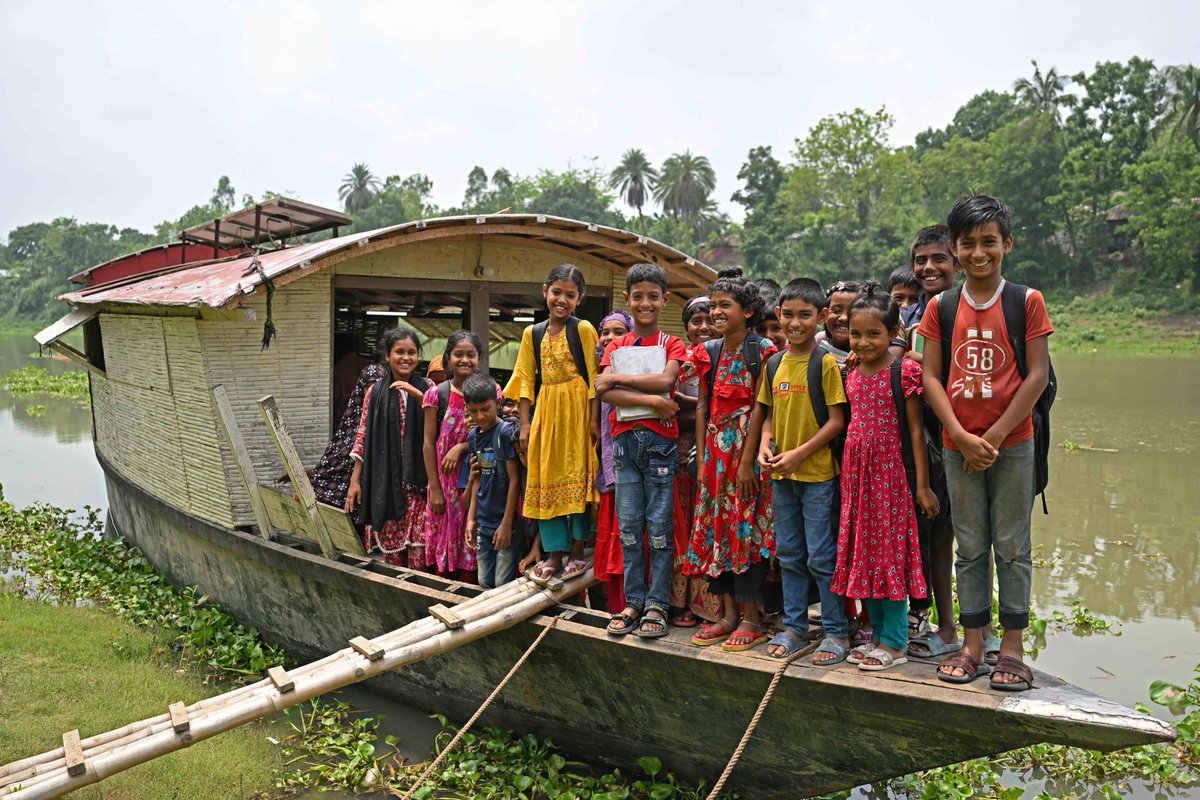
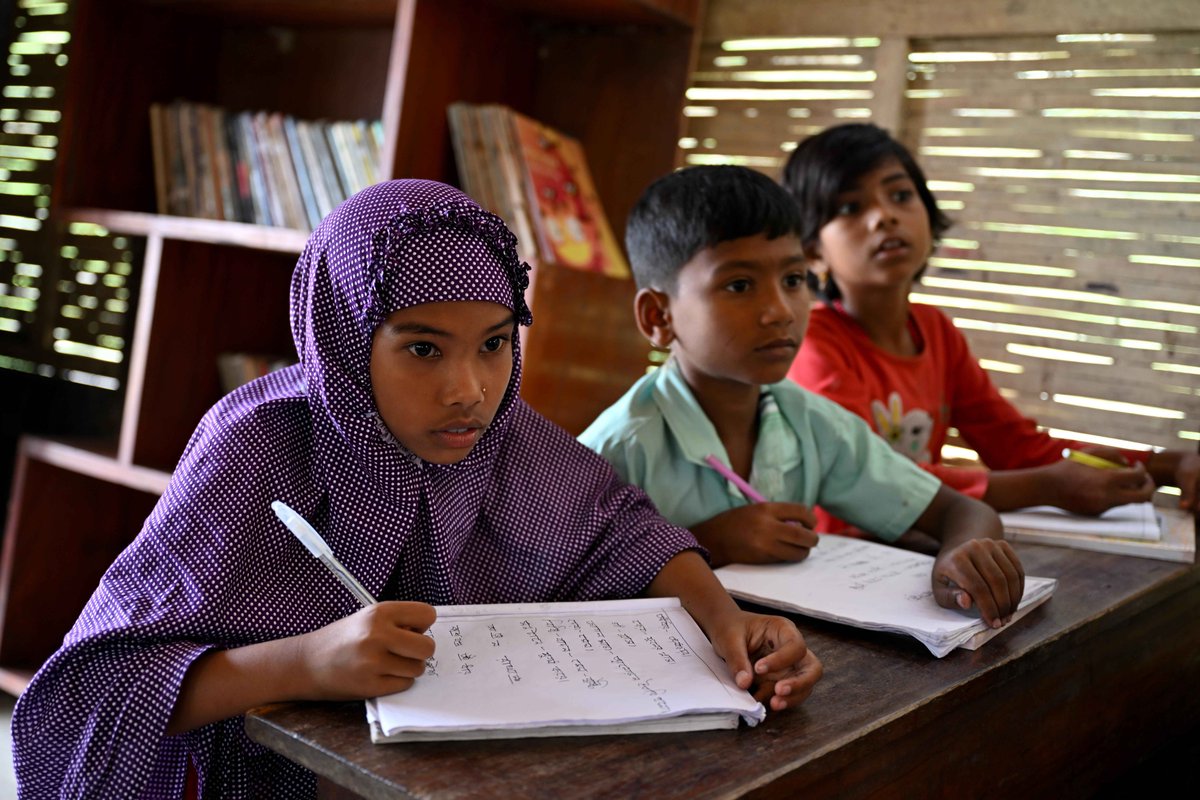
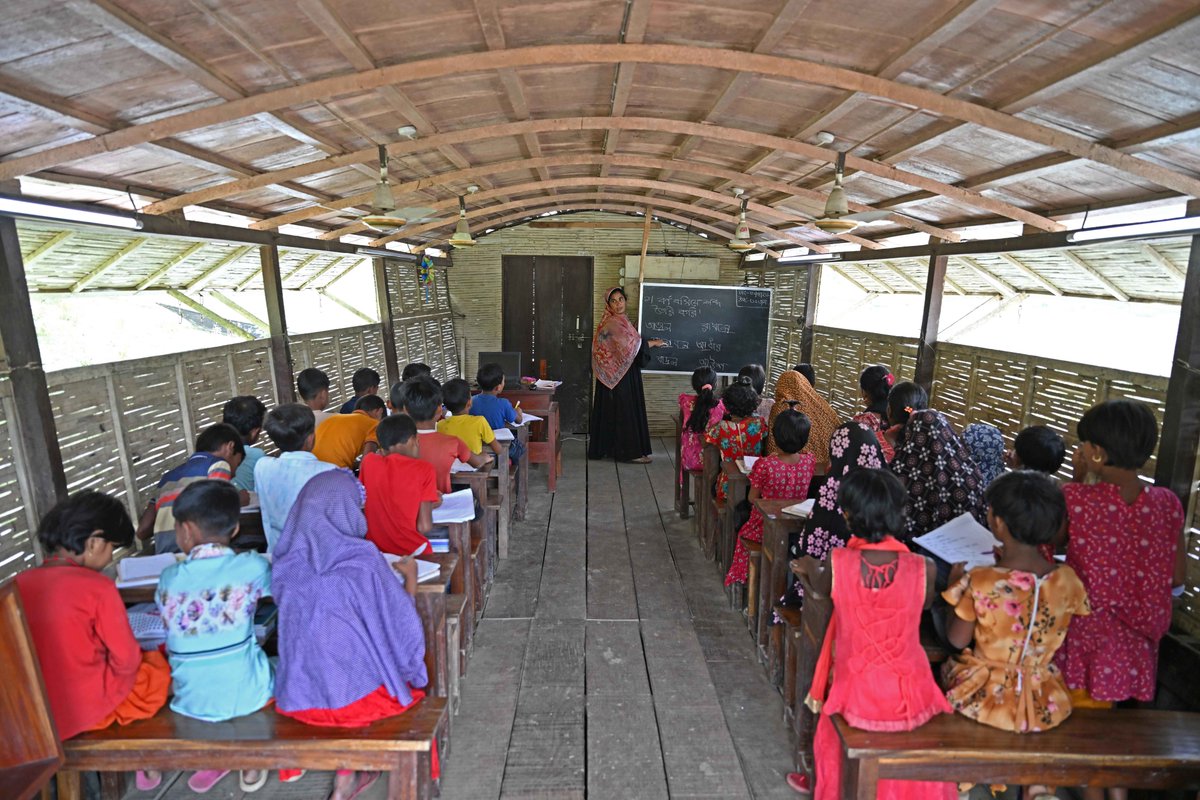
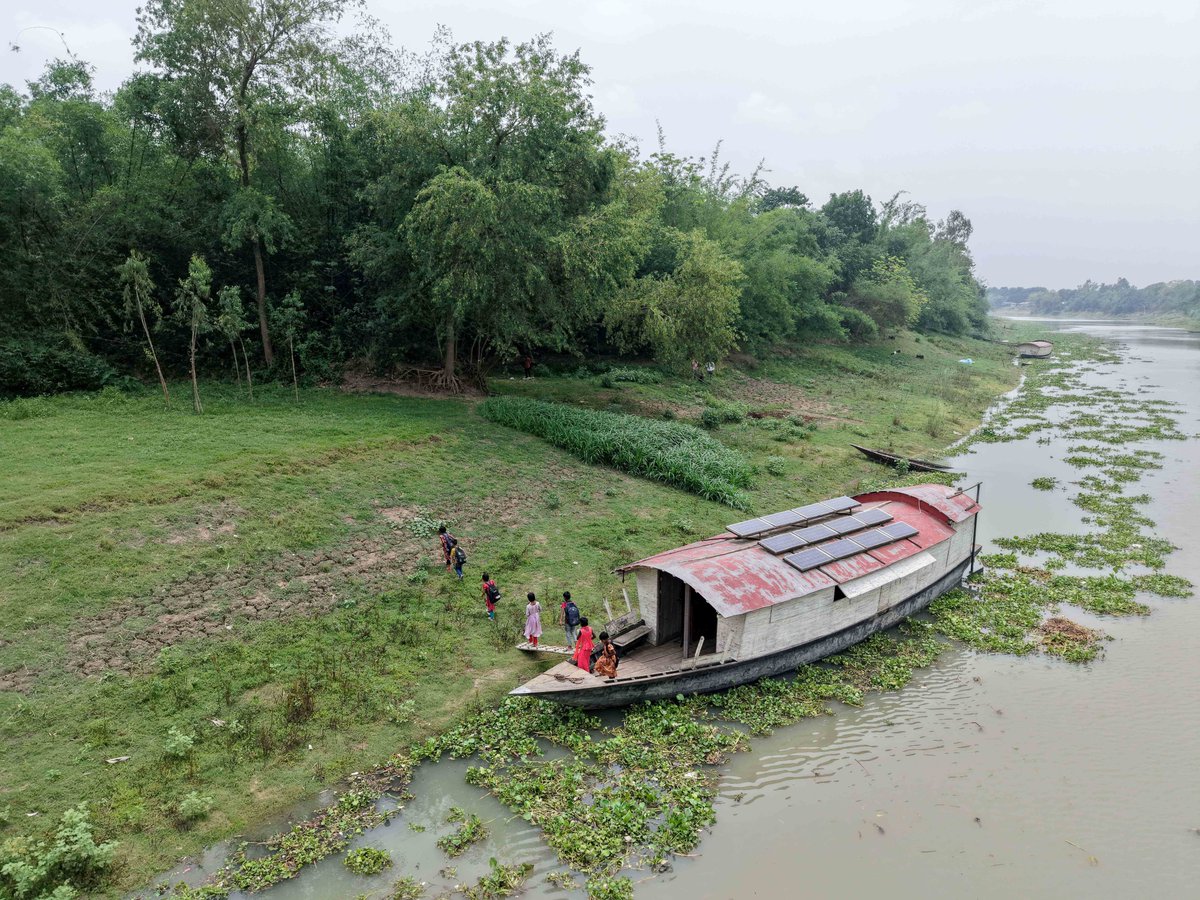
My latest story explores Bangladesh’s floating schools, where classrooms travel by boat to keep children learning during seasonal floods.
fairplanet.org/story/floatin…
#Bangladesh #ClimateAdaptation #Education #ClimateResilience
6

The 2022 floods demonstrated the scale of Pakistan's vulnerability to climate-related disasters. The challenge is not only responding to floods but building infrastructure capable of reducing future risks.
#ClimateAdaptation #DisasterManagement #Pakistan
stratheia.com/indus-water-sa…
6

Un giardino nel Sahara, acqua riciclata e agricoltura nel deserto. Il #NomadGarden è la nuova #Ispirazione di Anne-Claire Budin su Floraviva. ⌦ floraviva.it/ispirazioni/813… #Floraviva #NomadGarden #Sustainability #ClimateAdaptation #FoodSecurity #Landscape #Innovation
3

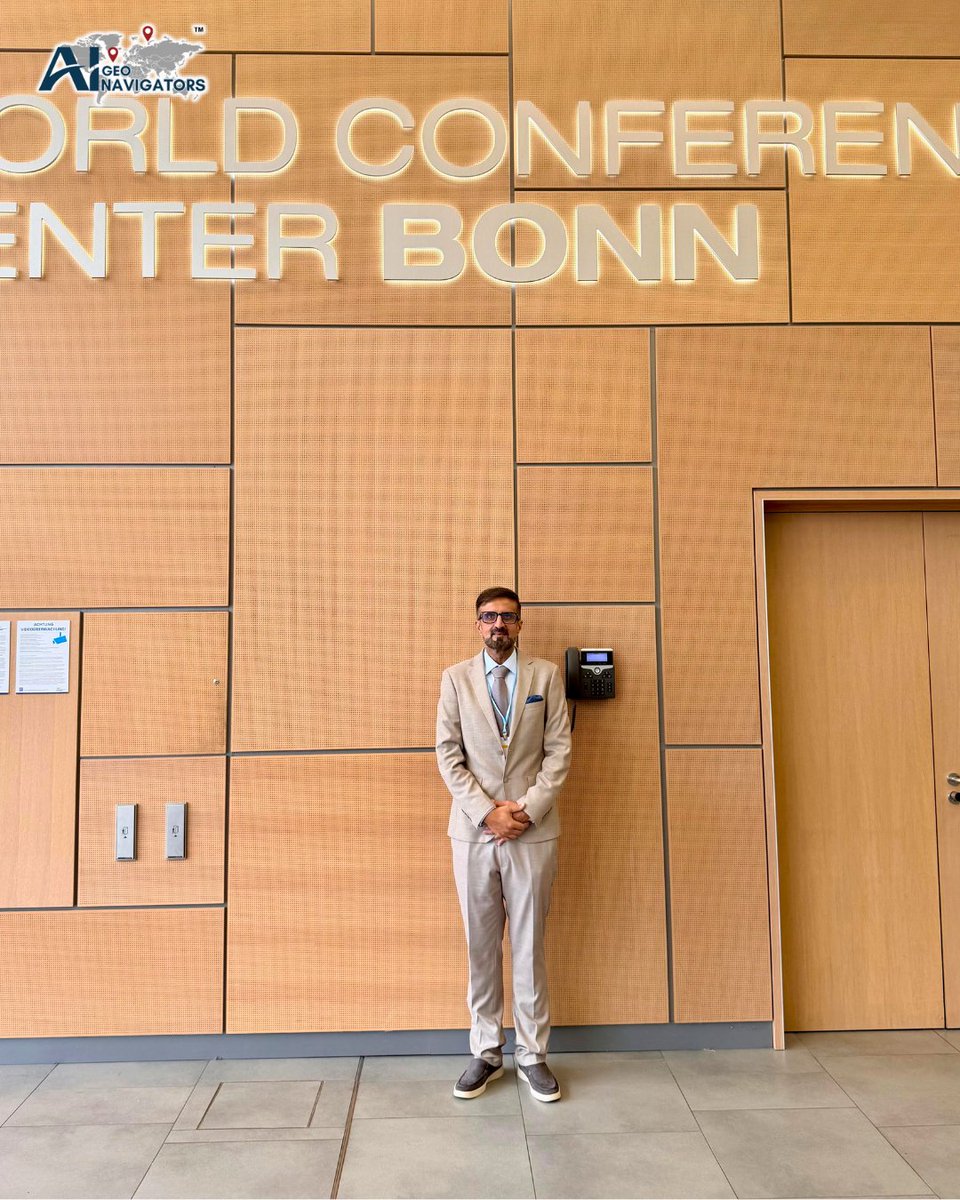
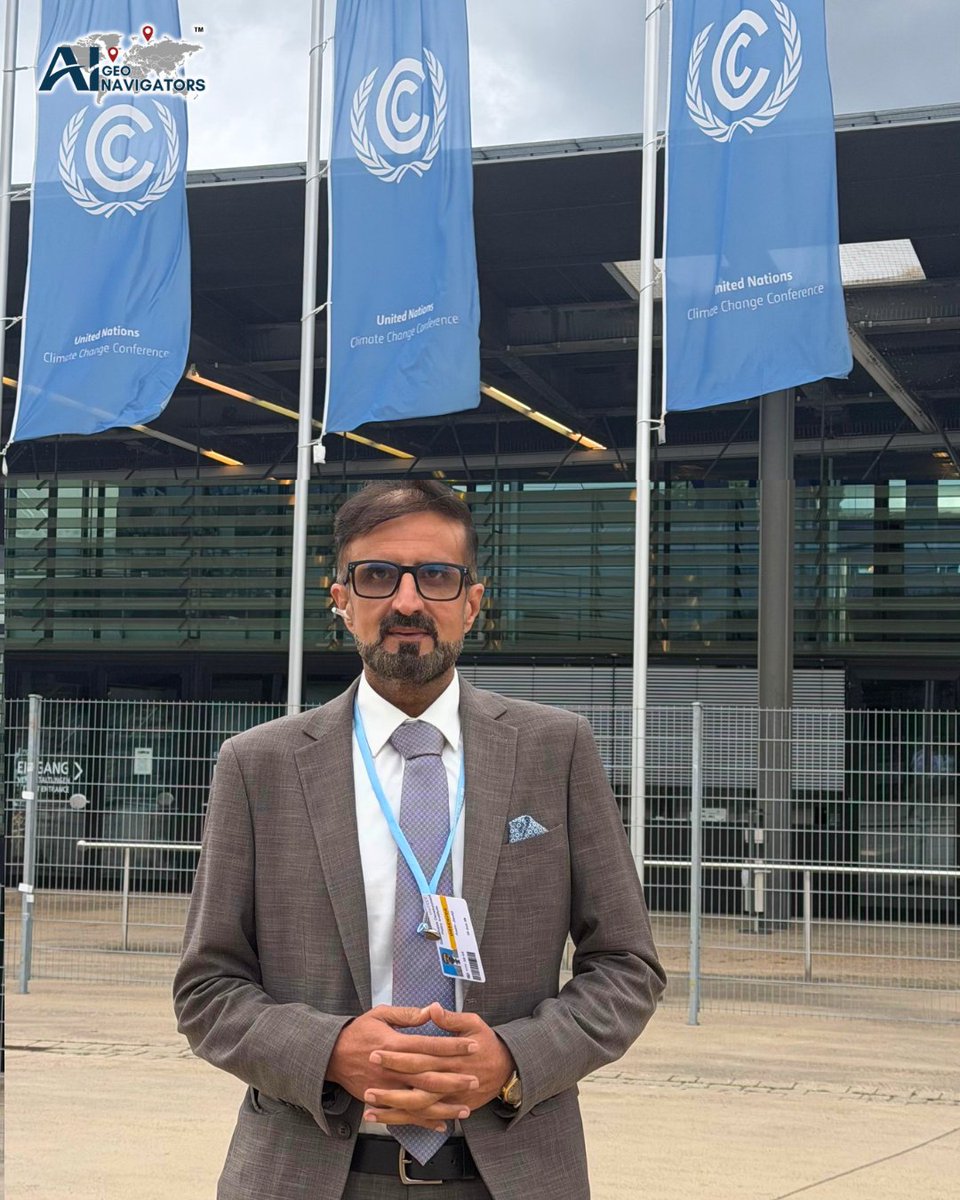
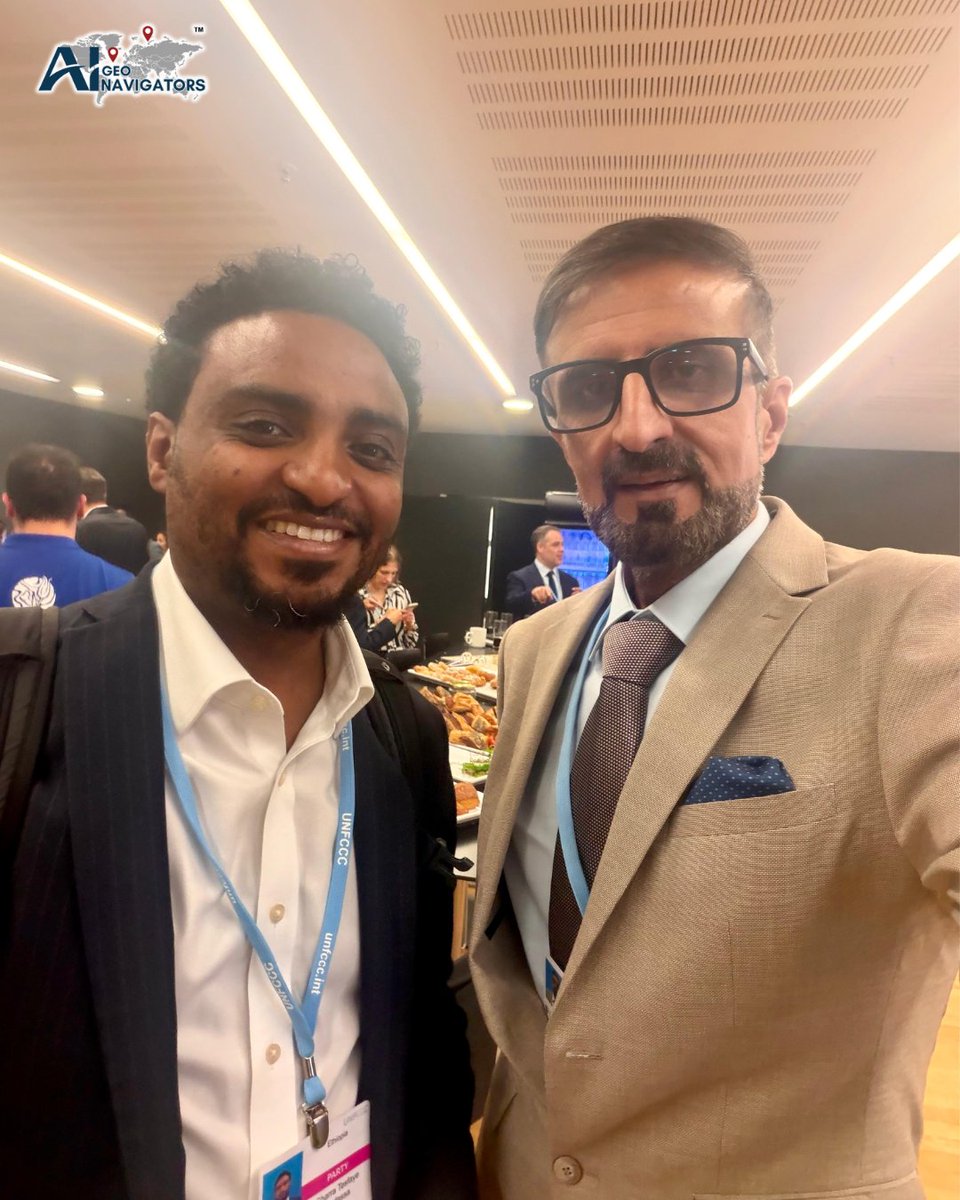
This week, AI Geo Navigators, CEO Asim Javid is in Bonn for SB64, the UN climate negotiations that sit halfway between COP30 in Belém and COP31 in Antalya.
The framing here is blunt: the ambition phase is over. Every corridor conversation comes back to the same question, how do we turn commitments into financeable, implementable action before 2030?
A few things standing out from the discussions:
Adaptation and early warning are finally getting airtime, not just lip service. The gap between "we have a warning system" and "the warning reaches the farmer in time" is where most countries are still losing. This is a challenge AI Geo Navigators works on every day, so it's encouraging to see it move closer to the centre of the table.
Climate finance and NDCs remain the hardest knot. The technical discussions are detailed and serious, but the political distance on who pays and how fast is still wide. Implementation is only as real as the money behind it.
Food systems are back on the agenda after the agriculture work stalled at COP30. For a country like Pakistan, where climate risk and food security are the same problem, this matters.
Just transition and capacity-building ran through nearly every session. The recurring theme: local communities and frontline practitioners need a real seat, not a consultation slot.
The negotiations close on 18 June, with decisions carried forward to Antalya. No conclusions yet but the direction is clear. The countries that win the next decade will be the ones that can operationalize climate intelligence, not just announce it.
We are pleased to see these conversations gaining momentum and look forward to following the outcomes as the road to COP31 continues.
@UNFCCC
@WMO
@UNDRR
@ClimateChangePK
@CANIntl
@AiGeoNavigators
#SB64 #ClimateAction #UNFCCC #ClimateAdaptation #EarlyWarning #ClimateFinance
32

HCTGS Deutschland v26. Can the North Sea Save Climate and Industry Even at 3°C?
618 TWh. 4.22 Mt green hydrogen. 30 Mm³ freshwater per day. 30 towers. 126% of Germany's electricity demand — continuously. That is what 3 HCTGS Clusters × 10 Towers deliver to Germany.
The controlled industrial vortex is not theoretical. It has been running since 2006 in the Mercedes-Benz Museum in Stuttgart — 144 tangential air outlets, a 34.4-metre artificial tornado, certified by German fire protection authorities.
Louis Michaud's Atmospheric Vortex Engine, funded by Peter Thiel's Breakout Labs, demonstrated the same principle in Canada. The physics is proven. The safety is proven. HCTGS scales it with steam at 1,500°C — and adds water, minerals, and hydrogen as simultaneous outputs.
Magnesium does not heat the water. Magnesium starts the process. The water's own thermodynamic potential sustains it. From 1,290 tonnes of Mg per tower per day: 2,140 tonnes of Sorel cement at EUR 800/t. From the concentrated MgCl₂ mother liquor left after sequential mineral crystallisation — CaSO₄, NaCl, KCl, MgSO₄, then MgCl₂ — electrolytic Mg metal at under USD 200/t. Two separate populations. No regeneration loop. No thermodynamic paradox.
The 600-metre tower height equals 60 bar hydrostatic pressure. Water distributes by gravity to every city, factory, and field within 400 kilometres — without a single pump. Municipal pumping consumes 10–30% of network electricity. HCTGS eliminates it structurally: 1.5–3 TWh/year never consumed. That is not a saving. It is energy that never needs to exist.
Green hydrogen: primary pathway thermochemical — Mg H₂O → MgO H₂ at 700–800°C, no electrical input consumed. Secondary pathway PEM electrolysis from ORC surplus. Internal cost: EUR 0.80–1.20/kg.
The architecture is a platform, not a factory. EUR 66.9 billion is park-wide annual value creation across all participants — co-investors, municipalities, bondholders, industrial tenants. The HCTGS consortium captures a negotiated share through offtake agreements. The rest flows to the partners. This is how Kalundborg works. The refinery sells steam. It does not own the pharmaceutical company's revenue.
The Mini-Pilot: EUR 10–15 million. Bundeswehr coastal ground. Accelerated military mandate. Operational within 18 months. In defence, second place is not a winning position.
The Hanseatic Architecture: Germany, France, Switzerland, Austria, Italy — parallel start. Each country begins when its own financing is secured. Prior art open under CC BY-NC-ND 4.0. The technology belongs to no single nation.
What 2025 decides, 2055 inherits.
DOI: doi.org/10.5281/zenodo.20672…
#Germany #NorthSea #Bavaria #Markus_Söder #HCTGS #GreenHydrogen #Infrastructure #Energiewende #ClimateAdaptation #PriorArt #Hanseatic
linkedin.com/pulse/hctgs-deu… via @LinkedIn
36
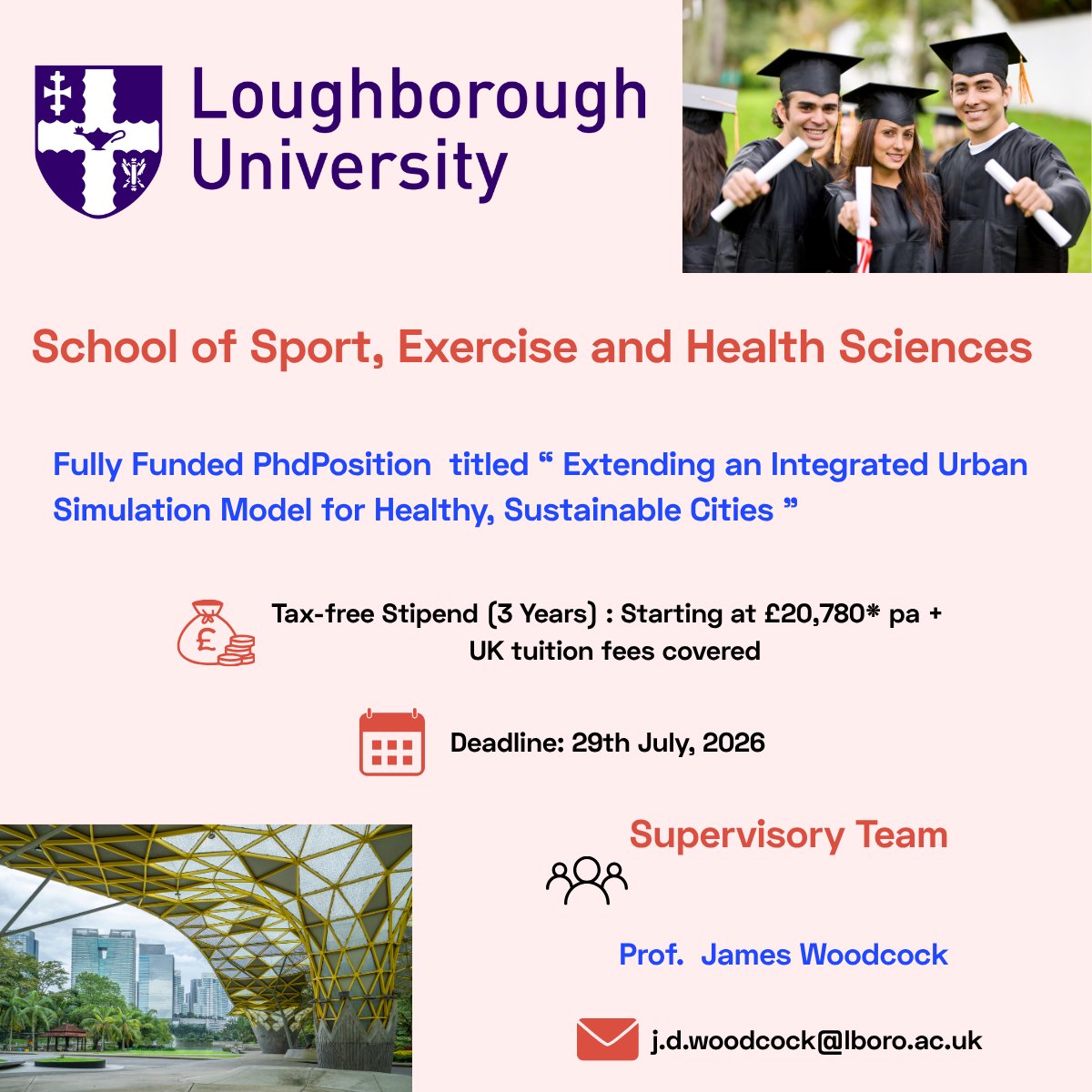
🎓 Fully Funded PhD in 𝗘𝘅𝘁𝗲𝗻𝗱𝗶𝗻𝗴 𝗮𝗻 𝗜𝗻𝘁𝗲𝗴𝗿𝗮𝘁𝗲𝗱 𝗨𝗿𝗯𝗮𝗻 𝗦𝗶𝗺𝘂𝗹𝗮𝘁𝗶𝗼𝗻 𝗠𝗼𝗱𝗲𝗹 𝗳𝗼𝗿 𝗛𝗲𝗮𝗹𝘁𝗵𝘆, 𝗦𝘂𝘀𝘁𝗮𝗶𝗻𝗮𝗯𝗹𝗲 𝗖𝗶𝘁𝗶𝗲𝘀 (United Kingdom 🇬🇧)
💶 Fully funded 3-year PhD studentship with a tax-free stipend of £20,780/year UK tuition fees covered
✅ Passionate about #SustainableCities #UrbanPlanning #ClimateAdaptation 🏙️🌍🚲
✅ Highly recommend this interdisciplinary #fullyfunded #PhDPosition across the Schools of Sport, Exercise and Health Sciences and Architecture, Building and Civil Engineering @lborouniversity 🇬🇧
📌 This #phdproject focuses on advancing one of the world's most sophisticated integrated urban simulation platforms to better understand how transport systems, urban environments, housing, and climate change influence health, sustainability, and social equity.
You’ll work on:
🔷 Extending the SILO–MITO-MATSim urban simulation framework to generate policy-relevant insights
🔷 Modelling climate adaptation challenges including extreme weather events, climate disruptions, and behavioural responses
🔷 Investigating decarbonisation pathways, electric vehicle adoption, and their impacts on households and public health
🔷 Analysing housing affordability, neighbourhood conditions, and health inequalities
🔷 Improving air quality, exposure modelling, and assessment of environmental health risks
🔷 Developing advanced activity-based and agent-based models to understand travel behaviour and urban dynamics
🌍 Contribute to healthier, more sustainable, and equitable cities by developing cutting-edge simulation tools that support evidence-based policymaking for transport, housing, climate adaptation, and public health.
✅ Work with Professor James Woodcock and collaborate with leading international partners including TU Munich, TU Graz, Utrecht University, ISGlobal Barcelona, and TU Berlin
⏰ 𝗗𝗲𝗮𝗱𝗹𝗶𝗻𝗲: 𝟮𝟵𝘁𝗵 𝗝𝘂𝗹𝘆, 𝟮𝟬𝟮𝟲
👉 Full details & apply here:
🔗phdscanner.com/opportunities…
📩 Want more like this?
➕ Follow @PhdScanner and join WhatsApp for updates:
whatsapp.com/channel/0029Vb5…
🌐 Visit: phdscanner.com
#fullyfundedPhD #PhDposition #PhDScanner #LoughboroughUniversity #UnitedKingdom #SustainableCities #UrbanPlanning #ClimateAdaptation #TransportModelling #HealthyCities #UrbanSimulation #PublicHealth #ResearchOpportunity
♻️ Share with someone applying this cycle
4
157

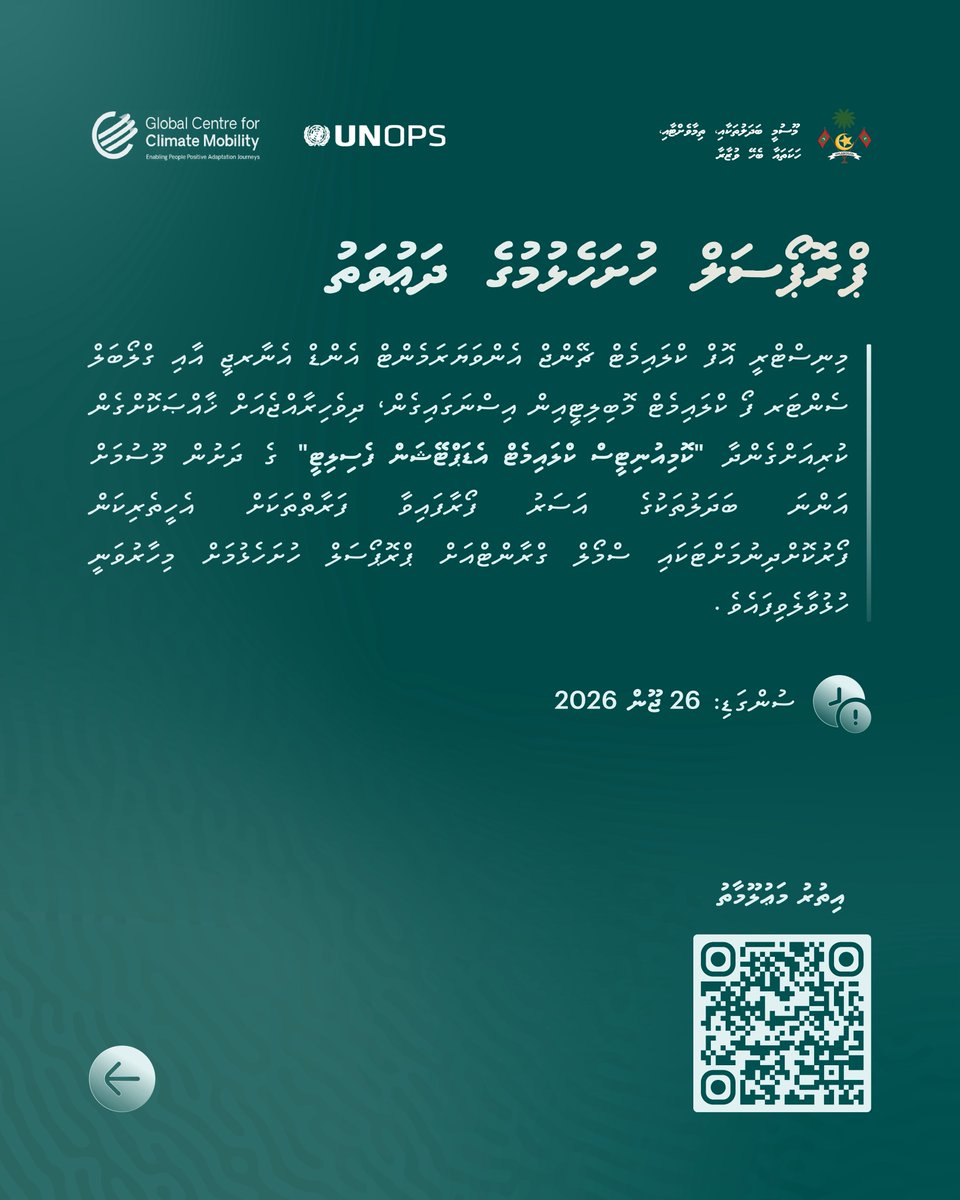
The Community Climate Adaptation Fund (CCAF) is now accepting proposals to support vulnerable populations affected by climate change.
More Information: ungm.org/Public/Notice/30343…
#ClimateAdaptation #CommunityResilience #CCAF #ClimateAction
12
9
396

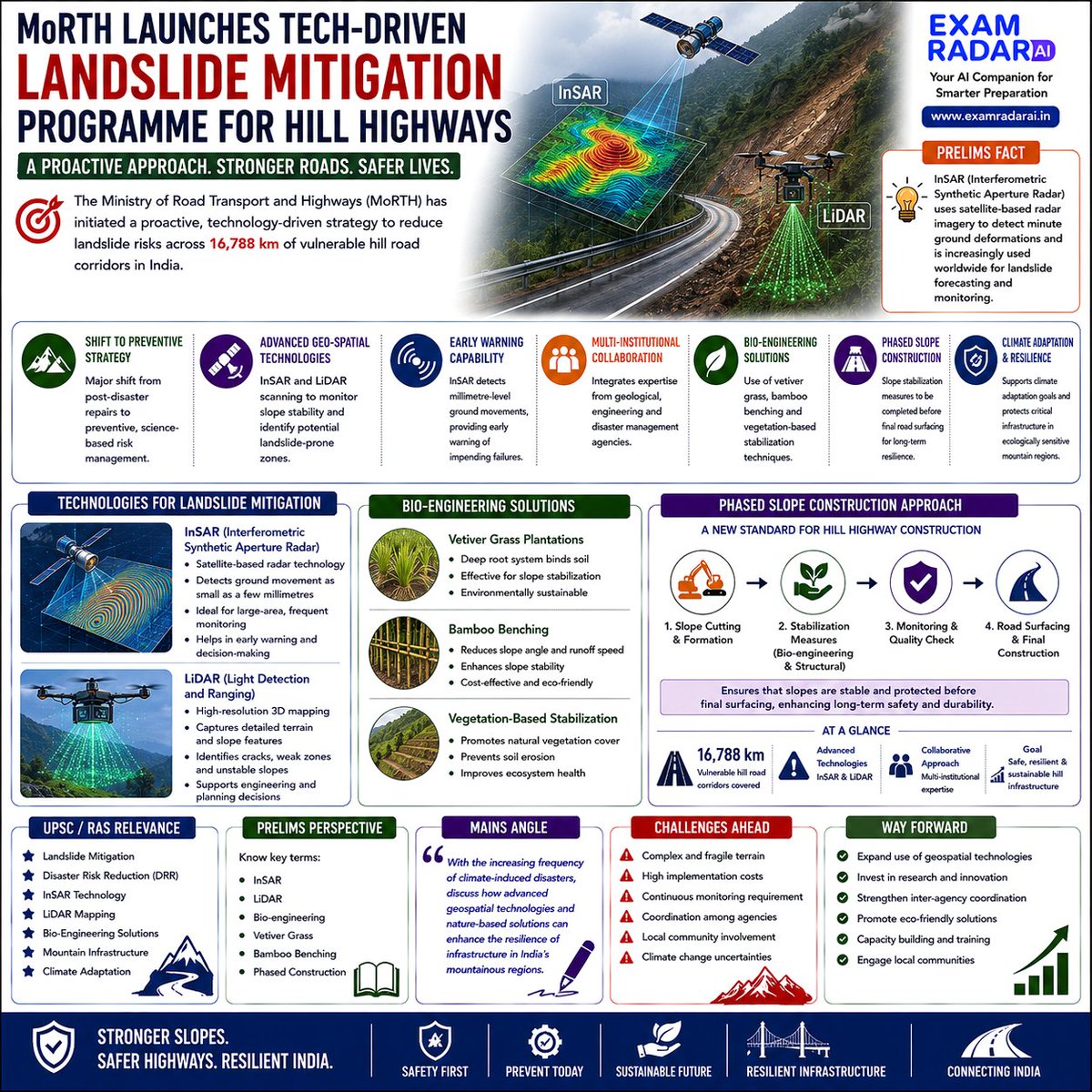
⛰️ MoRTH LAUNCHES TECH-DRIVEN LANDSLIDE MITIGATION PROGRAMME FOR HILL HIGHWAYS
The Ministry of Road Transport and Highways (MoRTH) has initiated a proactive, technology-driven strategy to reduce landslide risks across 16,788 km of vulnerable hill road corridors in India.
📌 The initiative marks a major shift from post-disaster repairs to preventive, science-based disaster risk management.
📌 Advanced geospatial technologies such as InSAR (Interferometric Synthetic Aperture Radar) and LiDAR scanning will be deployed to monitor slope stability and identify potential landslide-prone zones.
📌 InSAR technology can detect millimetre-level ground movements, providing early warning signals of impending slope failures.
📌 The programme integrates expertise from multiple institutions, including geological, engineering, and disaster management agencies.
📌 MoRTH is also promoting bio-engineering solutions, including vetiver grass plantations, bamboo benching, and vegetation-based slope stabilization techniques.
📌 A new phased slope construction approach will ensure that slope stabilization measures are completed before final road surfacing, enhancing long-term infrastructure resilience.
📌 The initiative supports climate adaptation goals and aims to protect critical transportation infrastructure in ecologically sensitive mountain regions.
🎯 UPSC/RAS Relevance:
• Landslide Mitigation
• Disaster Risk Reduction (DRR)
• InSAR Technology
• LiDAR Mapping
• Bio-Engineering Solutions
• Mountain Infrastructure
• Climate Adaptation
💡 Prelims Fact:
InSAR (Interferometric Synthetic Aperture Radar) uses satellite-based radar imagery to detect minute ground deformations and is increasingly used worldwide for landslide forecasting and monitoring.
📝 Mains Angle:
"With the increasing frequency of climate-induced disasters, discuss how advanced geospatial technologies and nature-based solutions can enhance the resilience of infrastructure in India's mountainous regions."
#UPSC #RAS #CurrentAffairs #MoRTH #Landslides #DisasterManagement #InSAR #LiDAR #ClimateAdaptation #Infrastructure #GS1 #GS3 #ExamRadarAI
1
21
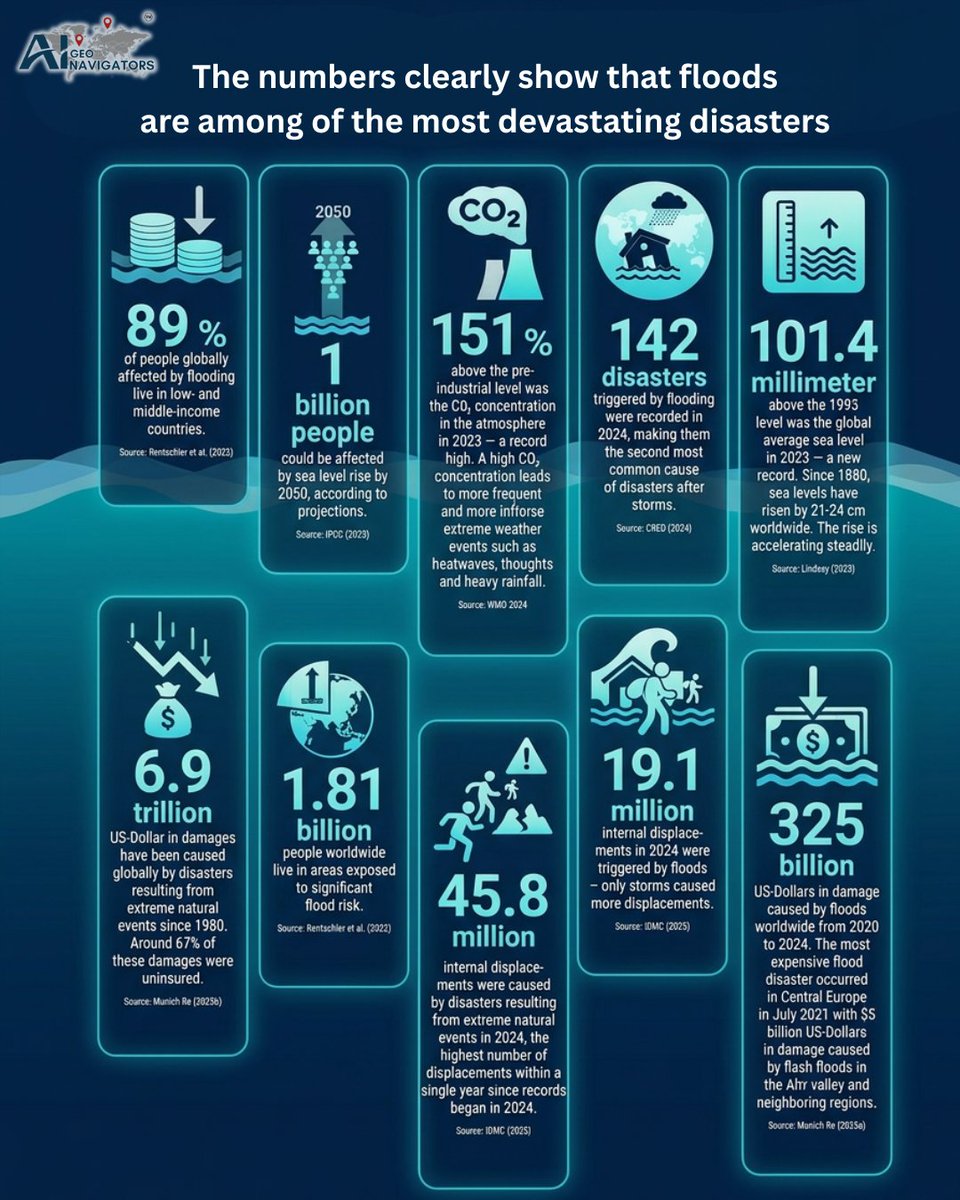
Floods are becoming one of the biggest risks facing communities, cities, and infrastructure.
The numbers are hard to ignore.
In 2024, floods triggered 142 disasters worldwide, making them the second-most common disaster after storms.
Between 2020 and 2024, flood-related damage reached more than US$325 billion.
And by 2050, up to 1 billion people could be affected by sea level rise.
These are not just environmental numbers. They are human, economic, and planning challenges.
Reducing flood risk means acting earlier, planning smarter, and using better data to understand where people, assets, and infrastructure are most exposed.
AI, geospatial intelligence, early warning systems, local knowledge, and nature-based solutions all have a role to play.
Floods cannot always be prevented, but their impact can be reduced.
Now is the time to turn risk data into real action.
What steps is your city, organization, or community taking to prepare for future flood risk?
@UNDRR
@WMO
@NASAEarth
@UNFCCC
@AiGeoNavigators
#FloodRisk #ClimateResilience #DisasterRiskReduction #GeospatialIntelligence #EarlyWarningSystems #ClimateAdaptation #UrbanResilience #NatureBasedSolutions #RiskManagement #SustainableCities #ClimateAction #GIS #RemoteSensing #DataForGood #ResilientInfrastructure
9
Jun 13
India’s coastal economies drive trade, fisheries, and livelihoods—but they are increasingly vulnerable to sea-level rise and extreme weather. A new coastal urbanism is urgently needed: @dddorf or-f.org/39037 #CoastalCities #ClimateChange #ClimateAdaptation
116

Jun 13
Yesterday’s thunderstorm is an indication of Climate Change. Branches of Dukhbhanjani Beri fell down and people were plucking leaves from it. The need of the hour is to preserve our ancient and holy trees. We need to understand that reverence is preserving and protecting not just our sacred trees and beris but also to propagate our native species of trees that are becoming extinct. #Punjab#climatechangeawareness #ClimateAdaptation #Respect
6
24
94
3,166

Jun 12
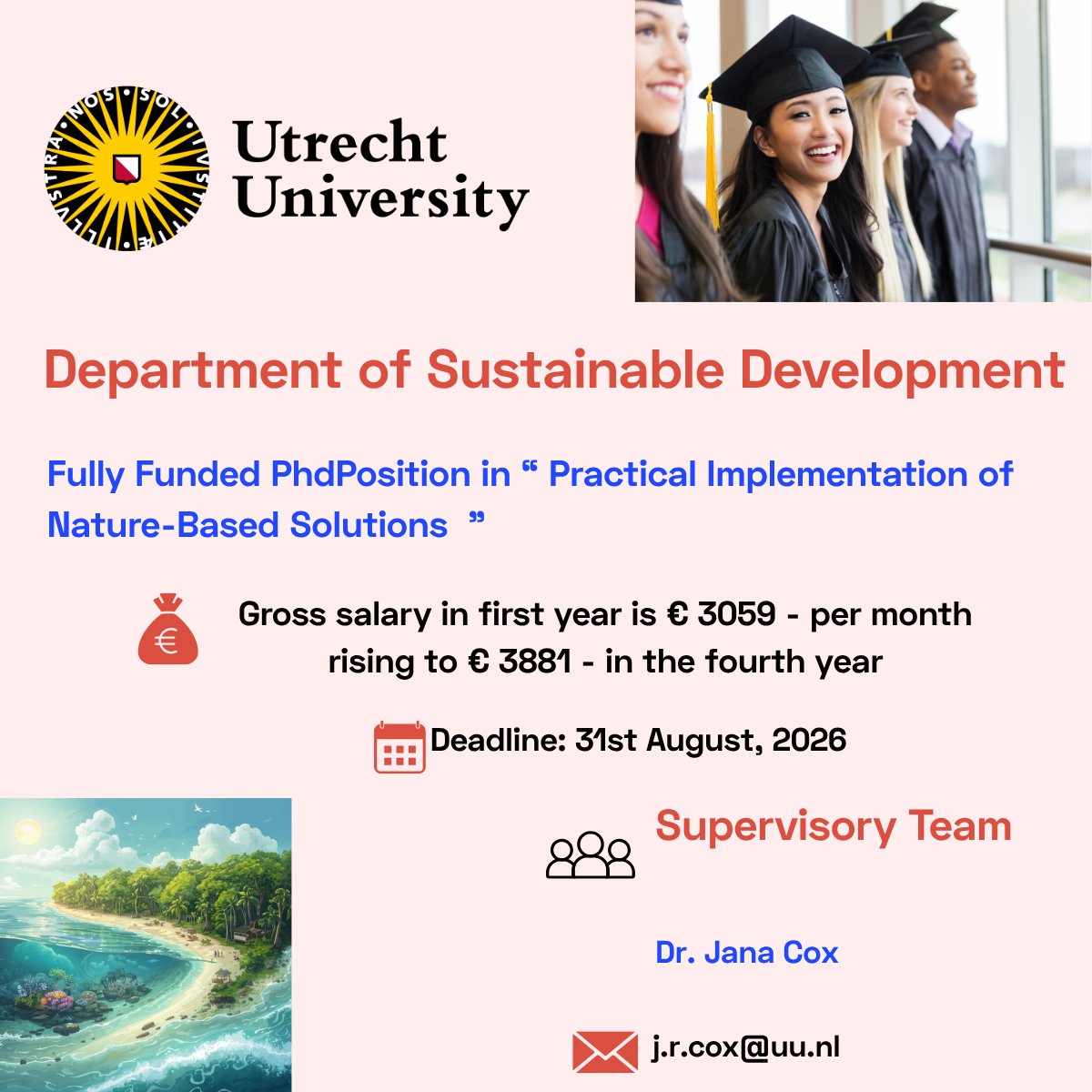
🎓 Fully Funded PhD in 𝗣𝗿𝗮𝗰𝘁𝗶𝗰𝗮𝗹 𝗜𝗺𝗽𝗹𝗲𝗺𝗲𝗻𝘁𝗮𝘁𝗶𝗼𝗻 𝗼𝗳 𝗡𝗮𝘁𝘂𝗿𝗲-𝗕𝗮𝘀𝗲𝗱 𝗦𝗼𝗹𝘂𝘁𝗶𝗼𝗻𝘀 (Netherlands 🇳🇱)
💶 Fully funded 4-year PhD with a salary ranging from €3,059 – €3,881/month excellent benefits
✅ Passionate about #NatureBasedSolutions #ClimateAdaptation #CoastalResilience 🌊🌱🌍
✅ Highly recommend this interdisciplinary #fullyfunded #PhDPosition within the Department of Sustainable Development @UniUtrecht 🇳🇱
📌 This #phdproject focuses on addressing the practical challenges of implementing sediment-based nature-based solutions (NbS) to create climate-resilient coastal zones capable of adapting to sea-level rise, land subsidence, and increasing flood risks.
You’ll work on:
🔷 Investigating sediment delivery processes and spatial patterns of sedimentation in coastal nature-based solutions
🔷 Assessing sediment quality, including the accumulation of microplastics and heavy metals, and implications for habitat development and land use
🔷 Evaluating how salt marshes, tidal mudflats, and retention basins interact with existing flood protection infrastructure
🔷 Studying the role of extreme events and storm-driven sediment transport in long-term coastal land building
🔷 Conducting fieldwork, laboratory analyses, GIS mapping, and experiments using Utrecht University's world-renowned Metronome tidal flume
🔷 Working with stakeholders and citizen science initiatives to assess the social acceptance and real-world feasibility of nature-based solutions
🌍 Contribute to creating more resilient coastal landscapes by advancing nature-based approaches that simultaneously enhance climate adaptation, biodiversity, flood protection, and sustainable land management.
✅ Work with Dr. Jana Cox and researchers from the Faculty of Geosciences, in collaboration with the Delta Climate Center and Delta-Enigma partners
⏰ 𝗗𝗲𝗮𝗱𝗹𝗶𝗻𝗲: 𝟯𝟭𝘀𝘁 𝗔𝘂𝗴𝘂𝘀𝘁, 𝟮𝟬𝟮𝟲
👉 Full details & apply here:
🔗 phdscanner.com/opportunities…
📩 Want more like this?
➕ Follow @PhDScanner and join WhatsApp for updates:
whatsapp.com/channel/0029Vb5…
🌐 Visit: phdscanner.com
#fullyfundedPhD #PhDposition #PhDScanner #UtrechtUniversity #Netherlands #NatureBasedSolutions #ClimateAdaptation #CoastalResilience #Sustainability #EnvironmentalScience #ClimateChange #FloodRiskManagement #ResearchOpportunity
@phdhardtalk
♻️ Share with someone applying this cycle
1
1
4
400

Jun 12
When Markets Tremble, the Garden Becomes Strategy
Video: Tips to grow garlic in water bottles, get lots of roots and quickly harvest youtu.be/S0Uq3I7cej8?is=WbWQ… via @YouTube
The global economy is entering a period of profound uncertainty. Inflation, supply chain disruptions, geopolitical tensions, climate change, and rising debt are all placing unprecedented pressure on food systems. History reminds us that food crises rarely arrive without warning—they build gradually until they become impossible to ignore.
Perhaps it is time to ask ourselves a simple but strategic question:
Are you ready to experience home gardening?
Home gardening is no longer just a hobby. It is becoming an act of resilience.
Every tomato, onion, pepper, herb, or fruit grown at home reduces dependence on fragile global markets while strengthening household food security. More importantly, it reconnects us with the land, teaches our children self-reliance, and preserves knowledge that many societies are slowly losing.
We may not prevent every economic shock, but we can prepare for it.
Let’s farm what we eat before necessity forces us to. Food sovereignty begins one garden at a time.
The best time to plant a tree was years ago. The second-best time is today. The same applies to growing our own food.
#HomeGardening #FoodSecurity #FoodSovereignty #Resilience #SustainableLiving #ClimateAdaptation #Agriculture #EconomicResilience #GrowYourOwnFood #Africa #GlobalHealth, @SonkoOfficiel , @assembleesn , @PrimatureSN , @GouvernementSN , @DissiOfficial , @azidama1963 , @abass_djigo , @FatimaNdiathie , @Sachachaw , @Awah_Juuf , @don_vi_corleon , @Cisse_Maps , @congaanel , @mamdpap , @albadaradi , @Mabouba_Diagne_ , @LayeSeckSeckFCB , @elmaalignjaay
3
2
209

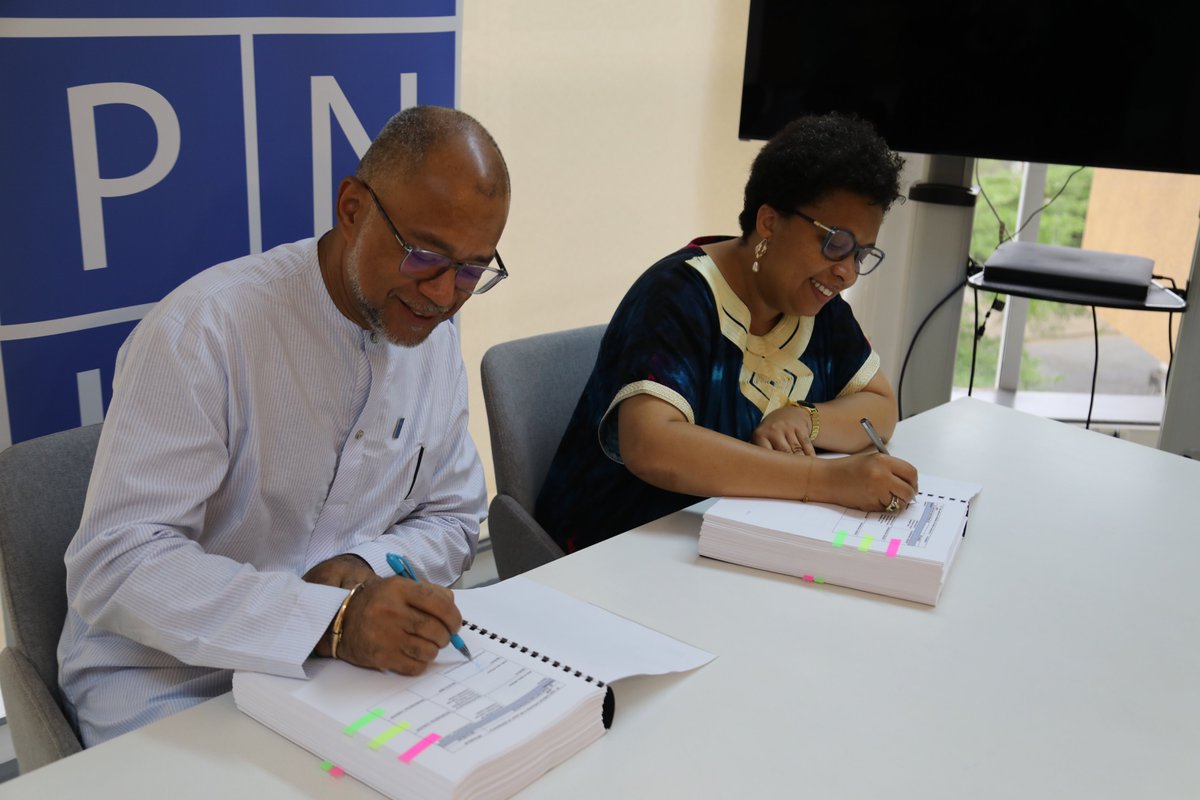
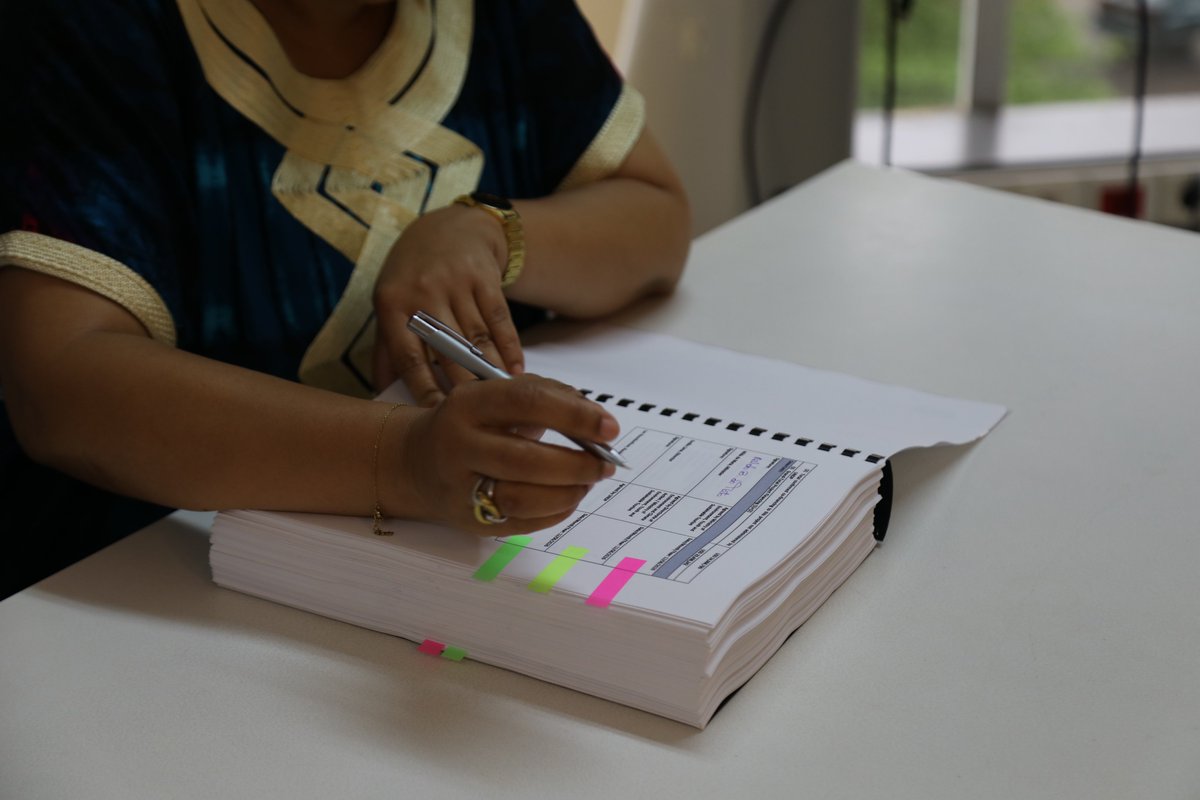
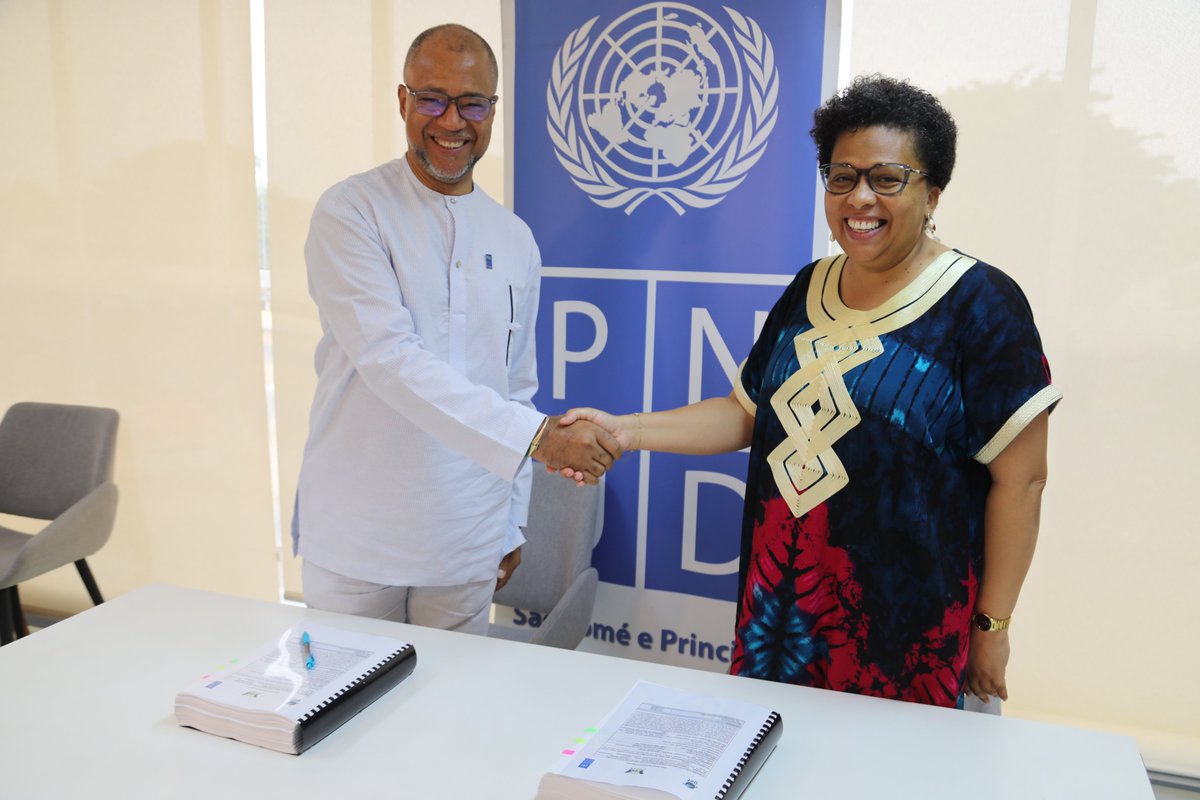
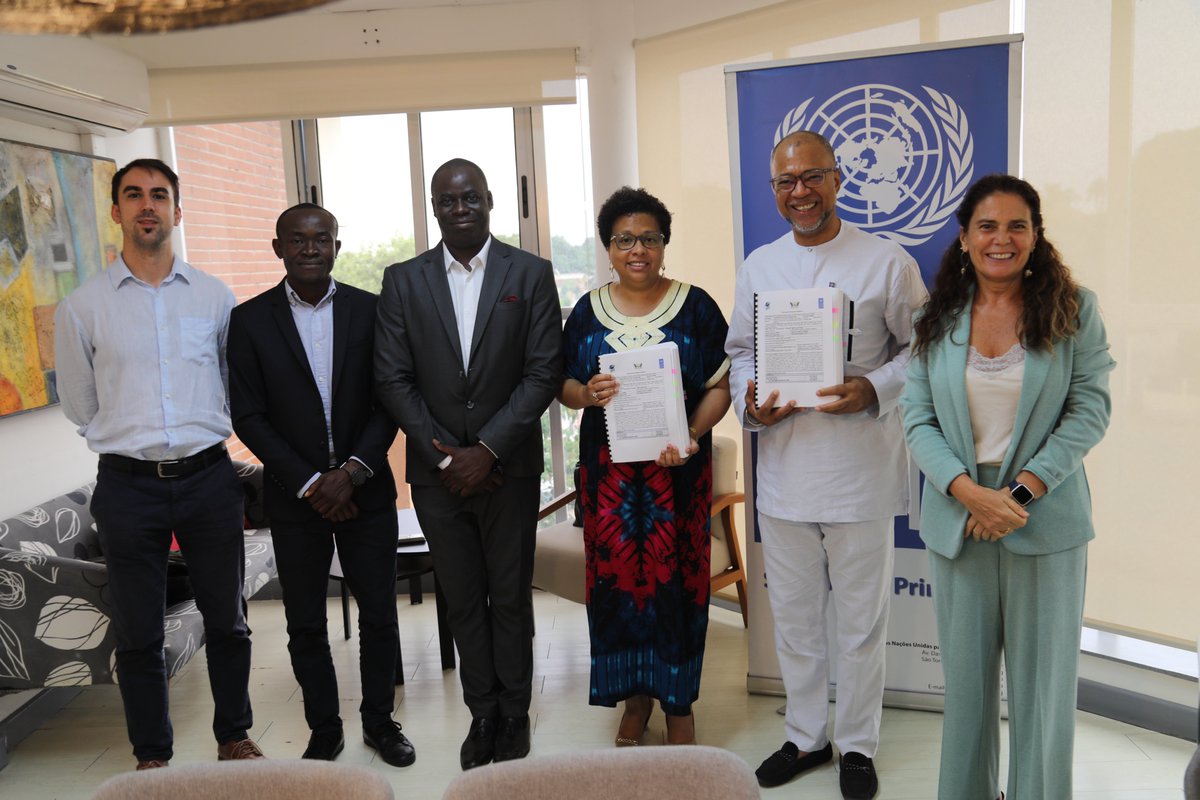
🇸🇹 São Tomé and Príncipe, #UNDP & #GEF have officially launched a new project to strengthen flood resilience and #watersecurity. The initiative will support #climateadaptation, watershed restoration, improved drainage systems & stronger institutional capacities. #ClimateAction🌍
3
40

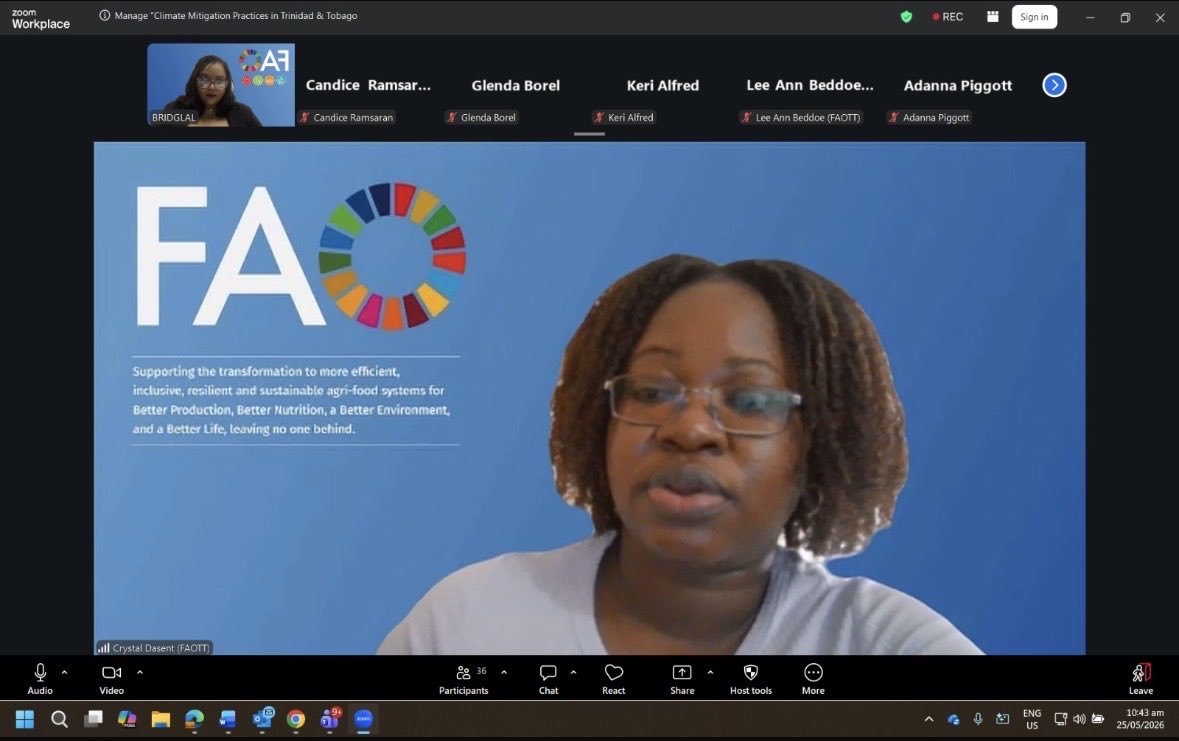
At a recent online stakeholder engagement workshop, Crystal Dasent, Lead Technical Specialist on FAO's @theGCF-funded project on #ClimateAdaptation systems for the TT 🇹🇹 Agriculture Sector, presented an overview of the project goals and outcomes. #climatesmart #agrifoodsystems
11

In my article @Diplomat_APAC on" #ClimateChange and the Future of #Central Asia- #SouthAsia #Connectivity", I argue for the need of joint #climateadaptation strategies #India #Uzbekstan #Termezdialogue #TAPI #IPI #Agriculture #trade @ISRS @Mantraya_Org
thediplomat.com/2026/06/clim…
64

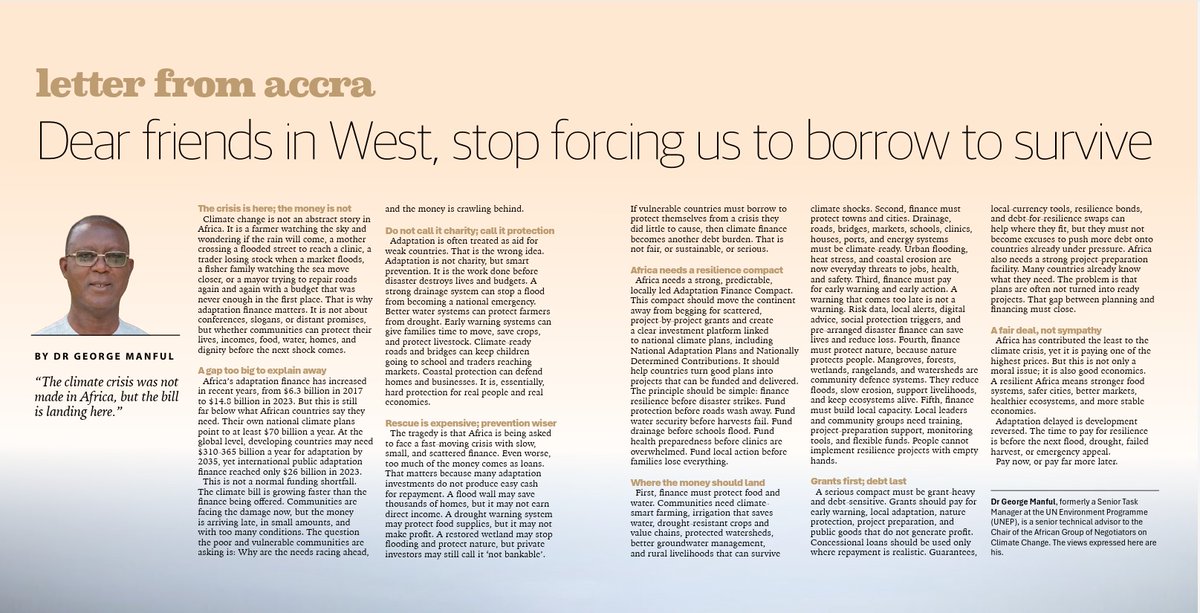
Bonn Climate Talks: Stop forcing us to borrow to survive - Dr George Manful
In his ‘‘Letter from Accra’’, Dr George Manful says the climate bill is growing faster for Africa than the resources being offered.
‘‘Why are the needs racing ahead, and the money crawling behind?’’ he asks in this analysis on #climateadaptation that's part of the latest edition of our newsletter “Shifting Power Quarterly”.
READ AND DOWNLOAD. Link on profile ➡️
#ClimateFinance #SB64
2
5
128

Jun 12
JCI ASPAC Niigata is full of energy!
📢 Venue change for tomorrow's AP-PLAT session:
Toki Messe International Conference Room
We look forward to seeing everyone there!
#JCIASPAC #ClimateAdaptation #APPLAT

2
409

Jun 12
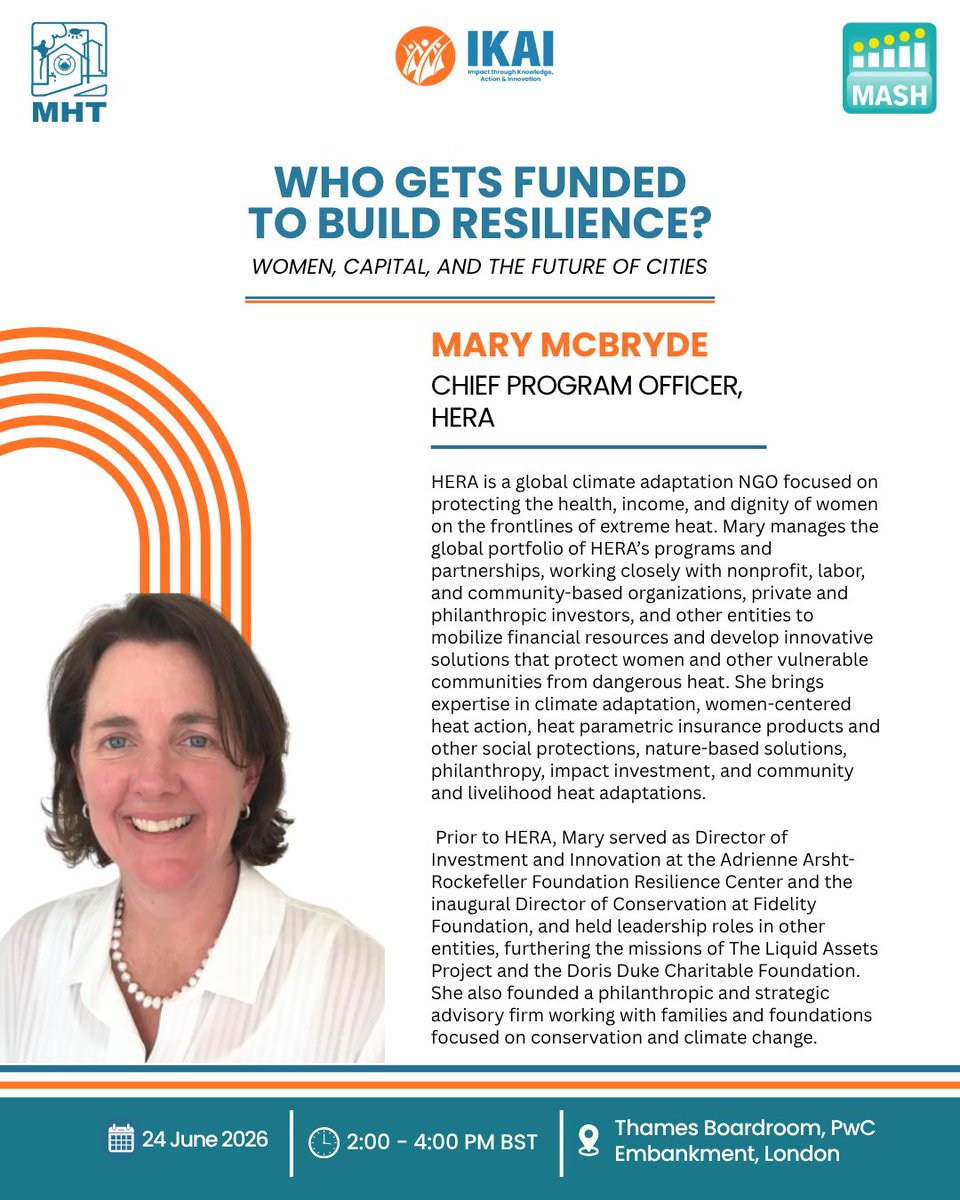
Meet the Speaker: Mary McBryde
Extreme heat is one of the fastest growing climate threats in the world. Mary McBryde has made it her life's work to protect the women bearing that burden most.
As Chief Program Officer at HERA , a global climate adaptation NGO focused on protecting the health, income, and dignity of women on the frontlines of extreme heat, Mary manages a global portfolio of programmes and partnerships. She brings deep expertise in women-centred #heataction, heat #parametricinsurance, #naturebased solutions, and community adaptation, working with philanthropic investors, labour organisations, and community-based partners to mobilise resources and develop solutions where they are needed most.
Who Gets Funded to Build Resilience? Women, Capital, and the Future of Cities.
Join the Conversation!
🗓 24 June 2026 | 2:00 to 4:00 PM BST |
📍 Thames Boardroom, PwC Embankment, London
#LCAW2026 #ClimateAdaptation #WomenAndClimate #HeatResilience #ClimateFinance #BeyondResilience #LondonClimateweek @Bijalb_15 @MASH_Project @mainas
18