
12 Aug 2025
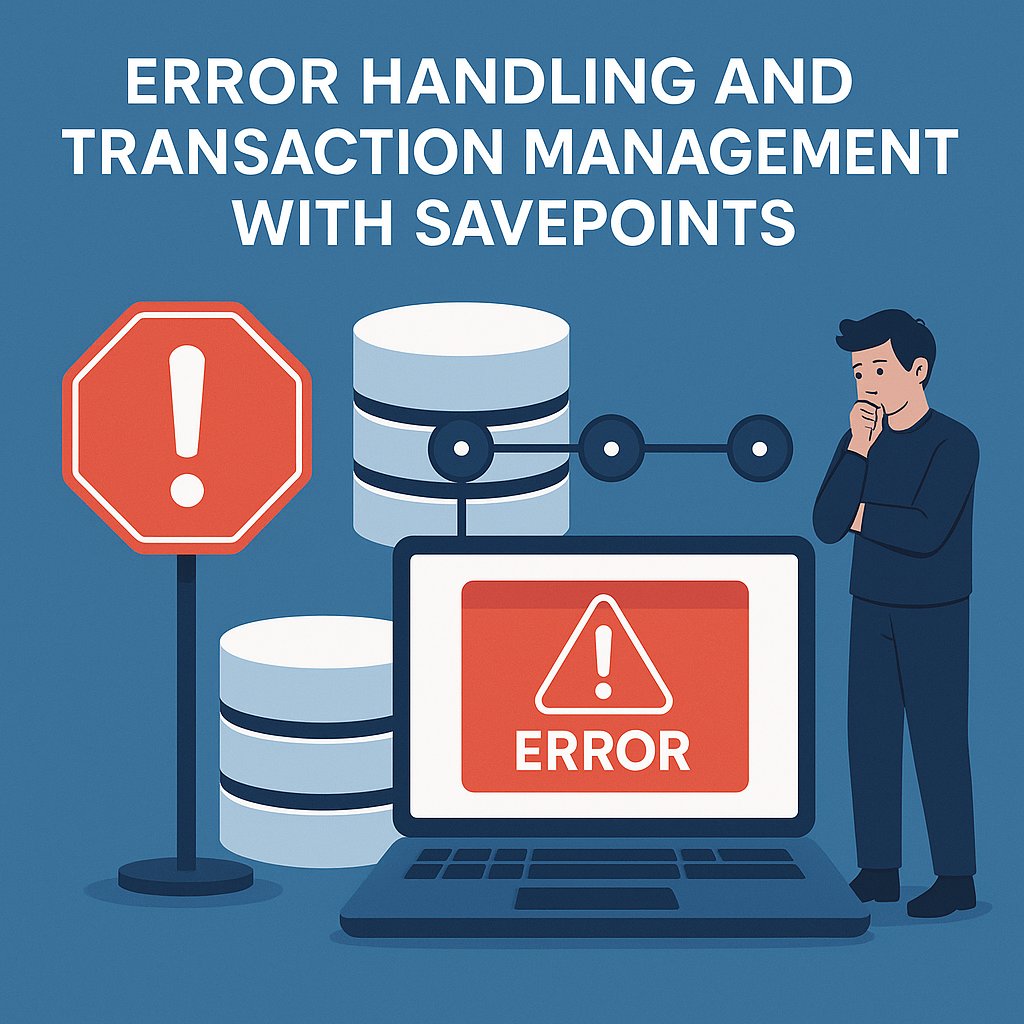
𝐓𝐫𝐚𝐧𝐬𝐚𝐜𝐭𝐢𝐨𝐧 𝐌𝐚𝐧𝐚𝐠𝐞𝐦𝐞𝐧𝐭 𝐓𝐡𝐚𝐭 𝐒𝐚𝐯𝐞𝐬 𝐌𝐢𝐥𝐥𝐢𝐨𝐧𝐬
🧠 Implement smart error handling with TRY…CATCH
🛠 Recover without losing it all using savepoints
📊 Build resilient, scalable enterprise systems
🔐 Protect mission-critical data like a vault
🏅 Follow techniques trusted by top developers
📖 𝐋𝐞𝐚𝐫𝐧 𝐭𝐡𝐞 𝐦𝐞𝐭𝐡𝐨𝐝 👉 c-sharpcorner.com/article/ma…
#EnterpriseSolutions #SQLBestPractices #DataIntegrity #CSharpCorner #SQL #SQLServer #DatabaseTips #ErrorHandling #DataSecurity
3
8
2,880
12 Aug 2025
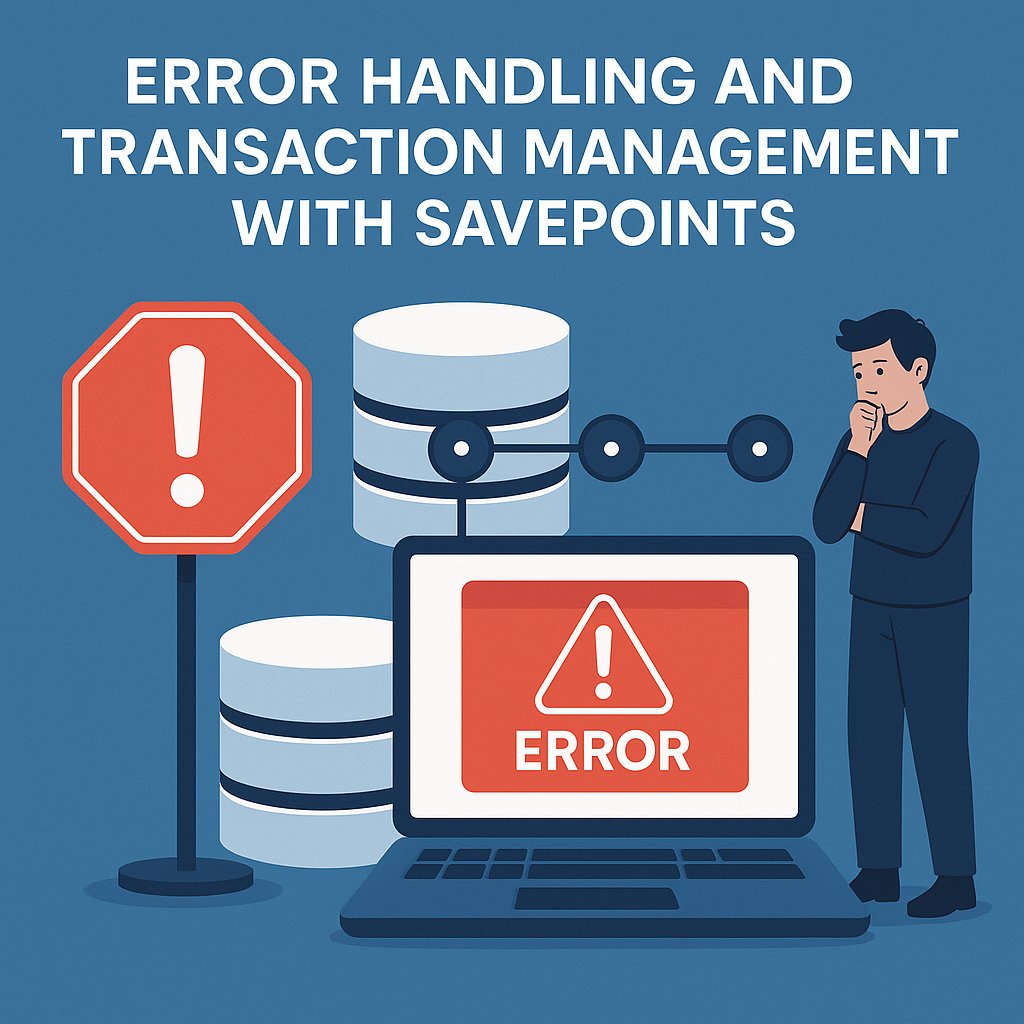
𝐓𝐫𝐚𝐧𝐬𝐚𝐜𝐭𝐢𝐨𝐧 𝐌𝐚𝐧𝐚𝐠𝐞𝐦𝐞𝐧𝐭 𝐓𝐡𝐚𝐭 𝐒𝐚𝐯𝐞𝐬 𝐌𝐢𝐥𝐥𝐢𝐨𝐧𝐬
🧠 Implement smart error handling with TRY…CATCH
🛠 Recover without losing it all using savepoints
📊 Build resilient, scalable enterprise systems
🔐 Protect mission-critical data like a vault
🏅 Follow techniques trusted by top developers
📖 𝐋𝐞𝐚𝐫𝐧 𝐭𝐡𝐞 𝐦𝐞𝐭𝐡𝐨𝐝 👉 c-sharpcorner.com/article/ma…
#EnterpriseSolutions #SQLBestPractices #DataIntegrity #CSharpCorner #SQL #SQLServer #DatabaseTips #ErrorHandling #DataSecurity
2
5
1,513
12 Aug 2025
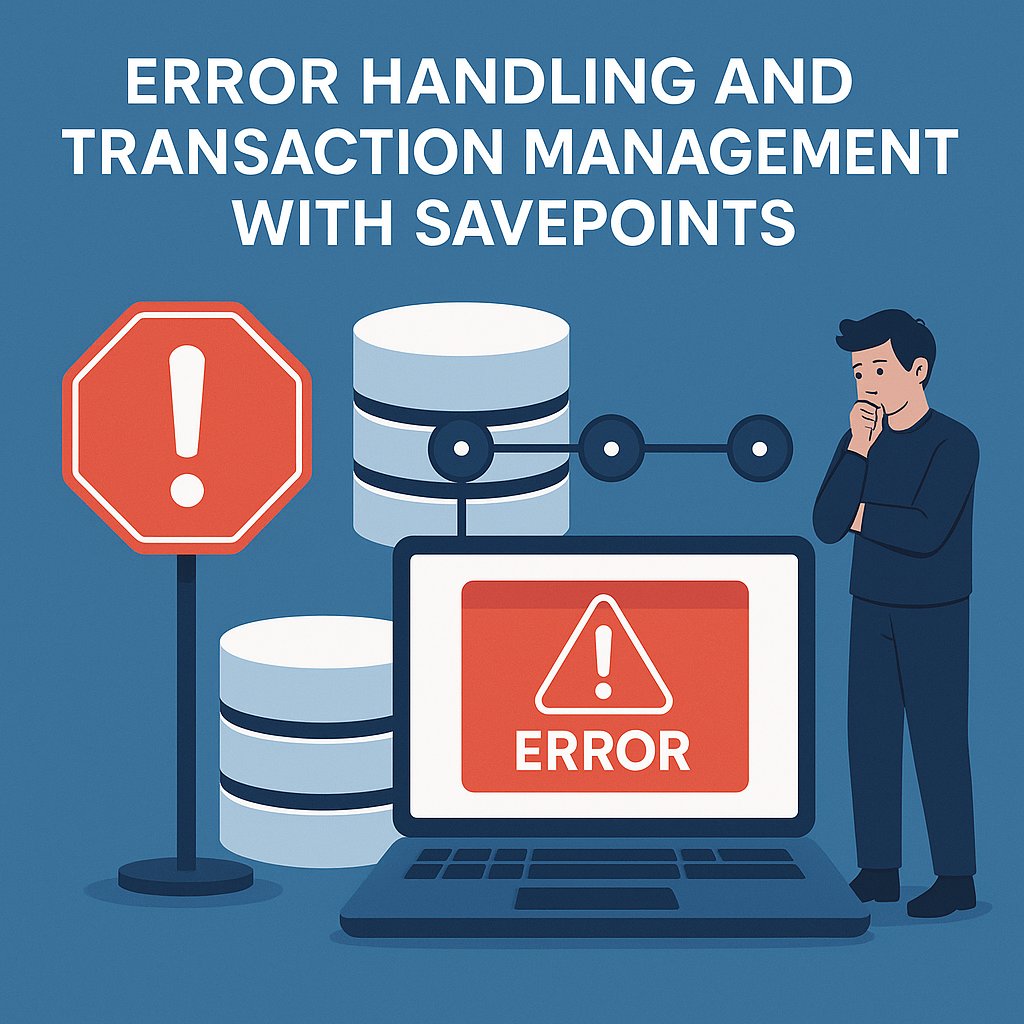
𝐓𝐫𝐚𝐧𝐬𝐚𝐜𝐭𝐢𝐨𝐧 𝐌𝐚𝐧𝐚𝐠𝐞𝐦𝐞𝐧𝐭 𝐓𝐡𝐚𝐭 𝐒𝐚𝐯𝐞𝐬 𝐌𝐢𝐥𝐥𝐢𝐨𝐧𝐬
🧠 Implement smart error handling with TRY…CATCH
🛠 Recover without losing it all using savepoints
📊 Build resilient, scalable enterprise systems
🔐 Protect mission-critical data like a vault
🏅 Follow techniques trusted by top developers
📖 𝐋𝐞𝐚𝐫𝐧 𝐭𝐡𝐞 𝐦𝐞𝐭𝐡𝐨𝐝 👉 c-sharpcorner.com/article/ma…
#EnterpriseSolutions #SQLBestPractices #DataIntegrity #CSharpCorner #SQL ##SQLServer #DatabaseTips #ErrorHandling #DataSecurity
2
3
400

7 May 2025
If SELECT were a turtle, how can I turn it into a hare without lettuce? 🐢➡️🐇
Source: devhubby.com/thread/how-to-m…
#PerformanceTuning #OraclePerformance #OracleDBA #SQLBestPractices
4
19

23 Feb 2025
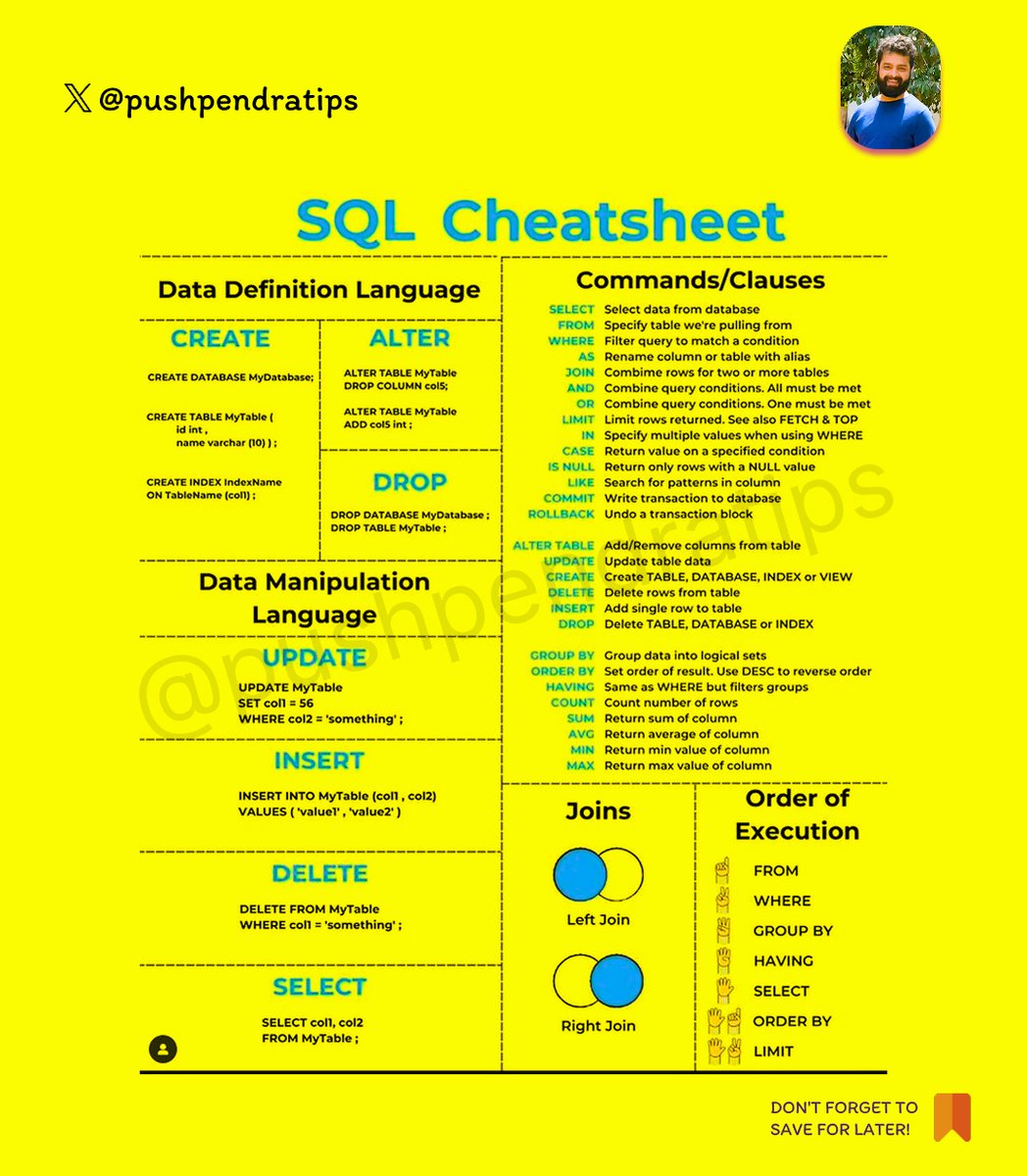
📜 SQL Cheat Sheet
🔍 Fetching Data (SELECT)
SELECT * FROM table_name;
SELECT column1, column2 FROM table_name;
SELECT DISTINCT column FROM table_name;
_____________________________________________________
🎯 Filtering Data (WHERE)
SELECT * FROM users WHERE age > 25;
SELECT * FROM orders WHERE status = 'delivered';
_____________________________________________________
🧩 Multiple Conditions (AND, OR, NOT)
SELECT * FROM users WHERE age > 25 AND city = 'Delhi';
SELECT * FROM products WHERE price < 500 OR stock > 50;
SELECT * FROM employees WHERE NOT department = 'HR';
_____________________________________________________
🔢 Sorting Results (ORDER BY)
SELECT * FROM employees ORDER BY salary DESC;
SELECT * FROM products ORDER BY price ASC, name DESC;
_____________________________________________________
🎛 Limiting & Skipping (LIMIT, OFFSET)
SELECT * FROM products LIMIT 5;
SELECT * FROM orders LIMIT 10 OFFSET 5;
_________________________________________________________
🏗 Grouping Data (GROUP BY, HAVING)
SELECT department, COUNT(*) FROM employees GROUP BY department;
SELECT category, AVG(price) FROM products GROUP BY category HAVING AVG(price) > 100;
_________________________________________________________
🏆 Aggregations (COUNT, SUM, AVG, MIN, MAX)
SELECT COUNT(*) FROM users;
SELECT SUM(price) FROM orders;
SELECT AVG(salary) FROM employees;
SELECT MIN(age), MAX(age) FROM users;
_____________________________________________________
🔄 Joining Tables (JOIN)
👫 Inner Join
SELECT users.name, orders.amount
FROM users
INNER JOIN orders ON users.id = orders.user_id;
_____________________________________________________
📌 Left Join
SELECT users.name, orders.amount
FROM users
LEFT JOIN orders ON users.id = orders.user_id;
_________________________________________________________
📌 Right Join
SELECT users.name, orders.amount
FROM users
RIGHT JOIN orders ON users.id = orders.user_id;
_____________________________________________________
🔗 Full Join
SELECT users.name, orders.amount
FROM users
FULL JOIN orders ON users.id = orders.user_id;
_____________________________________________________
🏗 Creating & Modifying Tables
🆕 Creating a Table
CREATE TABLE users (
id INT PRIMARY KEY,
name VARCHAR(100),
age INT,
city VARCHAR(50)
);
_____________________________________________________
🔧 Altering a Table
ALTER TABLE users ADD COLUMN email VARCHAR(100);
ALTER TABLE users DROP COLUMN city;
_____________________________________________________
📝 Modifying Data
➕ Inserting Data
INSERT INTO users (id, name, age) VALUES (1, 'Amit', 30);
_____________________________________________________
🛠 Updating Data
UPDATE users SET age = 31 WHERE id = 1;
_____________________________________________________
❌ Deleting Data
DELETE FROM users WHERE id = 1;
DELETE FROM users; -- Delete all rows
_____________________________________________________
🏛 Indexes & Keys
🔑 Primary Key
CREATE TABLE users (
id INT PRIMARY KEY,
name VARCHAR(100)
);
_____________________________________________________
🔑 Foreign Key
CREATE TABLE orders (
id INT PRIMARY KEY,
user_id INT,
FOREIGN KEY (user_id) REFERENCES users(id)
);
_____________________________________________________
🚀 Creating Index
CREATE INDEX idx_name ON users(name);
_____________________________________________________
📜 Subqueries & Unions
🔄 Subquery
SELECT name FROM users WHERE id IN (SELECT user_id FROM orders);
_____________________________________________________
🔗 Union (Combine Results)
SELECT name FROM customers UNION SELECT name FROM suppliers;
SELECT name FROM customers UNION ALL SELECT name FROM suppliers; -- Includes duplicates
_____________________________________________________
🔥 Transactions
BEGIN TRANSACTION;
UPDATE accounts SET balance = balance - 500 WHERE id = 1;
UPDATE accounts SET balance = balance 500 WHERE id = 2;
COMMIT; -- Save changes
ROLLBACK; -- Undo changes
#SQL #SQLTutorial #LearnSQL #SQLQueries #SQLCheatSheet #Database #DataScience #Programming #Tech #Code
#SQLForBeginners #SQLBasics #SQLTraining #LearnToCode #CodingForBeginners #AdvancedSQL #SQLPerformance #SQLOptimization #SQLBestPractices
#SQLDatabase #MySQL #PostgreSQL #SQLServer #OracleSQL #NoSQL #DataAnalytics #SQLForDataScience #BusinessIntelligence #BigData #DataVisualization
28
19
66
8,752

10 Oct 2024
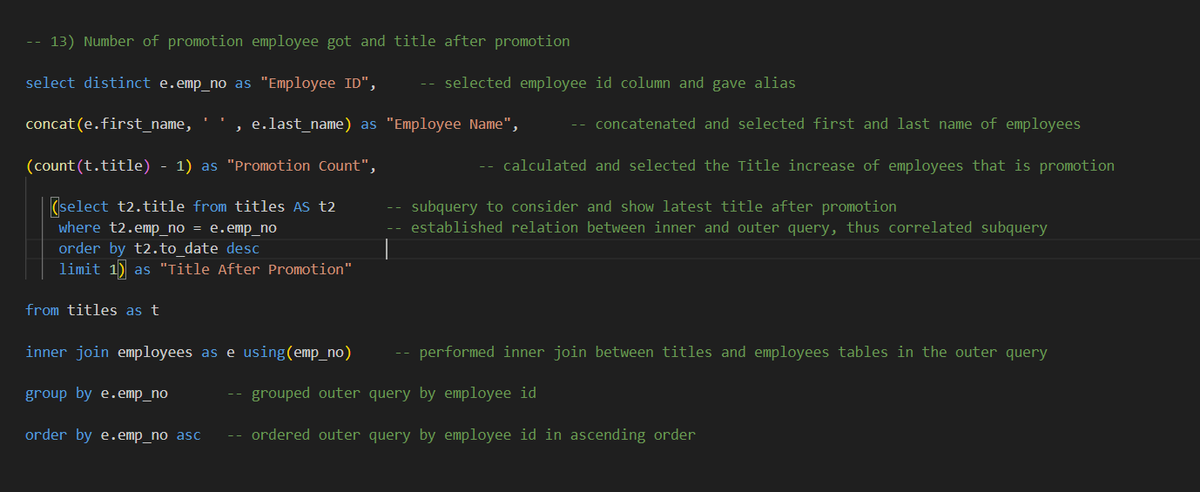
As a data analyst, ensuring optimal performance of SQL queries is a must and generally, whenever a SQL query is slow, subquery is the reason for that.
Also, how you implement subqueries is also important.
If you are using it to access small amount of data then it is fine but if you need to extract larger amount, then it can slow down the performance.
Also, if you use correlated subqueries, then your SQL query will be very slow if it is not implemented with caution.
Let's understand correlated subqueries in easy language:
𝗖𝗼𝗿𝗿𝗲𝗹𝗮𝘁𝗲𝗱 𝘀𝘂𝗯𝗾𝘂𝗲𝗿𝗶𝗲𝘀: When your inner query is connected with outer query and needs result/data from the outer query to perform operations, then it is known as correlated subqueries.
Generally, when you try to extract mutliple rows using correlated subqueries, it becomes really slow, thus SQL query slows down.
The solution for this is really simple, Use CTEs
#DataAnalytics #SQLPerformance #CTE #Subqueries #SQLQueries #CorrelatedSubqueries #DataOptimization #SQLBestPractices #DatabaseOptimization #QueryOptimization #DataAnalyst #DataEfficiency #DataQuerying #SQLTips #DataPerformance #SQLSkills #DataJobsUS #DataJobsUK #DataJobsEurope #TechSkills #DatabaseManagement #DataCareers #DataCommunity #DataInsights #SQLExperts #AnalyticsTools #DataDriven #UKTech #UKDataJobs #USTechJobs #USDataAnalyst #EuropeTech #EuropeDataJobs #UKAnalytics #USAnalytics #DataJobsEurope #TechCareersUK #DataCareersUK #DataCareersUS #TechCareersUS #TechCareersEurope #DataAnalystEurope #DataScienceUK #DataScienceUS #EuropeAnalytics #TechOpportunitiesUK #TechOpportunitiesUS #AnalyticsCareersEurope
3
54

25 Sep 2024
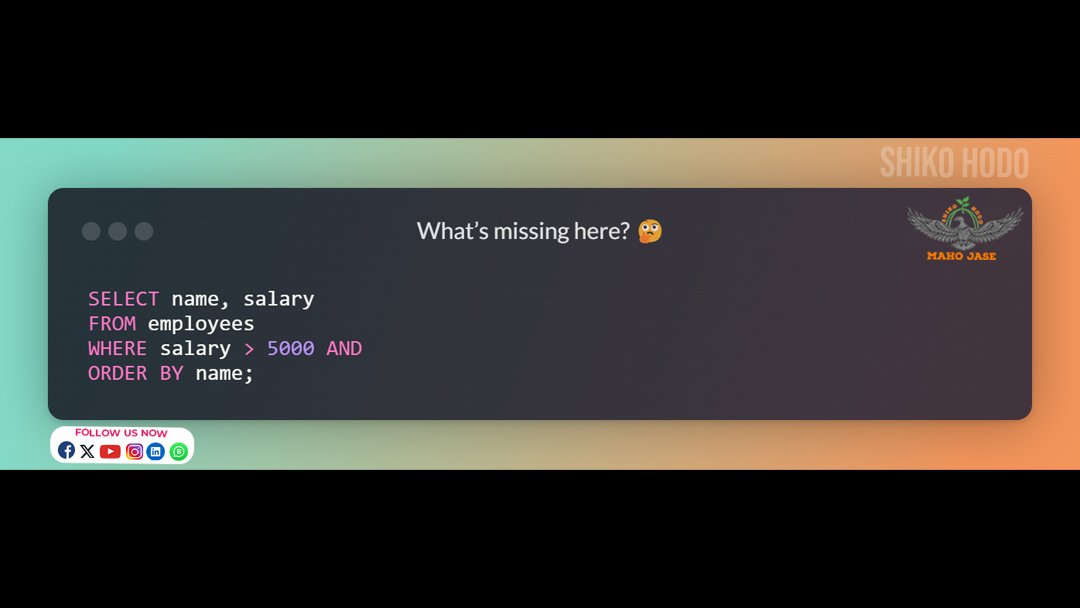
❓ Can You Spot the Error in This SQL Query?
.
.
.
#SQLSelect #SelectStatement #SQLQueries #DataRetrieval #SQLBestPractices #SQLTutorial #DatabaseManagement #SQLCommands #SQLDataExtraction #SQLSyntax
1
2
24
23 Sep 2024
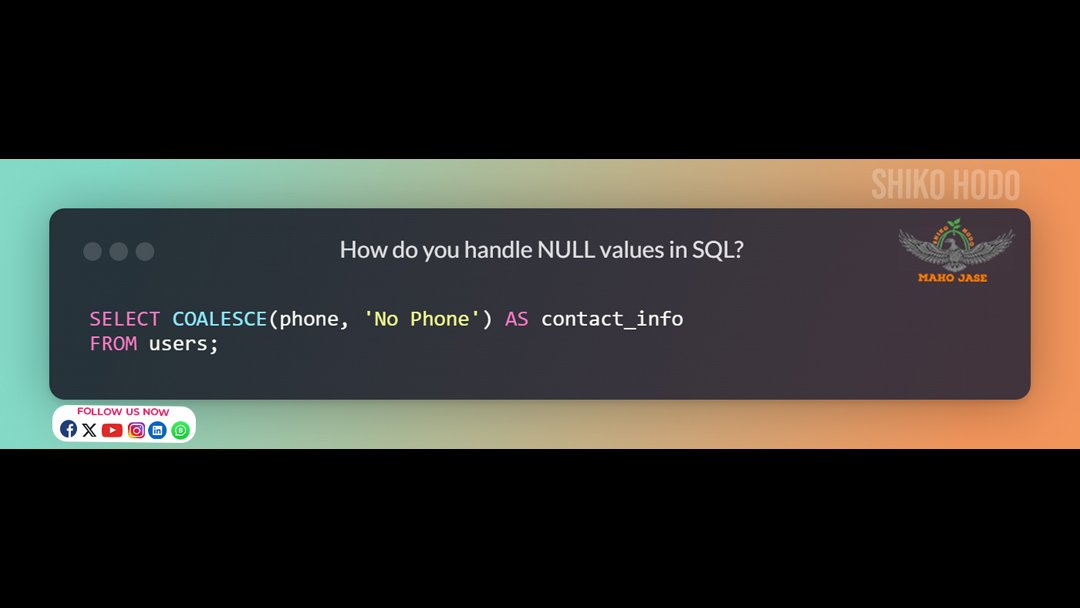
How often do you use COALESCE to avoid NULLs? 🤔
.
.
.
#SQLCOALESCE #HandlingNULLs #COALESCEFunction #SQLBestPractices #DatabaseQueries #SQLNullValues #SQLFunctions #DataHandling #SQLOptimization #SQLTutorial
1
2
19

12 Jan 2022
Looking back on our webinar from last Jan: SQL Backup Best Practices
Reviewing best practices is a great refresher for the start of a new year. Check out the full video here:
hubs.ly/Q01225S60
#sql #sqlcommunity #sqlbestpractices #sqltraining #learnsql #sqlwebinar

1
2

17 Dec 2020
📺 How to add secondary indexes (and why you'd want to: youtu.be/zD4AtWZwsEo
(a 3 minute video)
#100DaysofCode #SQLBestPractices #CockroachDB #DistributedSQL
2
16 Dec 2020
📺 How to use a physical explain plan: youtu.be/kFsnBrwQ1nA
In this 2 minute video we break down a pretty complicated example to make it easier to understand.
#100DaysofCode #CockroachDB #DistributedSQL #SQLBestPractices #SQLPerformance
1
4

9 Jan 2019
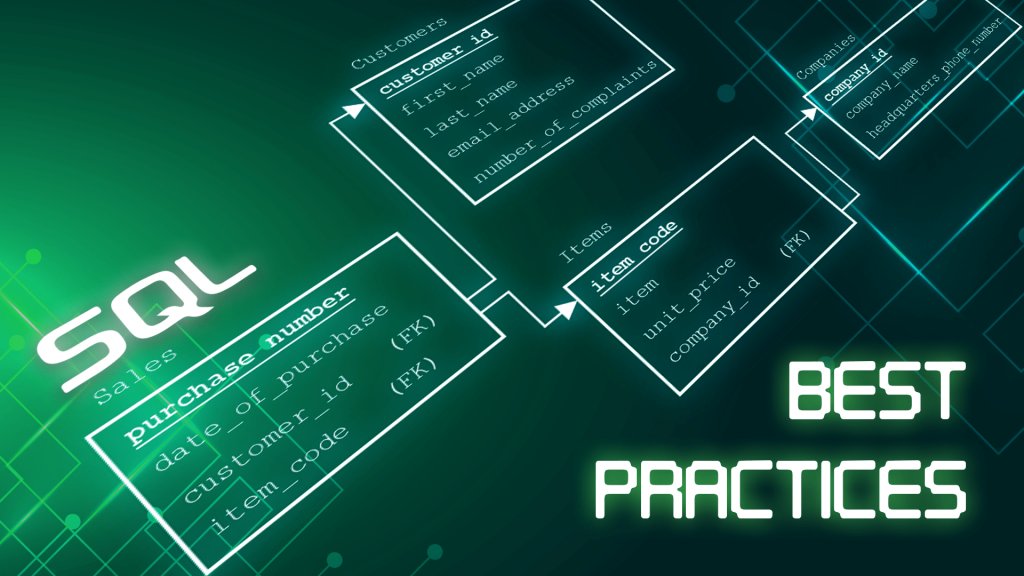
Check out our SQL Tutorial to learn how to type code cleanly and perfectly organized! #365DataScience #SQL #SQLTutorial #Tutorial #coding #SQLBestPractices buff.ly/2CKsmca
4
2