
Odisha's Water Man! Convenes @WaterInitiativ1 & CombatClimateChangeNetwork. Founder @Youth4WaterIn Researcher,Columns, Fotos,Blogs, Campaigner. TEDx Speaker!
Joined July 2009
- Tweets 16,268
- Following 4,953
- Followers 5,513
- Likes 34,969
2,893 Photos and videos






Never divide what you can unite...
Good morning 🙏 ❤️
Havw a fabulous Sunday 💗💗
9
Ghosts are more reliable than human beings. At least in their case you know that they look scary and will scare you. Humans are hypocrites by design…
~ Ranjan Panda
22

Jun 13
Now, it seems that almost nothing in our lives moves without AI.
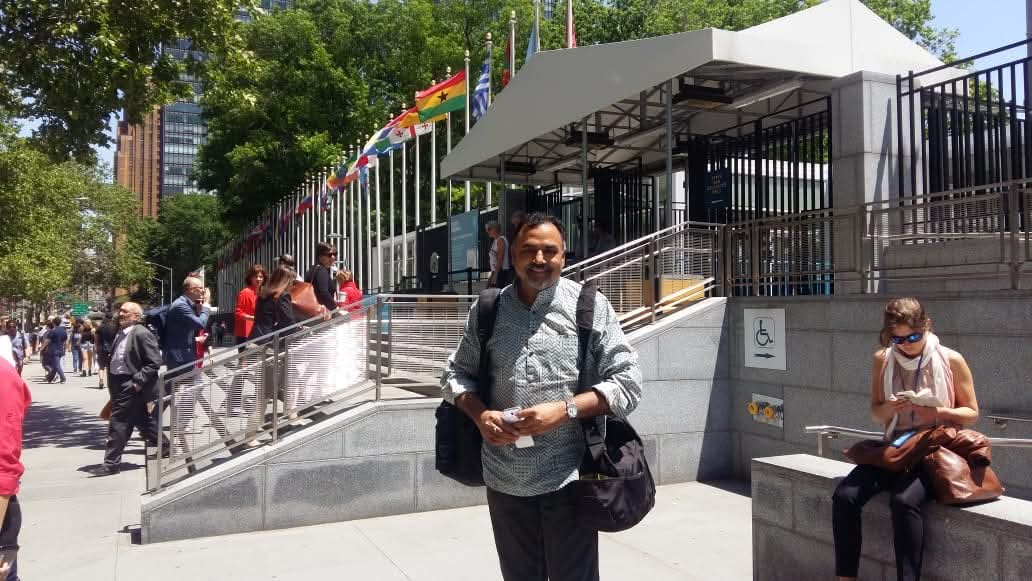
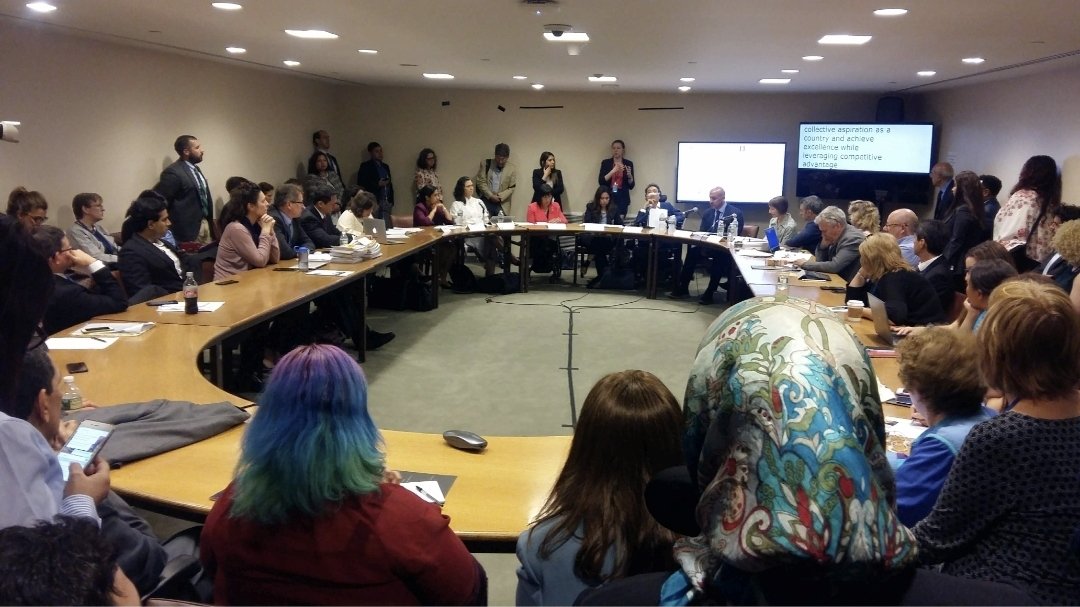
On 12 June 2018, long before the world became so obsessed with artificial intelligence, I had the opportunity to participate in an Inclusive AI Conference at the UN Headquarters in New York. The United Nations had already foreseen both the immense potential and the serious risks associated with AI. The objective was clear: to chart a roadmap for Inclusive AI so that marginalized, vulnerable, and underserved communities would not be pushed further to the margins by this transformative technology.
Eight years later, I find myself reflecting on how far we have come—and how far we still have to go.
Despite remarkable technological advancements, the world appears increasingly unequal, discriminatory, abusive, and undemocratic for many sections of society. The UN and countless organizations deserve credit for their efforts to address these challenges, but the broader trajectory remains worrying. Systemic discrimination, skewed income distribution, ecological degradation, and escalating climate impacts continue to deepen existing inequalities.
The rich are getting richer, often at the expense of both the poor and the planet. Not surprisingly, they also dominate access to and control over emerging technologies, including AI.
The contradictions are striking. AI-powered drones can help irrigate crop fields and improve agricultural productivity. The same technology can also be deployed to bomb innocent children in conflict zones. Yet the small and marginal farmers who feed much of the world often cannot afford these innovations, nor are they positioned to benefit from them.
This is why we need to fundamentally rethink how technology is developed, governed, and adopted. Technological progress, by itself, cannot be the measure of human progress. No matter how sophisticated our tools become, the rights of poor, Indigenous, and marginalized communities to land, water, forests, livelihoods, and dignity must remain non-negotiable.
Democracies, too, need to be reconnected to principles of inclusion, justice, and accountability. If AI is to serve humanity, it must be guided not merely by innovation and profit, but by equity, rights, and ecological responsibility.
The future should not belong only to those who own technology. It must also belong to those whose lives are most affected by it.
~ Ranjan Panda
13th June, 2026
#InclusiveAI #EthicalAI #AIandSociety #ClimateJustice #HumanRights #SocialJustice #IndigenousRights #SmallFarmers #FoodSecurity #Democracy #JustTransition #LeaveNoOneBehind #CombatClimateChangeIndia #WaterInitiatives #Youth4WaterIndia #MahanadiRiverWaterkeeper
@WaterInitiativ1 @MahanadiRiver @Waterkeeper @Youth4WaterIn @WFP @FoodSystems @IFAD @theGCF @theGEF @Welthungerhilfe @WHH_India @BoellStiftung @boell_India @FESinAsia
1
2
53
Jun 12
Another form of man-made flooding, far from the rivers...😜
On a serious note: people are same everywhere. Warning signals are different...
#WashingtonDC
x.com/ranjanpanda/status/153…

3
47
Jun 12
One of the greatest ironies of our times is that we continue to seek meaningful climate action from those who are often the managers, beneficiaries, and cheerleaders of war.
As delegates gather at SB64 in Bonn to discuss pathways towards a safer, more sustainable future, the world remains trapped in a model that rewards conflict while preaching cooperation. Wars devastate ecosystems, destroy livelihoods, displace communities, deepen inequalities, and leave behind enormous carbon footprints. Yet the political and economic systems that profit from militarisation are frequently the same systems expected to lead the climate transition.
How do we reconcile calls for decarbonisation with ever-rising military expenditures? How do we speak of climate justice while normalising conflicts that inflict disproportionate suffering on the most vulnerable? How do we negotiate resilience and adaptation while bombs erase decades of development gains overnight?
Climate change and war are not separate crises. They are deeply interconnected manifestations of a development paradigm that places power, extraction, and short-term interests above people, peace, and planetary well-being.
Perhaps the conversation at Bonn needs to go beyond emissions, targets, and finance. It must also confront a fundamental question: Can we realistically expect a just and effective climate future while continuing to celebrate and sustain economies that thrive on conflict?
There can be no lasting climate justice without peace. And there can be no meaningful peace without climate justice.
~ Ranjan Panda
12 June, 2026
#SB64 @UNFCCC @UNFCCCDocuments @UNFCCCwebcast @IPCC_CH @WaterInitiativ1 @MahanadiRiver @MahanadiRiver @Youth4WaterIn @FESinAsia @boell_India @UUSC @CJRFund @UNUCRIS @UNUEHS @Welthungerhilfe @WHH_India @DDisplacement @RefugeesIntl @UNmigration @cmdplatform @IOMAsiaPacific @nrc @LossandDamage @LossDamageYouth @LossDamage @waterclimateint @Adapt_Alliance @GCAP_adaptation @whiteband @youngo_unfccc @globalcompact @IDPs_Panel @GFMD_CSD @GFMDprocess
3
3
56
Jun 12
Perhaps India is one of the few countries where such an incident could happen. We are, unfortunately, the world's "spitting capital." Paan and gutkha stains are a common sight almost everywhere—even at places prominently displaying signs that say, "Do Not Spit Here."
Civic sense remains in short supply, and at times, merely requesting someone to behave responsibly can invite hostility. I have personally faced verbal abuse on several occasions simply for asking people not to waste water in public places.
It is reassuring that, in this case, people in positions of authority took cognizance of the incident and acted. More often than not, such matters are ignored, leaving those who speak up feeling isolated and vulnerable.
May common sense, civic sense, and respect for whistleblowers—at every level—prevail. A society progresses not when people remain silent, but when responsible citizens can raise concerns without fear of abuse or retaliation.
@IndianExpress @mieknathshinde @Dev_Fadnavis @CMOMaharashtra @DGPMaharashtra
Jun 11

An elderly man was assaulted by an Ola driver in Thane after objecting to him spitting on a public road near Jupiter Hospital at Cadbury Junction.
The incident took place when an elderly couple was passing near the hospital. The driver allegedly spat on the road and when the elderly man objected, the driver attacked and abused him. The victim suffered a leg injury.
Deputy Chief Minister Eknath Shinde took note of the incident and directed police to examine invoking attempt-to-murder charges, while Chief Minister Devendra Fadnavis said such acts would not be tolerated.
The accused, Nishant Dhar Shukla, was arrested and booked under sections related to assault and attempted murder.
2
120
Jun 11
Water Carries the Story of Climate Change: Reflections on Ecology, Resilience and Just Transition!
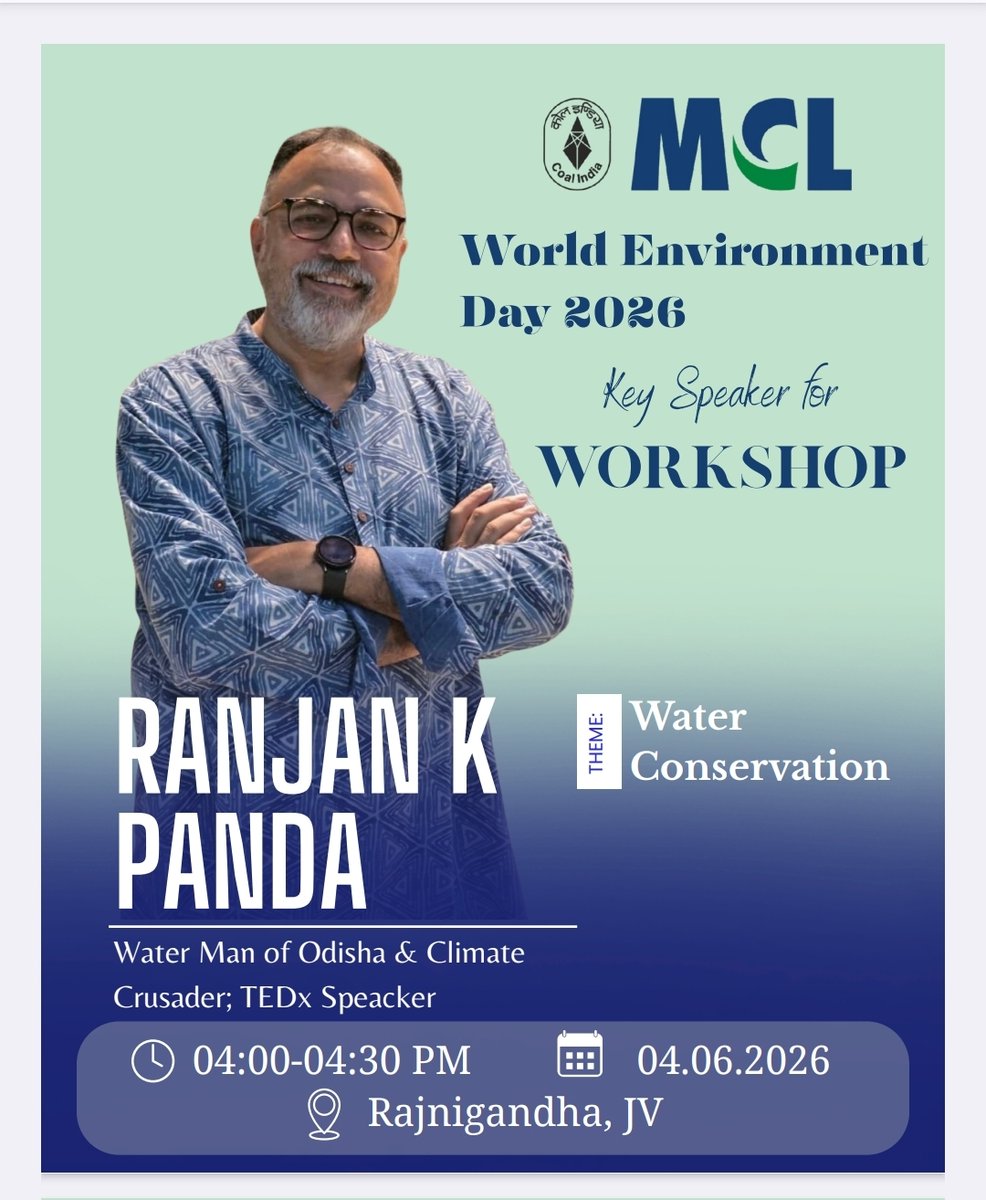
On 4 June, I had the opportunity to speak at the World Environment Day programme organised by @mahanadicoal (Mahanadi Coalfields Ltd. - MCL) at its headquarters. It was a valuable occasion to engage not only with MCL officials and employees but also with their family members and others associated with the institution.
My effort was to move the conversation beyond symbolic environmentalism and towards practical, grassroots actions that individuals and institutions can take to conserve water, restore ecosystems, and build climate resilience. While I touched upon the growing global crises of climate change, biodiversity loss and water insecurity, I consciously connected these challenges to the realities of the landscapes and communities in which MCL operates.
Climate change is often discussed as a distant global phenomenon. Yet its impacts are experienced locally - through disappearing water sources, degraded forests, declining biodiversity, rising temperatures, erratic rainfall, soil erosion, pollution, and increasing vulnerability of communities. Many of these local environmental stresses are not caused by climate change alone, but they significantly amplify its impacts. If we wish to address climate risks meaningfully, we must first acknowledge and address the ecological degradation unfolding around us.
One of the key messages I shared was that water cannot be treated as a stand-alone subject. Water is perhaps the most visible and most affected common resource in the climate crisis, carrying the consequences of almost every environmental disruption. Whether it is floods, droughts, heatwaves, declining agricultural productivity, ecosystem collapse or public health challenges, water sits at the centre of the story.
Therefore, conserving water is not merely about constructing structures or improving efficiency. It requires protecting forests, wetlands, rivers, ponds, grasslands, biodiversity, soils and all the interconnected ecosystems that regulate the water cycle. More importantly, it requires us to view these ecosystems not as expendable resources but as indispensable allies in our adaptation and resilience efforts.
I also appealed to MCL and its stakeholders to explore their own locally relevant models of a "Just Transition." The global conversation on Just Transition is often framed around shifting away from fossil fuels, but at the local level it must also involve transforming lifestyles, institutions and development pathways in ways that are socially equitable, ecologically responsible and economically viable.
Such a transition should create opportunities for communities, strengthen ecological security, and ensure that environmental stewardship becomes everyone's responsibility - not merely that of governments or experts.
The future of sustainability will not be determined only by large policies and technologies. It will also depend on millions of everyday decisions taken by institutions, communities and individuals. Every workplace, every colony, every village and every city has the potential to become a laboratory for local climate action and ecological restoration.
I sincerely hope that this message resonates across all levels of MCL - from senior leadership to field-level functionaries - and inspires meaningful action on the ground. In the end, resilience is not built through infrastructure alone; it is built through our relationship with nature, our collective sense of responsibility, and our willingness to act before crises become irreversible.
~ Ranjan Panda
#WorldEnvironmentDay2026 #MCL #CoalIndia #JustTransition #WaterCommons #Ecosystems #NatureBasedSolutions #ClimateChange #WaterSecurity #EcologicalRestoration #ClimateResilience #Sustainability #Biodiversity #WaterInitiatives #CombatClimateChangeNetwork #Youth4WaterIndia #MahanadiRiverWaterkeeper #RanjanPanda
3
3
70
Jun 11
The greatest deception is not the Blue-Coloured Jackal itself, but our failure to recognize it. As long as it goes unnoticed in our lives and systems, its consequences will haunt not only the present generation, but those yet unborn...
~ Ranjan Panda
3
44
Jun 10
Your self respect has to be stronger than your feelings...
Good morning 🙏 ❤️
3
34
Jun 10
Respect 🙏🙌✨️💖
@Youth4WaterIn @WaterInitiativ1 @MahanadiRiver
#AprilCOOL #MayACT #JuneHEAT #beattheheat #BeatTheHeat2026
3
34
Jun 10
It seems the @TPWesternOdisha efficiency level is on a reverse gear on a daily basis. Nowadays, just a few minutes of rainfall can cut us off from power supply for hours. As such also their early warning system doesn't work efficiently. To add to that, their complacency in dealing with consumer challenges is nose-diving.
It's a complete Ram Bharose situation on the forming.
@CMO_Odisha
@EnergyOdisha
@DmSambalpur @TataPower
1
2
76
Jun 9
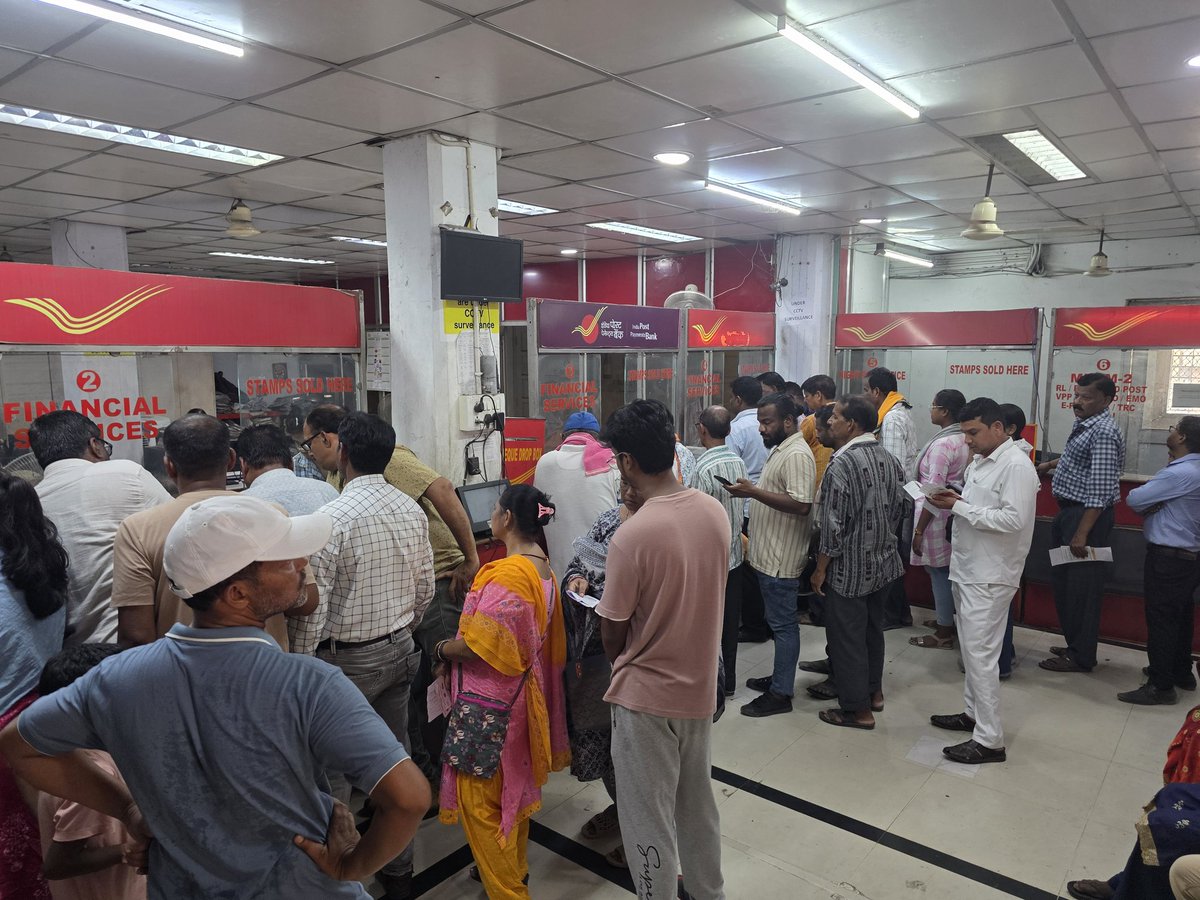
While cities are creating cooling zones to protect people from extreme heat, the Sambalpur Head Post Office seems oblivious to the realities of a #HeatWave. There are no cooling arrangements whatsoever for customers.
I've been waiting here for more than 30 minutes, and the experience has been extremely uncomfortable. Basic public facilities should not overlook something as essential as protection from the heat.
@IndiaPostOffice @IPPBOnline @SMC_Sambalpur @DmSambalpur #beattheheat #AprilCOOL #MayACT #JuneHEAT @Youth4WaterIn @MahanadiRiver @WaterInitiativ1
3
4
125
Ranjan Panda retweeted

BAN AI data centers..
They will RUIN the whole #ecosystem.
x.com/ranjanpanda/status/206…
AI data centers consume staggering amounts of water for cooling their energy-intensive servers and chips, with large facilities utilizing up to 5 million gallons per day—equivalent to the daily usage of a town of 10,000 to 50,000 residents.
Overstatement of originality, unrealistic decentralization, focus on quantity over sufficiency, improper aggregation of facilities, neglect of urban nature, disregard for public transport, and ignoring interpersonal differences in active mobility.
For example, not all healthcare facilities serve the same purpose; the availability of a dentist or general practitioner should be considered separately to assess true neighborhood accessibility.
Most analyses mainly spotlight parks, missing out on other urban greenery like gardens and tree-lined streets that boost environmental quality and community well-being. Including a variety of green spaces in planning enhances both environmental and social benefits.
Creating neighborhoods focused only on walking and cycling leaves out those who can't use them, whether due to age, health, or choice.
Urban systems should reflect population needs rather than enforce strict decentralization.
#AI #DataCenters #Heatwaves #Globalwarming
Jun 5

Press Release from @Youth4WaterIn
National Campaign “My 500-Meter City” Launched from Sambalpur on World Environment Day
Sambalpur/Bhubaneswar, June 5:
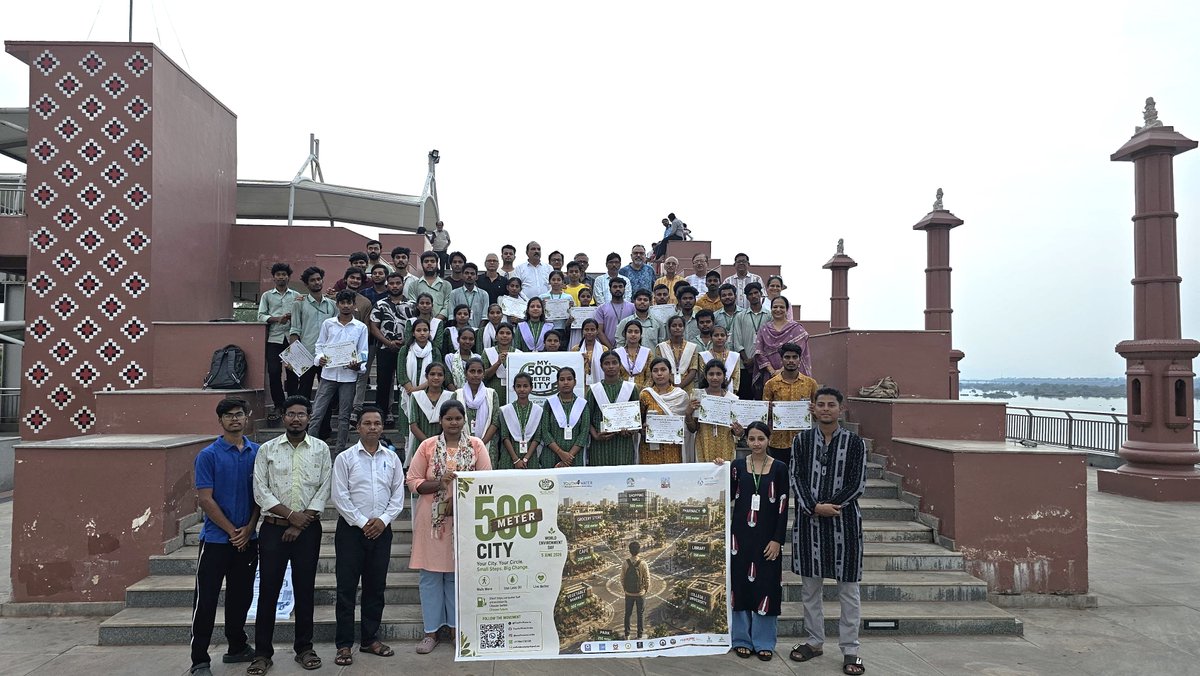
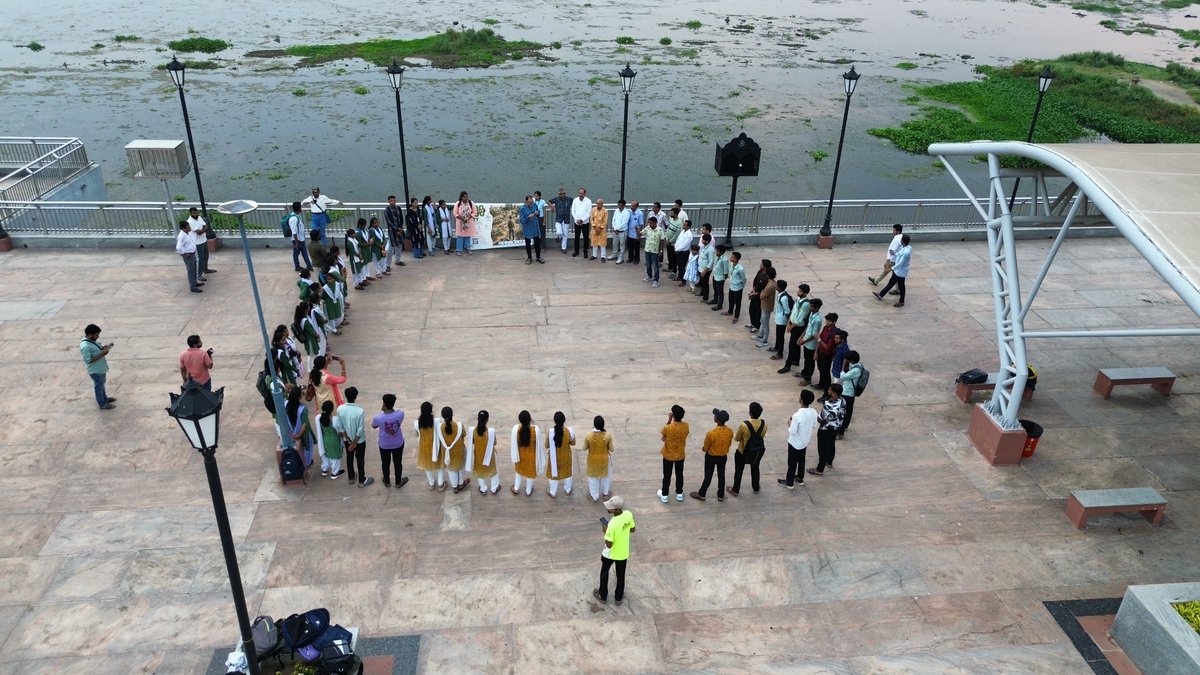
The pan-India, volunteer-driven Youth4Water-India campaign launched its new national initiative, “My 500-Meter City,” on the occasion of World Environment Day today. While the national launch took place on the banks of the Mahanadi River near the historic Samaleswari Temple in Sambalpur, campaign volunteers simultaneously organised local gatherings and individual outreach activities in more than 20 cities across the country.
Announcing the launch, Ranjan Panda, Founder-Mentor of Youth4Water-India and popularly known as the Water Man of Odisha, said the initiative aims to encourage citizens to reclaim and reimagine their neighbourhoods through sustainable mobility and climate-conscious lifestyles.
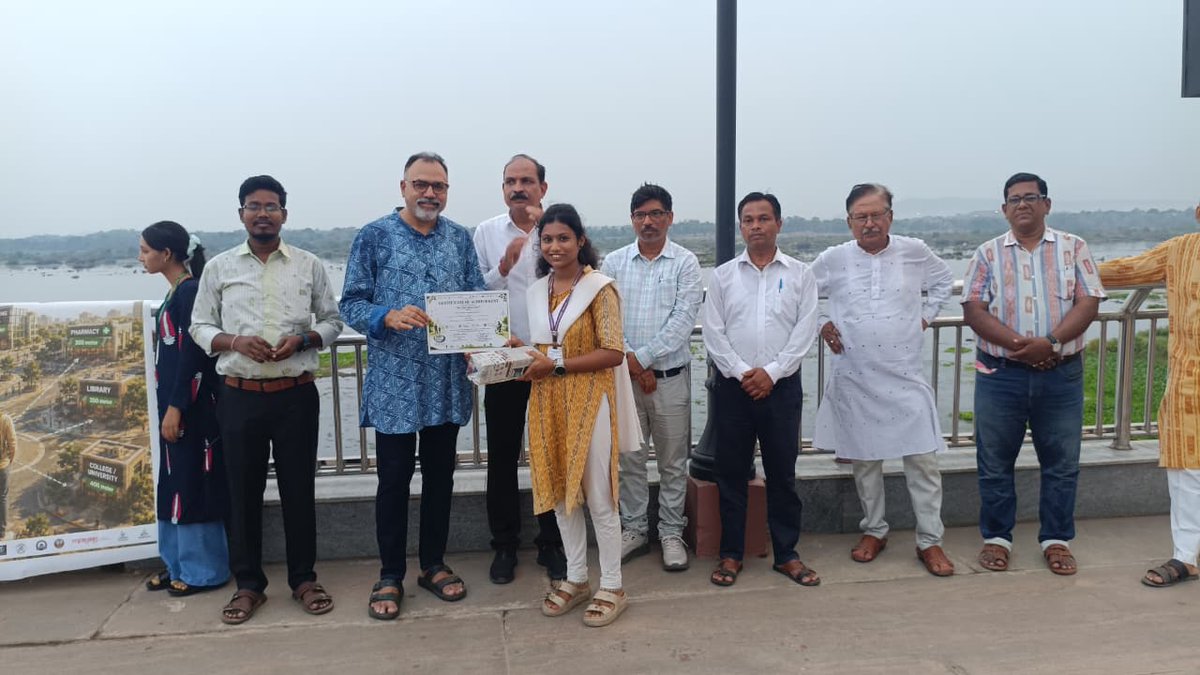
More than 100 youth and citizens participated in the Sambalpur launch event, where the campaign logo was collectively unveiled by the participants. Speaking on the occasion, Sanjay Baboo, President of the Samaleswari Temple Trust Board and co-organiser of the event, described the initiative as “a timely and much-needed campaign” that can contribute to local climate adaptation efforts and promote more liveable cities.
Senior journalists Priya Ranjan Sahuand Siba Nanda, along with other prominent citizens, addressed the gathering and urged participants to actively adopt the principles of the campaign while taking broader actions to conserve water, biodiversity, and the urban environment.
The concept behind My 500-Meter City is simple yet transformative: every citizen is encouraged to identify a 500-meter radius around their home, workplace, or institution and reduce the use of fossil-fuel-based transport within that zone as much as possible. According to Masud Alam, a Core Volunteer of Youth4Water-India who coordinated the Sambalpur event, the initiative can help reduce pollution, lower carbon emissions, strengthen community interactions, and improve both physical and mental well-being.
Youth participant Suhani Patra shared that she already uses a bicycle for her daily commute and believes the campaign will encourage more people to choose cycling and walking while advocating for safer and more inclusive public spaces. Another Core Volunteer, Rashmi Ranjan Panigrahi, informed participants that the campaign would gradually expand through a series of citizen-led activities in different cities.
A key highlight of the programme was the collective pledge taken by all participants, committing themselves to building greener, cleaner, and water-secure cities. “The pledge reflects our shared responsibility towards creating healthier urban environments and stronger community connections,” said youth volunteer Supriti Bhitria.
Reflecting on the future of the initiative, Panda said that after the success of the Plastic-Free Picnic Challenge, which achieved significant national and international outreach, Youth4Water-India now aims to expand the My 500-Meter City movement across India and eventually to other countries.
“This is a purely volunteer-driven and collaboratively facilitated campaign. We invite government agencies, civil society organisations, corporate institutions, academic bodies, media organisations, youth groups, resident welfare associations, and citizens from all walks of life to join and strengthen this movement,” Panda added.
Winners of four competitions held on the theme “Liveable Cities: My Idea of a City That Lives in Harmony with Nature” were felicitated with prizes and certificates during the programme.
The launch programme was organised in collaboration with the Samaleswari Temple Trust Board and supported by several partner organisations, including AJSA India, Big Wire, ABCD Charitable Trust, Sambalpur Cycling Club, Parivartan Setu, Mahanadi Dhara, Adarsha, Sikshya Niketan, Loka Seva, Aahwan Foundation, Mount Xplore, Rupayaan, Water Initiatives–India, and Mahanadi River Waterkeeper.
For further information, plz contact:
Masud Alam and Rashmi Ranjan
Core Volunteers, Youth4Water-India
WhatsApp: 91 9861750103
Email: youthwatercampaign@gmail.com
@timesofindia @IndianExpress @NewIndianXpress @the_hindu @ndtv @ndtvindia @NavbharatTimes @DainikBhaskar @thewire_in @frontline_india @MongabayIndia @ThePrintIndia @TheQuint @epw_in @WaterInitiativ1 @Youth4WaterIn @MahanadiRiver @Waterkeeper
2
4
126
Jun 8
Beyond the Death Toll: The Hidden Costs of Pesticide-Related Farmer Deaths!
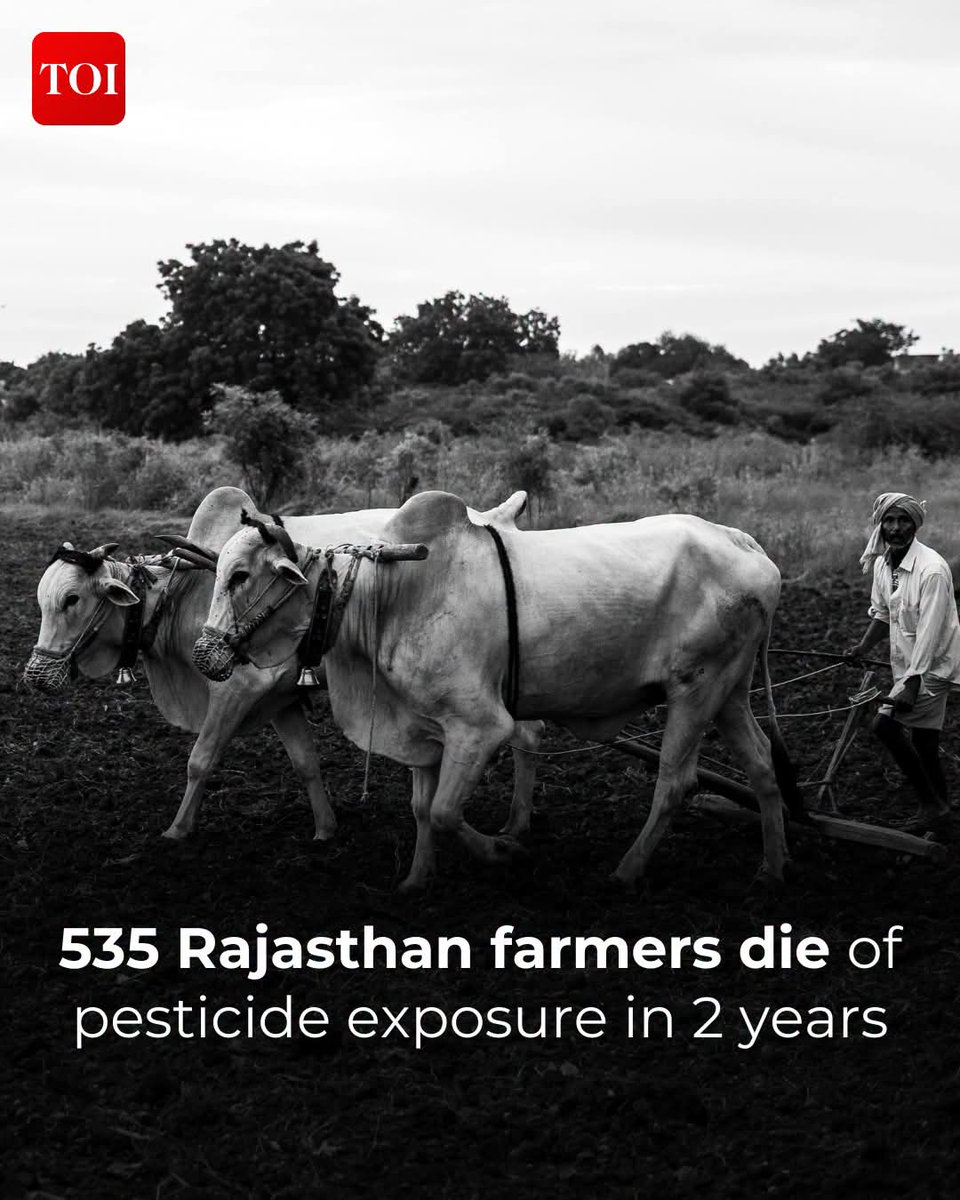
This news from Uttar Pradesh, published in @timesofindia is hardly shocking news. The real numbers are likely far higher, as many pesticide-related deaths, illnesses, and long-term health impacts never make it into official records.
Behind these statistics lies a much deeper crisis. Every farmer death or poisoning incident triggers devastating socio-economic consequences for families and communities, resulting in both economic and non-economic losses and damages. Loss of income, mounting healthcare expenses, indebtedness, psychological trauma, and disruption of livelihoods often persist for years.
The impacts extend far beyond human health. Excessive and unsafe use of chemical pesticides contaminates water bodies, degrades soils, harms biodiversity, and weakens the ecological foundations of agriculture itself.
The 535 deaths reported in Rajasthan are not merely numbers; they are warning signs of a farming system that urgently needs stronger regulation, safer practices, better enforcement, and a transition towards more sustainable and less toxic agricultural approaches.
Well, #climatechange also triggers increased use of pesticides.
~ Ranjan Panda
#FarmerDeaths #Pesticides #OccupationalHazards #WaterContamination #NELD
2
4
72
Jun 7
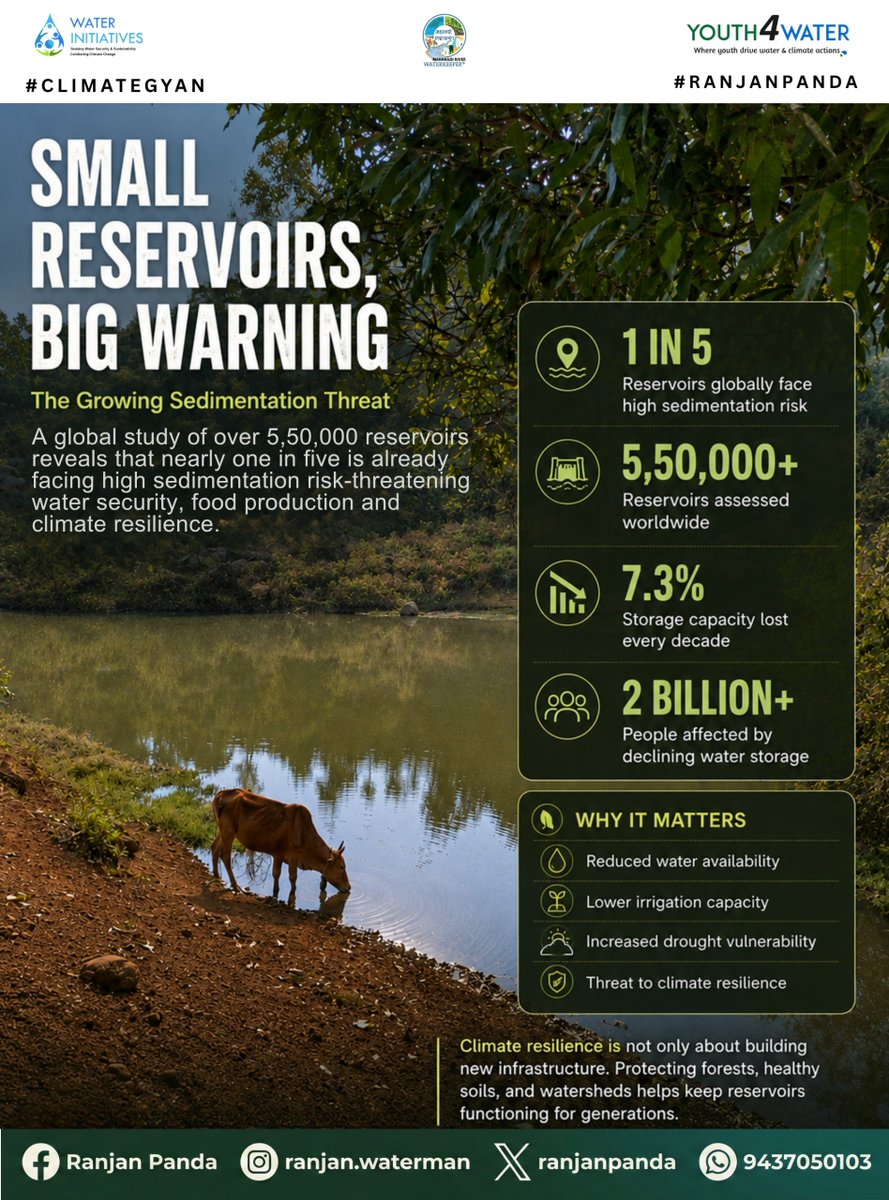
Today's #climategyan in one image! #42
Small Reservoirs, Big Warning: The Sedimentation Threat
There have long been concerns about sediment accumulation behind large dams, but a new global study shows that small reservoirs face an equally serious challenge. Covering more than 550,000 reservoirs worldwide, over 95% of which are smaller than 1 km², the study reveals that nearly one in five reservoirs is already facing high sedimentation risk. This growing problem threatens water supplies for more than 2 billion people and affects about 26% of the world's irrigated farmland.
The study estimates that reservoirs globally are losing storage capacity at an average rate of 7.3% per decade due to sedimentation. Small reservoirs, especially in dryland regions, are particularly vulnerable despite being critical for local water security, food production, and climate adaptation.
The findings also remind us that climate resilience is not just about building new infrastructure. While tree-planting drives are important, conserving existing forests and promoting soil-friendly, agroecological farming practices in catchments can help reduce erosion and sediment flow into rivers and reservoirs. Protecting these natural systems is essential for safeguarding both water security and healthy river ecosystems in a warming world.
~ @ranjanpanda
7 June, 2026
#CombatClimateChangeIndia #WaterInitiatives #Youth4WaterIndia #MahanadiRiverWaterkeeper #SmallReservoirs #Sedimentation #DAMS #river #riverecosystem #ClimateGyan #RanjanPanda #FoodSecurity #WaterSecurity #DroughtManagement #LocallyLedAdaptation @Youth4WaterIn @WaterInitiativ1 @MahanadiRiver @Adapt_Alliance @theGEF @theGCF @NABARDOnline
Note: Climate Gyan posters are designed as a "crispy" way to talk about massive climate challenges. Because condensing complex phenomena sometimes requires using general global statistics, they may not capture all the local complexities and vastness of these issues. I advise readers to explore the subject further before referencing them in their own works.
3
3
92