
Explore median household income across America's 50 largest metros, from Silicon Valley's top earners to lower-cost cities. dlvr.it/TSzBMV #HouseholdIncome #USMetros #IncomeDistribution #CostOfLiving #SiliconValley
3

May 22
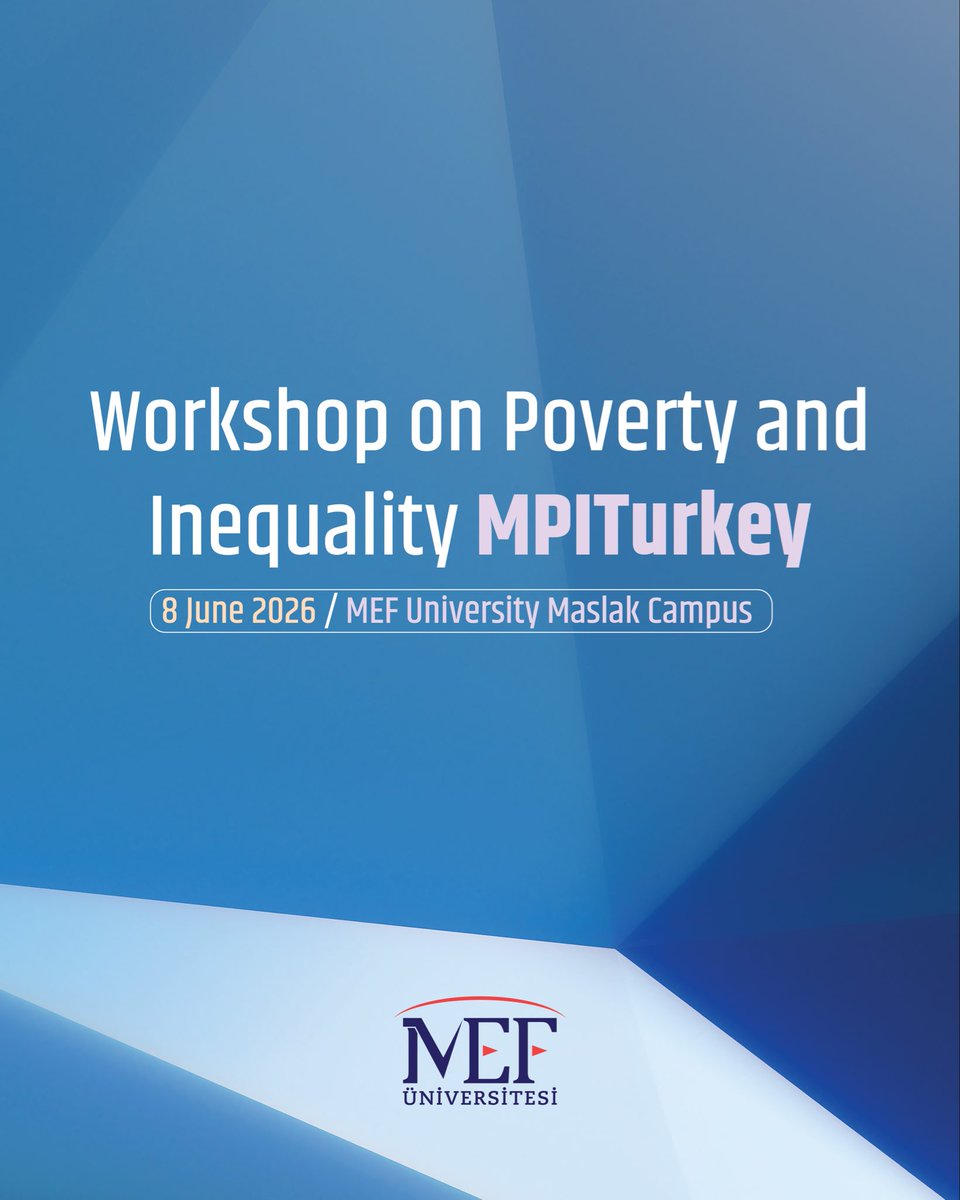
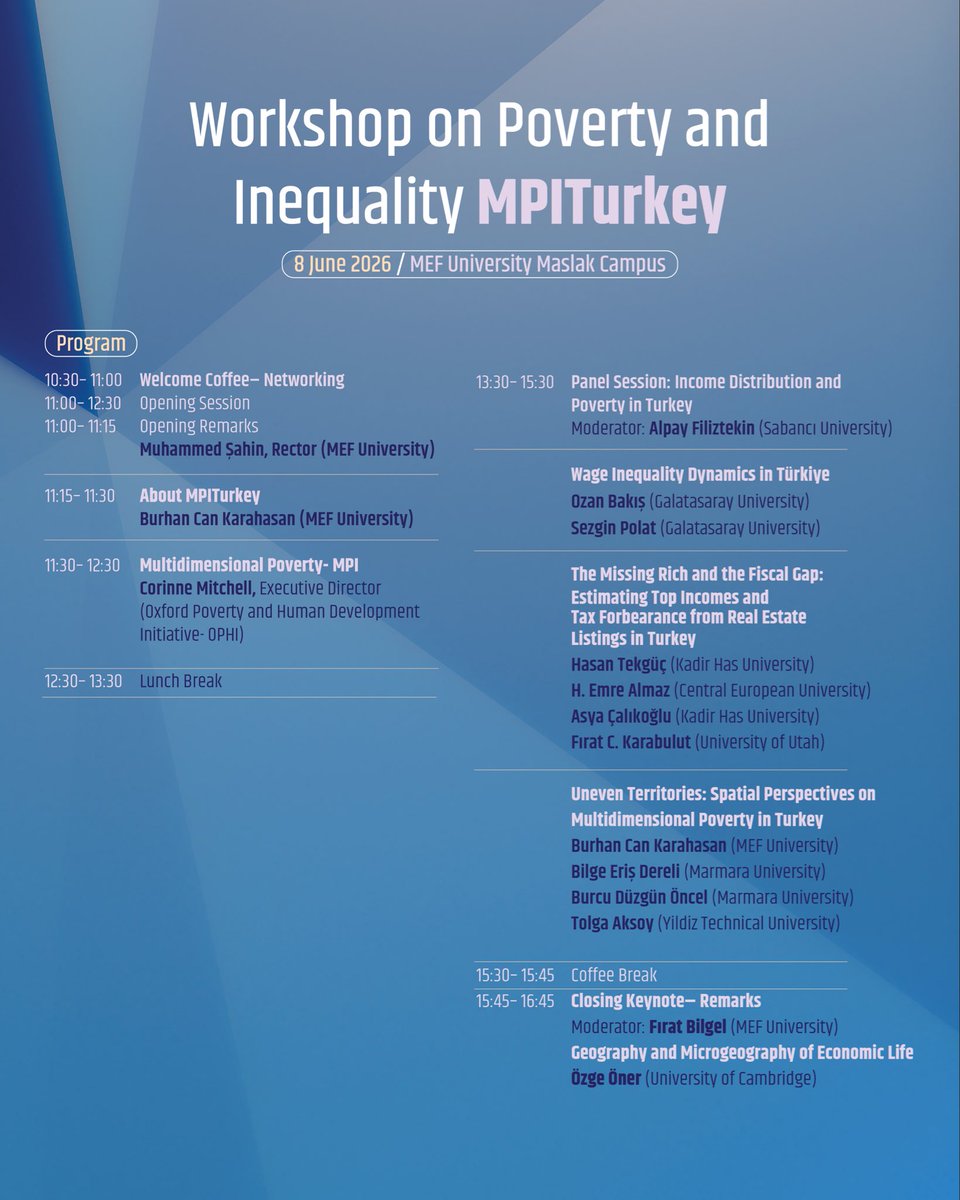
MPITurkey Workshop on Poverty and Inequality
MEF Üniversitesi bünyesinde yürütülen TÜBİTAK 1001 Projesi MPITurkey kapsamında,
“Poverty and Inequality Workshop” etkinliğini 8 Haziran 2026 tarihinde düzenliyoruz.
Gelir dağılımı, yoksulluk ve eşitsizlik dinamiklerinin ele alınacağı çalıştayın açılış konuşması, Rektörümüz Prof. Dr. Muhammed Şahin tarafından gerçekleştirilecektir.
Ayrıca etkinlikte, yurt içi ve yurt dışından değerli konuşmacı misafirlerimiz de yer alacaktır.
MPITurkey hakkında detaylı bilgi:
mpiturkey.mef.edu.tr
Kayıt için:
mpiturkey.mef.edu.tr/registe…
#MPITurkey #MEFUniversity #Yoksulluk #Eşitsizlik #Workshop #Ekonomi #GelirDağılımı #TÜBİTAK1001
MPITurkey Workshop on Poverty and Inequality
MEF University’s TÜBİTAK 1001 Project MPITurkey will host the “Poverty and Inequality Workshop” on June 8, 2026.
The workshop will bring together discussions on income distribution, poverty, and inequality dynamics, featuring opening keynote talks by leading international scholars.
The opening speech will be delivered by Professor Muhammed Şahin.
Learn more about MPITurkey:
mpiturkey.mef.edu.tr
Registration:
mpiturkey.mef.edu.tr/registe…
#MPITurkey #MEFUniversity #Poverty #Inequality #Workshop #Economics #IncomeDistribution #TUBITAK1001
5
4
4,585

Apr 2
Yi Fuxian argues that household income has steadily declined as a share of the economy, signaling a return from the relatively liberalized 1980s toward a “big government, small household” model.
#IncomeDistribution #StateVsSociety #ChinaEconomy
4
11
3,921

25 Sep 2025
IncomeDistribution🎷
🏝️Per latest surveys by PSA & study by PIDS, PH's Income Distribution is as follows:
🤑High Income: 1.6%
🎈Middle Income: 40%
😭Low Income: 58.4%
Poverty Alleviation progresses. Good So Far!😇👏
3
28

4 Aug 2025
GST Burden & Wealth Inequality: An Analytical UPSC Civil Services Assessment 📊⚡ #UPSC2026 #GSTBurden #WealthInequality #CivilServices #IASPrep #CurrentAffairs #TaxationPolicy #ExamPrep #UPSCMains #PrelimsMCQ #EconomicPolicy #SocialJustice #IncomeDistribution #StudyMaterial #ViralEducation #CompetitiveExams #IASExam #GovernmentJobs #UPSCStrategy #ExamSuccess
🔥 PRELIMINARY EXAMINATION CORE FACTS ✅ #UPSCPrelims #MCQMastery #EconomicFacts
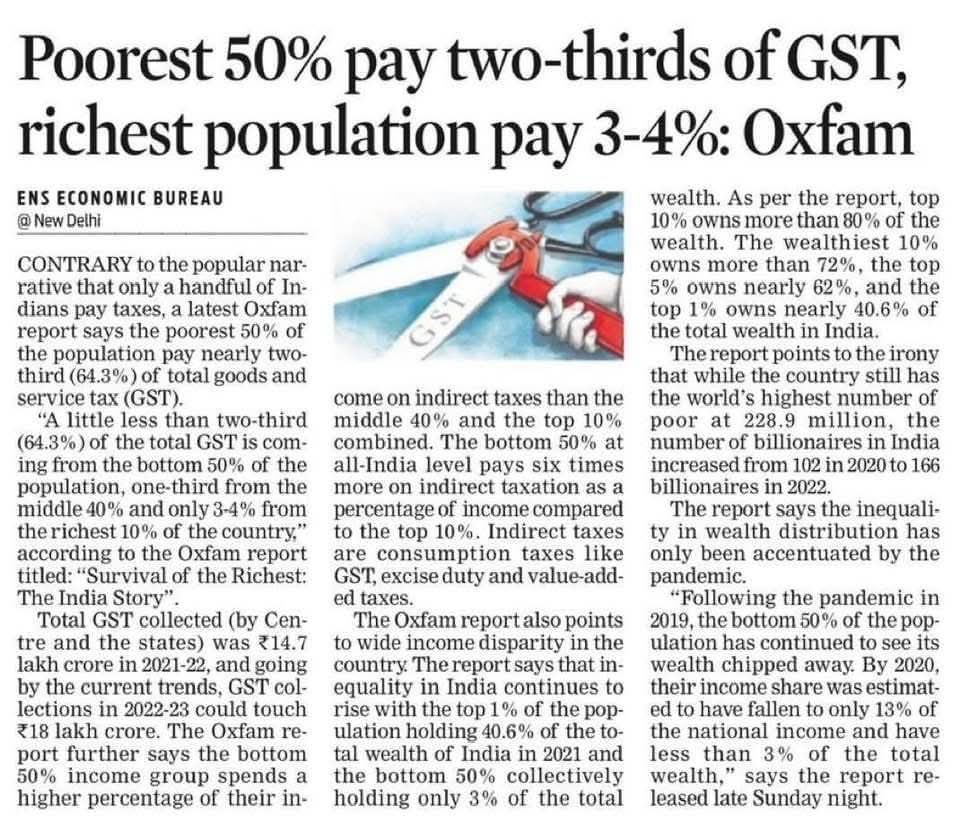
📊 GST Distribution by Income Groups (Oxfam 2023)
Poorest 50%: Pay 64.3% (nearly two-thirds) of total GST collections
Middle 40%: Contribute approximately one-third of GST revenue
Richest 10%: Pay only 3-4% of total GST collections
Tax Burden Ratio: Bottom 50% pays 6 times more as percentage of income vs top 10%
Report Source: "Survival of the Richest: The India Story" by Oxfam International
💰 GST Revenue Statistics
2021-22 Collections: ₹14.7 lakh crore total GST collected (Centre States)
2022-23 Projection: ₹18 lakh crore (20% increase from previous year)
2023-24 Achievement: ₹20.18 lakh crore (11.7% growth from FY23)
Current Trend: GST collections touching ₹22 lakh crore in recent periods
Revenue Growth: Consistent double-digit growth in GST collections since 2019
🏠 Wealth Concentration Data
Top 1% Ownership: 40.6% of India's total wealth (2021 data)
Top 10% Control: More than 72% of national wealth
Bottom 50% Share: Only 3% of total national wealth
Billionaire Count: Increased from 102 (2020) to 166 (2022)
Poverty Numbers: 228.9 million Indians below poverty line
📈 Tax Structure Impact
Indirect Tax Burden: Bottom 50% spends 6.7% of income on indirect taxes
Middle Class Impact: Middle 40% spend 3.3% of income on indirect taxes
Rich Contribution: Top 10% spend only 0.4% of income on indirect taxes
Essential Goods: Higher GST rates on daily necessities affecting poor disproportionately
1
1
12
663


24 Jun 2025
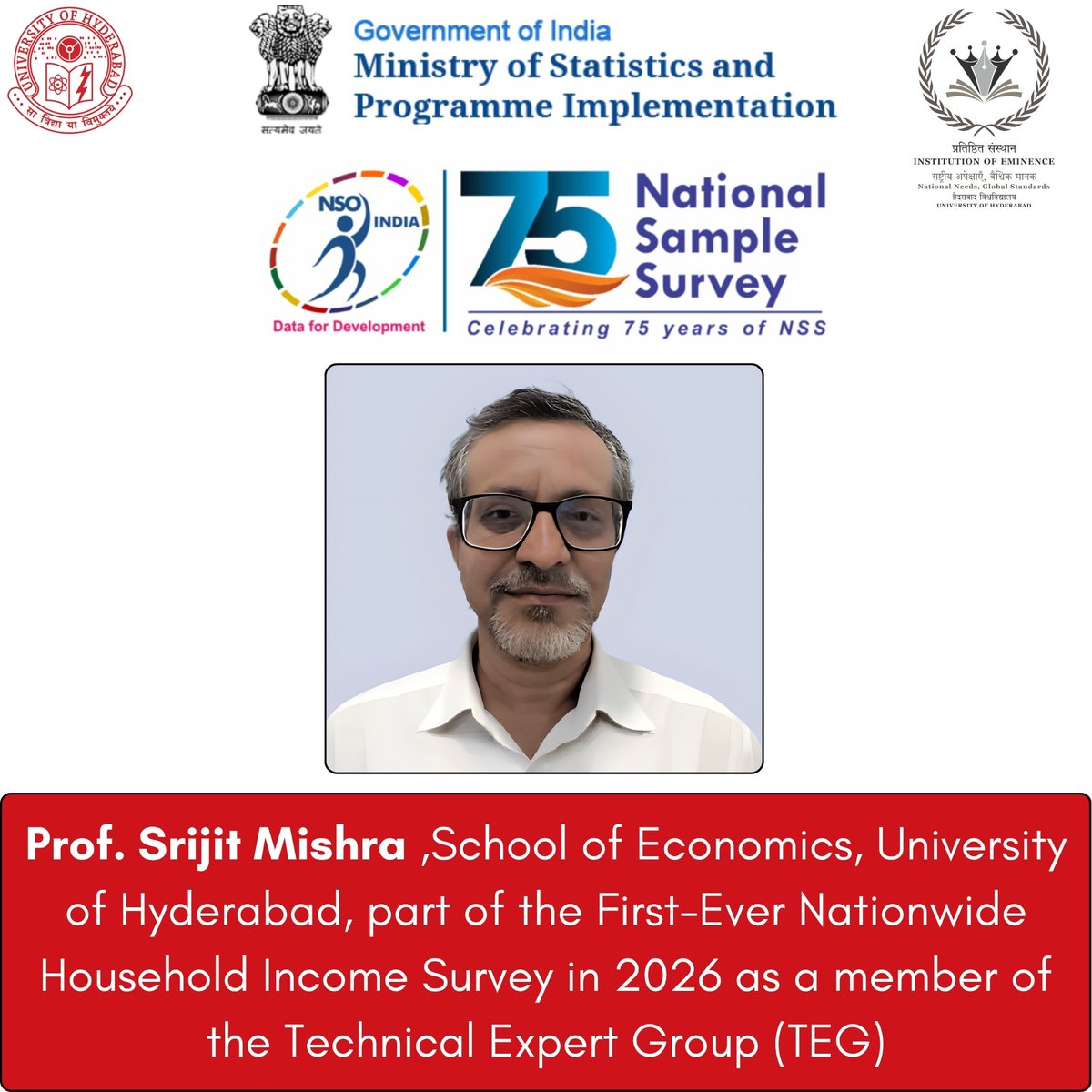
𝐏𝐫𝐨𝐟. 𝐒𝐫𝐢𝐣𝐢𝐭 𝐌𝐢𝐬𝐡𝐫𝐚 𝐀𝐩𝐩𝐨𝐢𝐧𝐭𝐞𝐝 𝐭𝐨 𝐍𝐚𝐭𝐢𝐨𝐧𝐚𝐥 𝐄𝐱𝐩𝐞𝐫𝐭 𝐏𝐚𝐧𝐞𝐥 𝐟𝐨𝐫 𝐈𝐧𝐝𝐢𝐚'𝐬 𝐅𝐢𝐫𝐬𝐭 𝐂𝐨𝐦𝐩𝐫𝐞𝐡𝐞𝐧𝐬𝐢𝐯𝐞 𝐇𝐨𝐮𝐬𝐞𝐡𝐨𝐥𝐝 𝐈𝐧𝐜𝐨𝐦𝐞 𝐒𝐮𝐫𝐯𝐞𝐲 🇮🇳📊
It is a moment of great distinction and pride that Professor Srijit Mishra, faculty member at the School of Economics, University of Hyderabad, has been appointed to the Technical Expert Group (TEG) constituted by the Ministry of Statistics and Programme Implementation (MoSPI). The TEG, chaired by Dr. Surjit S. Bhalla, will play a pivotal role in guiding the design and execution of India’s first-ever full-scale Household Income Survey, scheduled for 2026.
The inclusion of Prof. Mishra in this esteemed panel acknowledges his long-standing contributions to economic research, statistical methodology, and evidence-based policy studies. His expertise will contribute significantly to refining concepts, developing survey instruments, ensuring methodological rigour, and improving the reliability of income distribution data in the country.
This survey is expected to be a landmark initiative, offering critical insights into income patterns, the impact of technological shifts on household earnings, and providing a robust foundation for policy formulation and economic planning.
🔗 Read More on UoH Herald herald.uohyd.ac.in/india-to-…
#PublicPolicy #HouseholdIncomeSurvey #MoSPI #Economics #SrijitMishra #UniversityOfHyderabad #DataDrivenPolicy #IncomeDistribution #NationalStatistics #IndiaEconomy #EvidenceBasedResearch #ExpertPanel #ProudMoment #UoH
1
2
10
723

20 Apr 2025
Funds for paying dividends are formed through various contributions and income. In general, the government pays gold coins from various items of income to securities funds on a daily basis.
Funds for the payment of dividends on mining securities:
• 10% of the sale price of the corresponding type of mine at the mine auction for gold coins.
• An equal share of 10% of the trading guild’s profit fund.
Note. This fund covers the following types of securities: “Plot on a river”, “Large river mine”, “Plot in a quarry”, “Large quarry mine”, “Small mining”, “Large mining”.
#GoldenClone #CryptoGames #Game #Sol #Dividends #SecuritiesFunds #GoldCoins #MiningIndustry #IncomeDistribution #AuctionSales #TradingGuild #InvestmentFunds #MiningSecurities #FinancialManagement #EconomicContributions #MiningProfits #RevenueSharing #ResourceManagement

3
51

20 Mar 2025
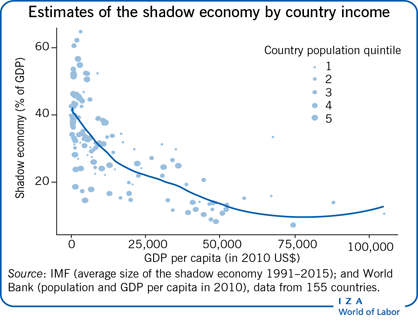
Fully understanding how #taxes affect the #IncomeDistribution requires accounting for how #TaxEvasion affects factor and product prices. Read more in this article by James Alm @Tulane and @mkasper_ @EuckenInstit:
wol.iza.org/articles/tax-eva…
1
3
6
1,348

#WATCH | Only 10% ‘Consuming Class’, Others Have No Money To Buy On Non-essentials, Report's Shocking Data India’s
Only 10% ‘Consuming Class’, Others Have No Money To Buy On Non-essentials, Report's Shocking Data A billion Indians—yes, nearly 100 crore of the population—have little to no disposable income.
Watch the video 🎥 youtube.com/watch?v=LTqzgqAV…
#IndusValleyReport #ConsumerLoans #IndiaEconomy #IncomeDistribution #IndiaGrowth #IndianEconomy2025 #WealthInequality #IndiaReport #IndiaGDP #InflationData
4
7
32
2,912

12 Feb 2025
Predicting Income Distributions with Minimal Data: A Game-Changer for Economic Forecasting
devdiscourse.com/article/tec…
#IncomeDistribution #EconomicForecasting #MachineLearning #AI #PolicyInnovation #DataDriven #GlobalEconomy #BayesianInference #PovertyAlleviation @WorldBank
100

20 Dec 2024
Chief Economic Advisor says Post-Covid the poor have done better
Watch: youtu.be/6ctBPQqLTJk | #VAnanthaNageshwaran #PostCOVID #India #IncomeDistribution #MiddleClass
577

16 Dec 2024
youtube.com/watch?v=uO8cQxZY…
@BasementRon #RonsBasement #silver, #silverprice, #gold, #goldprice, #ronsbasement, #economy, #platinum, #federalreserve, #fed, #silverstacking, #goldmines, #wallstreet, #preciousmetals, #housingmarket, #crypto, #cryptocurrency, #stockmarket, #foodshortages, #bitcoin, #jeromepowell, #stagflation, #usdebt, #bullion, #economiccrisis, #prepper, #dedollarization, #stockmarketcrash, #inflation, #geopolitics, #incomedistribution, #wealthdisparity #silversqueeze

1
88

26 Oct 2024
India sees 74 pc drop in income disparity since AY15, direct tax collection highest in 14 years
yespunjab.com/?p=52560
#IncomeDisparity #EconomicGrowth #SBIReport #IncomeDistribution #LowerIncomeGroup #TaxReform #DirectTaxes #IncomeTaxReturn #ITR #Taxes
59

1 Oct 2024
💡 Discussion: How can Central Banks ensure that the benefits and costs of price stability are fairly distributed?
🔗 Read the Full Study here 👇
ijcb.org/journal/ijcb24q4a2.…
#Disinflation #MonetaryPolicy #IncomeDistribution #CentralBanking
2
382

28 Sep 2024
# Equal Income Distribution: Harnessing Blockchain for Economic Equality
## Introduction
In a world where economic inequality continues to grow, the concept of a basic income has gained traction as a potential solution. The integration of blockchain technology into basic income systems could offer a revolutionary approach to income distribution. This article explores how blockchain can facilitate equitable income distribution, reduce economic disparities, and empower individuals to focus on their creativity and potential.
## Understanding Economic Inequality
Economic inequality refers to the unequal distribution of wealth and resources among individuals and groups within society. The growing gap between the rich and the poor poses significant challenges, including:
### Limited Access to Resources
Many individuals struggle to meet their basic needs for food, shelter, healthcare, and education. This lack of access can perpetuate cycles of poverty, making it difficult for marginalized communities to improve their circumstances.
### Stifled Innovation and Creativity
When individuals are preoccupied with meeting basic needs, their ability to innovate and create is diminished. Economic insecurity can stifle entrepreneurial efforts and limit contributions to society as a whole.
### Social Unrest
Rising economic inequality can lead to social tensions and unrest. As people become increasingly frustrated with their economic conditions, it can foster feelings of disenfranchisement and instability within communities.
## The Promise of Basic Income
A basic income system aims to provide individuals with a regular, unconditional sum of money to cover their essential needs. By ensuring a financial safety net, basic income can help address some of the issues associated with economic inequality. The key benefits include:
### Poverty Alleviation
A guaranteed income can lift individuals and families out of poverty, providing them with the means to meet their basic needs and improve their quality of life.
### Economic Stability
Basic income can stimulate local economies by increasing consumer spending. When individuals have disposable income, they are more likely to invest in goods and services, fostering economic growth.
### Encouragement of Creativity and Innovation
With financial worries alleviated, individuals can focus on pursuing education, creative projects, and entrepreneurial ventures. This can lead to increased innovation and a more dynamic economy.
## Blockchain: A Solution for Distribution
Blockchain technology offers unique advantages for implementing a global basic income system:
### Transparency and Security
Blockchain’s decentralized ledger ensures that all transactions are recorded transparently and securely. This transparency builds trust in the system, as individuals can verify that funds are distributed fairly and efficiently.
### Automated Distribution
Smart contracts, a feature of blockchain technology, can automate the distribution of income. These contracts can execute payments based on predefined conditions, ensuring timely and accurate transfers to individuals worldwide.
### Global Accessibility
Blockchain can enable access to basic income systems for individuals regardless of their geographical location. This is particularly beneficial in developing regions where traditional banking infrastructure may be lacking.
### Reduced Administrative Costs
By eliminating intermediaries, blockchain can reduce administrative costs associated with income distribution. This efficiency can ensure that a larger portion of the funds reaches those in need.
## Real-World Applications of Blockchain in Basic Income
Several projects and initiatives are exploring the potential of blockchain in basic income distribution:
### GiveDirectly
GiveDirectly is a nonprofit organization that provides cash transfers to individuals in need. By utilizing blockchain technology, they can ensure secure and efficient transactions, increasing the impact of their programs.
### Universal Basic Income (UBI) Projects
Various UBI pilot projects are experimenting with blockchain-based solutions for distributing income. These projects aim to assess the effectiveness of basic income in promoting economic stability and individual empowerment.
### Circles
Circles is a decentralized platform that enables individuals to receive a basic income in the form of a local cryptocurrency. This approach encourages local economic participation and fosters community engagement.
### Blockchain-Based Currencies
Some blockchain projects are developing digital currencies specifically designed for basic income distribution. These currencies aim to create a sustainable ecosystem that supports individuals and fosters economic growth.
## Addressing Challenges and Considerations
While the potential for blockchain-based basic income systems is promising, several challenges must be addressed:
### Regulatory Frameworks
Implementing basic income systems requires collaboration with policymakers to establish supportive regulatory frameworks. Ensuring compliance with existing laws and regulations is crucial for successful implementation.
### Technological Literacy
For blockchain solutions to be effective, individuals must have a basic understanding of how to use digital wallets and cryptocurrencies. Educational initiatives are essential to promote digital literacy.
### Integration with Existing Systems
Integrating blockchain-based income distribution with existing financial systems can pose technical challenges. Developing interoperability between traditional and blockchain systems will be key to success.
### Scalability
As demand for basic income systems grows, blockchain platforms must be scalable to accommodate an increasing number of transactions. Ensuring the technology can handle large-scale operations is vital for long-term sustainability.
## The Future of Equal Income Distribution
The integration of blockchain technology into basic income systems could transform economic structures worldwide. Key trends influencing this future may include:
### Global Adoption of Basic Income
As awareness of economic inequality grows, more countries may consider implementing basic income systems. Blockchain can facilitate these efforts by providing efficient and transparent solutions.
### Empowerment of Marginalized Communities
Blockchain-based basic income can specifically target marginalized communities, providing them with the resources needed to break free from the cycles of poverty.
### Increased Economic Mobility
With a guaranteed income, individuals may have the freedom to pursue education and job opportunities that were previously unattainable. This can lead to increased economic mobility and a more equitable society.
### Innovative Economic Models
The combination of blockchain and basic income could inspire new economic models that prioritize community well-being and sustainability, fostering a more inclusive economy.
## Conclusion
Blockchain technology holds the potential to revolutionize income distribution by enabling basic income systems that are transparent, efficient, and accessible to all. By addressing economic inequality, these systems can empower individuals to focus on their creativity and potential.
As we move toward a more equitable future, it is essential to collaborate among stakeholders, including policymakers, technologists, and communities, to harness the power of blockchain for social good. By embracing this transformative potential, we can pave the way for a fairer and more sustainable economic landscape.
#EqualIncome
#BasicIncome
#UniversalBasicIncome
#BlockchainForGood
#IncomeEquality
#FinancialInclusion
#WealthDistribution
#BlockchainTechnology
#PovertyAlleviation
#Empowerment
#EconomicJustice
#SmartContracts
#SocialImpact
#CryptoEconomy
#DigitalCurrency
#SustainableDevelopment
#IncomeSecurity
#FutureOfWork
#DecentralizedFinance
#EconomicEquality
#CommunityWealth
#BlockchainInnovation
#DirectCashTransfers
#TechForGood
#SocialWelfare
#GlobalIncome
#DigitalInclusion
#TransparentEconomy
#InnovativeEconomics
#RethinkEconomics
#DigitalCash
#EmpoweredCommunities
#SocialChange
#EquitableEconomy
#BlockchainBenefits
#SustainableIncome
#FutureOfFinance
#FinancialFreedom
#CryptoForAll
#IncomeDistribution
#CommunitySupport
#DigitalEconomy
#BlockchainSolutions
#AccessToIncome
#EconomicEmpowerment
#BlockchainRevolution
#UniversalIncome
#InclusiveEconomy
#InnovateForChange
#TrustInBlockchain
3
19

The mixed economy? It's a mess! 🧹
Max Molden tries to sort out some issues with justice at #EconLog: econlib.org/maneuvering-in-t… #MixedEconomy #MarketEconomy #IncomeDistribution
2
484

1 Aug 2024
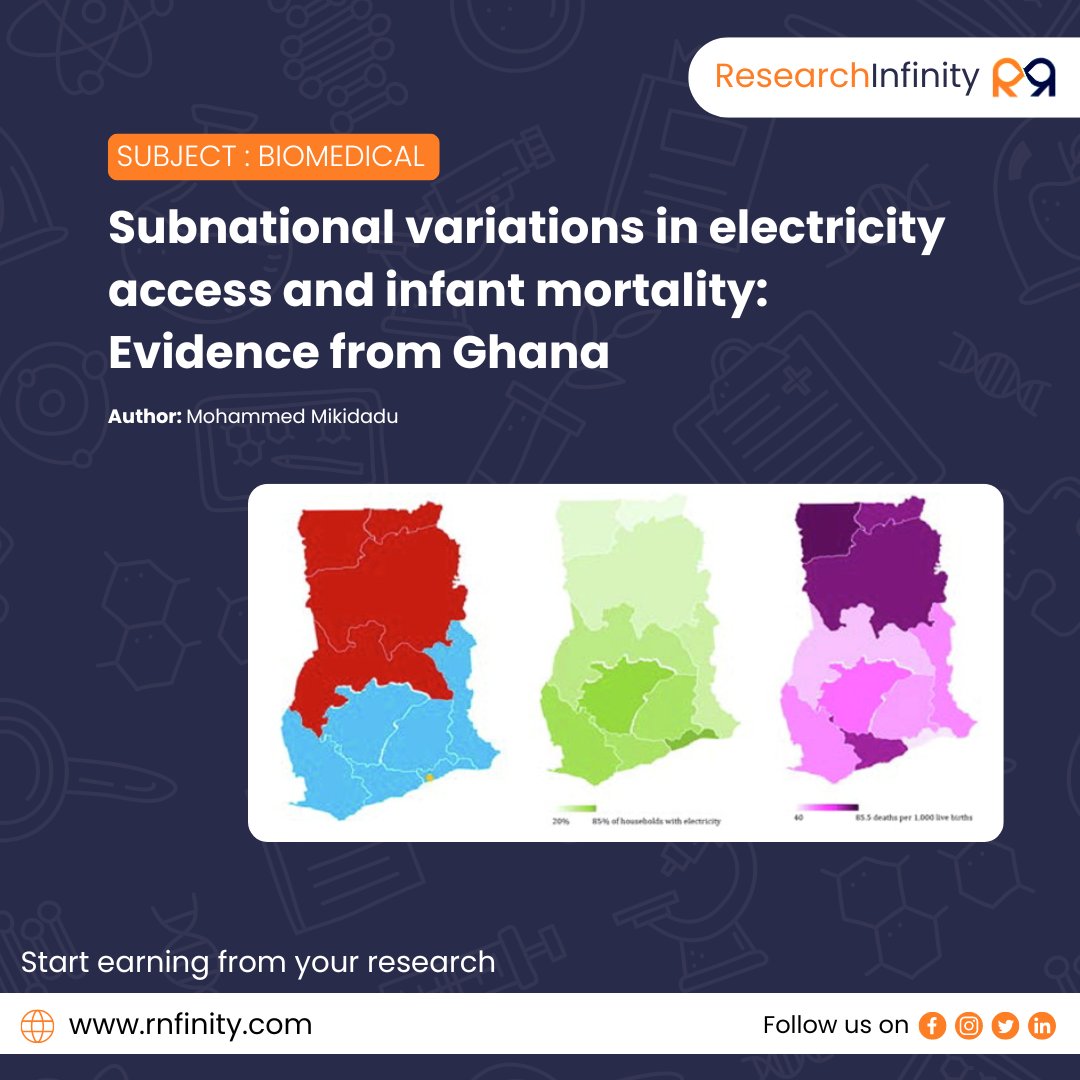
The study investigated the relationship between electricity access & infant mortality at the sub- national level in Ghana, controlling for correlates such as birth interval, children living with both parents, #womenseducation, & #incomedistribution.
More- tinyurl.com/2yvsnwb8
6
7
73

14 May 2024
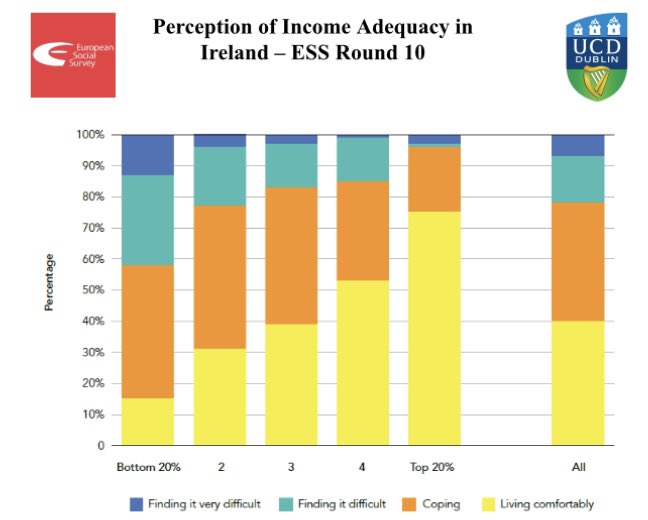
At the bottom of the income distribution, 42% find it difficult or very difficult to live on their current income. Among the top 20%, three-quarters report that they can live comfortably. #ESS10 #Survey #LoveIrishResearch #IncomeDistribution ess.ucd.ie/
3
3
611