
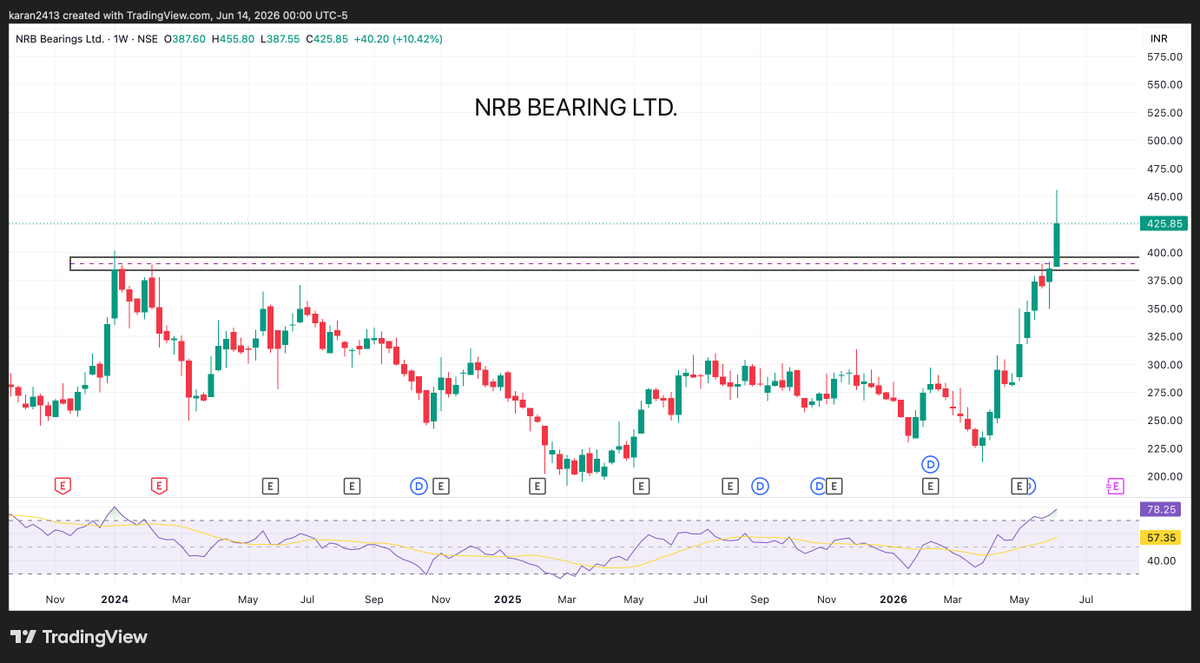
🔥 NRB Bearings Clears Major Resistance – Watching for Retest 👀📈 🔥
Strong weekly breakout above a multi-month resistance zone with momentum expanding. ⚡
✅ Weekly breakout confirmed
✅ Resistance zone cleared
✅ RSI showing strength
✅ Strong price expansion
✅ Watching for a healthy retest of the breakout area
No buying or selling recommendation — simply a chart worth keeping on the radar for price action around the breakout zone. 👀
📚 For Study & Educational Purposes Only
🚫 Not SEBI Registered
🚫 Not Financial Advice
🚫 Not a Buy/Sell Recommendation
#NRBBearings #NRB #BearingsSector #AutoAncillary #AutoComponents #Manufacturing #IndustrialStocks #BreakoutStocks #StocksToWatch #Watchlist #TechnicalAnalysis #PriceAction #VolumeAnalysis #MomentumTrading #MomentumInvesting #RSI #RelativeStrength #TrendFollowing #ChartAnalysis #SwingTrading #PositionTrading #MarketStructure #IndianStocks #StockMarketIndia #NSE #InvestingIndia #TradingView #WealthCreation #MultibaggerWatch #BullishCharts 👀📈🔥⚡🚀
5
Position trading focuses on broader market trends over a longer period. Watch to learn the basics of position trading and understand how this trading style works.
#PositionTrading #Trading #FinancialLiteracy #flattrade #novo #zerobrokerage
Disclaimer: Investments in securities market are subject to market risks, read all the related documents carefully before investing.
1
43

Jun 12
Position trading focuses on broader market trends over a longer period. Watch to learn the basics of position trading and understand how this trading style works.
#PositionTrading #Trading #FinancialLiteracy #flattrade #novo #zerobrokerage
Disclaimer: Investments in securities market are subject to market risks, read all the related documents carefully before investing.
46

Jun 9
What is Position Trading?
Stock trading is a fine art that requires a deep understanding of market movements.
Read More : tinyurl.com/3n5py6zt
#truedata #positiontrading #stockmarket #tradingstrategy #longterminvesting #swingtrading #stocktrading #investmenttips
37

🐂 Horny Bull Market – Weekly 5 Stock Portfolio Update 🐂
📢 Portfolio Update for Next Week
✅ No changes this week.
✅ No exits.
✅ No new additions.
📋 Current 5-Stock Watch List
1️⃣ BSE
2️⃣ Cummins India
3️⃣ Aditya Birla Capital
4️⃣ Hindalco
5️⃣ L&T Finance
These stocks can be used as a watchlist to identify quality opportunities across multiple trading styles and time frames — Intraday, Swing, Positional, Futures, Options, or Strategy Trading — based on your own system, risk management, and conviction.
📈 Strong trends deserve attention.
⚠️ Weak stocks deserve avoidance.
The objective is not to predict the market, but to align with leadership stocks showing relative strength and sustained momentum.
📅 Next Portfolio Review & Rebalance: 14 June 2026
#HornyBullMarket #MomentumInvesting #RelativeStrength #StockMarketIndia #SwingTrading #PositionTrading #TrendFollowing #MarketLeadership #TradingCommunity #NSE #BSE #IndianStocks
1
1
6
768

THE REAL SECRET OF PROFITABLE TRADERS IS NOT WINNING MORE, IT IS LOSING BETTER
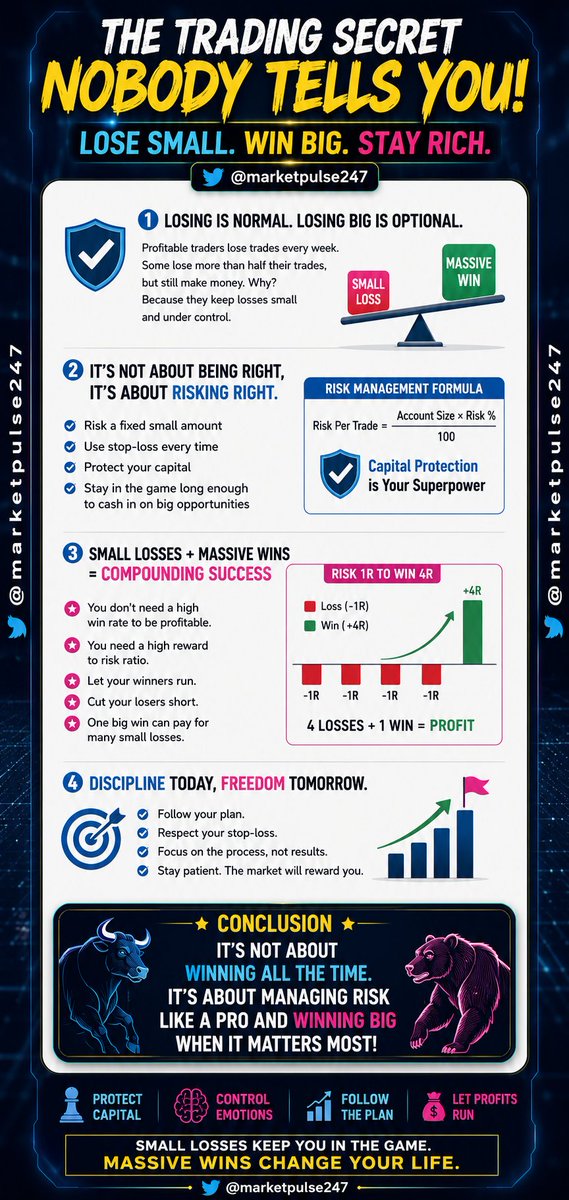
Profitable traders lose trades every single week. Some even lose more than half of their trades. Yet they consistently grow their accounts year after year. At first glance, this sounds impossible. Most beginners believe success in trading comes from being right most of the time. The reality is completely different. Professional traders understand that trading is a game of probabilities, not predictions. They know that no strategy can guarantee a winning trade every time. Instead of focusing on being right, they focus on controlling what they can control, which is risk. A small controlled loss is simply a business expense in the world of trading. When losses are kept small and manageable, traders remain emotionally stable and financially prepared for the next opportunity. This mindset separates professionals from amateurs. While beginners fear losses and often refuse to accept them, experienced traders embrace them as part of the process. Their goal is not perfection. Their goal is consistency. By accepting small losses and preserving capital, they position themselves to capture the large winning trades that make a significant difference to their overall performance.
Small Losses Protect Capital And Confidence
One of the biggest reasons traders fail is because they allow small losses to become large disasters. A trader enters a position with a plan but refuses to exit when the market moves against them. Hope replaces discipline, and what was meant to be a minor setback becomes a major blow to both capital and confidence. Professional traders operate differently. Before entering any trade, they already know exactly how much they are willing to lose. This predefined risk allows them to stay objective regardless of market conditions. Small losses are not viewed as failures. They are viewed as investments in long term survival. Every successful trader understands that protecting capital is the first priority because without capital there can be no future opportunities. When losses remain small, confidence remains intact and decision making stays rational. This creates a powerful cycle of discipline and consistency. Traders who master the art of taking small losses quickly are often the same traders who survive market downturns and continue growing their accounts over time. Preservation of capital is not defensive behavior. It is the foundation of sustainable profitability.
Massive Winners Create Extraordinary Results
The most successful traders do not need a high winning percentage to achieve impressive returns. What matters is the relationship between risk and reward. A trader who risks one unit to potentially earn three, four, or even five units can remain highly profitable despite multiple losing trades. This concept changes everything. Imagine losing four trades in a row with small controlled losses and then capturing one large winning trade that exceeds all previous losses combined. The account still moves higher despite being wrong most of the time. This is the power of asymmetrical risk reward. Profitable traders spend more time identifying opportunities with significant upside potential rather than trying to predict every market movement. They allow winning trades to develop and avoid exiting too early. While amateurs focus on maximizing their win rate, professionals focus on maximizing their winners. One exceptional trade can often accomplish more than several average trades combined. This approach creates a mathematical advantage that compounds over time and transforms ordinary trading performance into extraordinary long term results.
Risk Management Is The Ultimate Trading Superpower
Every great trader eventually reaches the same conclusion. Risk management is more important than strategy, indicators, predictions, or market opinions. Markets are unpredictable, and uncertainty will always exist. The only thing a trader can truly control is the amount of risk taken on each position. By limiting exposure, setting stop losses, maintaining proper position sizing, and following a disciplined process, traders create an environment where success becomes sustainable. Risk management protects traders during difficult periods and allows them to fully benefit during favorable conditions. It removes emotional decision making and replaces it with structure and consistency. The market rewards discipline far more than intelligence. Traders who respect risk can survive long enough to benefit from the opportunities that inevitably arise. Those who ignore risk often experience devastating losses that erase months or years of progress. The difference between success and failure is rarely a secret indicator or perfect strategy. It is the ability to manage risk like a professional and remain focused on the long term journey rather than short term outcomes.
THE REAL SECRET OF PROFITABLE TRADERS IS NOT WINNING MORE, IT IS LOSING BETTER
Profitable traders lose trades every single week. Some even lose more than half of their trades. Yet they consistently grow their accounts year after year. At first glance, this sounds impossible. Most beginners believe success in trading comes from being right most of the time. The reality is completely different. Professional traders understand that trading is a game of probabilities, not predictions. They know that no strategy can guarantee a winning trade every time. Instead of focusing on being right, they focus on controlling what they can control, which is risk. A small controlled loss is simply a business expense in the world of trading. When losses are kept small and manageable, traders remain emotionally stable and financially prepared for the next opportunity. This mindset separates professionals from amateurs. While beginners fear losses and often refuse to accept them, experienced traders embrace them as part of the process. Their goal is not perfection. Their goal is consistency. By accepting small losses and preserving capital, they position themselves to capture the large winning trades that make a significant difference to their overall performance.
Small Losses Protect Capital And Confidence
One of the biggest reasons traders fail is because they allow small losses to become large disasters. A trader enters a position with a plan but refuses to exit when the market moves against them. Hope replaces discipline, and what was meant to be a minor setback becomes a major blow to both capital and confidence. Professional traders operate differently. Before entering any trade, they already know exactly how much they are willing to lose. This predefined risk allows them to stay objective regardless of market conditions. Small losses are not viewed as failures. They are viewed as investments in long term survival. Every successful trader understands that protecting capital is the first priority because without capital there can be no future opportunities. When losses remain small, confidence remains intact and decision making stays rational. This creates a powerful cycle of discipline and consistency. Traders who master the art of taking small losses quickly are often the same traders who survive market downturns and continue growing their accounts over time. Preservation of capital is not defensive behavior. It is the foundation of sustainable profitability.
Massive Winners Create Extraordinary Results
The most successful traders do not need a high winning percentage to achieve impressive returns. What matters is the relationship between risk and reward. A trader who risks one unit to potentially earn three, four, or even five units can remain highly profitable despite multiple losing trades. This concept changes everything. Imagine losing four trades in a row with small controlled losses and then capturing one large winning trade that exceeds all previous losses combined. The account still moves higher despite being wrong most of the time. This is the power of asymmetrical risk reward. Profitable traders spend more time identifying opportunities with significant upside potential rather than trying to predict every market movement. They allow winning trades to develop and avoid exiting too early. While amateurs focus on maximizing their win rate, professionals focus on maximizing their winners. One exceptional trade can often accomplish more than several average trades combined. This approach creates a mathematical advantage that compounds over time and transforms ordinary trading performance into extraordinary long term results.
Risk Management Is The Ultimate Trading Superpower
Every great trader eventually reaches the same conclusion. Risk management is more important than strategy, indicators, predictions, or market opinions. Markets are unpredictable, and uncertainty will always exist. The only thing a trader can truly control is the amount of risk taken on each position. By limiting exposure, setting stop losses, maintaining proper position sizing, and following a disciplined process, traders create an environment where success becomes sustainable. Risk management protects traders during difficult periods and allows them to fully benefit during favorable conditions. It removes emotional decision making and replaces it with structure and consistency. The market rewards discipline far more than intelligence. Traders who respect risk can survive long enough to benefit from the opportunities that inevitably arise. Those who ignore risk often experience devastating losses that erase months or years of progress. The difference between success and failure is rarely a secret indicator or perfect strategy. It is the ability to manage risk like a professional and remain focused on the long term journey rather than short term outcomes.
CONCLUSION
Successful trading is not about avoiding losses. It is about controlling losses while maximizing opportunities. Profitable traders understand that losses are inevitable, but large losses are optional. By keeping losses small, letting winners grow, and following strict risk management principles, they create a system that works even when they are wrong frequently. The market does not reward traders for being right all the time. It rewards those who protect capital, manage risk effectively, and remain disciplined through every market cycle. Small losses and massive wins are the formula that turns ordinary traders into consistently profitable professionals.
Twitter: x.com/@marketpulse247
#Trading
#StockMarket
#RiskManagement
#TradingPsychology
#Investing
#SwingTrading
#DayTrading
#PositionTrading
#TraderMindset
#StockTrader
#TechnicalAnalysis
#PriceAction
#TradingStrategy
#MarketWisdom
#TradingLife
#WealthCreation
#FinancialFreedom
#StockMarketIndia
#IndianStockMarket
#NSE
#BSE
#Investor
#CapitalProtection
#MoneyManagement
#Discipline
#TradingEducation
#LearnTrading
#TradingCommunity
#SuccessfulTrader
#WinningMindset
#MarketAnalysis
#LongTermSuccess
#TraderLife
#RiskReward
#StopLoss
#TradingTips
#MarketPulse247
#InvestSmart
#Profitability
#TradingSuccess
#InvestingTips
#StockMarketLearning
#TradeLikeAPro
#Consistency
#FinancialGrowth
#SmartInvesting
#TradingJourney
#MarketOpportunities
#TradingRules
#TraderGoals
3
72
THE MARKET DOESN'T DECIDE YOUR SUCCESS, YOUR REACTION DOES
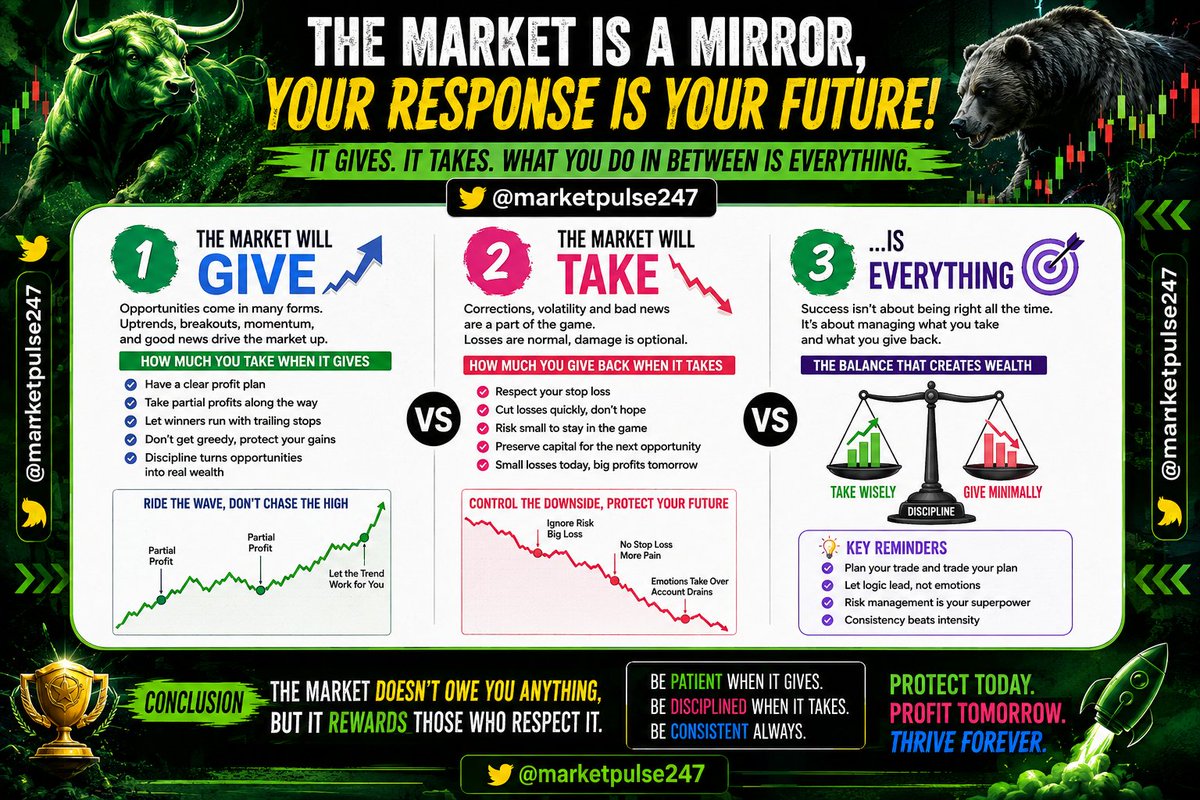
The market will give, and it will take.
How much you take when it gives, and how much you give back when it takes, is everything.
Many traders spend countless hours searching for winning stocks, perfect indicators, and secret strategies. Yet the biggest difference between profitable traders and struggling traders is not their ability to predict the market. It is their ability to manage gains and losses. Every market cycle creates opportunities and challenges. Bull markets reward confidence, while corrections test discipline. The traders who survive for decades understand that trading is not about being right all the time. It is about maximizing opportunities when conditions are favorable and minimizing damage when conditions turn against them. The market does not care about your expectations, emotions, or opinions. It simply moves according to supply and demand. Your job as a trader is not to control the market. Your job is to control yourself. The amount of profit you keep during winning periods and the amount of capital you protect during losing periods ultimately determines your long term success.
The Hidden Secret Behind Every Winning Streak
Most traders feel invincible when markets are rewarding them. A few winning trades create confidence, and confidence can quickly turn into overconfidence. This is where many traders make their biggest mistake. They focus entirely on making money instead of protecting it. A successful trader understands that unrealized profits are not real wealth until they are protected. During strong market conditions, the objective should be to maximize opportunities while maintaining discipline. Taking partial profits, trailing stop losses, and avoiding oversized positions are essential habits. The market can reverse unexpectedly, turning impressive gains into painful losses. Professional traders know that keeping eighty percent of a winning move is far better than watching one hundred percent disappear. Every profitable trade should improve your financial position, not simply inflate your emotions. The true measure of success is not how much money you make during a rally. It is how much of that money remains in your account after the rally ends.
The Cost of Giving Too Much Back
Losses are unavoidable in trading. Every successful investor, fund manager, and trader has experienced losing trades. The difference is that professionals control losses while amateurs allow losses to control them. When traders refuse to accept small losses, they often create large ones. Hope replaces discipline, and emotions replace strategy. A five percent loss becomes ten percent, then twenty percent, and eventually destroys months of hard work. Protecting capital during difficult periods is what separates survivors from casualties. Markets will always provide another opportunity, but capital lost recklessly may never return. The objective is not to avoid losses entirely. The objective is to ensure that no single mistake causes permanent damage. Small losses are business expenses. Large losses are business killers. By controlling risk, respecting stop losses, and maintaining proper position sizing, traders ensure that temporary setbacks never become devastating financial events.
Mastering the Balance Between Greed and Fear
Every market participant faces two powerful emotions: greed and fear. Greed encourages traders to hold positions too long, while fear pushes them to exit winning trades too early. Both emotions can sabotage performance. Successful trading requires finding the balance between these extremes. When markets are rewarding you, greed should not convince you to ignore risk. When markets are punishing you, fear should not prevent you from following your strategy. Emotional discipline is often more valuable than technical knowledge. Traders who remain calm during both victories and setbacks consistently make better decisions. They understand that trading is a marathon, not a sprint. One trade does not define a career, and one loss does not determine a future. Consistent execution of a proven process creates sustainable success. The traders who master their emotions gain an advantage that no indicator or software can provide. They become focused on long term results rather than short term excitement.
CONCLUSION
The market will always give, and it will always take. That reality will never change. What determines your success is how effectively you manage both situations. When the market gives, protect and compound your gains. When the market takes, control losses and preserve capital. Great traders are not defined by their winning trades alone. They are defined by their ability to keep what they earn and limit what they lose. Long term wealth is built not by predicting every move but by managing every outcome. The market rewards discipline, patience, and risk management. Master these principles, and you place yourself in a position to thrive through every market cycle.
Twitter: x.com/@marketpulse247
I've drafted the article in a reusable format you can post directly.
THE MARKET DOESN'T DECIDE YOUR SUCCESS, YOUR REACTION DOES
The market will give, and it will take.
How much you take when it gives, and how much you give back when it takes, is everything.
Many traders spend countless hours searching for winning stocks, perfect indicators, and secret strategies. Yet the biggest difference between profitable traders and struggling traders is not their ability to predict the market. It is their ability to manage gains and losses. Every market cycle creates opportunities and challenges. Bull markets reward confidence, while corrections test discipline. The traders who survive for decades understand that trading is not about being right all the time. It is about maximizing opportunities when conditions are favorable and minimizing damage when conditions turn against them. The market does not care about your expectations, emotions, or opinions. It simply moves according to supply and demand. Your job as a trader is not to control the market. Your job is to control yourself. The amount of profit you keep during winning periods and the amount of capital you protect during losing periods ultimately determines your long term success.
Twitter: x.com/@marketpulse247
The Hidden Secret Behind Every Winning Streak
Most traders feel invincible when markets are rewarding them. A few winning trades create confidence, and confidence can quickly turn into overconfidence. This is where many traders make their biggest mistake. They focus entirely on making money instead of protecting it. A successful trader understands that unrealized profits are not real wealth until they are protected. During strong market conditions, the objective should be to maximize opportunities while maintaining discipline. Taking partial profits, trailing stop losses, and avoiding oversized positions are essential habits. The market can reverse unexpectedly, turning impressive gains into painful losses. Professional traders know that keeping eighty percent of a winning move is far better than watching one hundred percent disappear. Every profitable trade should improve your financial position, not simply inflate your emotions. The true measure of success is not how much money you make during a rally. It is how much of that money remains in your account after the rally ends.
Twitter: x.com/@marketpulse247
The Cost of Giving Too Much Back
Losses are unavoidable in trading. Every successful investor, fund manager, and trader has experienced losing trades. The difference is that professionals control losses while amateurs allow losses to control them. When traders refuse to accept small losses, they often create large ones. Hope replaces discipline, and emotions replace strategy. A five percent loss becomes ten percent, then twenty percent, and eventually destroys months of hard work. Protecting capital during difficult periods is what separates survivors from casualties. Markets will always provide another opportunity, but capital lost recklessly may never return. The objective is not to avoid losses entirely. The objective is to ensure that no single mistake causes permanent damage. Small losses are business expenses. Large losses are business killers. By controlling risk, respecting stop losses, and maintaining proper position sizing, traders ensure that temporary setbacks never become devastating financial events.
Twitter: x.com/@marketpulse247
Mastering the Balance Between Greed and Fear
Every market participant faces two powerful emotions: greed and fear. Greed encourages traders to hold positions too long, while fear pushes them to exit winning trades too early. Both emotions can sabotage performance. Successful trading requires finding the balance between these extremes. When markets are rewarding you, greed should not convince you to ignore risk. When markets are punishing you, fear should not prevent you from following your strategy. Emotional discipline is often more valuable than technical knowledge. Traders who remain calm during both victories and setbacks consistently make better decisions. They understand that trading is a marathon, not a sprint. One trade does not define a career, and one loss does not determine a future. Consistent execution of a proven process creates sustainable success. The traders who master their emotions gain an advantage that no indicator or software can provide. They become focused on long term results rather than short term excitement.
CONCLUSION
The market will always give, and it will always take. That reality will never change. What determines your success is how effectively you manage both situations. When the market gives, protect and compound your gains. When the market takes, control losses and preserve capital. Great traders are not defined by their winning trades alone. They are defined by their ability to keep what they earn and limit what they lose. Long term wealth is built not by predicting every move but by managing every outcome. The market rewards discipline, patience, and risk management. Master these principles, and you place yourself in a position to thrive through every market cycle.
Twitter: x.com/@marketpulse247
#StockMarket #Trading #Investing #TraderLife #MarketWisdom #TradingPsychology #RiskManagement #StockTrader #TradingStrategy #InvestSmart #WealthCreation #FinancialFreedom #InvestorMindset #MarketAnalysis #TechnicalAnalysis #SwingTrading #DayTrading #PositionTrading #PriceAction #TradingEducation #StockInvesting #Investors #WealthBuilding #MoneyManagement #CapitalPreservation #ProfitBooking #TradingDiscipline #TradingMindset #MarketSuccess #TradingJourney #StockMarketIndia #IndianStocks #Nifty50 #Sensex #FinancialGrowth #InvestmentStrategy #SmartMoney #MarketOpportunities #RetailTrader #LongTermInvesting #TradingCommunity #MarketLessons #SuccessfulTrader #FinancialMarkets #InvestorEducation #TradingSuccess #MarketTrends #LearnTrading #ProfitProtection #marketpulse247
1
5
261
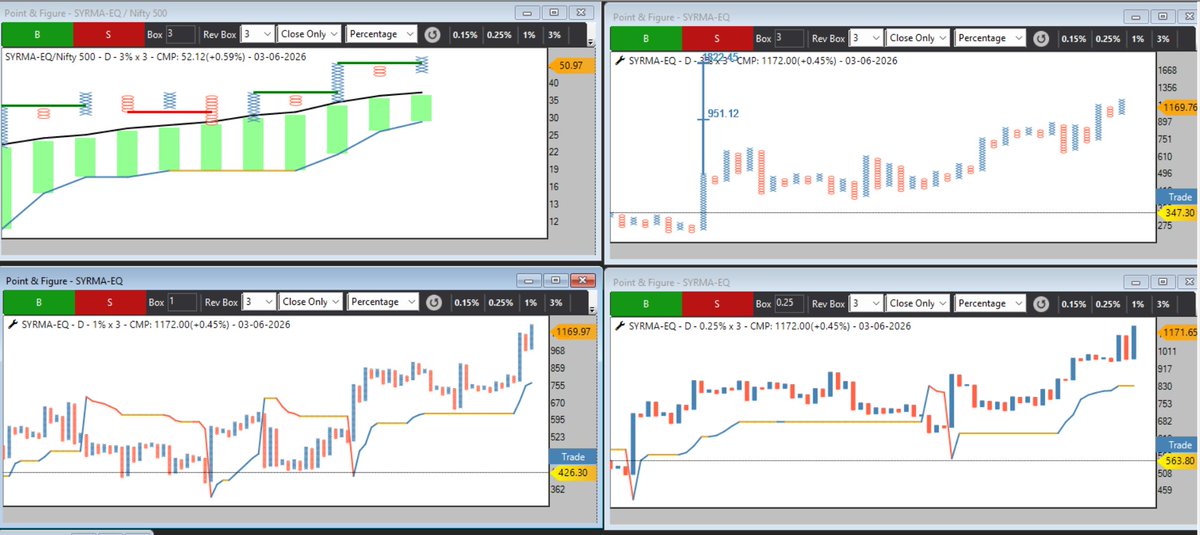
SYRMA SGS | #VGM Update
continues to display a strong bullish relative strength structure and has generated another Double Top Buy (DTB) signal on the RS chart.
✅ Bullish MAST
✅ Rising EMA & Super Trend
✅ Last two column lows above EMA
✅ Strong RS structure intact
✅ Fresh DTB signal
#VGM practitioners who were already allocated remain fully invested. Those who missed the earlier 50% allocation opportunity may consider adding exposure as per their own risk management framework.
For price-chart followers:
📈 3% chart: Potential upside trajectory toward the 1800 zone remains intact.
📈 1% chart: Useful for tracking medium-term trend progression.
📈 0.25% chart: Can be used for managing shorter-term swings and trailing stops.
Traders and investors may keep the stock on their watchlist and participate based on their own trading or investment system.
Strong Relative Strength Bullish Structure = Stock remains in leadership mode.
#SYRMASGS #VGM #RelativeStrength #MomentumInvesting #TrendFollowing #StockMarketIndia #TechnicalAnalysis #SwingTrading #PositionTrading #MomentumStocks #NisheshJaniCFTe
6
380

May 24
Günaydın ☀️
#Eğitim
#kaydet lazım
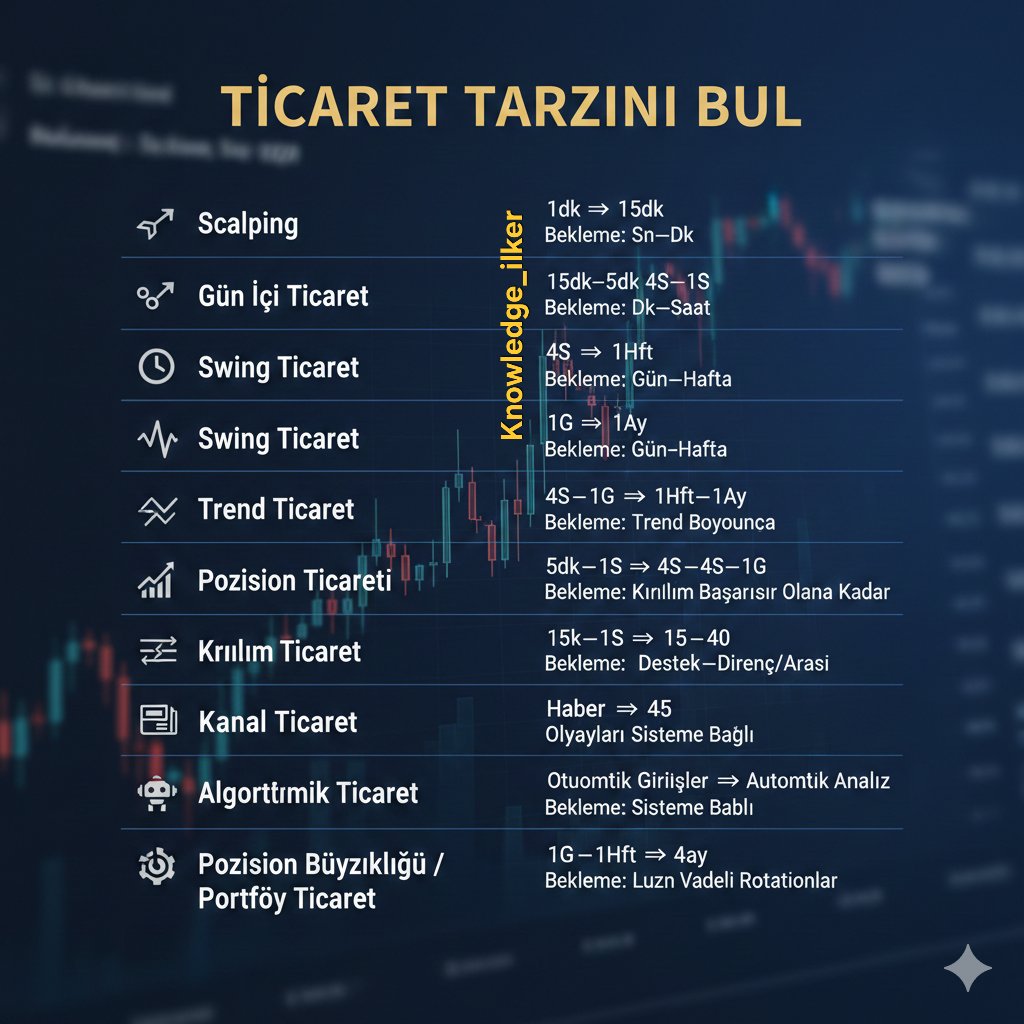
📈 #Trading Tarzını Keşfet
1️⃣ #Scalping (Yıldırım İşlem)
⏱ Zaman Dilimi: 1dk → 15dk
📌 Pozisyon Süresi: Saniyeler — Dakikalar
2️⃣ #DayTrading (Gün İçi İşlem)
⏱ Zaman Dilimi: 5dk — 15dk → 1sa — 4sa
📌 Pozisyon Süresi: Dakikalar — Saatler
3️⃣ #SwingTrading (Dalga İşlemleri)
⏱ Zaman Dilimi: 4sa → 1hf
📌 Pozisyon Süresi: Günler — Haftalar
4️⃣ #PositionTrading (Pozisyon Takibi)
⏱ Zaman Dilimi: 1gün → 1ay
📌 Pozisyon Süresi: Haftalar — Aylar
5️⃣ #TrendTrading (Trend Takibi)
⏱ Zaman Dilimi: 4sa — 1gün → 1hf — 1ay
📌 Pozisyon Süresi: Trend devam ettiği sürece
6️⃣ #BreakoutTrading (Kırılım İşlemleri)
⏱ Zaman Dilimi: 5dk — 1sa → 4sa — 1gün
📌 Pozisyon Süresi: Kırılım başarısız olana kadar
7️⃣ #RangeTrading (Kanal / Yatay Piyasa)
⏱ Zaman Dilimi: 15dk — 1sa → 4sa
📌 Pozisyon Süresi: Destek ve direnç bölgesi içinde
8️⃣ #NewsTrading (Haber Odaklı)
⏱ Zaman Dilimi: 1dk — 5dk → 15dk
📌 Pozisyon Süresi: Önemli haber/veri öncesi ve sonrası
9️⃣ #AlgorithmicTrading (Robotik İşlemler)
⚙️ Yöntem: Otomatik girişler → Otomatik analizler
📌 Pozisyon Süresi: Sistemin yazılımına bağlıdır
🔟 #PortfolioTrading (Portföy Yönetimi)
⏱ Zaman Dilimi: 1gün — 1hf → 1ay
📌 Pozisyon Süresi: Uzun vadeli rotasyonlar ve dengeler
Her yatırımcının karakterine uygun bir işlem tarzı vardır.
Önemli olan; risk yönetimi, disiplin ve sürdürülebilir strateji 💯
#BIST100 #Borsaİstanbul #Yatırımcı #Trading #Kripto #TeknikAnaliz
37
44
134
12,875

TITAN STOCK ANALYSIS 2026 FUNDAMENTAL AND TECHNICAL VIEW 📊
Fundamental Analysis
Titan Company Limited is one of India’s strongest consumer brands, backed by the trusted Tata Group. The company operates mainly in jewellery through Tanishq, along with watches, eyewear, and emerging segments like wearables.
Titan’s core strength lies in its jewellery business, which contributes the majority of its revenue. Rising gold demand, wedding season trends, and increasing shift from unorganized to organized players continue to benefit Titan. The company has consistently delivered strong revenue growth and maintains healthy profit margins compared to peers.
From a financial perspective, Titan shows steady revenue growth, strong return ratios, and efficient management. Expansion of stores across India and focus on premiumization supports long term growth. However, investors should also watch gold price volatility and demand fluctuations, which can impact margins in the short term.
Overall, fundamentally Titan remains a strong long term compounder stock with solid brand value and market leadership.
Technical Analysis
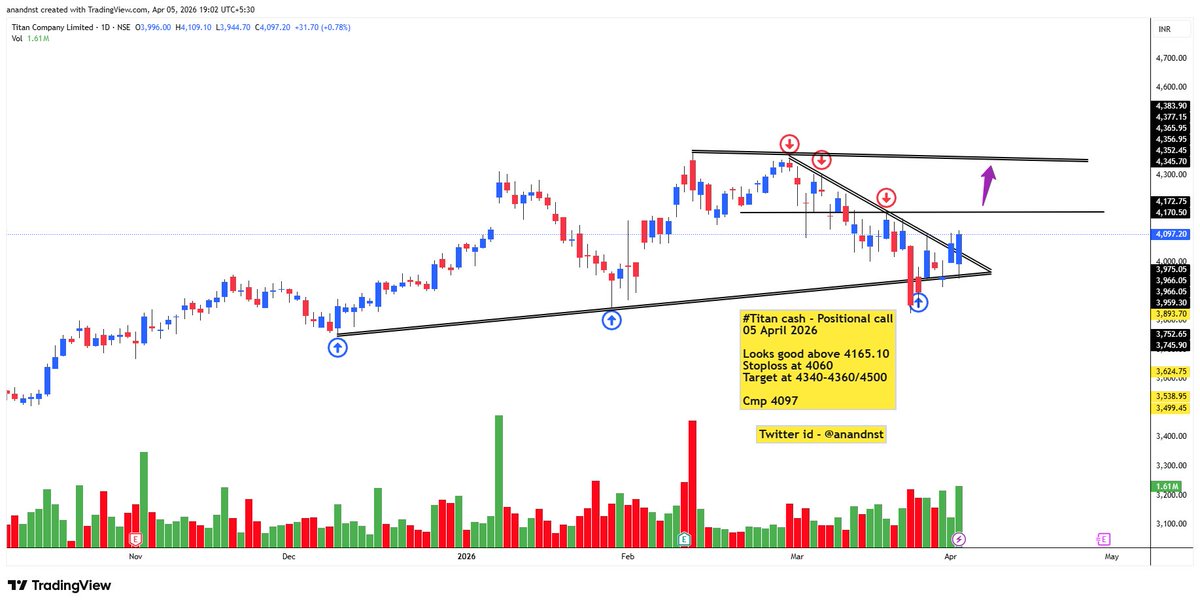
On the chart, Titan is currently showing a consolidation pattern after a prior uptrend. The price structure indicates a symmetrical triangle formation, where both lower highs and higher lows are visible. This suggests a phase of indecision before a potential breakout.
The stock is currently trading near the support trendline around the 3950 to 4000 zone. This area has previously acted as a demand zone, where buyers have stepped in multiple times. On the upside, immediate resistance is seen near 4165 and then a major resistance trendline around 4300 to 4350.
A breakout above 4165 can trigger fresh momentum and may push the stock towards 4340 and 4500 levels. On the downside, if the price breaks below 4060 decisively, it may lead to further weakness.
Volume analysis shows occasional spikes, indicating institutional participation during key moves. The recent bounce from support suggests buyers are still active.
Summary
Titan remains fundamentally strong with consistent growth driven by jewellery dominance and brand trust. Technically, the stock is at a crucial support zone within a consolidation pattern. A breakout above 4165 can lead to bullish momentum, while 4060 remains an important risk level. Traders can watch for breakout confirmation, while long term investors may consider dips as accumulation opportunities.
x.com/@anandnst
#Titan #TitanStock #TitanAnalysis #StockMarketIndia #IndianStockMarket #ShareMarket #StockAnalysis #TechnicalAnalysis #FundamentalAnalysis #InvestingIndia #StockTrading #SwingTrading #PositionalTrading #NSEIndia #BSEIndia #TataGroup #TataStocks #Multibagger #LongTermInvestment #WealthCreation #StockMarketTips #TradingViewIndia #ChartAnalysis #BreakoutStocks #SupportResistance #MarketTrends #StocksToWatch #IndianInvestors #RetailInvestors #StockMarketLearning #FinanceIndia #MoneyManagement #InvestSmart #BullishStocks #BearishStocks #MarketUpdate #DailyAnalysis #EquityMarket #StockIdeas #IntradayTrading #SwingTrader #PositionTrading #MarketResearch #StocksIndia #InvestmentIdeas #FinancialFreedom #StockEducation #TrendingStocks #MarketInsights #TraderLife
4
6
462
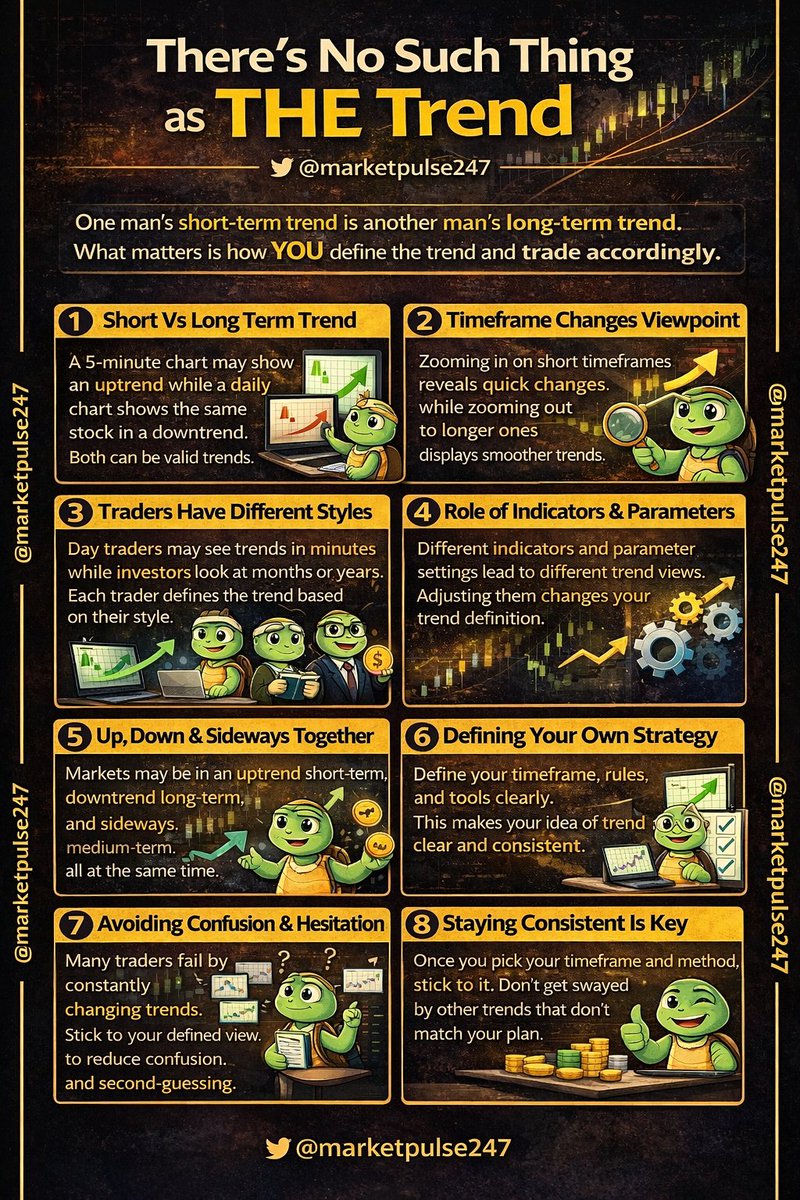
Understanding The Idea That There Is No Single Trend
In trading many people believe there is one clear trend in the market but the truth is different. The market does not move in just one direction when viewed from different angles. What looks like an uptrend to one trader may look like a sideways or even downtrend to another. This is why the statement says there is no such thing as one single trend.
Short Term Vs Long Term Trends Explained
A short term trader may look at a five minute or hourly chart. On this chart the price may be moving up quickly showing an uptrend. At the same time a long term investor looking at a daily or weekly chart may see the market going down overall. Both are correct based on their timeframes.
How Timeframe Changes Everything
Timeframe is one of the most important factors in trading. When you zoom in you see small price movements and frequent changes. When you zoom out you see bigger trends and smoother movements. This means the same market can show multiple trends depending on how you view it.
Why Different Traders See Different Trends
Every trader has a different style. Some trade for minutes while others invest for months or years. Because of this each trader defines trend based on their strategy. A day trader may act on small price changes while a long term investor ignores them completely.
Role Of Indicators And Parameters
Traders also use different tools like moving averages or indicators. By changing the settings of these tools the trend can look different. For example a fast moving average may show quick trend changes while a slow one shows a stable long term trend.
Understanding Uptrend Downtrend And Sideways Together
It is possible for a market to be in an uptrend in the short term while being in a downtrend in the long term. At the same time it may appear sideways in a medium timeframe. This may sound confusing but it is normal in financial markets.
Why There Is No Perfect Definition Of Trend
There is no universal rule that defines a trend for everyone. Each trader decides their own rules based on their goals and risk level. Trying to find the perfect definition will only create confusion and hesitation.
Importance Of Defining Your Own Strategy
The most important step is to clearly define your own trading strategy. Decide your timeframe your entry and exit rules and the tools you will use. Once you define this your idea of trend becomes clear and consistent.
Avoiding Confusion In Trading Decisions
Many traders fail because they keep changing their view based on different charts. One moment they follow a short term trend and the next moment they switch to long term thinking. This creates confusion and poor decisions.
Staying Consistent With Your Approach
Consistency is key in trading success. Once you choose your timeframe and method stick to it. Do not get distracted by other perspectives that do not match your plan. This helps build confidence and discipline.
Key Lesson For Every Trader
The main lesson is simple. There is no single trend that everyone follows. What matters is how you define the trend based on your strategy. Once you understand this you stop comparing yourself with others and focus on your own system.
Conclusion In Simple Words
The market can show multiple trends at the same time. Instead of trying to find one correct view focus on your own approach. Define your trend clearly trade with discipline and stay consistent. That is the real path to success in trading.
x.com/@marketpulse247
#TradingPsychology
#TrendFollowing
#MarketTrends
#StockMarketIndia
#TraderMindset
#LearnTrading
#TradingEducation
#StockMarketTips
#TechnicalAnalysis
#PriceAction
#TradingStrategy
#SmartTrading
#MarketInsights
#InvestingMindset
#FinancialEducation
#StockMarketLearning
#TradingWisdom
#ChartAnalysis
#TradingView
#MarketKnowledge
#DayTradingIndia
#SwingTrading
#PositionTrading
#IntradayTrading
#InvestSmart
#WealthCreation
#FinancialFreedom
#MoneyMindset
#RiskManagement
#ConsistentTrading
#DisciplineInTrading
#TradingLife
#TraderLifeIndia
#MarketPulse
#StockTrader
#FinanceTips
#TradingSkills
#InvestmentStrategy
#LongTermInvesting
#ShortTermTrading
#MarketAnalysis
#GrowYourMoney
#TradingGoals
#MindsetMatters
#SmartMoneyMoves
#LearnInvesting
#MarketEducation
#TradingSuccess
#StayConsistent
#FinanceCommunity
4
5
113
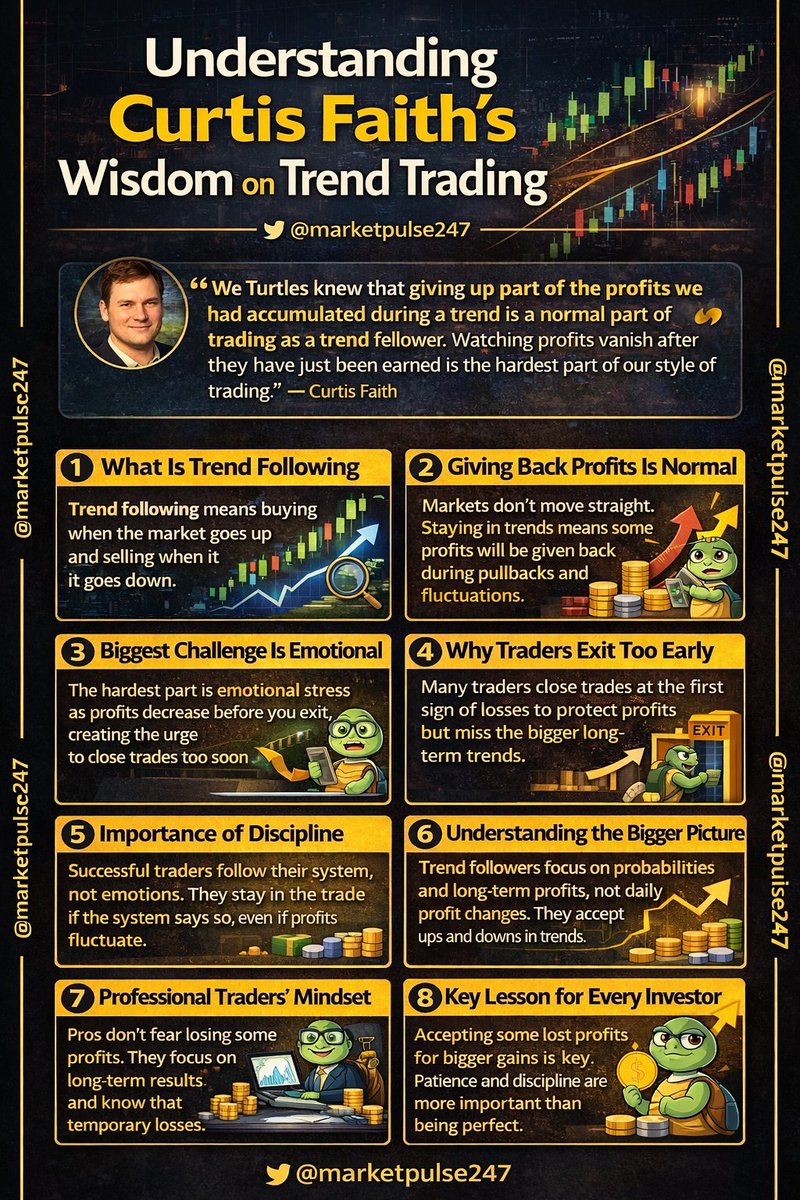
Understanding The Wisdom Of Curtis Faith
This powerful quote explains a key truth about trading especially for those who follow trends. Curtis Faith who was part of the famous Turtle Trading experiment highlights that losing some profits is not failure but a normal part of the strategy. Many beginners struggle to accept this idea but understanding it can completely change your trading mindset.
What Is Trend Following In Simple Terms
Trend following means you buy when the market is going up and sell when it is going down. You do not try to predict exact tops or bottoms. Instead you ride the trend for as long as it lasts. This approach focuses on capturing big moves rather than small quick profits.
Why Giving Back Profits Is Normal
Markets never move in a straight line. Even strong trends have ups and downs. When you stay in a trade during these fluctuations your profits will go up and down. Giving back some profit is the cost you pay to stay in the trend and catch the bigger move.
The Biggest Challenge Is Emotional Not Technical
The hardest part of trading is not strategy but controlling your emotions. When you see your profits decreasing after growing it creates fear. You feel like exiting quickly to protect gains. This emotional reaction often leads to early exits and missed opportunities.
Why Most Traders Exit Too Early
Many traders focus too much on protecting profits. As soon as they see a small drop they panic and close the trade. While this may feel safe it prevents them from benefiting from long trends. Trend followers accept short term discomfort for long term gains.
The Importance Of Discipline In Trading
Successful traders follow a system. They do not make decisions based on emotions. If the system says stay in the trade they stay even if profits fluctuate. Discipline helps them remain consistent and avoid impulsive mistakes.
Understanding The Bigger Picture
Trend following is about probabilities not certainty. You will not win every trade and you will not exit at the perfect point. The goal is to make more money on winning trades than you lose on losing ones. Accepting small profit reductions helps achieve this balance.
Learning To Handle Profit Fluctuations
To succeed you must train your mind to stay calm. Instead of focusing on daily profit changes focus on the overall trend. Remind yourself that temporary pullbacks are normal and often necessary before the trend continues.
How Professional Traders Think Differently
Professional traders do not fear losing some profits. They understand it is part of the process. They focus on long term results rather than short term emotions. This mindset allows them to stay in winning trades longer and maximize returns.
Key Lesson For Every Investor
If you want to grow in trading you must accept that profits will not always move in your favor. Learning to hold through volatility is essential. Patience and discipline are more important than trying to be perfect.
Conclusion In Simple Words
The message from Curtis Faith is clear. You cannot capture big market moves without giving back some profits along the way. Instead of fearing it accept it as part of your strategy. Once you master this mindset you will become a stronger and more confident trader.
x.com/@marketpulse247
#TradingPsychology
#TrendFollowing
#StockMarketIndia
#TraderMindset
#DisciplineInTrading
#TradingLife
#LearnTrading
#StockMarketTips
#InvestingMindset
#EmotionalControl
#TradingEducation
#SmartTrading
#MarketPsychology
#PriceAction
#TechnicalAnalysis
#TradingJourney
#ConsistentProfits
#WealthMindset
#RiskManagement
#TradingStrategy
#LongTermTrading
#MarketDiscipline
#StockMarketLearning
#TradeSmart
#MoneyMindset
#ProfitBooking
#InvestorMindset
#MarketTrends
#TradingWisdom
#FinanceEducation
#StockTrader
#IntradayTrading
#SwingTrading
#PositionTrading
#MarketInsights
#TradingQuotes
#LearnInvesting
#FinancialFreedom
#GrowYourMoney
#TraderLifeIndia
#MarketPulse
#InvestSmart
#TradingSkills
#TradingGoals
#MindsetMatters
#StayDisciplined
#TradingSuccess
#PatiencePays
#MarketKnowledge
#SmartMoneyMoves
4
5
120

Mar 7
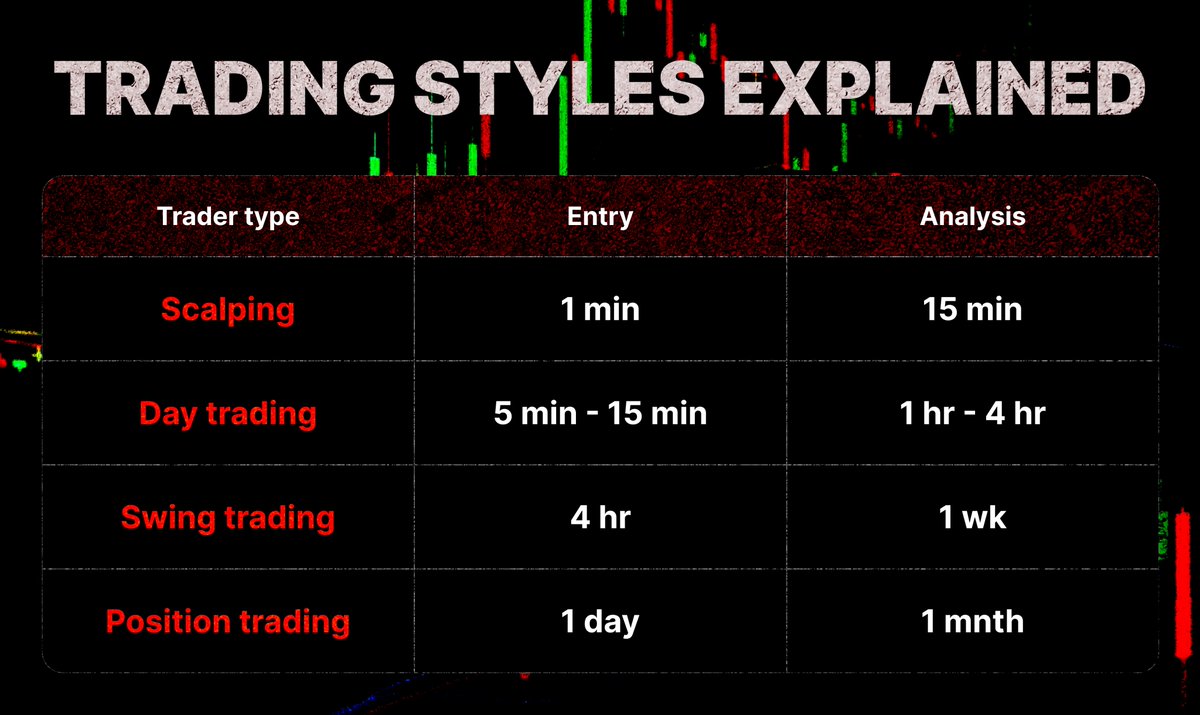
I am into scalping, what about you?
#cryptosignal #trading #cryptotrading #swingtrading #positiontrading #crypto #btc #eth #bitcoin
2
42

Feb 20
Noise fades.
Structure remains.
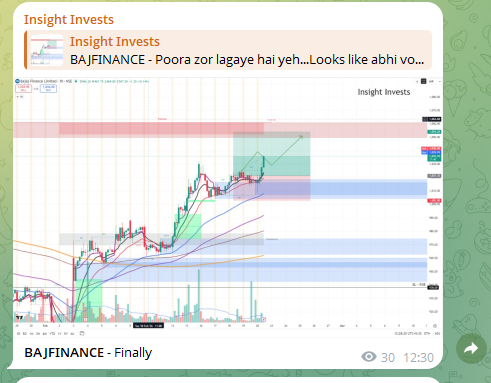
BAJAJ FINANCE offered a technically aligned setup.
✅ Controlled consolidation
✅ Strong participation
✅ Momentum trigger📈
Trade prepared. Not reactive.
📲 Join our Telegram to stay updated. Link in BIO
#Bajfinance #PositionTrading #SmartExecution
1
4
146

Jan 29
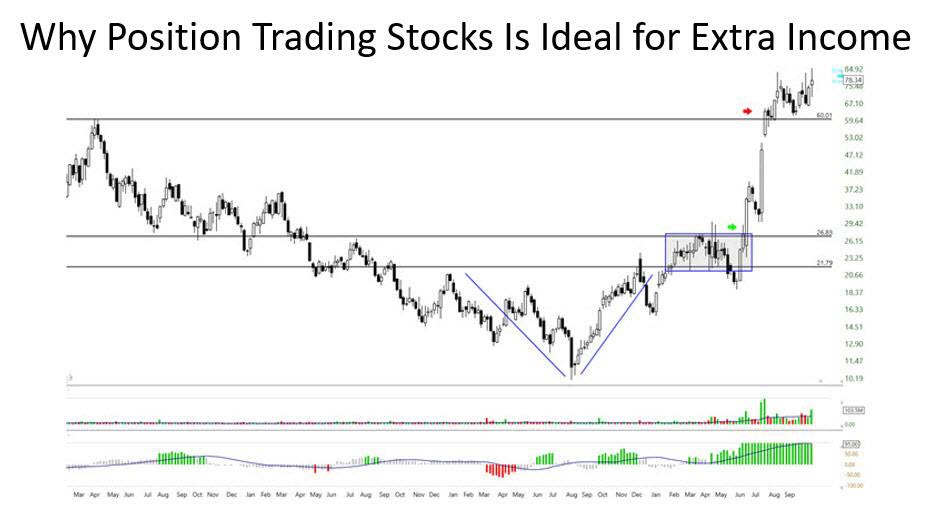
🚀 Want extra income from trading — without extra stress?
Position Trading delivers:
✔ Bigger moves
✔ Fewer emotions
✔ Less screen time
👉 Read why it works (esp. for beginners): technitrader.com/pages/why-p…
#trade #trading #StockTrading #positiontrading #makemoney #ExtraIncome
ALT WHY POSITION TRADING STOCKS IS IDEAL FOR EXTRA INCOME
2
45

Jan 27
🧭 Position Trader Mindset:
Trade the macro trend.
Ignore short-term noise.
Patience is the edge.
Wide targets, controlled risk.
Time works in your favor.
Position traders win by holding conviction.
#PositionTrading #TradingPsychology #MarketTrends #Crypto #Forex #Stocks
3
108

Jan 22
📈 Position Update — Long Bull Options Opened
Based on our AI Picks (Bullish Table), I’ve opened long-dated bullish option positions on:
• $NFLX
• $PLTR
• $AVGO
• $HOOD
⏱️ Expected timeline: ~3–7 months
🎯 Thesis: AI-derived targets strong trend continuation
🧠 This is position trading, not day trades
Sharing for transparency.
Not financial advice — do your own research.
#OptionsTrading #LongTermBull #AITrading #PositionTrading
1
2
182

Jan 15
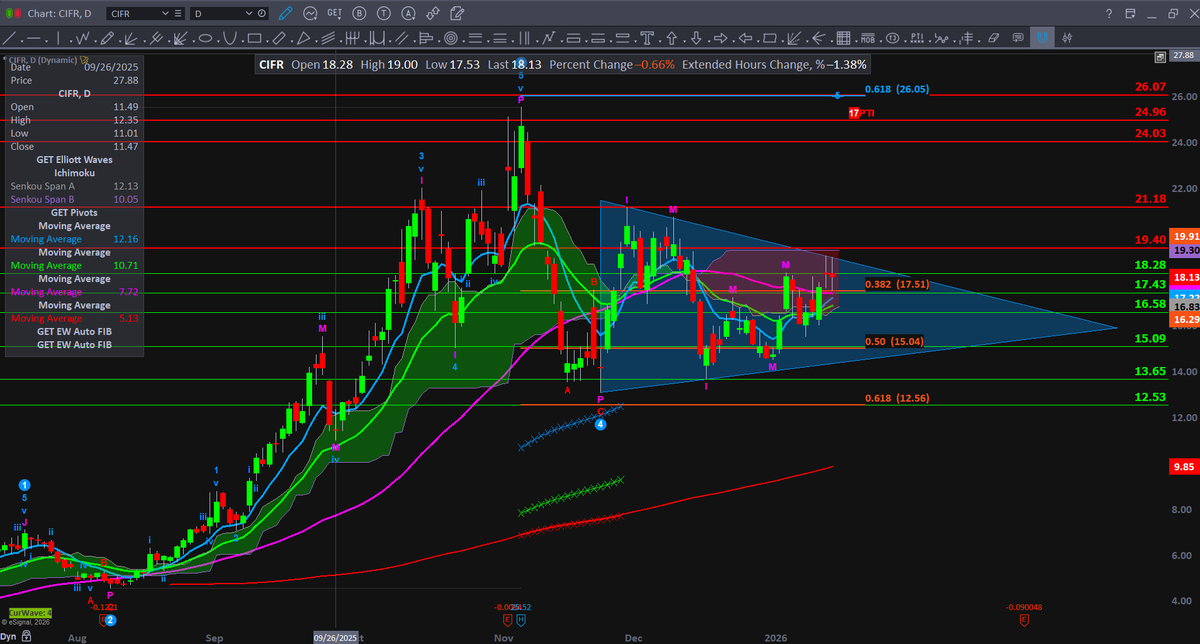
$CIFR Daily Chart – Trading Plan
Last Price: $18.13
1. Elliott Wave Analysis
Wave Structure: A 5-wave advance topped near $26, followed by a sharp ABC correction and prolonged consolidation within a triangle, likely representing Wave 4.
Current Position: Price is mid-range within the triangle, near the 0.382 retracement ($17.51). A breakout above $18.28 would suggest the beginning of Wave 5. Breakdown below $15.09 would point to further downside before the next impulsive leg.
Forecast: If the triangle resolves upward, Wave 5 could target $24–26. A breakdown would shift focus toward $15.04 / $13.65 / $12.56.
Key Wave Levels:
Triangle Resistance: $18.28
Support Pivot: $15.04 (0.50), $13.65, $12.56 (0.618)
Wave 5 extension target: $24.03 → $26.05
2. Trade Plan
Resistance Levels:
$18.28 / $19.40: Key triangle resistance and breakout level
$21.18 / $24.03 / $26.05: Swing targets if bullish breakout confirms
Support Levels:
$17.43 / $16.58: Near-term support within triangle
$15.09 / $13.65 / $12.56: Breakdown targets and Fib retracement zones
Trade Setups:
Breakout Long: Entry > $18.28 | Target: $21.18–$24.03 | Stop: < $17.00
Pullback Buy: Entry $15.10–$16.00 | Target: $18.00 | Stop: < $14.50
Breakdown Short: Entry < $15.00 | Target: $13.65 / $12.56 | Stop: > $16.25
Risk Notes:
Current compression within triangle favors sharp expansion
Ichimoku Cloud still red → need confirmation for bullish reversal
Volatility likely to spike on breakout
3. Combined Outlook
Bias: Neutral-to-Bullish – triangle near resolution
Wave Count Alignment: Favoring bullish Wave 5 scenario if breakout clears $18.28
🔁 Process-driven execution. Risk first, consistency follows.
👉 Join the Discord: discord.gg/nnFV7x4eJf
👉 Full stats & plans: tradeselliot.vip/pricing/
#elliottwave #swingtrading #CIFR #stockmarket #tradingplan #technicalanalysis #discordtrading #waveanalysis #fibonacci #positiontrading #tradercommunity #trading #investing #SPX #SPY #QQQ
4
891


19 Dec 2025
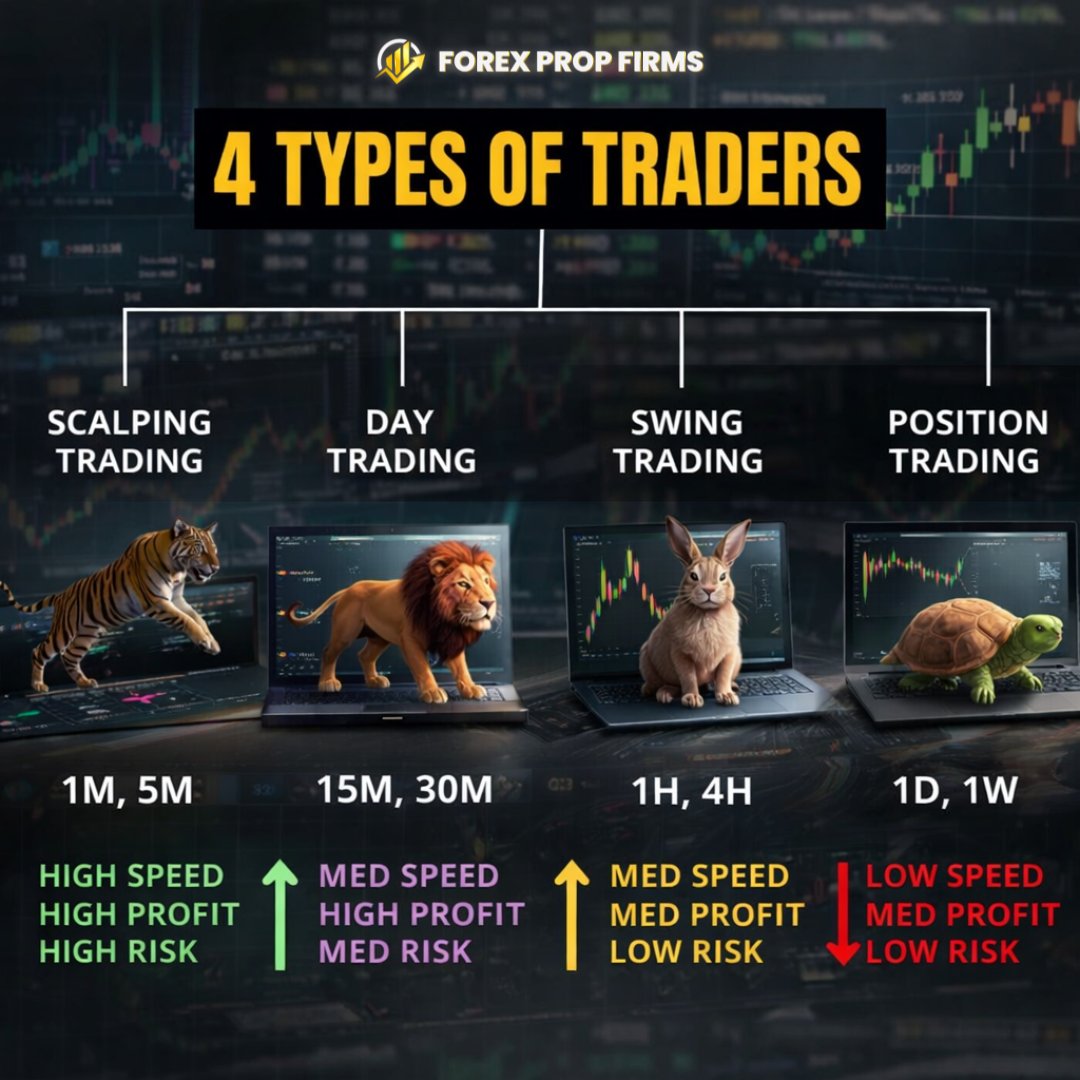
4 Types of Traders!
🐅 Scalpers — fast, fierce, high risk.
🦁 Day traders — steady pace, big moves.
🐇 Swing traders — patient setups, lower risk.
🐢 Position traders — slow and steady, long‑term vision.
Different animals, different speeds… but the same jungle: the market.
Which one are you? 👀
..
..
#ForexTrading #PropFirms #TraderTypes #FundedTrader #PropFirmReviews #Scalping #DayTrading #SwingTrading #PositionTrading #TraderMindset #ForexEducation
2
162