Apr 11
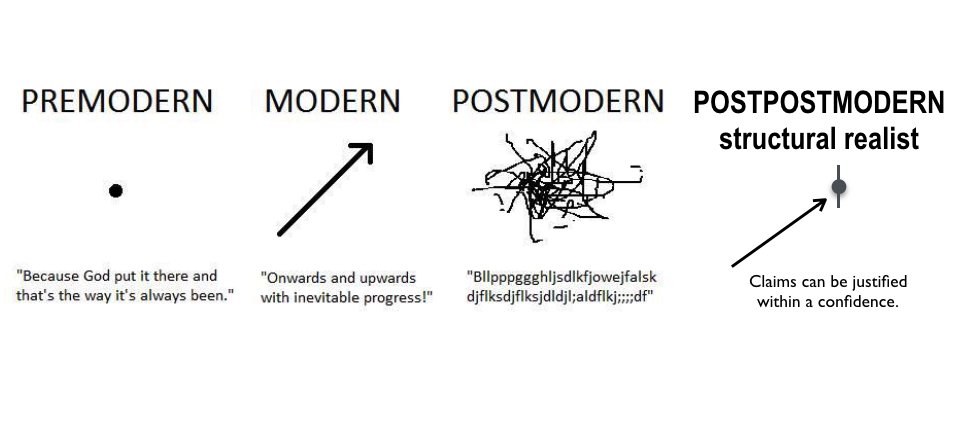
Empire threatens civilization. Resistance enforces sovereignty. One exhausts itself performing dominance. The other outlasts by holding the high ground. The world didn't just change. It inverted. #StructuralRealism
2
100
TOBACCO VANGUARD
Not for all and sundry.
Language and the Tobacco Apparatus
By M. Reuven
Debates about tobacco regulation often proceed as though they concerned only science and policy. Health outcomes are measured, risk ratios are calculated, and governments introduce rules intended to reduce harm. The process appears technical and administrative. Language, in this account, merely describes a reality that already exists.
The matter is less straightforward than it appears. The vocabulary through which an industry is described plays a decisive role in shaping how that industry is understood and governed. Words do not simply report events. They organise perception, define legitimacy and determine which questions can be asked in public. Once a particular vaocabulary becomes established, it begins to structure the field in which both policy and commerce operate.
The debate around cigarettes provides a clear illustration. The industry is rarely described in the neutral language of manufacture and consumption. Instead it is framed through a vocabulary of crisis and remedy. Smoking is called an epidemic. Cigarettes are described as a public health emergency. The market becomes a site of intervention rather than exchange. Once these terms are adopted, the presence of government action appears not merely permissible but necessary.
The observation itself is not new. Linguists have long noted that the categories embedded within language influence the manner in which societies interpret their surroundings. In modern political thought a similar insight appears in the work of Louis Althusser, who argued that social orders reproduce themselves through institutions that shape the way individuals understand the world. Schools, media, public agencies and research bodies all participate in this process. They do not merely communicate facts. They organise meaning.
Within the tobacco sector these institutions have produced a distinctive vocabulary that now governs public discussion. Terms such as harm reduction, risk continuum, smoke-free future and endgame for smoking circulate widely through regulatory filings, corporate presentations and investor commentary. Each expression carries with it a set of assumptions about how the industry is expected to evolve. Once repeated often enough, the vocabulary begins to appear descriptive rather than prescriptive.
The concept of the risk continuum offers a useful example. It proposes that nicotine products can be arranged along a scale of progressively reduced harm. Cigarettes occupy one end of the spectrum, while other forms of nicotine consumption are placed further along the ladder. The diagram appears orderly and scientific. Yet the significance of the concept lies not merely in measurement. It provides a framework through which policy can be organised, capital can be directed and corporate strategy can be justified.
Language therefore performs an institutional function. It helps coordinate the activities of regulators, manufacturers, advocacy groups and financial analysts. A shared vocabulary allows these actors to interpret events within the same conceptual structure. Heated tobacco becomes a transitional technology. Vapes are positioned as harm reduction tools. Cigarettes are cast as a declining relic whose disappearance is treated as the natural conclusion of the story.
This process does not require a central authority issuing instructions. It operates through the gradual alignment of language across multiple institutions. Government agencies publish guidance. Public health bodies develop terminology. Consultancies translate these terms into strategic frameworks. Corporations adopt the same vocabulary in order to communicate with regulators and investors. Over time the language becomes the common grammar through which the industry is discussed.
The result is what may be called a tobacco apparatus. It consists not only of legislation and taxation but also of categories, metaphors and expectations that structure the field of debate. The apparatus determines what counts as responsible conduct, what counts as progress and what counts as deviation from the accepted direction of travel.
It is here that language intersects with the broader historicist narrative examined in these pages. Once the vocabulary of transition becomes embedded within institutions, it begins to carry an implicit claim about the future. Cigarettes are said to belong to the past. Alternative nicotine products are said to belong to the future. The industry appears to move along a pathway whose destination is already known. The language presents the outcome as though it were a discovery about history itself.
Yet the appearance is misleading. The vocabulary does not reveal the direction of history. It expresses the preferences and assumptions of the institutions that employ it. When regulators speak of a smoke-free future they are stating a policy ambition. When corporate strategists speak of transformation they are responding to regulatory pressure and investor expectations. When analysts describe the migration of consumers along a risk continuum they are adopting the conceptual framework provided by the same institutions.
None of these developments constitutes a historical law. They describe a network of administrative, commercial and rhetorical practices that shape the environment in which the industry operates. The language of transition therefore belongs to the apparatus that governs the sector rather than to the structure of history itself.
The prudent observer should therefore treat such vocabulary with a degree of caution. Language can illuminate reality, but it can also impose a narrative upon events that obscures their contingency. Markets adapt, technologies emerge and regulations change. These developments reflect the interaction of institutions, incentives and consumer behaviour. They do not reveal a predetermined destiny.
The tobacco industry will continue to evolve under the pressures that surround it. New products will appear, regulations will be revised and consumer habits will adjust with time. Yet the future course of these developments cannot be read directly from the vocabulary that presently dominates the debate.
Language describes the apparatus through which the industry is governed. It does not disclose the final chapter of its history.
#TobaccoVanguard #TobaccoVanguardism #LanguageAndPower #TobaccoApparatus #LouisAlthusser #KarlPopper #AntiHistoricism #Ideology #Regulation #RiskContinuum #NGP #HeatedTobacco #Vapes #NicotinePouches #TobaccoIndustry #PhilosophyOfMarkets #StructuralRealism #MonetaryRealism #CivilisationalContinuity #MReuven
2
3
104
TOBACCO VANGUARD
Not for all and sundry.
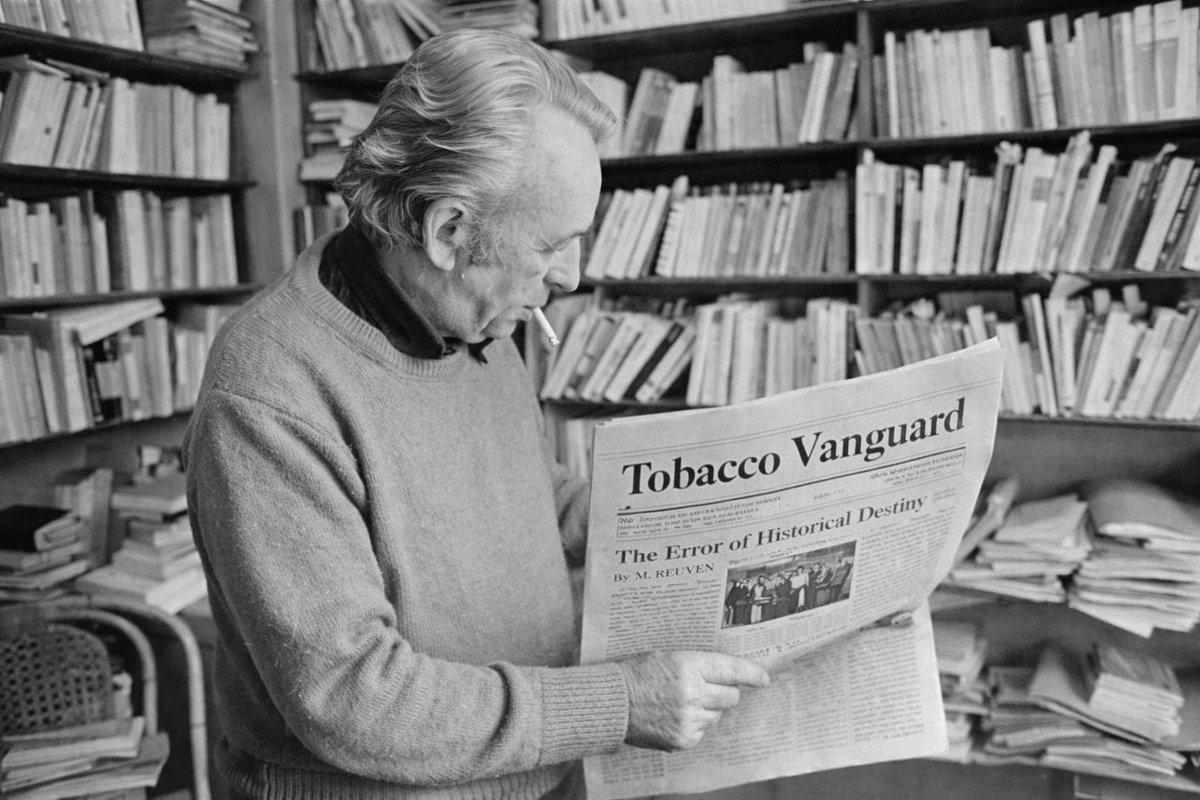
The Myth of Historical Destiny
By M. Reuven
The tobacco industry has developed an unusual vocabulary in recent years. Analysts, regulators and corporate strategists increasingly speak as though the course of the industry were already written. Combustible cigarettes belong to the past. Heated tobacco, vapes and nicotine pouches belong to the future. The sector is said to be moving along a transition pathway whose destination is a smoke-free future. The language varies slightly from one institution to another, yet the underlying premise remains constant. History, it is implied, has chosen its direction.
This premise deserves careful examination, because it rests upon a philosophical error. Tobacco Vanguard has previously observed that history has no subject. Events do not proceed under the guidance of a sovereign historical agent directing mankind toward a predetermined outcome. The contemporary enthusiasm for transition narratives rests upon precisely this assumption. It imagines that governments, corporations, activists and investors collectively carry history toward a final destination in which cigarettes disappear and a new technological order replaces them.
The difficulty is that history possesses no such faculty. It has no subject and no intention. The notion that social development moves toward an identifiable end point is not analysis but historicism. It is the belief that the future of human society can be read in advance from the tendencies of the present.
Few industries illustrate the persistence of historicist thinking more clearly than tobacco. Each quarter produces new declarations about the inevitable arrival of a smoke-free future. Corporate presentations describe “transformation journeys”. Regulators speak about the “endgame for smoking”. Investors discuss the gradual migration of consumers along a risk continuum that culminates in the disappearance of the cigarette itself. The language gives the impression that the industry is travelling along a railway track whose terminus has already been printed on the timetable.
This manner of thought has a long intellectual history. One finds its political expression in the revolutionary writings of Marx and Lenin, who understood the state as an instrument of class rule and imagined that historical development would culminate in the overthrow of capitalism. Later theorists, including Louis Althusser, stripped away the more romantic elements of this tradition. Althusser argued, rightly in our view, that history has no subject directing its movement. Social orders persist because institutions reproduce them, not because destiny commands them. Yet even this structural approach leaves open the temptation to imagine that the underlying forces of society possess a direction of travel.
It is here that the corrective provided by Karl Popper becomes decisive. Popper’s criticism of historicism was simple and devastating. The future course of human history cannot be predicted because it depends upon the growth of knowledge, and the growth of knowledge cannot itself be foreseen. Any doctrine that claims to discern the inevitable destination of society therefore rests upon an illusion. What appears to be a law of history is usually nothing more than a projection of present expectations.
Once this point is grasped, the language surrounding the modern tobacco transition appears in a very different light. The repeated assertion that cigarettes belong to the past and novel nicotine products represent the future is a narrative constructed within contemporary institutions. Regulators, public health authorities, consultancies and corporate strategists all possess reasons for describing the industry in these terms. Their vocabulary then circulates through research notes, policy documents and investor presentations until it acquires the authority of common sense.
Yet the narrative remains precisely that: a narrative. The existence of heated tobacco, vapes and nicotine pouches does not confer upon history a direction. Markets respond to incentives, regulation alters consumer behaviour, and companies adapt to the circumstances in which they operate. None of these developments reveal a predetermined end point. They merely describe a field of pressures within which producers and consumers act.
The risk continuum offers a useful example. The concept suggests that nicotine products can be arranged along a ladder of progressively reduced harm, culminating in the disappearance of the cigarette. The diagram appears orderly and scientific. In practice it performs a different function. It provides a language through which institutions can organise policy, shape corporate messaging and guide capital allocation. The continuum therefore operates less as a discovery about the structure of history than as part of an ideological apparatus that renders a particular future intelligible and respectable.
This does not mean that new products will fail, nor that cigarettes will persist indefinitely. The point is more fundamental. History provides no warrant for the claim that one outcome or the other is destined to occur. Tobacco Vanguard rejects the habit of treating present tendencies as historical laws. The appearance of technological change does not confer prophetic authority upon analysts, regulators or executives. It merely indicates that markets and institutions are adjusting to contemporary conditions.
The same reasoning applies to the wider regulatory environment in which the industry operates. Governments tax cigarettes heavily while simultaneously presenting them as objects of moral disapproval. Retail display restrictions remove the product from public view. Public health campaigns speak in the language of eradication. These policies are often described as stages along the path to a smoke-free society. Yet they are better understood as political decisions taken within specific administrative frameworks. They reveal the preferences of governments, not the direction of history.
For this reason Tobacco Vanguard approaches the entire discussion of transition with a certain scepticism. The future of nicotine consumption will be shaped by taxation, consumer preference, technological innovation and political pressure. It will not be determined by historical destiny. The belief that society is marching inevitably toward a preordained end point is the oldest illusion of modern political thought. It has appeared in revolutionary doctrine, in developmental economics and now in the language of regulatory transition.
Against that illusion Tobacco Vanguard advances a simpler proposition. History has no subject, no direction and no appointed destination. Social orders evolve through the interaction of institutions, incentives and human choices, none of which possess prophetic authority. When the tobacco industry is described as though it were travelling toward a predetermined future, one is not observing the discovery of historical law. One is witnessing the persistence of historicism in a modern administrative form.
The prudent observer therefore declines to read destiny into the present. Markets endure, institutions change, and the habits of consumers adjust with time. Yet the course of these developments cannot be extracted from history itself. The future remains open, not because history lacks structure, but because structure does not confer prophecy.
That, in the end, is the intellectual ground upon which Tobacco Vanguard stands.
#TobaccoVanguard #TobaccoVanguardism #Historicism #KarlPopper #LouisAlthusser #Lenin #AntiHistoricism #PhilosophyOfMarkets #RiskContinuum #NGP #HeatedTobacco #Vapes #NicotinePouches #TobaccoIndustry #Regulation #Ideology #StructuralRealism #MonetaryRealism #CivilisationalContinuity #MReuven

3
3
215

Feb 21
ANALYSIS
Why India’s future will be decided in its neighbourhood
Writer: Mahendra K Singh | Akhilendra K singh
Click- dailypioneer.com/news/why-in…
#NeighbourhoodFirst #IndiaForeignPolicy #SouthAsia #IndiaChina #Pakistan #SriLanka #Bangladesh #Nepal #Maldives #Afghanistan #Bhutan #OperationSindoor #StrategicAutonomy #Geopolitics #StructuralRealism #RegionalStability #Connectivity #GreaterMaleConnectivityProject #BayOfBengal #IndianOcean #ChinaInfluence #EconomicDiplomacy #EnergyCooperation #CrisisResponse #YouthDiplomacy #IndispensableIndia #GlobalSouth #StrategicIdentity
7
209

24 Dec 2025
TOBACCO VANGUARD
Not for all and sundry.
Structure Precedes Agency: Why Tobacco Equities Reward the Prudent
By M. Reuven
Most commentary on tobacco equities fails because it begins in the wrong place. It treats tobacco as a product category rather than as a position within an economic and fiscal structure. From that starting error follow the usual confusions about morality, innovation, and decline. The prudent business owner approaches the question differently. He does not ask whether cigarettes are fashionable, nor whether the industry tells a convincing story about the future. He asks where value is captured, who controls the terms of that capture, and whether the position is durable.
By those measures, tobacco equities occupy one of the clearest upstream positions in the modern economy.
The combustible cigarette is not a legacy technology awaiting replacement. It is a settled commodity embedded in a long standing arrangement between state, industry, and consumer. That arrangement is not sentimental. It is fiscal. Governments rely upon cigarette excise to fund public expenditure without imposing broad based tax increases. The industry relies upon administered price ladders to offset declining volumes. Consumers, though stigmatised, remain predictable, habitual, and price tolerant within wide bounds. This ensemble is not accidental. The prudent business owner knows that structure precedes agency.
What matters for the equity holder is position within that structure. Tobacco firms sit upstream of consumption, regulation, and moral narrative. They do not depend on persuading consumers to behave differently each year. They administer a pricing system that resets the category. They operate a tax conduit that the state cannot easily abandon. This is why effort, innovation, and virtue are secondary considerations. Income follows position, not merit.
Much of the misunderstanding surrounding tobacco equities arises from the persistent belief that markets reward progress in a technological sense. On this view, next generation products represent a natural succession and therefore a necessary justification for continued investment. This confuses novelty with elevation. Heated tobacco, vapour devices, and nicotine pouches do not occupy the same structural position as cigarettes. They lack a unified fiscal regime, they invite inconsistent regulatory treatment, and they do not provide a simple conduit for excise. As such, they do not occupy the same position.
In practice, these products perform a different function. They provide option value. They offer management teams a language of renewal that sustains valuation multiples. They give policymakers a rhetorical alibi, allowing prohibitionist impulses to be moderated by reference to alternatives. They reassure capital markets that a future narrative exists if required. What they do not do is replace the structure of earnings. The cigarette remains the primary mechanism through which cash is generated and returned.
This explains the apparent contradiction between transformation rhetoric and capital allocation. Tobacco firms speak publicly of transition, yet continue to direct the majority of investment toward combustible maintenance, pricing progression, and market share defence. Excess cash is not reinvested in speculative growth. It is returned to shareholders through dividends and buybacks with mechanical regularity. This is structural realism. The commodity that pays is defended.
From the perspective of a business owner, this behaviour is immediately recognisable. In any mature enterprise with limited reinvestment opportunity, prudence consists in defending margin, controlling distribution, and returning surplus capital rather than pursuing expansion for its own sake. Tobacco firms are constrained from empire building by regulation and scrutiny. That constraint reduces agency risk and aligns management with income generation.
There is also an advantage in behavioural legibility. Tobacco consumption is habitual and slow to change. Demand does not swing violently with fashion or sentiment. In inflationary periods, pricing power protects real returns. In recessions, consumption contracts modestly rather than collapsing. In speculative booms, tobacco lags, but it rarely implodes. This asymmetry is not exciting, but prudence is not the pursuit of excitement. It is the management of downside.
Moral objections are frequently raised. These objections confuse ethical judgment with structural analysis. One need not approve of smoking to recognise the fiscal and political role cigarettes continue to play. Markets do not reward goodness. They reward control of upstream positions where value is priced, taxed, and distributed. Tobacco equities sit precisely at such a point. That is why they persist, and that is why they continue to pay.
The modern economy celebrates innovation while relying quietly on structural arrangements that remain indispensable. Tobacco is one such arrangement. Its equities do not promise transformation. They promise maintenance. For the prudent business owner, maintenance of income is often the more serious objective.
#TobaccoVanguard #TobaccoEquities #BusinessOwnership #StructuralRealism #PoliticalEconomy #UpstreamPosition #ValueCapture #RegulatedCashFlows #ExciseEconomics #EquityIncome #PrudentCapital #SoundMoney
1
2
78
11 Nov 2025
TOBACCO VANGUARD
Not for all and sundry.
The Short Age of Venture Capital
By M. Reuven
The tech age insists that every problem has a software solution and every solution a venture fund. Yet, in the present cycle the conditions that once gave venture capital an advantage have largely disappeared. The great AI model providers now absorb each new software application almost as soon as it appears, adding its functions to their own systems at almost no cost. The old tale of the nimble start-up outrunning the slow incumbent does not apply when the incumbent is the infrastructure itself. Duration shortens, moats dissolve, and the enterprise that hoped to grow becomes a feature in someone else’s product.
Dan Rasmussen saw this pattern coming. He showed that the average venture fund, after fees, performs worse than public equities and that most of the gains come from a few rare winners. Remove those and what remains is marketing. The rise of AI makes this worse. Power now lies at the base, where capital, computing power, and data are already concentrated. Applications are reduced to a churn of wrappers, each with a year or two to attract attention before being replaced. There is no compounding curve to ride, only a cliff to fall from.
This is not an innovation ecosystem but a reflexive oligopoly. The appearance of boundless AI capability attracts money; the money pays for training; the new training raises capability again. The cycle flatters its own story until a material energy constraint intrudes. Venture funds, meanwhile, provide theatre for investors who pay high fees for short-term exposure to someone else’s platform. The language of disruption conceals a simple fact: the profits belong to the model owners and the energy suppliers beneath them. Everyone else rents.
Set this beside the record of old industries like tobacco and the difference is clear. A patient investor in the established cigarette houses has been paid in cash, not narrative. Steady pricing, controlled capacity, and regular buybacks have produced reliable returns over time. The product is ordinary, the accounting clear, and the shareholder treated as proprietor. The compounding comes from dividends and discipline, not from quarterly promises of reinvention. Where venture capital invites belief in the next unicorn, tobacco invites arithmetic. One is liable to blow up; the other tends to pay.
For investors the lesson is direct. If the applications cannot produce lasting businesses, the tech venture model loses its purpose. Diversification within funds will not fix it, since outcomes all depend on the same few platforms. What remains is fee extraction on one side and disappointment on the other. Capital that seeks real returns should prefer cashflow, modest leverage, and businesses whose strength rests on law, logistics, or habit. The future may, in time, yield new industries worthy of patience. Until then, prudence lies in keeping money where margins are real.
Sound money, real margins, lawful profit. The age of venture capital has passed for now; the age of patient investment remains.
Disclaimer: This is editorial commentary, not investment advice.
#TobaccoVanguard #VentureCapital #AIMarket #SoundMoney #RealMargins #PatientCapital #InvestmentDiscipline #AIEconomy #StructuralRealism #ReflexiveMarkets #TobaccoStocks #LongTermInvesting #Cashflow #FinancialRealism #CriticalRealism #MReuven #EditorialEconomics #MoralEconomy
2
85
4 Nov 2025
TOBACCO VANGUARD
Not for all and sundry.
Altria: The Real Structure of Value
By M. Reuven
There is a tendency, recurrent in the markets and in journalism alike, to confuse share price movements with economic reality. The latest quarterly results from Altria have again brought forth the familiar chorus of structural pessimism. Analysts now pronounce that the company is a “structural loser” in tobacco’s transition, and that a yield of 7.5% is no longer compensation enough. Yet what these pronouncements neglect is that structure itself has a deeper meaning than fashion. Altria remains, in any material sense, the structural foundation of the US nicotine economy.
Marlboro is not a fading relic but the earnings powerhouse of an entire sector. Its share of combustible profits exceeds that of any other brand family in the developed world. The cash it generates continues to fund not only one of the strongest dividend records in American corporate history but also an ongoing contraction of share count through buybacks. In a market where consumers are strained, Marlboro’s dominance of retail space and pricing power provides the ballast that most of its peers would envy.
The consumer, it is true, is under pressure. The evidence of trading down across staples is visible, and tobacco is no exception. Yet even here, Altria has responded with characteristic realism. The continued advance of Basic marks not retreat but adaptation, ensuring that the company retains the budget-conscious smoker without undermining its premium core. This is structural management, the capacity to defend margins by tiering the market rather than abandoning it.
Much has been made of the competitive dynamics in modern oral nicotine. ZYN’s aggressive expansion is real, and on! has met resistance in a market that is still forming. But the scale of combustibles’ cash flow dwarfs the entire pouch category, and Altria’s long-term capacity to buy, integrate, or rationalise remains undiminished. The suggestion that a single quarter’s stagnation in oral shipments signifies structural collapse is a misunderstanding of proportion.
Altria’s business is built upon the realism of American consumption: habitual, predictable, and cash-yielding. It is not a growth stock, and it has never claimed to be. It is a compounding engine, distributing value through dividends and buybacks rather than narrative. The structural investor understands this. He does not seek perpetual expansion but disciplined return.
What recent commentary calls decline, Tobacco Vanguard calls continuity. The core franchise endures, the consumer endures, and the shareholder continues to be paid. There are few structures in modern finance of which the same can honestly be said.
#TobaccoVanguard #Altria #MO #Marlboro #Basic #Dividend #Buybacks #TobaccoStocks #IncomeInvesting #ValueInvesting #USMarkets #Nicotine #TobaccoIndustry #CashFlow #ShareholderReturns #StructuralRealism #ReducedRiskProducts #Investing #Equities $MO
1
58
21 Sep 2025
TOBACCO VANGUARD Est. 1977
Not for all and sundry.
850 followers.
Thank you. We study the structures that set prices and profits: law, tax, retail rules, platform policy, trade and funding. Our work begins with cash flows and ends with the institutions that make markets. The desk stays disciplined.
#TobaccoVanguard #StructuralRealism #CriticalRealism #Ideology #ISAs #Regulation #Tobacco #Dividends #Buybacks #CashFlows #Markets
2
3
180
18 Sep 2025
TOBACCO VANGUARD Est. 1977
Not for all and sundry.
Why Structures Pay: An Investor’s Primer on Ideology
By M. Reuven
The market pays those who read its structures before they read its quotes. Tobacco is the clearest case. It is ordered by institutions that preach, signal, and when needed, coerce. Health campaigns set the script, doctors and ESG screens repeat it, online platforms ration visibility, taxation restricts access, ministers and courts enforce the official line. Together these parts reproduce an order in which cigarette volumes fall within a known corridor, prices rise with discipline, and cash reaches the equity owners with regularity. The investor who ignores this order mistakes an ideological climate for a commercial fate.
Ideology is not a drift of opinion. It lives in practice. Health curricula, retail display rules, warning labels, advertising bans, platform policies, and newsroom styles are not decoration. They are the routines that train citizens, retailers, and investors to act in certain ways. These are the ideological state apparatuses. Alongside them stands the repressive arm in the strict sense, tax authorities, border seizures, fines, litigation, and the occasional ban. Persuasion sets the habit. Coercion sets the boundary. The result is a market that narrows brand choice, restricts open display, and hardens price realisation. Demand does not vanish. It is channelled.
The tobacco investor is shaped by these same routines. Screens, mandates, and house policies hail him as a steward of virtue, and he moves his capital accordingly. That movement can misprice resilient cash engines. The discipline is to separate story from structure. We begin with mechanisms, not moods. We ask how a specific rule alters elasticity by tier, how a display ban shifts the illicit share, how a tax change passes through to price, and where margin settles. We then compare the outcome to historic base rates. For decades, the cigarette corridor has been simple. Volume down at a steady pace, price up more, cash conversion high, and cost control persistent. We underwrite on the record unless a clear mechanism says otherwise.
Narrative and fundamentals do not travel in a straight line. They circle. A raid, a lawsuit, a ministerial speech moves headlines. Retail behaviour adjusts. Elasticity changes. Illicit trade lifts or falls. Cash flows shift. The story then rewrites itself around the numbers. This loop is reflexive and it is measurable. We map it. The point is not to chase each headline, but to understand which institutions can move behaviour and which can only move mood.
Ideology, the state apparatuses, and the repressive arm together explain how markets and states reproduce their own conditions. The framework is not a doctrine. It is a tool. It helps us read the institutional stack that governs retail visibility, pricing power, and capital costs. It clarifies the contradiction at the heart of the field, moral hostility to the product beside fiscal reliance on its proceeds.
The commercial consequences are clear. Display restrictions create a dark market in the civic sense, lawful goods made discreet. Brand salience is managed, but the scarcity that follows supports mix and price. Strong warnings reduce appeal, particularly among the young, yet the legal channel persists under tax and law. Elasticities remain below unity in the aggregate, which allows price to outrun volume in steady fashion. The larger firms match this with capital discipline and a bias to buybacks. Where policy suppresses the illicit path, legal price strengthens. Where platforms close promotional routes, price discovery shifts to the counter, but the till still records a sale.
Our task is to keep the ledger at the centre. Free cash flow, dividend cover, and buyback yield must be read alongside the institutional map. We will state the mechanism, test it, name the counterfactual, and draw the decision for the holder of shares. A reader should finish with a clearer view of where cash will travel and why.
Structures pay because they persist. They do not guarantee every quarter, but they define the corridor through which cash tends to run. In a field shaped by instruction and enforcement, price is a function of habit and rule as much as of taste. The owner who understands the structure owns the cash. For now, the structure still pays.
#TobaccoVanguard #PaymentRails #Ideology #StructuralRealism #CriticalRealism #MonetaryRealism #Althusser #Markets #Investing #CashFlow #Dividends #SoundMoney #ESG #Regulation #TobaccoEquities #InvestorDiscipline #StructuralAnalysis #Reflexivity #BaseRates #FreeCashFlow
1
2
133
17 Sep 2025
TOBACCO VANGUARD Est. 1977
Not for all and sundry.
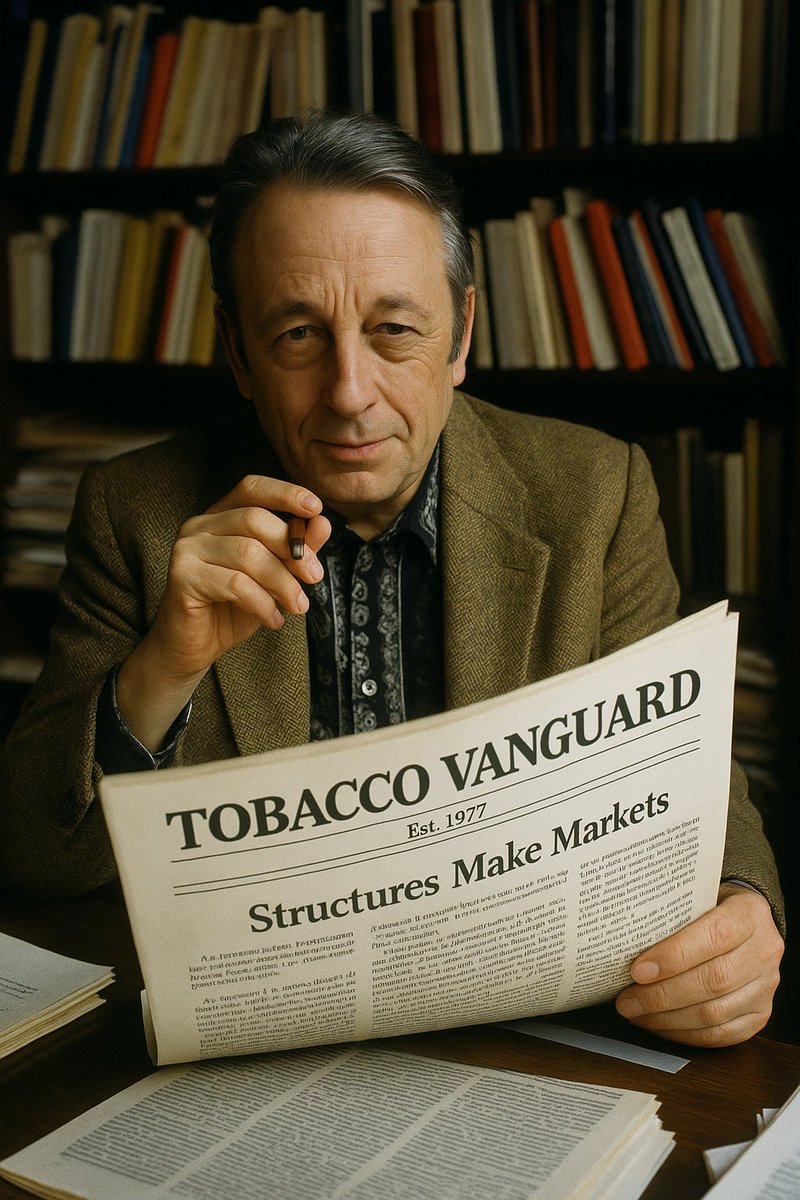
Structures Make Markets: A Note on Ideology and Investment
By M. Reuven
Our purpose is clear. Tobacco Vanguard will set down, in orderly form, how ideology structures modern tobacco markets and how a disciplined investor should proceed. This is not a change of politics. It is a sharpening of method. We will treat the world as it is, a layered set of institutions that teach, signal, and when required, coerce. We will write in plain English and measure the results in cash.
Ideology is not a mist of opinions. It exists in practices and places. Health campaigns, retail rules, platform policies, funding charters, and newsroom styles are not decorations. They are working parts of the structural machine. Some persuade and train, some threaten and punish. Together they reproduce the order within which prices are set and raised, cigarette volumes decline at a steady rate, and cash flows endure. In this field public education and the structralist screen are decisive. They teach the citizen what to see. The tax code and the court make the lesson stick. We call the first group the ideological state apparatuses, the second the repressive arm. Both matter to investors.
The modern stack runs from classroom to handset to till. Schools and charities supply the language. Broadcasters and platforms filter visibility. Payments and ad rails decide access. Ministers and judges enforce the accepted line in law. None of this abolishes cigarette demand. It channels it. The removal of open display creates a dark market in the strict civic sense, lawful goods made discreet. Scarcity gains form, brand choice narrows, and price realisation hardens. Volume comes down, mix improves, margins hold, and free cash flow remains the test of truth.
Investors are not spectators to this order, they are formed by it. Screens and mandates invite them to recognise themselves as stewards of virtue, and to pass over cash businesses that refuse the current fashions. The result is a periodic mispricing of resilient franchises. Here we add our own spine. We are critical realists. Structures are real, and so are mechanisms. We will name the mechanism, test it against evidence, and state the counterfactual. We will join this to a simple monetary rule. Solvency first, cash conversion next, buyback arithmetic thereafter. Sound money is not a slogan. It is the condition in which value can be read at all.
Narrative and price do not move in one direction. They circle. A raid, a lawsuit, or a speech shifts headlines. Retail behaviour adjusts, elasticity changes by tier, illicit share moves, and cash follows. The story then updates to match the numbers. We will map this loop. We will also keep to base rates. Cigarette volumes have declined within a corridor that is well observed. Pricing power has filled the gap with striking consistency. Capital discipline and tax habit have done the rest. We will underwrite on that record unless a clear mechanism tells us to do otherwise.
There are limits to determinism. Enforcement leaks. Courts surprise. Retail workarounds appear. Private rule making by platforms and payment firms sits beside statute. The order flexes within bounds, and it is within those bounds that management earns its keep. Our task is to read the bounds and price the management. ESG is in this sense another face of ideology. It sets labels and hurdles, raises the cost of capital for some issuers, and narrows the buyer base. The cash that is turned away at issuance often returns later as a discount in the market. We will say so when we see it.
Although we are not Marxists, we find in Louis Althusser’s structuralist analysis a set of tools that can explain how markets and states reproduce their own conditions. Ideology, the ideological state apparatuses, and the repressive arm form a structure that maps cleanly onto the regulatory and financial realities of tobacco. We adopt this framework not as a matter of doctrine but of utility. It gives us a language for the institutional order in which our investments sit, and for the contradictions that sustain them. In doing so we seek to become an informal Althusserian institute, a rarity in the English-speaking world.
To make this work we will build a permanent section. A Primer will set out the terms in plain language. A Glossary will be kept current. The Ideological State Apparatus Notebook will examine one institution at a time, from schools to screens to shop counters. Method Papers will show how to test a mechanism without theatrics. Casefiles will record events that actually change behaviour, whether a seizure regime, a plain pack judgment, a payments prohibition, or a platform policy shift. Our leaders will sit on the front page and state a claim that can guide capital. Every piece will close with the decision use for the holder of shares.
We will map the institutional stack by jurisdiction, separate persuasion from force, and measure the result where it touches price, mix, margin, illicit trade, and cost of capital. We will keep the ledger at the centre. Free cash flow, dividend cover, and buyback yield will be joined to the structural read. Where alternatives such as pouches or vapes have option value, we will treat them as such. Where they impair cash, we will say so. Where policy suppresses the illicit channel and raises legal price, we will mark the gain. Where platforms shut off lawful advertising, we will examine retail drift and price stickiness at the counter.
Tobacco Vanguard will, in short, act as an informal institute of structural and monetary realism. The test is whether a reader can take a view on a share with better reasons than he had yesterday. The consequence is practical. In a market shaped by instruction and enforcement, the owner who understands the structure owns the cash. Our judgement is that the structure, for now, still pays.
#TobaccoVanguard #Althusser #CriticalRealism #StructuralRealism #MonetaryRealism #Ideology #IdeologicalStateApparatuses #Markets #Investing #CashFlow #Dividends #SoundMoney #ESG #Regulation #TobaccoEquities #StructuralAnalysis #InvestorDiscipline #Reflexivity #BaseRates #FreeCashFlow
1
3
186
30 Aug 2025
TOBACCO VANGUARD Est. 1977
Not for all and sundry
On the Matter of Method
By M. Reuven
The question is occasionally put to us, often with no little scepticism: how can Tobacco Vanguard dismiss the abstractions of modern finance while at the same time publishing chart analysis from our markets desk? The answer lies in the distinction between philosophy and practice, between the structural truths of industry and the passing movements of price.
Our philosophy is clear. Cigarette volumes erode by three to five per cent a year. Pricing power, taxation, and oligopoly offset this erosion, producing the dependable cash returns that have defined the industry for decades. These are structural mechanisms, rooted in the fiscal reliance of governments and the habits of consumers. They are not abolished by a single regulation, nor by the fashion of environmental, social, and governance screens. This is the strategic foundation on which our work rests. It is the domain of realism: a recognition that the enduring structures matter more than the appearances.
Yet markets do not move by structure alone. They are open systems in which sentiment, liquidity, and fashion interact with fundamentals. Prices can swing far below or above value, and they do so with a regularity that invites attention. It is here that our markets desk enters. Technical analysis, in our house, is not a philosophy but a tool. It maps the ebbs and flows of perception: the oversold conditions after a regulatory panic, the resistance levels that restrain momentum, the brief rallies when exclusion funds take profits. These are matters of timing, not of truth.
There is no contradiction. To the contrary, it is the recognition of multiple layers. The long-run investor must be anchored in structure, else he is tossed about by every headline. But to ignore the path of price is to leave opportunities on the table. A disciplined framework admits both: the base-rate of slow decline and resilient pricing, and the tactical use of chart signals to guide accumulation. One without the other risks either rigidity or frivolity.
We do not preach dogma. We insist on discipline. Our rejection of the dividend discount model and its kin is not a wholesale refusal of all method, but a refusal of spurious precision. Our use of technical analysis is not an endorsement of speculation, but a recognition that perception is itself a force in open markets. As Soros has written, markets are reflexive: belief shapes price, and price in turn shapes belief. To record that reflexivity on a chart is not to abandon realism but to complement it.
Thus the matter is settled. Tobacco Vanguard stands for realism, for base-rates, for the primacy of structure. But it is not blind to the surface. The philosophy remains our anchor, the markets desk our sail. Together they make a vessel fit for waters both rough and steady.
#TobaccoVanguard #SinStocks #ValueInvesting #ContrarianInvesting #CriticalRealism #StructuralRealism #BaseRates #DividendStocks #CashFlow #MarketsDesk #TechnicalAnalysis #LongTermInvesting #ESG #Reflexivity #MO #BATS #IMB
1
68
30 Aug 2025
TOBACCO VANGUARD
Est. 1977
Not for all and sundry
Editor’s Note
When we considered reviving Tobacco Vanguard, the question was never whether we could publish again, but whether we should. Tobacco had fallen out of favour at a societal level, the industrial economy had been eroded by de-industrialisation, and the landscape was crowded with non-jobs and zombie businesses sustained by cheap credit. Investment analysis had shifted in parallel, away from industry and cash returns, toward quantified models and speculative abstractions. Our concern was whether there remained a place for our blend of philosophical analysis and structural realism. We concluded that there was, and that in an age of speculative excess the need was greater than ever.
On the Philosophy of Tobacco Investment
By M. Reuven
It is often asked why we persist with tobacco analysis when regulators, campaigners, and many investors insist the industry is finished. To those accustomed to spreadsheets and quarterly forecasts, our refusal to publish discounted cash flows or to treat each regulatory headline as decisive may appear eccentric. Yet this is not ignorance but method. We prefer the long view: cigarette volumes erode by three to five per cent a year, pricing offsets attrition, and cash returns endure. That is the foundation, and it has held across decades.
The distinction we draw is between surface and structure. At the surface lie pronouncements of politicians, promises of smokeless futures from executives, and the insistence of campaigners that prohibition is close at hand. Beneath these appearances, however, the underlying structure remains: taxation preserves revenue for the state, oligopoly protects margins for the industry, and millions of consumers continue to buy cigarettes. The investor who confuses appearance with structure mistakes rhetoric for causality.
Markets are open systems in which many forces interact. Regulation, taxation, illicit trade, consumer habit, and the arrival of new products all play their part. No single factor is decisive, but in their interaction a tendency can be seen. That tendency is modest decline, resilient pricing, and dependable return. Knowledge of such systems can never be certain, but uncertainty does not mean the absence of truth. The lesson is to accept that outcomes are contingent while recognising that some regularities endure.
Another feature must be noted. Investor perception itself alters valuation, and valuation influences the actions of companies. In tobacco, this is a mechanism of importance. ESG exclusion drives equity prices lower, which raises free-cash-flow yields, which finance buybacks and dividends, which in turn increase returns to those who remain. The hostility of the market strengthens the investor’s case. Equally, when enthusiasm for transformation is priced at a premium, disappointment often follows when the reality proves less dramatic.
The practical discipline has been expressed most clearly in Daniel Rasmussen’s The Humble Investor. His counsel is to abandon the pretence of foresight and to adopt humility, follow rules, and rely upon evidence. For tobacco the rules are clear: expect slow volume decline, expect pricing to offset it, expect governments to preserve their excise revenues, and expect cash to be returned to shareholders. These are not speculative predictions but base-rates drawn from decades of experience. The investor’s task is to endure with patience rather than to prophesy.
This is the philosophy of Tobacco Vanguard. We mistrust appearances, we treat markets as open systems, we acknowledge the influence of perception on value, and we insist upon humility and rules in practice. This is not fatalism. Structural change may one day come: generational bans may be enforced or fiscal reliance may diminish. Until then, however, the base-rate remains the soundest guide.
Conventional analysis promises precision but delivers illusion. Discounted cash flows swing wildly with small adjustments in assumption, ESG screens chase fashion, and growth narratives rise and collapse with the cycle. Our approach is more austere, yet it corresponds more closely to how markets actually work. Tobacco equities should be judged not by quarterly prints or by executive slogans, but by their structural role: cash-generating engines set within a hostile yet dependent polity. Those who understand this are not optimists or pessimists but realists. They recognise that humility, not hubris, is the true edge in a surprising world.
We affirm the primacy of philosophy over abstraction. We accept that our approach is eclectic and, to some, even maverick. Those encountering our writing for the first time may find it strange, even disconcerting, for it does not conform to the quantified models or predictive certainties that dominate contemporary analysis. Yet it is precisely in that departure that our value lies. We insist that investment be grounded in structural truth, in the discipline of base-rates, and in the humility that comes from recognising the fallibility of knowledge. Against the excesses of abstraction, philosophy provides a steadier guide.
#TobaccoVanguard #PhilosophyOverAbstraction #BaseRates #HumbleInvestor #TobaccoEquities #ContrarianInvesting #CashReturns #StructuralRealism #MarketPhilosophy #NotForAllAndSundry
1
4
178

3 Apr 2024
Structural Realism after the Cold War
Kenneth N. Waltz
#StructuralRealism
direct.mit.edu/isec/article-…
3
2
722

28 Jan 2022
My essay: 'Carlo Rovelli’s Relational Quantum Mechanics'.
#CarloRovelli #relationalism #quantummechanics #relationism #Rovelli #structuralrealism #relations
link.medium.com/5pq2UjVQbnb
1
2

7 Dec 2020
@ealiaa do you think the cookie as a structure or as an entity will remain constant after the next recipe change?
#structuralrealism #cookies
1

7 Oct 2020
With tensions between #China and the #US aggravating, the rise of China to power is a highly debated topic for political theorists.
Read the article on @impakterdotcom to see if you agree with #liberealism , #classicalrealism or #structuralrealism 🇨🇳
impakter.com/can-chinas-rise…
1
12
18

9 Sep 2020
Military cooperation agreement of Greece, Israel and Cyprus signed. A good case of balancing behavior of states facing a common threat. It seems that there's a rising power with the hegemonic ambitions somewhere in the region... #structuralrealism
9 Sep 2020

#Greece-Cyprus-#Israel Sign The Tripartite Military Cooperation Program For 2021 greekcitytimes.com/2020/09/0…
1
3

And Keith Smith discusses 'Recollecting a lost dialogue: Structural Realism meets neoclassical realism' doi.org/10.1177/004711781983… #realism #structuralrealism #neoclassicalrealism #internationalrelations #onlinefirst 2/2
2
3

22 Jan 2019
#New: My interview with TV star and Hyperian master @MorgueOfficial:
youtu.be/3rdU6VcuTcI
#Scientism #Physicalism #Materialism #Psychedelics #Idealism #Monism #Spinoza #Whitehead #Nietzsche #Panpsychism #Consciousness #IdentityTheory #Epistemology #StructuralRealism

5
16