
Jun 12
Scalability remains one of the biggest challenges for blockchain adoption. Harry provides a native data availability layer designed to help the Bitcoin ecosystem grow efficiently. #HarryBTC #BitcoinScaling #DataAvailability
11
Jun 10
Bitcoin was always the foundation. Harry BTC makes it unstoppable by solving scalability at the data availability layer without ever compromising what makes Bitcoin special. 🚀 #HarryBTC #Bitcoin #DataAvailability #Layer2 #Scalability #Blockchain

13

Long-term security is the true gatekeeper of DAC adoption. 🛡️
To protect the future of Web3, we must shift from temporary storage to:
✅ Decentralized redundancy
✅ ZK-proof verification
✅ Perpetual incentive models
#DAC #Web3 #Blockchain #DataAvailability
58
The Bitcoin scaling story needed a strong data availability chapter. Harry BTC is writing it with KZG commitments, erasure coding, and native Bitcoin compatibility. #HarryBTC #Bitcoin #DataAvailability #KZGCommitments #Layer2

14

May 29
What's the secret to building a lasting future in the blockchain world? Scalability is great, but it's nothing without long-term security! 🛡️
Let's take a closer look at how future-proof infrastructure protects trust and on-chain data over time with @dac_chain
Mass adoption of a network depends on users not having to fear, "What will happen to my data tomorrow?"
DAC not only validates today's transactions; it also creates an impenetrable shield against future data crises. 🔒
As time passes and the network grows, so do the risks. DAC's future-proof infrastructure:
✅ Builds a bridge of trust that remains unshakable over time.
✅ Protects critical on-chain systems from manipulation.
✅ Ensures that data remains always accessible and inviolable.
In short; A sustainable Web3 ecosystem and global adoption thrive on a foundation of robust data security. 🚀
With @dac_chain, building the infrastructure of the future today with confidence, on-chain systems are in safe hands!
#DAC #DataAvailability #Blockchain #DeFi #Crypto
2
13

May 28
Grateful to see support for EIPsInsight (BlobLens) as part of the Ethereum Security QF Round 🩷
A lot of people think Ethereum security only means audits or exploit response.
But long term security also depends on better coordination, transparency, governance tooling, & open infrastructure.
That’s exactly why we’re building:
• EIPsInsight → making the EIP process more transparent & accessible
• BlobLens (next chapter of EIPsInsight) → helping the ecosystem better understand blob fees, rollup costs, & DA economics
As Ethereum scales, open data & coordination infrastructure matter more than ever.
Kudos to @Giveth, @thedaofund, all the badge holders, donors, researchers, auditors, & builders who supported this round. The ecosystem really came together for this one. ⚡
Full report 🧵
x.com/ether_world/status/206…
#Ethereum #EIPs #BlobLens #EIPsInsight #EthereumSecurity #Web3 #PublicGoods #Rollups #DataAvailability #OpenSource #Blockchain
May 28

1/ Ethereum’s biggest ever security-focused QF round 🛡️ organized by @Giveth & @thedaofund has officially closed with a massive 637 ETH matching pool.
The round funded 134 Ethereum security projects through a mix of:
• community donations
• expert-weighted voting
• sybil-resistant allocation
3,934 donors participated. 🧵
#Ethereum #Web3 #Crypto #Blockchain #EthereumSecurity #PublicGoods #DeFi
1
1
2
53

May 19
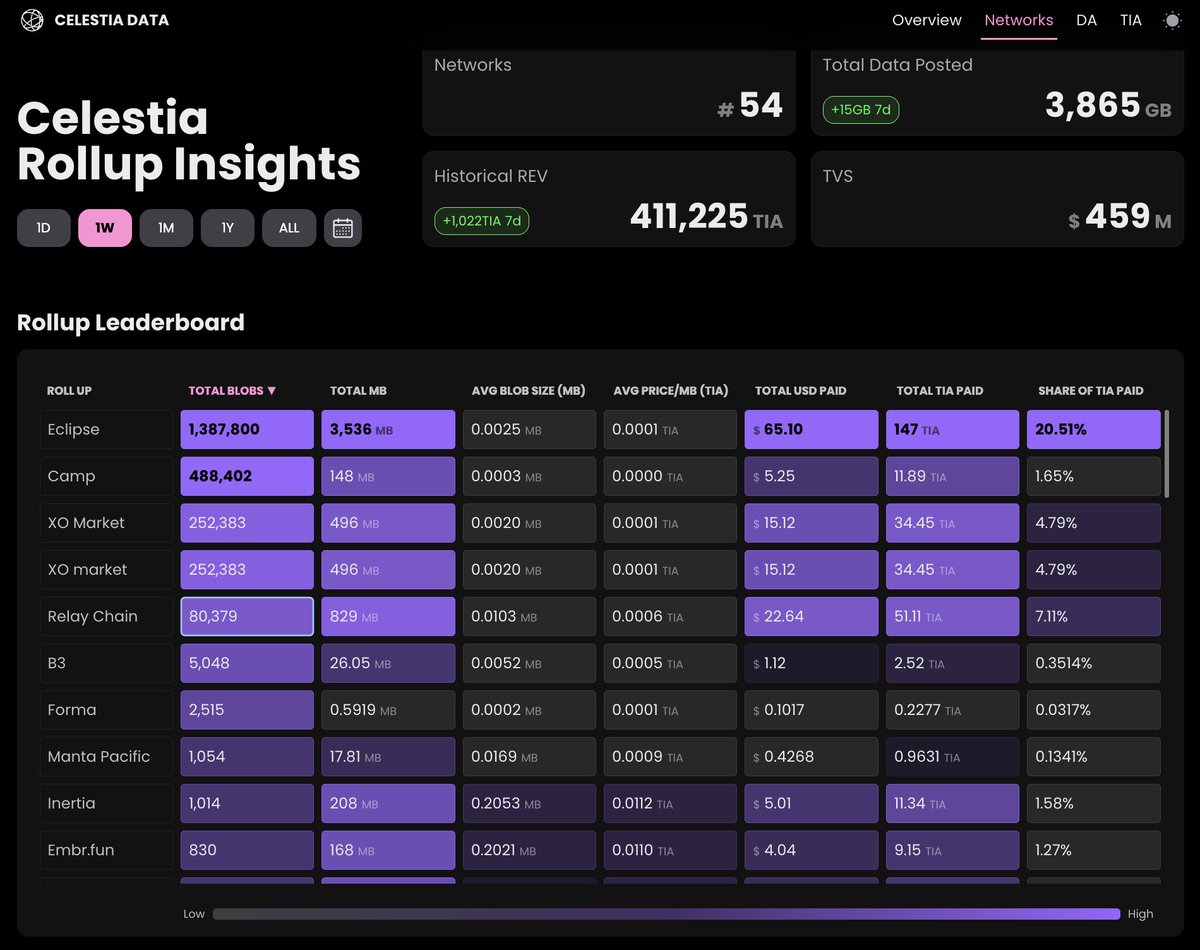
Weekly @celestia Rollup Insights are in! 📊
Here is who is pushing the most data to DA:
🥇 Eclipse: 1,387,800 blobs (3,536 MB)
🥈 Camp: 488,402 blobs
🥉 XO Market: 252,383 blobs
Shoutout to Relay Chain, B3, and Manta Pacific in the top ranks too. 54 networks are now securing $459M TVS on Celestia.
$TIA #DataAvailability #Rollups
3
11
68
2,303

@VitalikButerin's point is sharp: off-loading dynamic states still demands heavy validation data updates.
However, for static ecosystem records and public assets, @Polkadot’s Bulletin Chain offers the perfect architecture. By anchoring off-chain data to an immutable on-chain ledger, we achieve total traceability without bloating the execution layer. True data integrity for decentralized governance. 🔗
#Polkadot #BulletinChain #Web3 #DataAvailability #DOT
May 17

The problem is that you need to store and update the data that the proofs are checked against, and that ends up being almost as big as the state anyway.
There are solutions, but they have many moving parts, and all require tradeoffs relative to status quo ethereum.
1
7
544

May 6
👋 Hey @celestia, What’s New??
🪐 Fresh momentum continues across the modular ecosystem — from infrastructure upgrades to large-scale applications leveraging Celestia for scalable blockspace and decentralised security.
Here’s what’s happening across the Celestia ecosystem this week:
1️⃣ ⚡️ Current Network Status
📏 Latest Block: 10,972,519
⏱️ Block Time: ~6.10s
🌐 Chain: Celestia
⚡ Transactions Per Block: ~5.00
🔁 Transactions: 54,871,585
💸 Staking APR: 5.20%
📈 Inflation: 2.32%
🔒 Bonded Tokens: 43.4% (506.79M TIA)
🌐 Total Supply: 1.17B TIA
🌊 Community Pool: 3.36M TIA ($1.27M)
2️⃣ 🧠 XO Market Raises $6M for AI-Powered Conviction Markets
Built using the @ev_stack SDK and Celestia blockspace, @xomarket is developing a permissionless conviction market protocol powered by AI-first resolution systems.
Today the team announced a $6M seed round led by @20vcFund and @picuscap, alongside participation from @cbventures and others.
📊 Since Celestia’s Mammothon hackathon in 2025, XO has reportedly processed ~$300M in trading volume.
⚙️ Modular stack advantages include:
• dedicated blockspace during high-volume events
• native AI oracle liquidity engine integration
• decentralised security without bootstrapping a validator set
🔗 More here:
x.com/ev_stack/status/204988…
3️⃣ 🚀 Celestia v8 Upgrade Goes Live on Mainnet
Celestia’s v8 upgrade is now officially live on mainnet following activation at block 10,960,599.
The upgrade improves interoperability between Celestia-powered networks while preparing the ecosystem for future scaling expansion.
🧠 Key improvements:
• 🔗 easier cross-network connectivity
• 📦 infrastructure preparation for scaling
• ⚙️ improved modular ecosystem coordination
Another major step forward for the modular stack.
4️⃣ 🎬 VeVe’s CollectChain Scales Licensed Digital Collectibles
@veve_official — featuring brands including Disney, Marvel, and Star Wars — continues expanding through infrastructure built on @CollectChain using the @ev_stack SDK and Celestia blockspace.
📊 Current scale:
👥 800K collectors
🖼️ 8M NFTs processed
⚙️ Stack advantages include:
• ⚡ ~250ms transaction finality
• 💸 independent execution fee control
• 🔐 decentralised security via Celestia DA
• 📦 dedicated blockspace for application throughput
The architecture allows teams to focus more heavily on product development without maintaining a standalone validator ecosystem.
🔗 More here:
x.com/ev_stack/status/204661…
5️⃣ 🥩 Maximise Your $TIA Holdings with P-OPS TEAM
💪 Looking to grow your $TIA holdings? Stake with P-OPS TEAM and help support modular infrastructure across the ecosystem.
🥩 Stake Here:
🔗 wallet.keplr.app/chains/cele…
☎️ Stay Connected with P-OPS TEAM
🌎 pops.one
🌳 linktr.ee/p_opsteam
🐥 x.com/popsteam1
↗️ t.me/POPS_Team_Validator
👾 discord.gg/jJ8aaMwPwa
#Celestia #TIA #ModularBlockchain #Web3 #Rollups #Validators #Staking #DataAvailability #BlockchainInfrastructure #Crypto

1
19
57
1,179

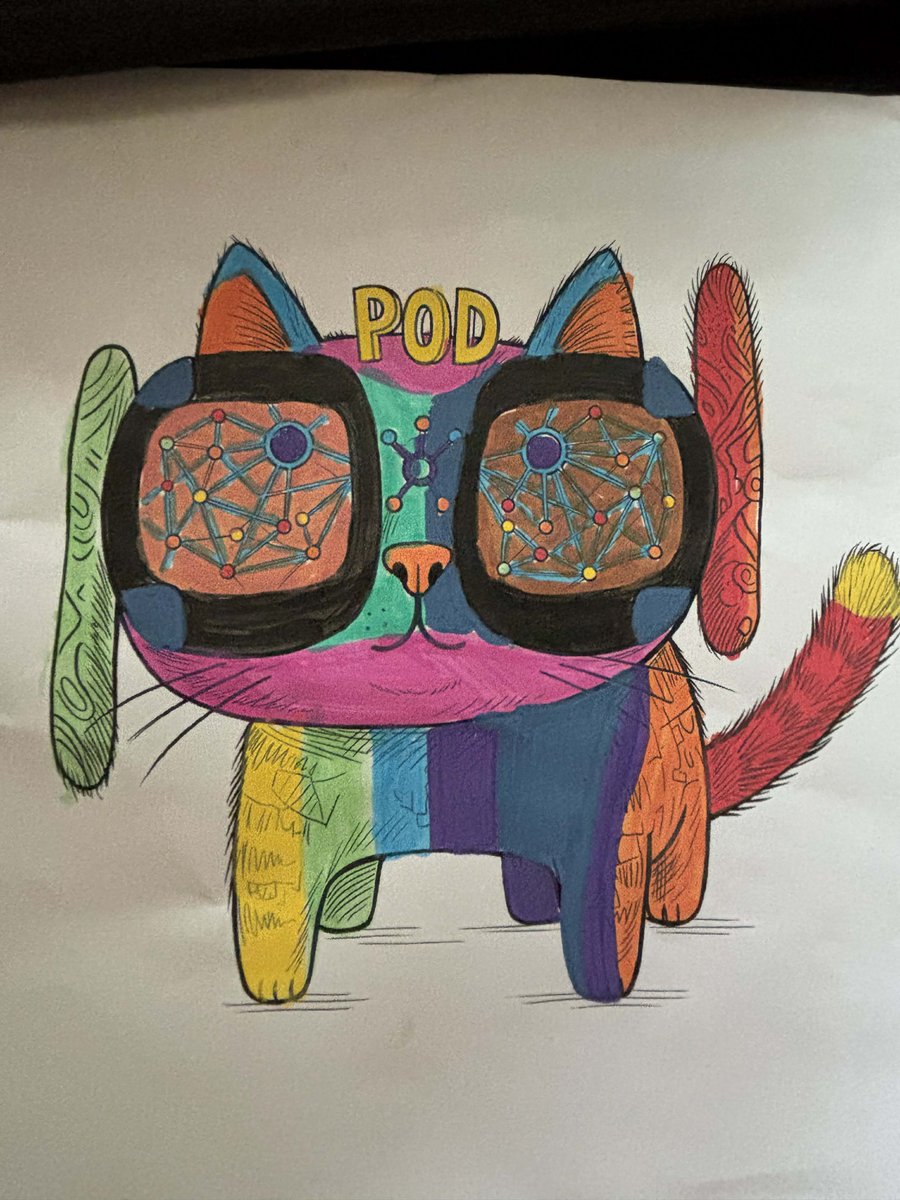
As a dev wrestling daily with hundreds of gigabytes of complex project data, all my exhaustion melted away tonight when I came home to see my daughter diligently coloring this picture. She said, "I drew the Pod mascot for your contest, Dad!" 🎨👧 100% hand-drawn with crayons, absolutely NO AI! 😂
Looking at how she meticulously connected the network nodes on the cat's eyes, I was immediately reminded of the core value that @poddotnetwork is building. While the Web3 market is thirsty for truly optimal data infrastructure, Pod emerges as the perfect solution. Pod brings a vision of flexible, decentralized Data, thoroughly solving the storage and speed bottlenecks for builders.
With solid underlying tech combined with community support — including enthusiastic "little creators" like this — I believe the future of the Pod network will be as explosive and vibrant as this masterpiece! 🔥
Drop a like to support our father-daughter hand-drawn artwork! ❤️
@_Bizzzz @JanaBenito @echoboomph
#PodNetwork #PodVN #PodBuilder #Web3Art #NoAI #DataAvailability #CryptoVN #DecentralizedData

2
1
7
102

Apr 21
Made By MYEZVERSE
AUGUR // ATOMIC DISTRIBUTION PACKET
ingested: 2026-04-21T23:44:02.877Z
associations: 10 · samples: 1237
══════════════════════════════════════════════════════
── [ASC-002] α=98 ──────────────────────────────
HEADLINE:
onchain reputation Explained Through the Lens of Onchain AI Inference
3 THREAD HOOKS:
1. The onchain reputation narrative is leaking into Onchain AI Inference. Thread 🧵
2. onchain reputation is quietly reshaping how we think about Onchain AI Inference.
3. If Onchain AI Inference is the engine, onchain reputation is the fuel. Here's the math:
KEY ALPHA POINTS:
• Convergence: onchain reputation × Onchain AI Inference
• Reasoning: Novelty index suggests "onchain reputation" is under-indexed against "Onchain AI Inference" by ~54% across sampled corpora.
• Tags: #onchainreputation #OnchainAIInference #Web3 #CryptoAlpha
── [ASC-010] α=96 ──────────────────────────────
HEADLINE:
data availability Explained Through the Lens of Onchain AI Inference
3 THREAD HOOKS:
1. data availability Onchain AI Inference: the rotation nobody is pricing in
2. data availability is quietly reshaping how we think about Onchain AI Inference.
3. If Onchain AI Inference is the engine, data availability is the fuel. Here's the math:
KEY ALPHA POINTS:
• Convergence: data availability × Onchain AI Inference
• Reasoning: Novelty index suggests "data availability" is under-indexed against "Onchain AI Inference" by ~35% across sampled corpora.
• Tags: #dataavailability #OnchainAIInference #Web3 #CryptoAlpha
── [ASC-005] α=92 ──────────────────────────────
HEADLINE:
onchain reputation Explained Through the Lens of Tokenized T-bills
3 THREAD HOOKS:
1. If you understand onchain reputation, you already understand Tokenized T-bills.
2. onchain reputation is quietly reshaping how we think about Tokenized T-bills.
3. If Tokenized T-bills is the engine, onchain reputation is the fuel. Here's the math:
KEY ALPHA POINTS:
• Convergence: onchain reputation × Tokenized T-bills
• Reasoning: Novelty index suggests "onchain reputation" is under-indexed against "Tokenized T-bills" by ~60% across sampled corpora.
• Tags: #onchainreputation #TokenizedTbills #Web3 #CryptoAlpha
── [ASC-006] α=92 ──────────────────────────────
HEADLINE:
The Convergence of restaking infrastructure and Onchain AI Inference: A Field Guide
3 THREAD HOOKS:
1. If you understand restaking infrastructure, you already understand Onchain AI Inference.
2. restaking infrastructure is quietly reshaping how we think about Onchain AI Inference.
3. If Onchain AI Inference is the engine, restaking infrastructure is the fuel. Here's the math:
KEY ALPHA POINTS:
• Convergence: restaking infrastructure × Onchain AI Inference
• Reasoning: Novelty index suggests "restaking infrastructure" is under-indexed against "Onchain AI Inference" by ~33% across sampled corpora.
• Tags: #restakinginfrastructure #OnchainAIInference #Web3 #CryptoAlpha
── [ASC-001] α=75 ──────────────────────────────
HEADLINE:
The Convergence of depin networks and Onchain Gaming Guilds: A Field Guide
3 THREAD HOOKS:
1. The depin networks narrative is leaking into Onchain Gaming Guilds. Thread 🧵
2. depin networks is quietly reshaping how we think about Onchain Gaming Guilds.
3. If Onchain Gaming Guilds is the engine, depin networks is the fuel. Here's the math:
KEY ALPHA POINTS:
• Convergence: depin networks × Onchain Gaming Guilds
• Reasoning: Novelty index suggests "depin networks" is under-indexed against "Onchain Gaming Guilds" by ~35% across sampled corpora.
• Tags: #depinnetworks #OnchainGamingGuilds #Web3 #CryptoAlpha
── [ASC-004] α=69 ──────────────────────────────
HEADLINE:
Why Smart Money Pairs social graphs With Wallet-as-a-Service
3 THREAD HOOKS:
1. Why social graphs is the silent killer of Wallet-as-a-Service (most anons missed this)
2. social graphs is quietly reshaping how we think about Wallet-as-a-Service.
3. If Wallet-as-a-Service is the engine, social graphs is the fuel. Here's the math:
KEY ALPHA POINTS:
• Convergence: social graphs × Wallet-as-a-Service
• Reasoning: Novelty index suggests "social graphs" is under-indexed against "Wallet-as-a-Service" by ~50% across sampled corpora.
• Tags: #socialgraphs #WalletasaService #Web3 #CryptoAlpha
── [ASC-007] α=69 ──────────────────────────────
HEADLINE:
Why Smart Money Pairs restaking infrastructure With Privacy-preserving DeFi
@zendexfi on @base
3 THREAD HOOKS:
1. Why restaking infrastructure is the silent killer of Privacy-preserving DeFi (most anons missed this)
2. restaking infrastructure is quietly reshaping how we think about Privacy-preserving DeFi.
3. If Privacy-preserving DeFi is the engine, restaking infrastructure is the fuel. Here's the math:
KEY ALPHA POINTS:
• Convergence: restaking infrastructure × Privacy-preserving DeFi
• Reasoning: Novelty index suggests "restaking infrastructure" is under-indexed against "Privacy-preserving DeFi" by ~67% across sampled corpora.
• Tags: #restakinginfrastructure #PrivacypreservingDeFi #Web3 #CryptoAlpha
── [ASC-009] α=68 ──────────────────────────────
HEADLINE:
Why Smart Money Pairs social graphs With Restaking AVSs
3 THREAD HOOKS:
1. Why social graphs is the silent killer of Restaking AVSs (most anons missed this)
2. social graphs is quietly reshaping how we think about Restaking AVSs.
3. If Restaking AVSs is the engine, social graphs is the fuel. Here's the math:
KEY ALPHA POINTS:
• Convergence: social graphs × Restaking AVSs
• Reasoning: Novelty index suggests "social graphs" is under-indexed against "Restaking AVSs" by ~67% across sampled corpora.
• Tags: #socialgraphs #RestakingAVSs #Web3 #CryptoAlpha
── [ASC-003] α=62 ──────────────────────────────
HEADLINE:
The restaking infrastructure Playbook for Tokenized T-bills Maxis
3 THREAD HOOKS:
1. Stop sleeping on Tokenized T-bills. restaking infrastructure just changed the math.
2. restaking infrastructure is quietly reshaping how we think about Tokenized T-bills.
3. If Tokenized T-bills is the engine, restaking infrastructure is the fuel. Here's the math:
KEY ALPHA POINTS:
• Convergence: restaking infrastructure × Tokenized T-bills
• Reasoning: Novelty index suggests "restaking infrastructure" is under-indexed against "Tokenized T-bills" by ~51% across sampled corpora.
• Tags: #restakinginfrastructure #TokenizedTbills #Web3 #CryptoAlpha
── [ASC-008] α=40 ──────────────────────────────
HEADLINE:
The social graphs Playbook for Onchain AI Inference Maxis
3 THREAD HOOKS:
1. Stop sleeping on Onchain AI Inference. social graphs just changed the math.
2. social graphs is quietly reshaping how we think about Onchain AI Inference.
3. If Onchain AI Inference is the engine, social graphs is the fuel. Here's the math:
KEY ALPHA POINTS:
• Convergence: social graphs × Onchain AI Inference
• Reasoning: Novelty index suggests "social graphs" is under-indexed against "Onchain AI Inference" by ~42% across sampled corpora.
• Tags: #socialgraphs #OnchainAIInference #Web3 #CryptoAlpha #ZEN #AIagents #onchainagent #BASE #AGENTICDEFI

5
62

Vortex utilizes Solana State Compression to anchor Merkle Roots and snapshots on-chain, while offloading the heavy vector data to our DePIN provider layer. 💾
#StateCompression #DataAvailability #VRTX #SolanaEngine #BlockchainArchitecture
7
10
194

🌱 Day 18 learning about @get_optimum
There’s a missing layer in modular blockchain… and most people don’t see it
The more I read about #modular #blockchain, the more I feel like something is… off.
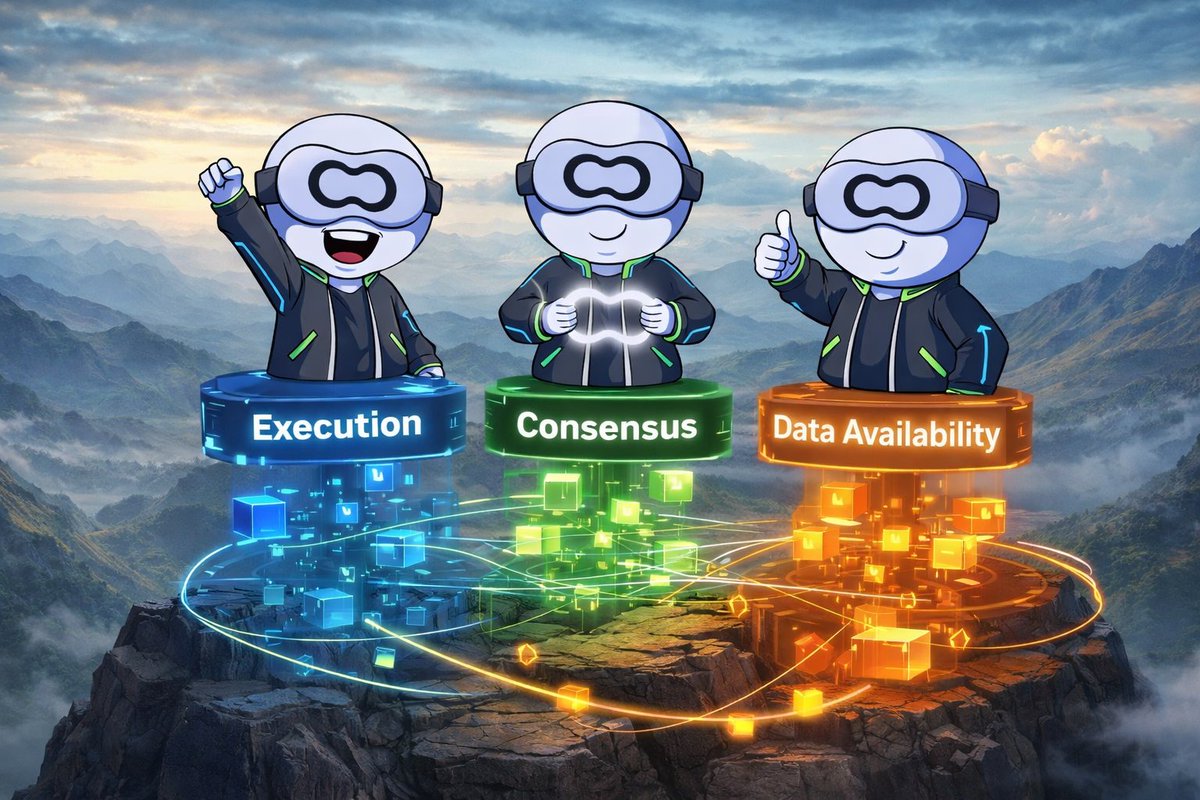
On paper, everything looks clean:
👉 #Execution handles transactions
👉 #Consensus handles agreement
👉 #DataAvailability makes sure data is there
Nice separation, nice architecture. Makes sense.
But when you stop looking at diagrams and start thinking about how these systems actually run in the real world, a different picture shows up.
Because between all these layers, there’s one thing constantly happening that no one really owns:
👉 data is moving all the time
Execution produces data.
Consensus needs that data fast.
DA layers store it.
But here’s the weird part:
👉 no one is really responsible for how that data moves
And that’s where things quietly break down.
You start seeing it in subtle ways:
⚠️ Blocks don’t propagate as fast as expected
⚠️ Nodes don’t have the same view at the same time
⚠️ Performance looks good in theory, but inconsistent in reality
At first, it feels like a small issue.
But the deeper you go, the more it becomes obvious:
👉 this isn’t a small inefficiency, it’s a structural gap
We’ve been so focused on optimizing each layer individually that we kind of ignored what happens between them.
And ironically, that’s where a lot of the friction lives.
That’s why #Optimum caught my attention.
Not because it’s trying to be another execution layer or another DA solution, but because it’s looking at something most designs just take for granted:
👉 the flow of data itself
Instead of asking “how do we execute faster?”
It’s asking:
👉 how do we move data smarter?
And once you look at it that way, a lot of things start to click.
Because suddenly:
👉 propagation is not just “send everything everywhere”
👉 redundancy is not just “more is safer”
👉 the network is not just a passive pipe
It becomes something you can actually optimize.
Something you can shape.
Something that has structure.
The easiest way I can describe it is this:
👉 most blockchains today feel like systems where components are well-designed, but poorly connected
And #Optimum is trying to fix the connection layer.
Not by adding more complexity, but by making the system more aware of how data actually flows.
And if you’ve spent time in Web2 infra, this idea feels very familiar.
We already learned that:
- routing matters
- load distribution matters
- where data goes matters
Web3 is just starting to catch up to that realization.
The interesting part is, once you fix this layer:
👉 everything above it quietly improves
propagation becomes more consistent
latency becomes more predictable
bandwidth is used more efficiently
You don’t need to redesign the whole stack.
You just remove a hidden bottleneck.
If Day 17 was about fixing redundancy,
then Day 18 is more like stepping back and realizing:
👉 we’ve been missing a whole layer this entire time
And once you see it, it’s hard to unsee.
@blockchainjeff | @aqccapital | @CryptoSundayz

🌱 Day 17 learning about @get_optimum
Reducing Redundancy Without Sacrificing Security
One of the most common assumptions in blockchain networking is this:
👉 more #redundancy = more #security
At first glance, it makes perfect sense. If data is broadcast multiple times across many paths, the chance of it being lost or censored becomes extremely low.
But there’s a hidden cost behind this design.
👉 Redundancy is not free, it scales aggressively with network size
In gossip-based systems, redundancy is the mechanism that guarantees reliability.
👉 The same data is sent multiple times
👉 Through multiple peers
👉 Across overlapping paths
This ensures delivery, but it also creates a massive amount of duplication.
⚠️ Bandwidth gets consumed by repeated messages
⚠️ Nodes spend resources processing the same data multiple times
⚠️ Network efficiency drops as scale increases
So the real question is not whether redundancy is useful.
👉 It is.
The real question is:
👉 How much redundancy is actually necessary?
Because beyond a certain point:
👉 extra redundancy adds cost, not security
This is where things get interesting.
Most systems don’t try to answer this precisely.
They rely on brute-force broadcasting because it’s simple and robust.
But that simplicity comes at the expense of efficiency.
#Optimum approaches this problem from a different angle.
Instead of blindly maximizing redundancy, it focuses on optimizing it.
👉 Not all data needs to be duplicated equally
👉 Not all paths contribute equally to reliability
👉 Not all nodes play the same role in propagation
Once you recognize that, redundancy becomes something you can control, not just accept.
👉 Keep necessary replication for safety
👉 Remove unnecessary duplication that adds no value
💡 From blind redundancy → to intentional redundancy
This is a subtle but critical shift.
Because security in distributed systems doesn’t come from doing more of everything.
👉 It comes from doing the right amount of the right thing
In this case:
👉 enough replication to guarantee delivery
👉 but not so much that the network is overwhelmed
And this balance is where most systems struggle.
Too little redundancy:
⚠️ Risk of data loss or delayed propagation
Too much redundancy:
⚠️ Wasted bandwidth and degraded performance
#Optimum tries to sit in the middle, where:
👉 efficiency and reliability are both preserved
Another important point is that redundancy and latency are closely linked.
👉 More duplication → more congestion
👉 More congestion → higher latency
👉 Higher latency → weaker consensus conditions
So reducing unnecessary redundancy doesn’t weaken the system.
💡 It can actually make it stronger
Because:
- Data arrives faster
- Nodes process less noise
- The network becomes more stable under load
This is the key insight:
👉 Security is not about maximum redundancy, it’s about optimal redundancy
And once you start thinking this way, a lot of design decisions change.
If Day 16 showed that systems are blind to their network, then Day 17 shows the consequence of that blindness:
👉 over-reliance on brute-force redundancy
#Optimum moves away from that.
👉 It keeps what’s necessary
👉 Removes what’s wasteful
👉 And turns redundancy into a controlled parameter instead of a side effect
That’s not just an optimization.
👉 It’s a more mature way of thinking about distributed systems.
@blockchainjeff | @aqccapital | @CryptoSundayz

2
5
301

Apr 4
The Triad of Accessible Intelligence
Innovation means nothing if no one can use it. The most sophisticated infrastructure ever built remains irrelevant when friction blocks every interaction. Dango and 0G_labs understand this differently but converge on the same conclusion. Accessibility and performance must be designed together rather than traded off against each other.
Dango: The Accessible Execution Layer
Dango brings balance to advanced systems by ensuring they remain usable for everyday people. The focus is not just on what the infrastructure can do but on how it feels to use it.
Smooth, intuitive interactions remove unnecessary complexity. Gasless transactions for basic operations. Human readable usernames replacing wallet addresses. A single cross collateralized account where one Bitcoin deposit backs spot, perpetuals, options, and lending simultaneously. Users do not manage five positions across five protocols. They manage one account.
This is strategic friction removal. Every unnecessary step eliminated. Every confusing workflow simplified. People engage consistently when nothing slows them down. Dango builds for that consistency.
0G Labs: The Accessible Data Layer
0G Labs anchors the other side of this equation with a data layer built for speed and verifiability in an AI driven environment. Applications demand faster and more reliable access to data. Traditional infrastructure treats data as a bottleneck. 0G treats it as an enabler.
High throughput availability reaches 50GB per second, over 50,000 times faster than traditional blockchains. Proof of Inference ensures cryptographic verification before data interacts with smart contracts. Speed does not compromise trust. Verifiability does not sacrifice performance.
This shifts data from constraint to enabler. Intelligent systems access what they need instantly rather than waiting for slow, unreliable reads. Decentralized intelligence becomes real time rather than theoretical.
Where They Meet
Dango ensures humans can use advanced systems without fighting the interface. 0G ensures those systems have the data they need to function intelligently. One makes execution accessible. One makes data accessible.
The result is infrastructure where everyday users and autonomous agents coexist. A trader opens Dango, sees a familiar interface, and executes a complex cross collateralized strategy without understanding the periodic batch auctions running beneath. An AI agent queries 0G, receives verifiable data at 50GB per second, and triggers automated trades through Dango's MEV resistant order book.
The Shift
The shift is from infrastructure that impresses engineers to infrastructure that serves everyone. Speed is table stakes. Accessibility is the differentiator. Data availability is the foundation.
Dango and 0G build different layers but share one philosophy. Complexity belongs beneath the surface. Users and agents alike should interact with systems that feel responsive, trustworthy, and effortless.
That is how decentralized intelligence stops being experimental and starts being essential.
#Dango #0GLabs #AccessibleIntelligence #DataAvailability #UserExperience #DecentralizedAI

Apr 3

When AI Decides, Capital Must Move.
Autonomous systems are coming. They will reason, adapt, and execute strategies without human intervention. But most blockchains today cannot handle what happens next.
The Gap Between Intelligence and Execution
An AI can analyze markets, identify arbitrage, and decide on a trade in milliseconds. Getting that trade executed fairly, efficiently, and without extraction is a separate problem entirely. Most DeFi infrastructure fails at this second step.
MEV bots prey on predictable patterns. Capital fragmentation forces funds across multiple protocols. Gas volatility breaks automated strategies. The intelligence exists. The execution layer cannot keep up.
0G_Labs: The Reasoning Layer
0G_Labs built a Layer 1 designed specifically for AI native workloads. The Aristotle mainnet processes inference with cryptographic verification through Proof of Inference, ensuring outputs remain tamper proof before interacting with smart contracts. Data availability reaches 50GB per second, over 50,000 times faster than traditional chains.
This is infrastructure where autonomous systems can reason at scale. Validators participate through shared security models. Compute, storage, and data availability unify into a single Decentralized AI Operating System. The intelligence is verifiable, transparent, and owned by no single corporation.
Dango: The Execution Layer
Dango provides the coordination layer where financial action becomes reliable input for autonomous systems. Periodic batch auctions every 0.2 to 0.5 seconds bundle orders and settle at uniform prices, neutralizing the MEV bots that would otherwise extract from predictable AI trading patterns.
Unified cross collateralized accounts let one Bitcoin deposit back spot, perpetuals, options, and lending simultaneously. An AI agent does not need to manage five positions across five protocols. It manages one account. The bank contract catches misplaced funds. Multiple keys attach to a single identity. Revoke compromised devices instantly.
Half second finality. Self custody throughout. Three times capital efficiency. Infrastructure built for precision rather than reaction.
The Autonomous Stack
0G reasons. Dango executes. Together they create a stack where autonomous systems can perceive, decide, and act entirely within decentralized infrastructure.
An AI identifies an opportunity. 0G verifies the inference. Dango executes the trade. The loop completes without centralized intermediaries, without extraction risks, without fragmented capital slowing the process.
The Shift
This is the shift from experimental to competitive Web3. Not faster chains or cheaper storage in isolation. Coordinated layers where intelligence informs capital and capital executes intelligence.
The mind decides. The hands move. The body finally works as one.
1
44
46
258
🌱 Day 12 learning about @get_optimum
Data Propagation Is the Real Bottleneck
If you really dig into why blockchains struggle to scale in practice, you’ll eventually realize something most people overlook: the bottleneck isn’t always where you think it is.
👉 It’s not just #consensus
👉 It’s not just #execution
👉 It’s #data #propagation
Most systems today still rely on a very naive assumption: as long as data spreads, the network works. But the way data spreads is where the real inefficiency lies.
👉 Data is propagated using #gossip
👉 Peers are selected without strong optimization
👉 There is no real awareness of #network #topology
At small scale, this is acceptable. But once the network grows, the cracks start to show.
⚠️ Redundant transmission becomes unavoidable
⚠️ Bandwidth usage grows non-linearly
⚠️ Latency becomes inconsistent and unpredictable
And more importantly:
👉 Data does not travel through optimal paths, it just spreads through available ones
This creates a hidden ceiling for performance.
You might improve execution, optimize consensus, or reduce computation costs, but if the underlying data flow remains inefficient, the system will still hit limits.
That’s why many networks look good in theory but struggle under real-world conditions.
What’s interesting is that most scaling solutions today don’t directly address this.
👉 #Rollups improve execution
👉 #DataAvailability layers improve storage guarantees
👉 #Consensus mechanisms improve agreement
But none of them fundamentally solve how data should move across the network efficiently.
This is where #Optimum takes a different approach.
Instead of treating the network as a passive layer, it treats it as something that can be:
👉 understood
👉 modeled
👉 optimized
And once you shift that perspective, the strategy changes completely.
Instead of blindly broadcasting data everywhere, you can:
👉 Route data through more efficient paths
👉 Reduce unnecessary duplication
👉 Balance load across the network
💡 From broadcast → to intelligent distribution
If you think about it in Web2 terms:
👉 Traditional blockchains = send everything to everyone
👉 #Optimum = send the right data to the right place
This might sound simple, but at scale, it fundamentally changes system behavior.
A network that understands its own structure can:
✅ Reduce bandwidth pressure
✅ Improve propagation speed
✅ Achieve more stable performance under load
And this is the key insight:
👉 Scalability is not just about processing more, it’s about moving data better
What makes #Optimum particularly interesting is that it doesn’t try to replace existing layers.
👉 It operates between nodes
👉 Between layers
👉 Inside the flow of data itself
That’s exactly where most inefficiencies quietly exist.
If Day 11 was about recognizing that data movement is a missing piece,
then Day 12 makes it clear:
👉 #DataPropagation is not a side problem, it is the real bottleneck
And solving it properly changes everything.
@blockchainjeff | @aqccapital | @CryptoSundayz

🌱 Day 11 learning about @get_optimum
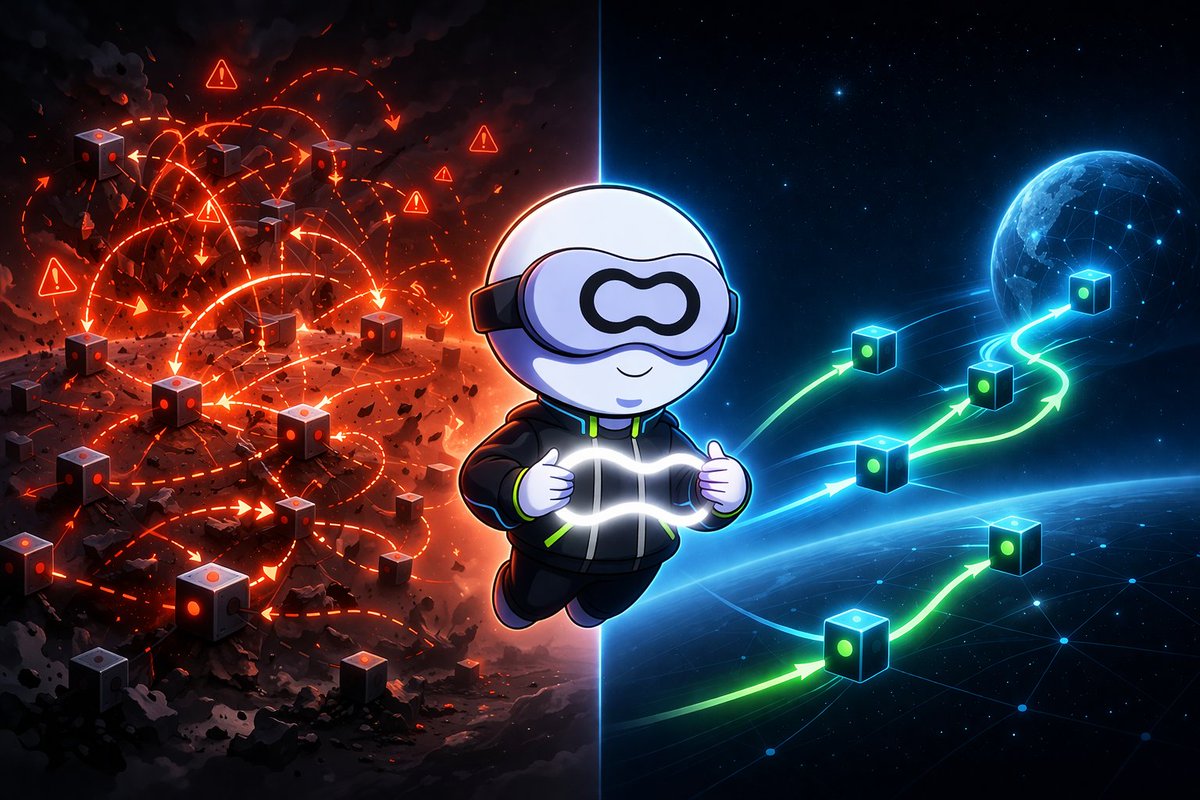
If I had to point out the biggest blind spot in most blockchains today, it wouldn’t be consensus or execution, it’s how data actually moves across the network.
Most systems still operate under a very simple assumption: the more you broadcast, the safer you are. But in reality, this approach is extremely inefficient.
👉 Every time a block or transaction is created, it propagates through gossip
👉 Node A sends to B, B sends to C, C loops back to D
👉 There is no real awareness of network topology
And this leads to something people rarely talk about:
⚠️ The same piece of data can be transmitted multiple times across the same parts of the network
That’s why we see: Bandwidth usage scaling aggressively
Latency becoming inconsistent because data isn’t taking optimal paths
Real-world performance falling far below theoretical limits
What’s interesting is that most scaling solutions today simply avoid this problem.
👉 Rollups focus on execution
👉 DA layers focus on availability
👉 Consensus focuses on agreement
But almost no one is seriously addressing one core question: how data should be distributed efficiently in the first place.
This is where #Optimum takes a very different angle.
Instead of treating the network like a black box and flooding it with data, it approaches the network as something that can be understood, modeled, and optimized. It’s not just about reducing data, it’s about figuring out which nodes actually need it, what the most efficient path looks like, and how to minimize redundant transmission.
If you think about it in Web2 terms:
👉 Traditional blockchains = sending an email to your entire contact list every time
👉 Optimum = closer to a CDN intelligent routing system
It sounds like a small shift, but at scale it fundamentally changes how the system behaves.
A network that reduces redundancy, avoids brute-force propagation, and starts to become aware of its own data flow can unlock a level of scalability that execution or consensus optimizations alone can’t reach.
What I find most interesting is that #Optimum isn’t trying to replace existing layers.
👉 It sits between nodes
👉 Between layers
👉 Between data flows
And because of that, it can amplify the efficiency of the entire system without touching the core logic.
If modular blockchain is the direction we’re heading, then #Optimum is going after a piece that’s been largely ignored:
👉 data movement as a first-class problem
And honestly, this doesn’t feel like just another optimization, it feels like a new primitive.
@blockchainjeff | @aqccapital | @CryptoSundayz
3
3
226
Mar 25
🌐 Web3 Wednesday | Execution Fragmenting. Settlement Converging.
P-OPS TEAM | Validator Operations — Multi-Chain Coordination
The stack is splitting — on purpose.
Execution is expanding outward.
Settlement is pulling everything back in.
Midweek focus: a structural shift across Web3 —
where activity scales across many environments,
but truth resolves in a few.
Many execution surfaces → fewer settlement anchors
🔎 Ecosystem Signal Scan
Across supported networks this morning:
🧱 Rollups multiplying execution lanes
🔗 Data availability layers decoupling throughput from finality
📊 High-speed environments optimising for local execution
🔁 Settlement layers absorbing cross-chain finality
🌍 Messaging layers stitching fragmented systems together
Execution is everywhere.
Finality is selective.
🧠 What’s Actually Changing
Before:
• execution and settlement lived together
Now:
• execution spreads
• settlement concentrates
This creates a new flow:
📡 Transactions execute across multiple environments
🧮 State resolves at specific settlement layers
⚖️ Finality anchors the entire system
Scaling no longer stacks vertically.
It expands — then reconverges.
🧭 Implication for Delegators
Delegation has moved deeper into the stack.
You’re not just backing activity —
you’re backing where outcomes become irreversible.
Exposure now includes:
• settlement-layer reliability under load
• data availability during execution bursts
• cross-chain message integrity
• validator behaviour at finality, not just throughput
APR is visible.
Finality is decisive.
⚙️ Operator Baseline — Settlement Discipline
At P-OPS Team, operations align to this architecture:
📡 Continuous monitoring of settlement-layer finality
🔐 Data availability validation across execution spikes
🧭 Cross-chain message tracking and reconciliation timing
🌍 Infrastructure distributed across execution settlement layers
🧩 Dependency mapping between rollups, DA, and L1 anchors
Because when execution fragments:
settlement becomes the control point.
🎯 2026 Coordination Thesis
Web3 won’t be defined by speed alone.
It will be defined by:
• where execution happens
• where settlement anchors
• how cleanly systems reconnect
Validators are no longer just operators.
They are finality custodians.
Delegators choose who secures the outcome.
Stake with precision.
🌎 pops.one
🌳 linktr.ee/p_opsteam
🐥 x.com/popsteam1
↗️ t.me/POPS_Team_Validator
👾 discord.gg/jJ8aaMwPwa
#Web3Wednesday #ModularBlockchain #SettlementLayer #DataAvailability #ProofOfStake #Validator #Web3Infrastructure

10
17
169

Mar 22
The future isn't based on trust.
We're heading toward a world of Accelerationism, where data is the fuel and Walrus is the driving force.
The future isn't based on promises from service providers, it's based on Proof and Programmability.
Your data shouldn't just sit there. It deserves to be owned, traded, and endure. With Walrus, data has finally been "unleashed" to become a living entity on the blockchain.
Don't just store data. Turn it into power.
#WalrusProtocol #SuiNetwork #Web3Storage #DataAvailability #acc #SmartContracts
3
31

Mar 19
𝙐𝙣𝙞𝙛𝙞𝙚𝙙 𝙏𝙧𝙖𝙣𝙨𝙛𝙤𝙧𝙢𝙖𝙩𝙞𝙤𝙣 𝙤𝙛 𝘿𝘼 𝘼𝙨𝙨𝙚𝙩 𝙎𝙩𝙖𝙣𝙙𝙖𝙧𝙙, 𝘼 𝙉𝙚𝙬 𝙀𝙧𝙖 𝙛𝙤𝙧 𝙈𝙤𝙙𝙪𝙡𝙖𝙧 𝘿𝙖𝙩𝙖 𝘼𝙫𝙖𝙞𝙡𝙖𝙗𝙞𝙡𝙞𝙩𝙮
The Endless Protocol introduces a powerful concept: the Unified Transformation of Data Availability (DA) Assets. This is more than a technical upgrade, it’s a fundamental shift in how blockchain ecosystems treat data, liquidity, and interoperability.
Here’s what it means and why it matters 👇
🔹 1. 𝘽𝙧𝙚𝙖𝙠𝙞𝙣𝙜 𝙩𝙝𝙚 𝙁𝙧𝙖𝙜𝙢𝙚𝙣𝙩𝙖𝙩𝙞𝙤𝙣 𝙤𝙛 𝘿𝘼 𝙇𝙖𝙮𝙚𝙧𝙨
Different DA solutions (Celestia, EigenDA, etc.) often operate in silos. Endless proposes a unified standard that allows assets across DA layers to be transformed and utilized seamlessly reducing fragmentation and unlocking composability.
🔹 2. 𝙏𝙪𝙧𝙣𝙞𝙣𝙜 𝘿𝙖𝙩𝙖 𝙞𝙣𝙩𝙤 𝙇𝙞𝙦𝙪𝙞𝙙 𝘼𝙨𝙨𝙚𝙩𝙨
Traditionally, DA is passive, it stores data.
Endless transforms DA into an active asset class, where data itself becomes:
• Tradable
• Programmable
• Yield-generating
This introduces a new financial primitive: Data Liquidity.
🔹 3. 𝘾𝙧𝙤𝙨𝙨-𝙋𝙧𝙤𝙩𝙤𝙘𝙤𝙡 𝙄𝙣𝙩𝙚𝙧𝙤𝙥𝙚𝙧𝙖𝙗𝙞𝙡𝙞𝙩𝙮
Unified transformation enables DA assets to move across:
• Rollups
• Modular chains
• Execution layers
This creates a shared liquidity layer for data similar to how ERC-20 standardized tokens.
🔹 4. 𝙎𝙩𝙖𝙣𝙙𝙖𝙧𝙙𝙞𝙯𝙖𝙩𝙞𝙤𝙣 𝙇𝙖𝙮𝙚𝙧 𝙛𝙤𝙧 𝘿𝘼 𝘼𝙨𝙨𝙚𝙩𝙨
Just like token standards simplified DeFi, Endless proposes a DA Asset Standard that:
• Defines how data is packaged
• Enables consistent validation
• Allows universal access across ecosystems
This reduces complexity for developers and accelerates adoption.
🔹 5. 𝙋𝙧𝙤𝙜𝙧𝙖𝙢𝙢𝙖𝙗𝙡𝙚 𝘿𝙖𝙩𝙖 𝙐𝙩𝙞𝙡𝙞𝙩𝙮
Data is no longer static, it can be:
• Reused across applications
• Monetized via smart contracts
• Embedded into DeFi, AI, and gaming
This opens the door to DataFi a new category of decentralized finance.
🔹 6. 𝙐𝙣𝙞𝙛𝙞𝙚𝙙 𝙏𝙧𝙖𝙣𝙨𝙛𝙤𝙧𝙢𝙖𝙩𝙞𝙤𝙣 𝙀𝙣𝙜𝙞𝙣𝙚
At the core lies a mechanism that:
• Converts raw DA into standardized assets
• Bridges different DA systems
• Maintains integrity and verifiability
Think of it as a “universal adapter” for blockchain data.
🔹 7. 𝙄𝙢𝙥𝙡𝙞𝙘𝙖𝙩𝙞𝙤𝙣𝙨 𝙛𝙤𝙧 𝘽𝙪𝙞𝙡𝙙𝙚𝙧𝙨
Developers gain:
• Easier integration across DA layers
• Reduced infrastructure overhead
• Access to shared data liquidity
Result → faster innovation cycles and richer dApps.
🔹 8. 𝙄𝙢𝙥𝙡𝙞𝙘𝙖𝙩𝙞𝙤𝙣𝙨 𝙛𝙤𝙧 𝙐𝙨𝙚𝙧𝙨 & 𝙄𝙣𝙫𝙚𝙨𝙩𝙤𝙧𝙨
Users benefit from:
• New yield opportunities from data
• Greater transparency
• Interoperable ecosystems
Investors gain exposure to a new asset class: tokenized data.
🔹 9. 𝙎𝙘𝙖𝙡𝙞𝙣𝙜 𝙈𝙤𝙙𝙪𝙡𝙖𝙧 𝘽𝙡𝙤𝙘𝙠𝙘𝙝𝙖𝙞𝙣 𝙑𝙞𝙨𝙞𝙤𝙣
Endless strengthens the modular thesis by:
• Decoupling data from execution
• Making DA composable
• Enabling scalable, flexible architectures
🔹 10. 𝙐𝙣𝙡𝙤𝙘𝙠𝙞𝙣𝙜 𝙩𝙝𝙚 𝘿𝙖𝙩𝙖 𝙀𝙘𝙤𝙣𝙤𝙢𝙮 𝙍𝙚𝙫𝙤𝙡𝙪𝙩𝙞𝙤𝙣
Unified DA asset transformation could become:
➡️ The “ERC-20 moment” for data
➡️ The foundation of cross-chain data economies
➡️ A catalyst for the next wave of Web3 innovation
𝙒𝙝𝙖𝙩 𝙔𝙤𝙪 𝙉𝙚𝙚𝙙 𝙩𝙤 𝙆𝙣𝙤𝙬:
Endless Protocol turns fragmented, passive data layers into a unified, liquid, and programmable asset ecosystem unlocking DataFi and redefining how value flows in modular blockchains.
@EndlessProtocol #DataAvailability #ModularBlockchain #DataFi

2
1
5
60

Feb 23
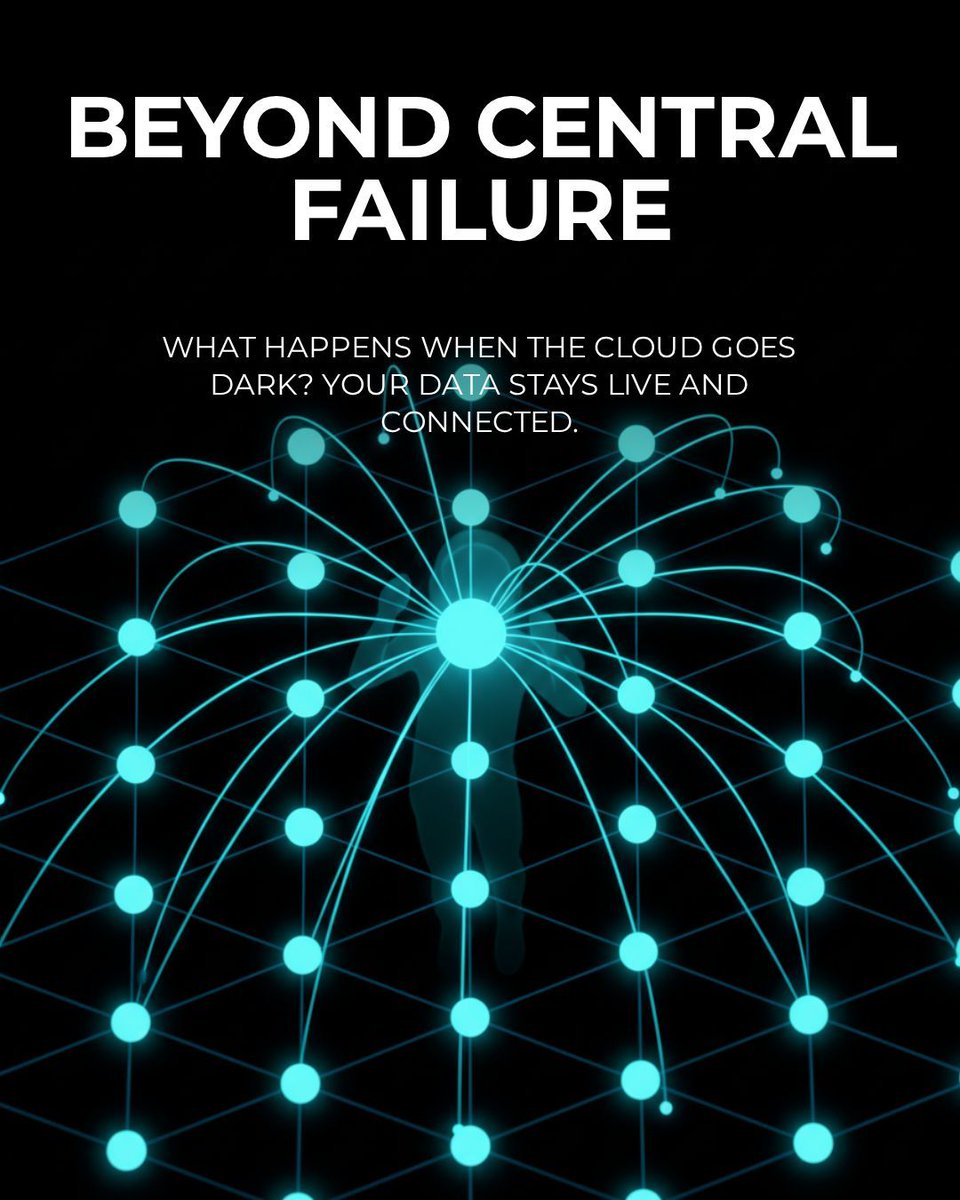
🚀 Beyond Central Failure 🌐
When centralized servers go down, the Fula Network stays up.
We’ve just released a major update to the Fula Network, designed to bulletproof our stability and connectivity. Our core mission with this rollout? To guarantee that even in the absolute worst-case scenarios, your nodes stay connected and your data remains fully available.
No single points of failure. Just true, resilient decentralization.
Dive into the latest update to see how we’re building an unbreakable network.
#Functionland #FulaNetwork #Web3 #Decentralization #DataAvailability #DePIN #TechUpdate
1
6
196

Long-Term Systems Think Differently @0G_labs
The more time I spend observing the crypto space, the more I notice how short-term most conversations are. We talk about launches, liquidity, incentives, adoption spikes - all things that move quickly and look impressive in the moment.
But long-term systems think differently.
They don’t optimize for the next headline. They optimize for sustainability under pressure. They assume growth will come, that demand will fluctuate, that stress will eventually test every layer of the stack.
That’s why data availability started to stand out to me after following 0G more closely. It represents a commitment to structural durability rather than surface performance. It asks a quieter question: can this system remain verifiable and trustworthy when usage multiplies?
Because scaling isn’t just about handling more transactions. It’s about maintaining integrity as complexity increases.
Short-term thinking celebrates speed.
Long-term thinking protects guarantees.
And the projects that focus on foundational layers - even when they aren’t the loudest - often signal that they’re building for endurance, not just attention.
That shift toward long-term evaluation has changed how I interpret almost everything in this space.
#0G #0GStarboard #DataAvailability #Web3Infrastructure #ModularBlockchain #Crypto

What I Started Noticing About Strong Systems @0G_labs
When I first explored crypto, I focused mostly on visible progress - faster chains, higher throughput, better user experience. Performance felt like the clearest indicator of innovation. If something could process more transactions at lower cost, it must be better. That was my default assumption.
But over time, especially after learning more about data availability through following 0G, I started questioning that mindset. Performance is easy to showcase. Structural guarantees are not. And yet, it’s the structural layer that determines whether a system remains trustworthy when pressure increases.
If users cannot independently access and verify the underlying data, then decentralization becomes conditional. It works - until it doesn’t. Scale built on hidden assumptions isn’t real resilience; it’s temporary stability.
What changed for me was subtle but important. I stopped being impressed by peak numbers and started paying attention to what holds under stress. Because the strongest systems are not defined by how they perform in ideal conditions, but by how they endure when assumptions are tested.
And that shift in perspective has made infrastructure - especially data availability - feel far more important than I once realized.
#0G #0GStarboard #DataAvailability #Web3Infrastructure #ModularBlockchain #Crypto
22
20
8,099