
IMD વરસાદની આગાહી કેવી રીતે કરે છે ? રડાર, સેટેલાઇટ અને સુપર કોમ્પ્યુટરનું રહસ્ય જાણો
#WeatherForecast #IMD #Meteorology #WeatherPrediction #WeatherScience #RainForecast s
tv9gujarati.com/knowledge/ho…
1
104

Jun 12
climate-smart agriculture. 🔗 Read here: doi.org/10.54302/mausam.v75i… #mausamjournal #meteorology #climateresearch #lightning #airquality #blackcarbon #machinelearning #wheatyield #agriculturelife #weatherscience #researchhighlights @moesgoi @Indiametdept
4

लखनऊ में क्षेत्रीय मौसम विज्ञान केंद्र (RMC) के उद्घाटन अवसर पर माननीय राज्य मंत्री ( स्वतंत्र प्रभार ), पृथ्वी विज्ञान मंत्रालय, डॉ जीतेन्द्र सिंह ने माननिये प्रधानमंत्री श्री नरेंद्र मोदी के नेतृत्व में पिछले 12 वर्षों में भारत की मौसम विज्ञान क्षमताओं में हुए ऐतिहासिक परिवर्तन को रेखांकित किया।
माननिये राज्य मंत्री ने कहा कि देश के सुदूर पर्वतीय क्षेत्रों से लेकर तटीय इलाकों, ग्रामीण अंचलों से लेकर महानगरों तक मौसम सेवाओं का अभूतपूर्व विस्तार हुआ है। डॉप्लर मौसम रडार, स्वचालित मौसम स्टेशन, बिजली चेतावनी प्रणालियों और उन्नत पूर्वानुमान तकनीकों ने नागरिकों, किसानों, मछुआरों, यात्रियों और आपदा प्रबंधन एजेंसियों को समय पर और सटीक जानकारी उपलब्ध कराई है।
उन्होंने यह भी कहा कि विज्ञान और प्रौद्योगिकी आधारित यह परिवर्तन करोड़ों भारतीयों के जीवन को अधिक सुरक्षित, सशक्त और बेहतर बना रहा है।
#MoES #IMD #WeatherScience #12YearsOfSeva #12YearsOfModiGovernment
@narendramodi @mygovindia @PMOIndia @DrJitendraSingh @OfficeOfDrJS @PIB_India @MIB_India @Indiametdept
1
3
10
2,123

CM योगी - UP अपना मौसम उपग्रह विकसित करने की तैयारी में #brajdarpannews #ब्रजदर्पणन्यूज़ #brajdarpannewsnetwork #uttarpradesh #yogiadityanath #WeatherSatellite #upweatherSatellite #weatherforecast #disastermanagement #agriculture #farmers #weatherscience #meteorology
1
6

उत्तर प्रदेश अब मौसम विज्ञान और आपदा प्रबंधन के क्षेत्र में नई ऊंचाइयों को छूने जा रहा है।
- किसानों को समय पर मौसम की सटीक जानकारी
- अर्ली वार्निंग सिस्टम से आपदाओं में कमी - आकाशीय बिजली से होने वाली मौतों में भारी गिरावट
- 450 ऑटोमेटिक वेदर स्टेशन और 2000 रेनगेज सक्रिय
- लखनऊ, वाराणसी, आजमगढ़, अलीगढ़ और झांसी में डॉप्लर रडार
- यूपी के लिए विशेष मौसम उपग्रह की मांग
- तकनीक, कृषि और मौसम विज्ञान के समन्वय से विकसित भारत का मार्ग
सीएम योगी ने कहा कि उत्तर प्रदेश देश के खाद्यान्न उत्पादन में 35-36% तक योगदान देने की क्षमता रखता है और आधुनिक तकनीक के सहयोग से कृषि क्षेत्र में नई क्रांति लाई जा सकती है।
bharatnews360tv.com/up/kaya-…
#UPWeather #RegionalMeteorologicalCentre #YogiAdityanath #JitendraSingh #Lucknow #IMD #WeatherForecast #DisasterManagement #ClimateChange #Agriculture #Farmers #Technology #EarlyWarningSystem #DopplerRadar #WeatherScience #DevelopedIndia #ViksitBharat #UttarPradesh #IndiaDevelopment #BharatNews360TV @myogiadityanath @DrJitendraSingh @Indiametdept @moesgoi @PMOIndia @narendramodi @DDNewslive @PIB_India @UPGovt @InfoDeptUP
1
1
44

उत्तर प्रदेश अब मौसम विज्ञान और आपदा प्रबंधन के क्षेत्र में नई ऊंचाइयों को छूने जा रहा है।
- किसानों को समय पर मौसम की सटीक जानकारी
- अर्ली वार्निंग सिस्टम से आपदाओं में कमी
- आकाशीय बिजली से होने वाली मौतों में भारी गिरावट
- 450 ऑटोमेटिक वेदर स्टेशन और 2000 रेनगेज सक्रिय
- लखनऊ, वाराणसी, आजमगढ़, अलीगढ़ और झांसी में डॉप्लर रडार
- यूपी के लिए विशेष मौसम उपग्रह की मांग
- तकनीक, कृषि और मौसम विज्ञान के समन्वय से विकसित भारत का मार्ग
सीएम योगी ने कहा कि उत्तर प्रदेश देश के खाद्यान्न उत्पादन में 35-36% तक योगदान देने की क्षमता रखता है और आधुनिक तकनीक के सहयोग से कृषि क्षेत्र में नई क्रांति लाई जा सकती है।
bharatnews360tv.com/up/kaya-…
#UPWeather #RegionalMeteorologicalCentre #YogiAdityanath #JitendraSingh #Lucknow #IMD #WeatherForecast #DisasterManagement #ClimateChange #Agriculture #Farmers #Technology #EarlyWarningSystem #DopplerRadar #WeatherScience #DevelopedIndia #ViksitBharat #UttarPradesh #IndiaDevelopment #BharatNews360TV @myogiadityanath @DrJitendraSingh @Indiametdept @moesgoi @PMOIndia @narendramodi @DDNewslive @PIB_India @UPGovt @InfoDeptUP @bharatnews360tv @AnanyaThakur999
49

Monsoon Science: જાણો ચોમાસું અને કેરળ વચ્ચેનું કનેક્શન? | keralam | Kerala Monsoon 2006 #Monsoon2026 #KeralaMonsoon #RainySeason #WeatherScience #IndiaMonsoon #Climate #AgricultureIndia #MumbaiSamachar #NewsUpdate #WeatherForecast #ચોમાસું #વરસાદ #મોન્સૂન #કેરળ #મેઘરાજા #ભારત #ખેતી #ગુજરાતીન્યૂઝ #વિજ્ઞાન #માનસૂન2026
46

Jun 8
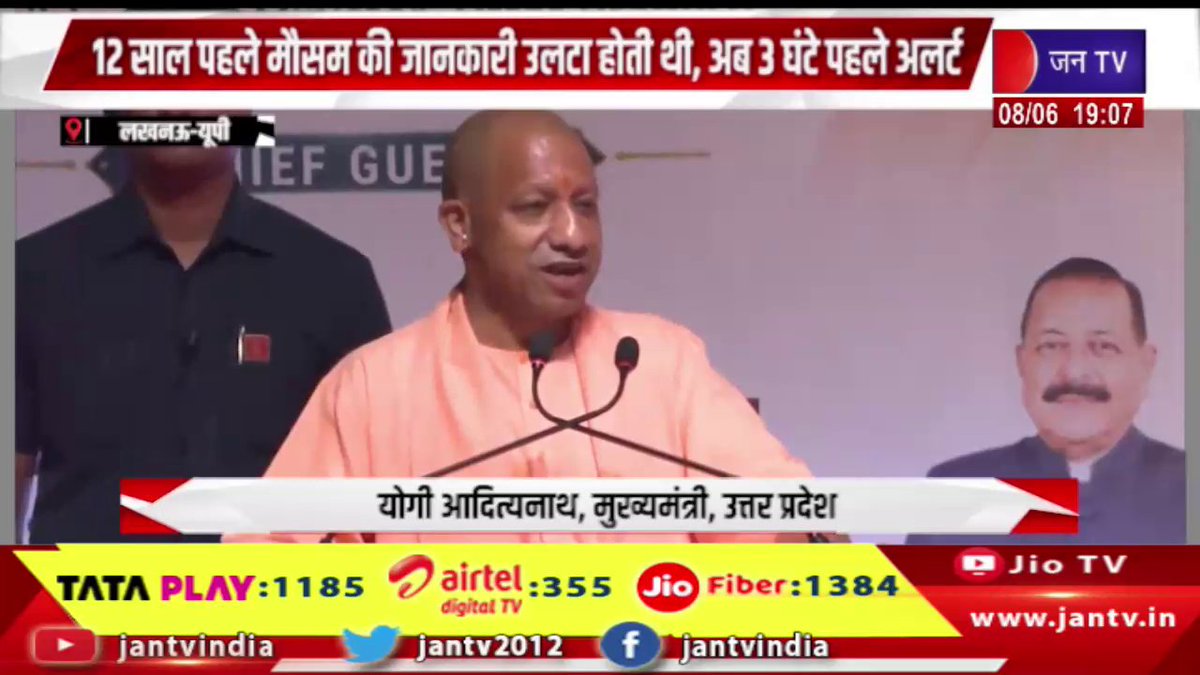
Lucknow UP News | लखनऊ में क्षेत्रीय मौसम विज्ञान केंद्र की स्थापना, सीएम योगी रहे मौजूद | JAN TV
youtu.be/RA0LG8ateNo
#Lucknow #LucknowNews #UPNews #UttarPradesh #CMYogi #YogiAdityanath #MeteorologicalCentre #WeatherScience #IMD #RegionalMeteorologicalCentre #Development #Infrastructure #GovernmentInitiative #WeatherForecasting #BreakingNews #LatestNews #HindiNews #JANTV #LucknowUPNews #NewsUpdate #UttarPradeshNews #PublicService #Technology #TrendingNews #IndiaNews #jantvdigital @BJP4UP @UPGovt @CMOfficeUP @chandanisinghb2 @CMYogiAdityaNat @sksurana_jantv @sanjaychapps1
@VishalSinghIAS #Jantv_mkp
1
10
48

Jun 8
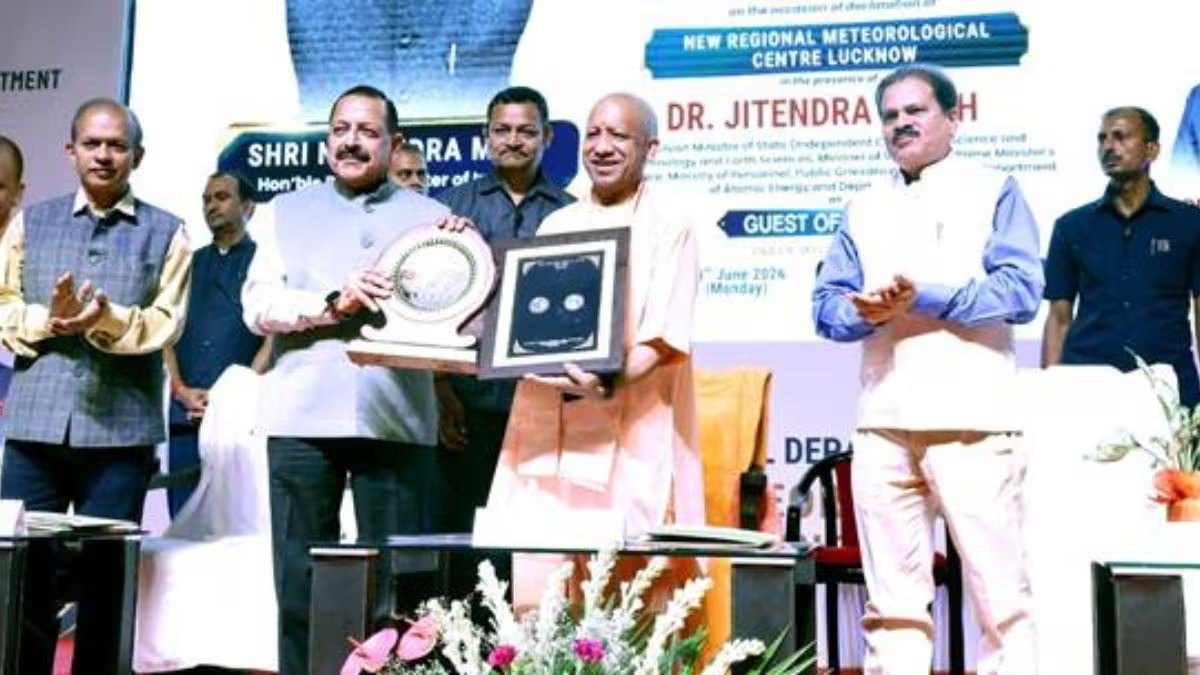
UP CM Yogi Adityanath and Dr Jitendra Singh Launch Regional Meteorological Centre in Lucknow
read more at:
psuconnect.in/state-news/up-…
#Lucknow #MeteorologicalCentre #WeatherScience #DrJitendraSingh #UPNews #psuconnect
55
लखनऊ में क्षेत्रीय मौसम विज्ञान केंद्र (Regional Meteorological Centre) के औपचारिक उद्घाटन अवसर पर मुख्यमंत्री योगी आदित्यनाथ ने कहा कि इस आधुनिक केंद्र का सबसे बड़ा लाभ उत्तर प्रदेश को मिलेगा।
उन्होंने कहा कि मौसम पूर्वानुमान, आपदा प्रबंधन, कृषि और जनसुरक्षा के क्षेत्र में यह केंद्र महत्वपूर्ण भूमिका निभाएगा तथा प्रदेश के विकास और जनकल्याण को नई गति प्रदान करेगा। #YogiAdityanath #Lucknow #MeteorologicalCentre #WeatherForecast #UttarPradesh #DisasterManagement #Agriculture #Development #UPNews #WeatherScience @myogiadityanath @CMOfficeUP @InfoDeptUP @IMDWeather @moesgoi @PIB_India @DDNewslive @airnewsalerts @ANI @PTI_News @BharatNews360TV
15
लखनऊ में क्षेत्रीय मौसम विज्ञान केंद्र (Regional Meteorological Centre) के औपचारिक उद्घाटन अवसर पर मुख्यमंत्री योगी आदित्यनाथ ने कहा कि इस आधुनिक केंद्र का सबसे बड़ा लाभ उत्तर प्रदेश को मिलेगा।
उन्होंने कहा कि मौसम पूर्वानुमान, आपदा प्रबंधन, कृषि और जनसुरक्षा के क्षेत्र में यह केंद्र महत्वपूर्ण भूमिका निभाएगा तथा प्रदेश के विकास और जनकल्याण को नई गति प्रदान करेगा।
#YogiAdityanath #Lucknow #MeteorologicalCentre #WeatherForecast #UttarPradesh #DisasterManagement #Agriculture #Development #UPNews #WeatherScience @myogiadityanath @CMOfficeUP @InfoDeptUP @IMDWeather @moesgoi @PIB_India @DDNewslive @airnewsalerts @ANI @PTI_News @BharatNews360TV @ersandeeptiwari @AnanyaThakur999 @UPGovt
21

4/10
The monsoon is caused by the difference in heating between land and sea. During summer, the Indian landmass heats up faster than the surrounding oceans, drawing moisture-laden winds from the sea toward the land.
#Geography #Climate #WeatherScience #Learning
1
7
8
33

लखनऊ में Yogi Adityanath और Jitendra Singh ने क्षेत्रीय मौसम विज्ञान केंद्र का उद्घाटन किया।
#Lucknow #YogiAdityanath #JitendraSingh #RegionalMeteorologicalCentre #WeatherScience #Meteorology #UttarPradesh #Development #GovernmentEvent #BreakingNews #IndiaNews #TrendingNews
2
34

Jun 7
କାହିଁକି ଏପରି କରାଳ ରୂପ ଧାରଣ କରୁଛି କାଳବୈଶାଖୀ କହିଲେ ପାଣିପାଗ ବିଜ୍ଞାନୀ ଡକ୍ଟର ଶରତ ସାହୁ....IMD Bhubaneswar Sarat Chandra Sahoo on Kalbaisakhi Storm Wreaks Havoc
#Kalbaisakhi #WeatherUpdate #IMD #Bhubaneswar #OdishaNews #BreakingNews #Storm #WeatherScience #HeavyRain #Thunderstorm #ClimateChange #WeatherForecast #OdishaWeather #NaturalDisaster #DisasterNews #CycloneAlert #RainUpdate #WindStorm #Meteorology #IndiaWeather #prameyanews7
1
78

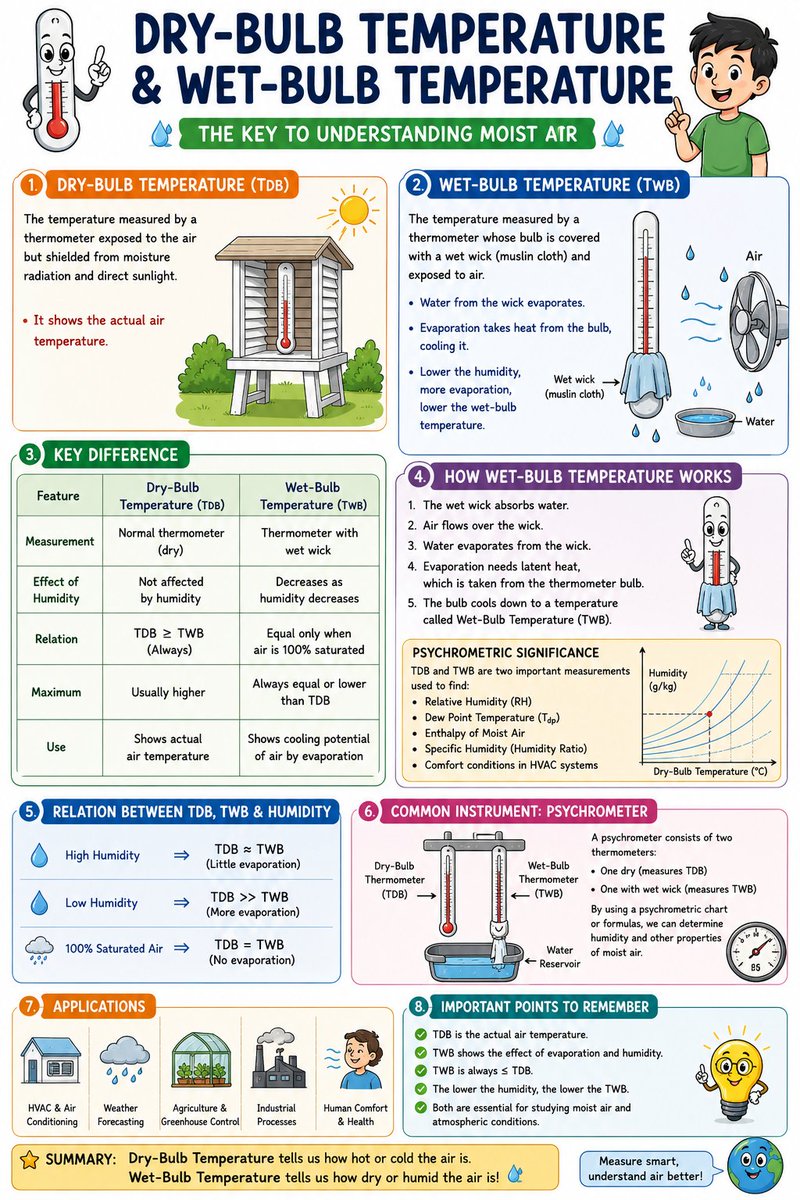
🌡️💧 DRY-BULB & WET-BULB TEMPERATURE | METEOROLOGY SIMPLIFIED 💧🌡️
Ever wondered how weather experts measure air temperature humidity effects together? 🤔
The answer lies in two important scientific terms:
👉 Dry-Bulb Temperature (TDB)
👉 Wet-Bulb Temperature (TWB)
📌 What is Dry-Bulb Temperature?
🌡️ It is the actual air temperature measured by a normal thermometer.
☀️ It is not affected by humidity or moisture.
📍 It tells how hot or cold the air really is.
💧 What is Wet-Bulb Temperature?
🌬️ It is measured using a thermometer covered with a wet cloth (wick).
💦 Water evaporates → takes heat away → cooling effect occurs.
📉 It shows how humidity affects cooling of air.
⚖️ Key Difference:
🌡️ Dry-Bulb → Real air temperature
💧 Wet-Bulb → Cooling humidity effect
🌍 Why it is important?
📊 Weather forecasting
🌾 Agriculture & irrigation
🏭 Industrial climate control
❄️ HVAC & air conditioning systems
🧍 Human comfort analysis
🧠 Scientific Insight:
✔ More humidity → less evaporation → TWB closer to TDB
✔ Less humidity → more evaporation → bigger difference
🌟 Understanding these helps us decode real atmospheric conditions scientifically!
👇 Share to help students learn meteorology easily!
#Meteorology #ScienceEducation #Physics #Geography #WeatherScience #DryBulbTemperature #WetBulbTemperature #ClimateScience #STEM #ScienceMadeEasy #EducationForAll #LearningScience #WeatherForecasting #AirHumidity #AtmosphericScience #StudentLife #SciencePoster #KnowledgeIsPower #EdTech #StudySmart
@students @teachers @weatherenthusiasts @scienceenthusiasts @geographylovers @schoolcommunity @educationforall @learnershub @stemworld @edtechcommunity
2
6
156

Jun 4
Let's understand the Science of Cloud Electrification via AI Animation to understand the concepts of Thundering, Thunderstorms and cloud fusion visually in vedic way.
Uploading video here to easy access
#NowPremiering #RedSprites #VedicMeteorology #VedicScience #AtmosphericScience #CloudElectrification #Rigveda #Atharvaveda #Indra #WeatherScience #SpaceWeather #AncientWisdom #Documentary #YouTubePremiere
Jun 3

Transient Luminous Events and Vedic Meteorology: Red Sprites and Upward Electrification
High above the heavy, dark clouds of a thunderstorm, a mesmerizing and elusive phenomenon generally occurs and is called as Red Sprite, as Transient Luminous Events (TLEs), red sprites are massive electrical discharges that flare in the middle-to-upper atmosphere roughly 30 to 50 miles (40–80 km) above the Earth.
First reported in 1886, these sudden surges of electricity shoot upward through the mesosphere, moving in the exact opposite direction of the lightning bolts we typically see striking the ground.
While such upward ionization and high-atmosphere electrification seem like distinctly modern discoveries, the underlying mechanics of this inherent electric charge are surprisingly well-documented in ancient texts.
Though rarely focused on in the majority of Samhita scriptures, the Rigveda and Atharvaveda offer core technical explanations for the ionization and electrical charge mechanisms that can produce such phenomena.
The Vedic Framework for Atmospheric Ionization
According to modern meteorology, violent and turbulent motions within massive storm clouds produce electrical charges, resulting in lightning and torrential rain.
The friction between interacting substances naturally leads to widespread electrification.
Ancient Vedic meteorologists recognized this same physical mechanism but applied specific conditions to it.
According to Vedic science, not all clouds possess the inherent ability to generate electrical charges.
Charge generation is exclusive to clouds formed by vapors evaporated directly by solar radiation.
To understand this ancient science, we must look at the specific terminology used by the Seers:
Varuna: The radiant heating from the sun that drives evaporation.
Apah: Moisture-based water or vapor in the air (Vayu). Once evaporated by the sun's heat, this water becomes electrically charged. Thus, Apah translates conceptually to "charged clouds."
Vidyut: The generated electric charge itself.
Pravatas: "Floating clouds" that are arranged to move violently and turbulently.
Pravatonapat: The specific name given to the electrical charge generated within these violently moving Pravatas.
Scriptural Insights on Charge and Polarity
Atharvaveda clearly outlines the water cycle and its relationship to atmospheric charge.
It notes that moisture condenses and is subsequently sent out (evaporated) by Varuna (solar radiation).
Once this moisture becomes Apah (charged clouds), it is said to be possessed by Indra , which conceptually represents the active electrical charge.
The Rigveda takes this understanding of atmospheric physics a step further by explicitly addressing the duality of electrical charges, what we now call positive and negative polarity.
"O daughter of floating clouds, the electrical charge! In honor of you and your forms, I salute you. Both the negative charge, known as " Hetu/Agneya " , and the positive charge, known as " Vapu/Somiya", are present. Your home, which is located in Apah, is familiar to us. In the process of gathering clouds, you serve as the nucleus."*
When bringing these ancient theories together, it is simple to understand why the Vedic seers personified the electrical charge produced in solar-evaporated clouds as Lord Indra.
In this meteorological context, Indra is not merely a deity but a representative force of the sun.
He functions as the charge-producing agent within moving clouds, acting as the critical physical catalyst required for heavy rain and simultaneous thunder.
Furthermore, ancient texts suggest this electrical force possesses immense planetary influence, sometimes acting as the primary trigger for heavy earthquakes when eclipses occur within the Indra and Varuna Mandala Nakshatras.
2
4
23
2,184
Jun 4
Let's understand the Science of Cloud Electrification via AI Animation to understand the concepts of Thundering, Thunderstorms and cloud fusion visually.
Here is the short documentary on Cloud Electrification which i have created to l help to understand the RED SPRITES & VEDIC Meteorology interconnection
Journey beyond the thunderclouds into a world where modern atmospheric science meets ancient Vedic wisdom.
Discover:
1.The mystery of Red Sprites above thunderstorms.
2. The science of cloud electrification
3. Varuna, Apah, and Vidyut in Vedic literature
4. The role of Indra as the force behind thunder and rainfall
5 Insights from the Rigveda and Atharvaveda
From the storm clouds of Earth to the edge of space, explore a fascinating perspective on one of nature's most powerful phenomena.
Ancient Wisdom • Modern Science • One Sky
🎥 Watch Now on YouTube,
👍 Like the video
💬 Share your thoughts in the comments
🔄 Share with friends and family
🔔 Subscribe for more documentaries on Vedic Science, Astronomy, Nature, and Ancient Knowledge
youtu.be/hWnGeFJB06k?si=bBKU…
#NowPremiering #RedSprites #VedicMeteorology #VedicScience #AtmosphericScience #CloudElectrification #Rigveda #Atharvaveda #Indra #WeatherScience #SpaceWeather #AncientWisdom #Documentary #YouTubePremiere
1
1
8
2,003

Monsoon update : ମୌସୁମୀ ବର୍ଷାରେ ଭିଜିଲା କେରଳ, ଜାଣନ୍ତୁ କେଉଁ ରାଜ୍ୟକୁ କେତେବେଳେ ପହଞ୍ଚେ ମୌସୁମୀ ବାୟୁ... prameya.com/how-monsoon-move…
#prameyadigital #Monsoon #SouthwestMonsoon #KeralaMonsoon #IndiaWeather #MonsoonExplained #WeatherScience #Rainfall #IMD
1
87
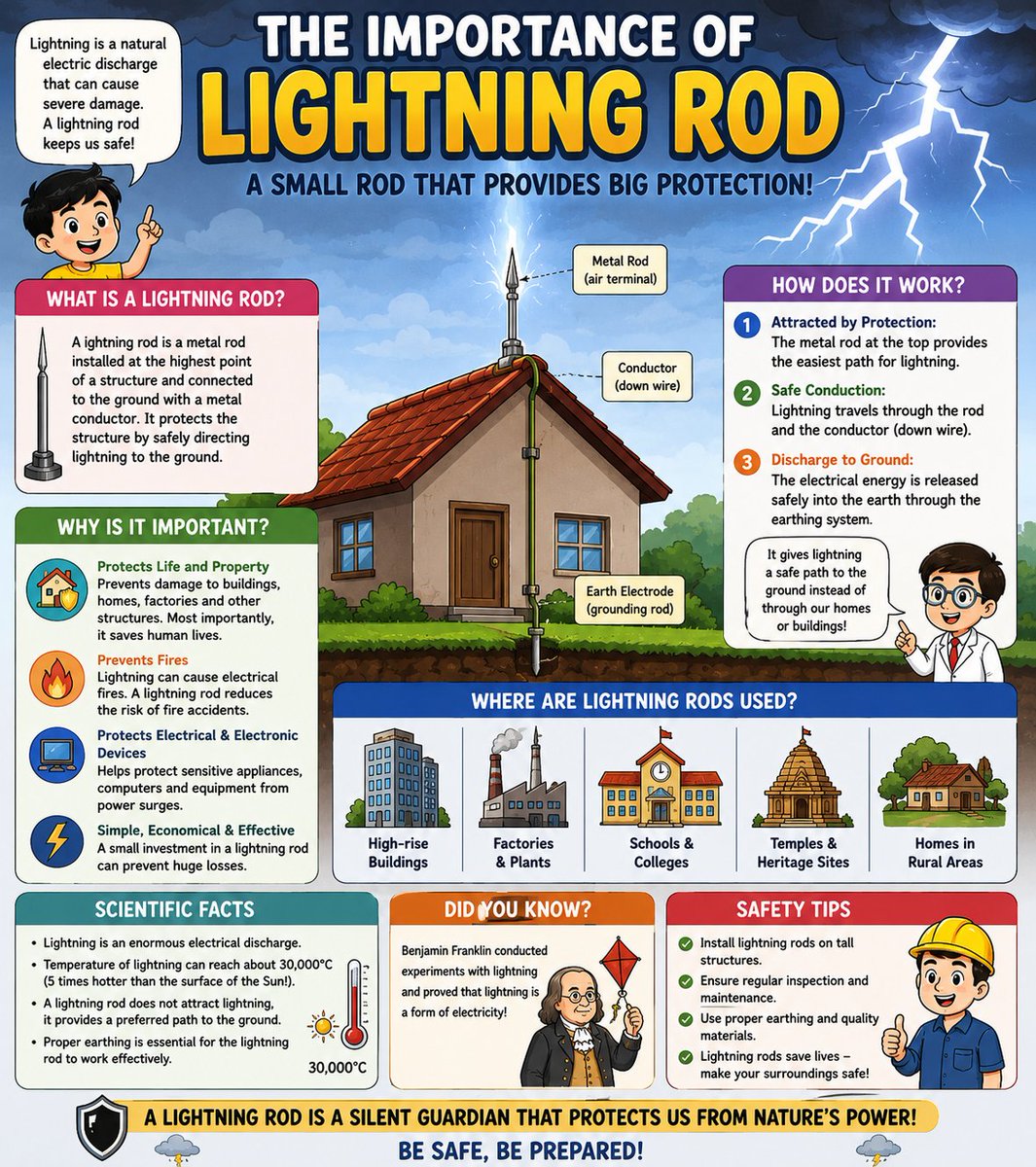
🏠 HOW DOES A LIGHTNING ROD PROTECT US? 🏠⚡
Every second, around 100 lightning strikes occur somewhere on Earth! 🌍⚡
But did you know that a simple metal rod can help protect buildings, equipment, and even lives from lightning damage?
🔬 What is a Lightning Rod?
A lightning rod is a metal conductor installed at the highest point of a structure. It safely channels lightning's electrical energy into the ground, reducing the risk of damage.
⚡ Why are Lightning Rods Important?
✅ Protect homes, schools, hospitals, and factories
✅ Reduce the risk of electrical fires
✅ Safeguard electronic equipment from power surges
✅ Help preserve historical monuments and heritage sites
✅ Save lives during thunderstorms
🧪 How Does It Work?
1️⃣ Lightning strikes the rod.
2️⃣ The electrical current travels through a conductor.
3️⃣ The energy is safely carried into the Earth through grounding.
💡 Scientific Fact:
A lightning bolt can heat the surrounding air to nearly 30,000°C — about 5 times hotter than the surface of the Sun! ☀️⚡
👨🔬 Benjamin Franklin's famous experiments helped scientists understand lightning and led to the invention of the lightning rod, one of the most important safety devices in engineering history.
🌩️ Remember:
A lightning rod does NOT stop lightning. It simply provides the safest path for electricity to reach the ground.
Science Engineering = Safer Communities! 🔬⚡
@NASA @NASAEarth @NOAA @UNESCO @UNDRR @ScienceMagazine @Nature @NewScientist @ScientificAmerican @TheRoyalSociety @IEEEorg @ASCE7 @ISRO @IndiaDST @VigyanPrasar
#LightningRod #LightningProtection #BenjaminFranklin #Electricity #Engineering #ScienceEducation #STEM #Physics #WeatherScience #Meteorology #ElectricalEngineering #CivilEngineering #DisasterPreparedness #SafetyFirst #ScienceCommunication #STEMEducation #ScienceFacts #EducationalPoster #LearningScience #ClimateAwareness #NaturalHazards #Innovation #Technology #Infrastructure #SchoolScience #FutureEngineers #ScienceOutreach #PhysicsEducation #EngineeringMarvels #ScienceForAll #Thunderstorm #WeatherSafety #EngineeringHistory #STEMLearning #ScienceTeacher #ScienceStudents #PhysicsLovers #DidYouKnow #TodayILearned
13
24
465

सगळा देश चिंब भिजतो, पण भारताचा एक कोपरा असा आहे, जिथे मान्सून अगदी शेवटी हजेरी लावतो. केरळमध्ये १ जूनला एन्ट्री करणारा पाऊस संपूर्ण देश पार करून इथे पोहोचेपर्यंत थेट जुलैचा पहिला आठवडा उजाडतो!
#Monsoon #IndianMonsoon #WeatherScience #Geography #RajasthanMonsoon #PunjabMonsoon #Rainfall #ClimateFacts #मराठीमाहिती
lokmat.com/photos/national/i…
1
1
468