
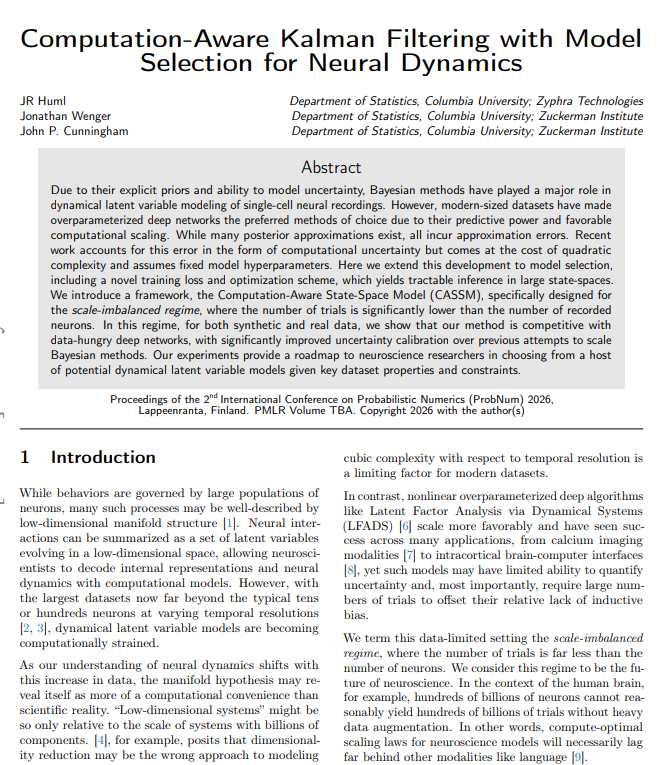
9/25 𝗖𝗼𝗺𝗽𝘂𝘁𝗮𝘁𝗶𝗼𝗻-𝗔𝘄𝗮𝗿𝗲 𝗞𝗮𝗹𝗺𝗮𝗻 𝗙𝗶𝗹𝘁𝗲𝗿𝗶𝗻𝗴 𝘄𝗶𝘁𝗵 𝗠𝗼𝗱𝗲𝗹 𝗦𝗲𝗹𝗲𝗰𝘁𝗶𝗼𝗻 𝗳𝗼𝗿 𝗡𝗲𝘂𝗿𝗮𝗹 𝗗𝘆𝗻𝗮𝗺𝗶𝗰𝘀
This paper introduces the Computation-Aware State-Space Model (CASSM), a framework for dynamical latent variable modeling of single-cell neural recordings, specifically for the scale-imbalanced regime (trials significantly lower than neurons). CASSM extends computational uncertainty to model selection using a novel training loss and optimization scheme, achieving tractable inference in large state-spaces. It demonstrates competitive performance with data-hungry deep networks and significantly improved uncertainty calibration on both synthetic and real data, offering a roadmap for neuroscience researchers.
#CASSM #Neuroscience #BayesianMethods #StateSpaceModels #UncertaintyQuantification #DynamicalLatentModels
Paper Link: arxiv.org/abs/2606.01468
1
25

Hidden structural states of proteins revealed by conformer selection @NatureComms
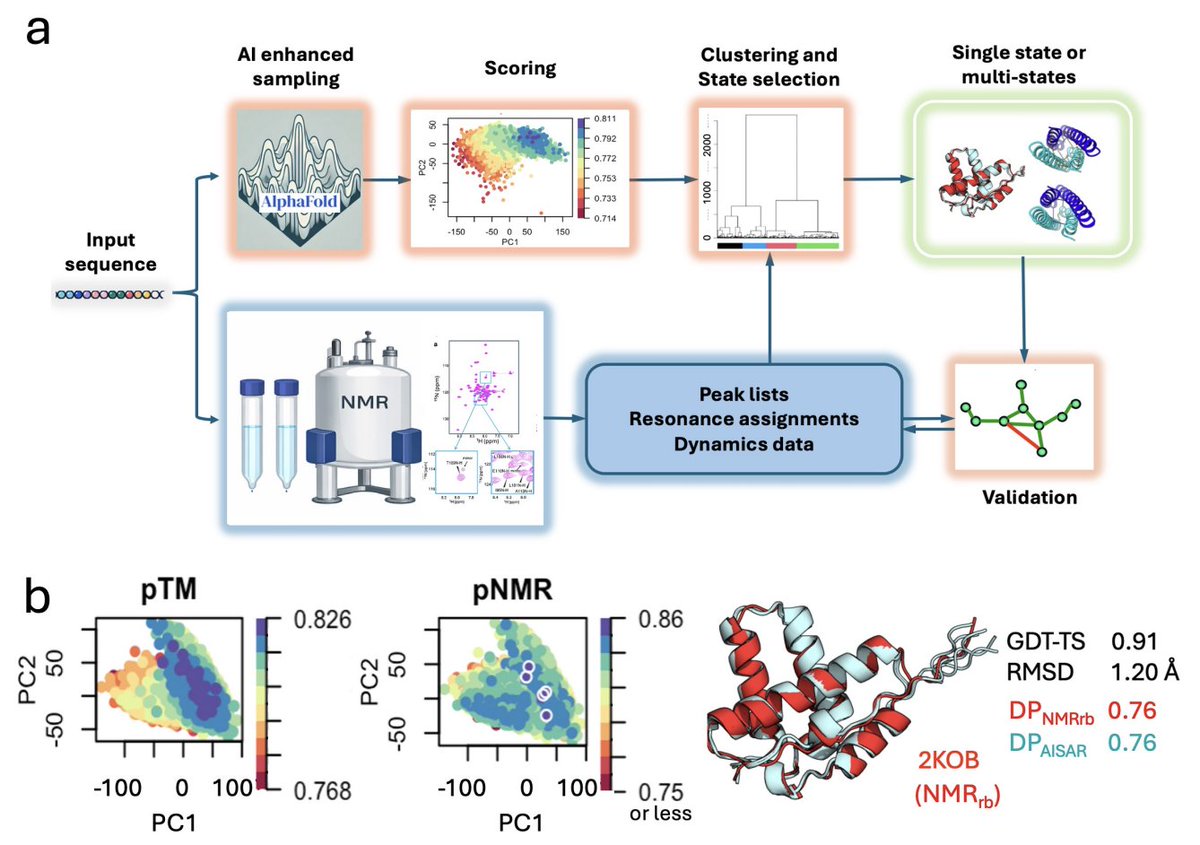
1. The paper introduces AISAR (AI SAmpling with NMR Recall selection), a computational–experimental workflow that finds alternative protein conformations by selecting from AI-sampled structures using NOESY recall and other NMR observables, rather than enforcing traditional distance restraints.
2. Key motivation: conventional restraint-based NMR can “pin” dynamic proteins into compromised single structures when NOEs arise from multiple fast-exchanging states; AISAR aims to avoid these distortions by using conformer selection instead of restraint satisfaction.
3. AISAR pipeline: generate diverse conformers with AlphaFold2-based sampling (AFsample), score each model with a Bayesian-like metric combining (i) min–max scaled NOESY recall pTM (global fold reliability) and (ii) agreement between per-residue pLDDT and chemical-shift-derived flexibility (RCI), then cluster, select candidate states, and assemble multi-state ensembles guided by RMSF agreement with RCI.
4. Validation centerpiece: NOESY “Double Recall” analysis identifies subsets of NOESY peaks uniquely explained by each state (state-specific NOE support), providing evidence for multiple conformations in dynamic equilibrium rather than model overfitting.
5. On Gaussia luciferase (GLuc), AISAR identifies two dominant, interconverting states (<~1 ms lifetimes) with large rearrangements of two “lids” (H5/H6 loop and C-terminal broken helix H10/H11), switching between closed vs open conformations that reshape binding pockets and expose cryptic cavities.
6. Functional structural insight for GLuc: opening/closing modulates accessibility and environments of two catalytic residues, Arg76 and Arg147, positioned in two pockets; pocket volumes shift from small/variable to larger and include emergence of a large cryptic pocket (~600–800 ų). The two-state model also aligns with reported cooperativity in substrate binding and with NMR relaxation evidence of exchange.
7. GLuc NOE evidence: Double Recall finds ~158 NOEs unique to state 1 and ~175 unique to state 2; the combined two-state ensemble explains ~218 NOESY peaks (including many long-range peaks) inconsistent with a prior single-state NMR model, supporting genuine multi-state behavior.
8. On the tumor suppressor CDK2AP1 (dimeric 61–115 fragment), AISAR finds two closely related states in equilibrium distinguished by switching between inter-chain vs intra-chain Cys105 sulfur–π interactions with Tyr63, yielding state-dependent cryptic pocket remodeling not resolved by conventional single-state NMR or standard AF2 inference.
9. CDK2AP1 experimental link: despite high spectral degeneracy, Double Recall identifies small sets of state-specific NOEs (~22 unique to state 1; ~23 unique to state 2). Peak doubling for Thr109/Glu110 is consistent with slow exchange between a major (~80%) and minor (~20%) state, plausibly driven by differing ring-current environments near Tyr63.
10. Broader message: AISAR can return a restraint-independent single-state structure when appropriate (demonstrated on integrase DNA-binding domain 2KOB), but can also expose hidden conformational heterogeneity and cryptic pockets in ordered proteins—especially where AF2 confidence is high yet NMR dynamics (RCI/relaxation) indicate additional states.
💻Code: github.com/MontelioneLab/AIS…
📜Paper: doi.org/10.1038/s41467-026-7…
#NMR #ProteinDynamics #StructuralBiology #AlphaFold #ComputationalBiology #BayesianMethods #ConformationalEnsembles #DrugDiscovery #CrypticPockets
7
50
2,753

Feb 12
🧵 Modeling China’s Grain Yield through the Lens of Uncertainty 🌾📊
Predicting how much grain a country will produce isn’t just math — it’s national strategy.
Tingqing Ye & Rui Kang apply Uncertain Time Series Analysis (UTSA) to forecast grain yield in China, revealing why uncertainty > probability.
🌾 Why Grain Yield Matters
Grain yield fuels economies and feeds nations.
Accurate forecasts = stable food supply policy resilience.
But real-world data is messy — weather, soil, and market factors introduce uncertainty, not pure randomness. 🌦️
📊 The Breakthrough
The study applies UTSA — Uncertain Time Series Analysis — a model built on uncertainty theory, not probability. It captures structured uncertainty across decades of rice yield data. 🍚
🧮 What’s Inside the Model
🔹Order selection
🔹Parameter estimation
🔹Residual analysis
🔹Uncertain hypothesis testing
⚖️ Why Uncertainty Beats Probability
Traditional probabilistic models assume randomness.
But real agricultural systems aren’t purely random — they’re systematically uncertain.
UTSA models uncertainty directly, leading to more stable and interpretable forecasts. 🧠
🚜 The Results
✅Reliable predictions for rice yield trends
✅Improved understanding of residual patterns
✅Stronger linkage between climate variation and yield outcomes
📘 Read the full study:
👉 doi.org/10.1142/S17528909224…
This model bridges math, environment, and economics — showing how uncertainty theory can drive data-driven sustainability.
From crops to climate, uncertainty may be the key to resilience. 🍃
@Worldscientific @NaturePortfolio @AgriFoodNet @FAO @WFPAsiaPacific @DataScienceCtrl @SpringerNature @ScienceMagazine @OECDagriculture @UNFAO @OpenAI @MIT_CSAIL @AIP_Publishing @NatureComms @MDPIOpenAccess @AgriTechFuture @CIMMYT @WileyGlobal @FAOSDGs @WorldBankData @NatureClimate @CGIAR @StatModeling @econometricsoc
#GrainYield #UncertaintyTheory #TimeSeriesAnalysis #AgriculturalModeling #FoodSecurity #UTSA #StatisticalForecasting #UncertainStatistics #AgriculturalEconomics #ClimateImpact #CropModeling #DataScience #AppliedMathematics #UncertaintyQuantification #AIinAgriculture #RiceProduction #PredictiveModeling #BayesianMethods #SystemModeling #UncertainSystems #SustainableAgriculture #EconomicForecasting #FoodSystems #MathematicalModeling #AgriTech

1
3
217

Jan 26
Real-time cardiac MRI produces thousands of images, yet only a few are critical for reliable analysis.
CEMSE Professor Raul Tempone, in collaboration with scientists at the German Aerospace Center (DLR), has developed a Bayesian machine learning approach that selects the most informative MRI frames for manual labeling in real-time cardiac imaging.
By reducing uncertainty in ventricular volume estimates, the method improves the reliability of analysis across the heart, particularly in challenging cases such as rare congenital heart conditions. Crucially, the approach also indicates when automated measurements can, and cannot, be trusted.
Read more: discovery.kaust.edu.sa/en/ar…
#KAUSTAMCS #CEMSE #MachineLearning #CardiacMRI #BayesianMethods #AIinHealthcare

6
417

2 Dec 2025
I'm at @NeurIPSConf this week! If you're around, let's grab a coffee or chat. I usually talk about #OptimalTransport and #BayesianMethods, but I'm always keen to hear about anything you're working on.
1
33
1,703

25 Mar 2025
Enhance your #TradingSignals by learning to implement #bayesian #bayesianmethods #priors - #hedgefunds #xccy #gibbs #inferencing #quant
reddit.com/r/HowToDoBayesian…
1
2
4
200

17 Nov 2024
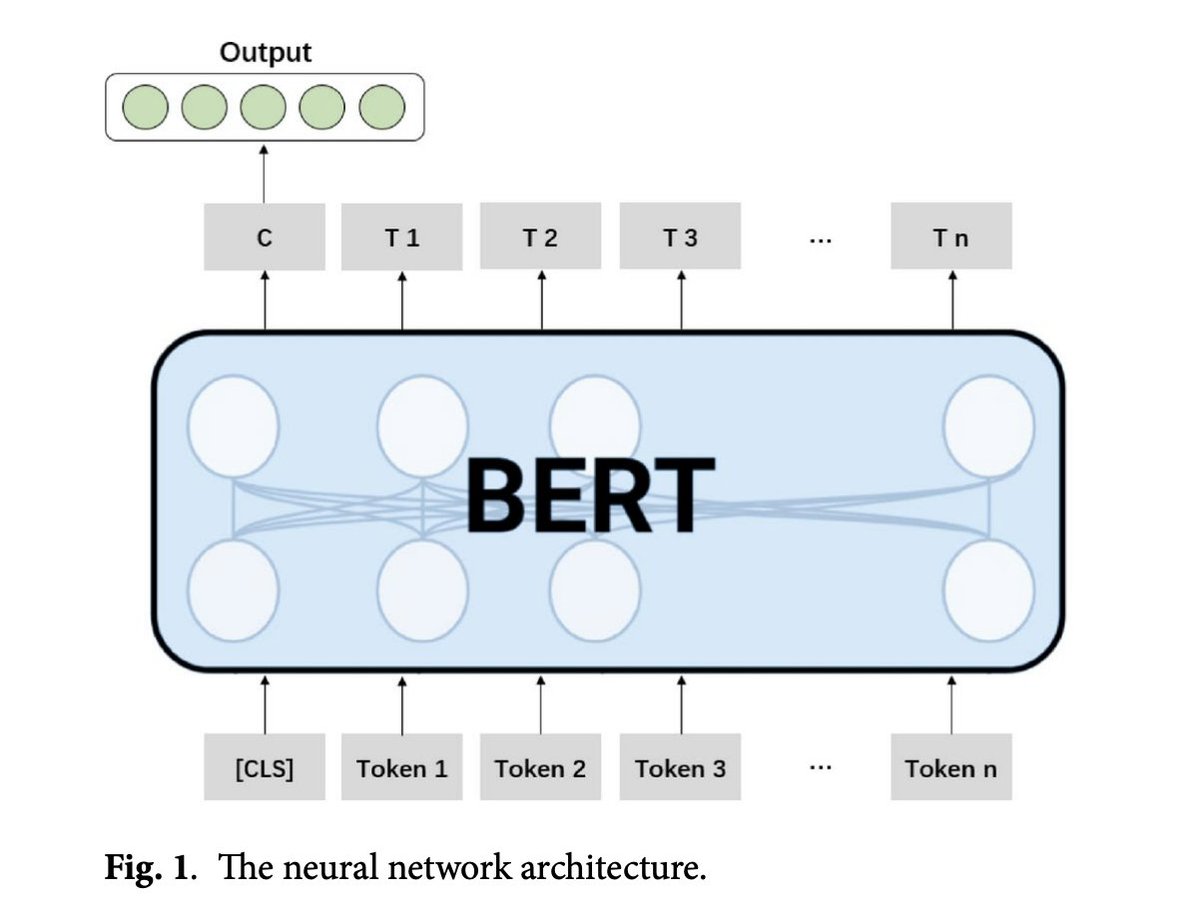
BEAL: A Bayesian Deep Active Learning Method for Efficient Deep Multi-Label Text Classification
itinai.com/beal-a-bayesian-d…
#MultiLabelTextClassification #ActiveLearning #DeepLearning #BayesianMethods #AIInnovation #ai #news #llm #ml #research #ainews #innovation #artificialintel…
2
9
369

14 Nov 2024
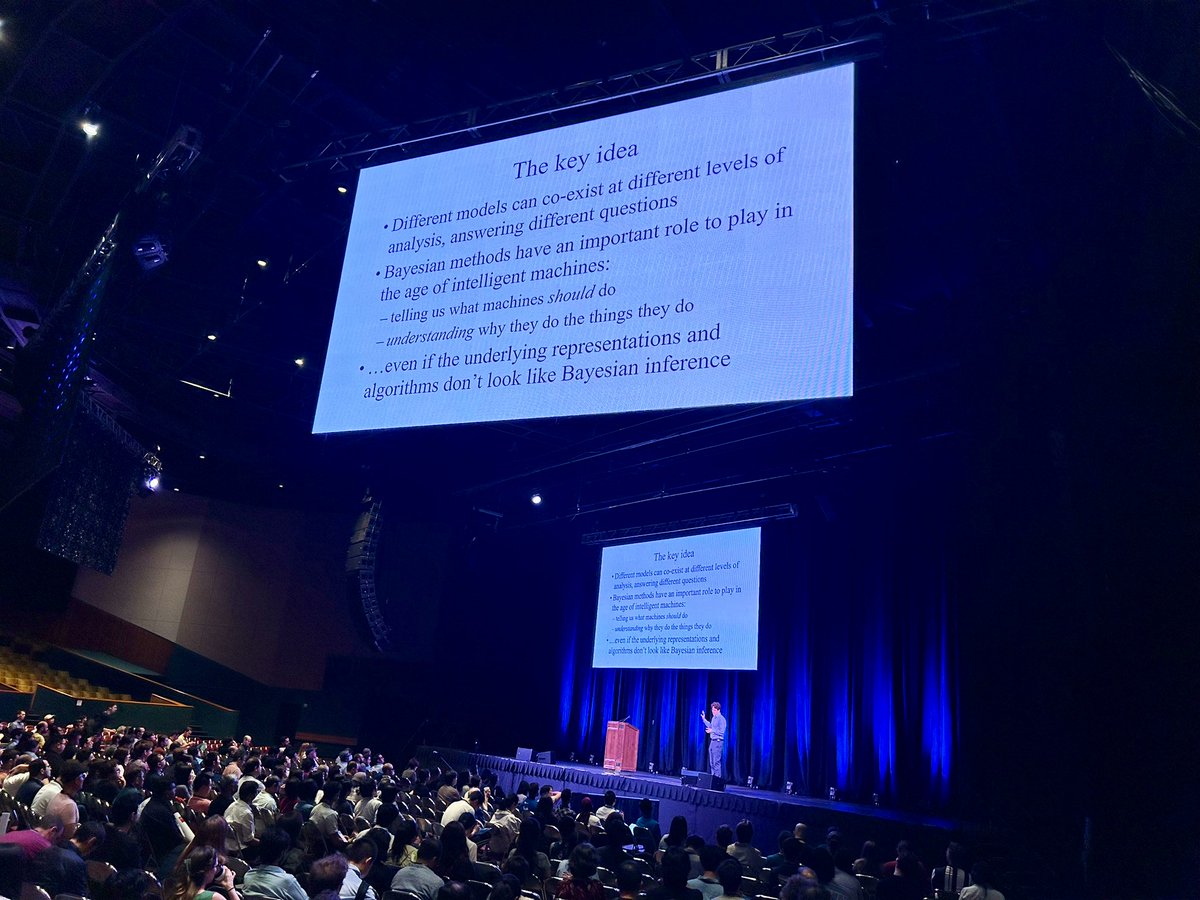
Excited to be at #EMNLP2024! Just saw Tom Griffiths' keynote on Bayesian methods for understanding #LLMs - super relevant to our current work on evaluating LLM critical thinking. Also presenting our work on uncertainty quantification this week. #BayesianMethods #CognitiveScience arxiv.org/pdf/2406.17274
3
168

16 Oct 2024
The Bayesian Fama-MacBeth (BFM) method offers reliable risk premia estimates for both tradable and nontradable factors, overcoming issues with weak and spurious factors, as well as omitted variables.
2/n #BayesianMethods
1
1
4
482

14 Oct 2024
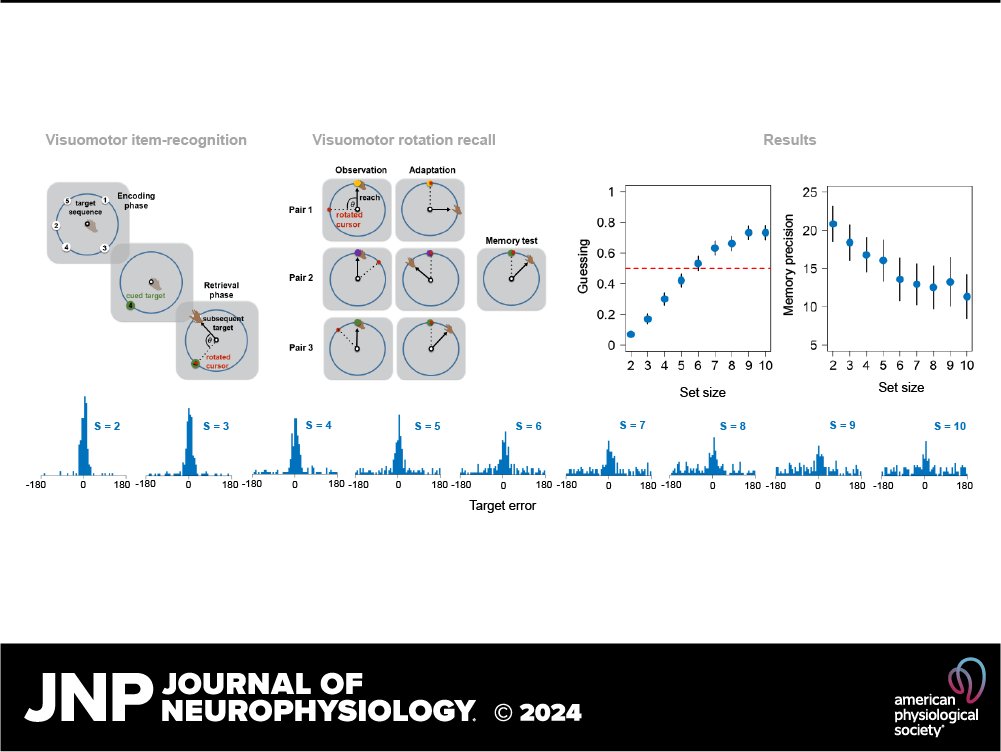
#JNeurophysiol Podcast 🚨 Join coauthor Carlos A. Velázquez-Vargas (@velapsy) in this insightful episode as he uncovers how working memory impacts visuomotor retrieval strategies.
🎧ow.ly/mnm650TL9kZ
#MotorAdaptation #WorkingMemory #BayesianMethods #ExplicitStrategies

3
1,063
27 Sep 2024
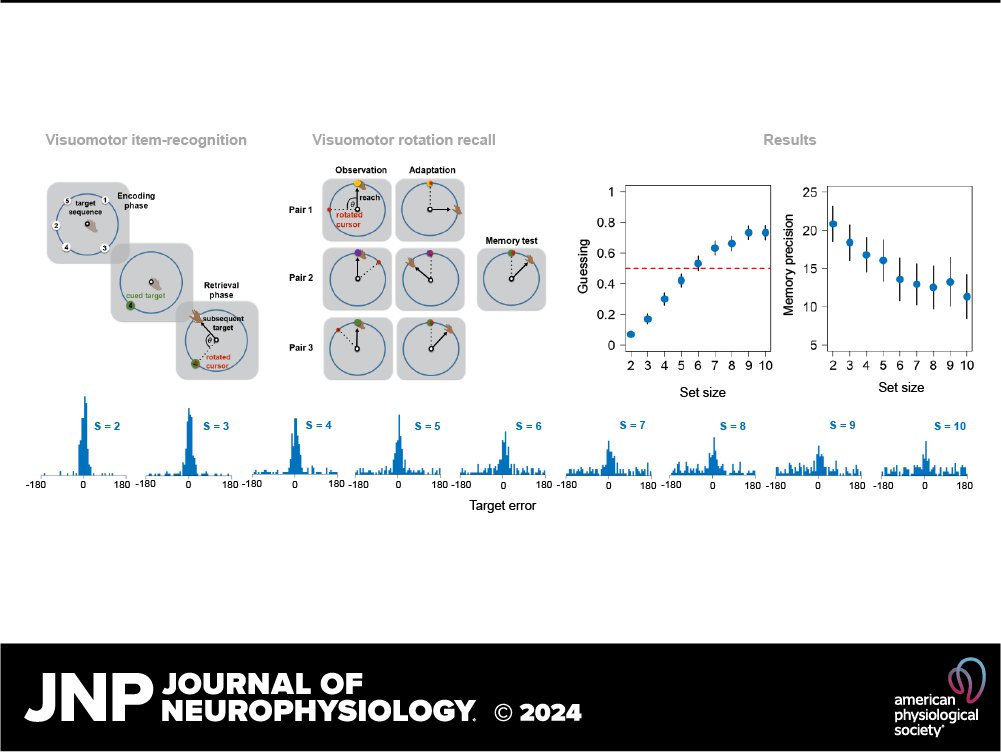
New research by Carlos A. Velázquez-Vargas and Jordan A. Taylor shows humans can adapt to feedback perturbations in visuomotor tasks by retrieving successful solutions from memory.
🔗ow.ly/XznU50TrL27
#MotorAdaptation #WorkingMemory #BayesianMethods #ExplicitStrategies
4
11
1,047

15 Apr 2024
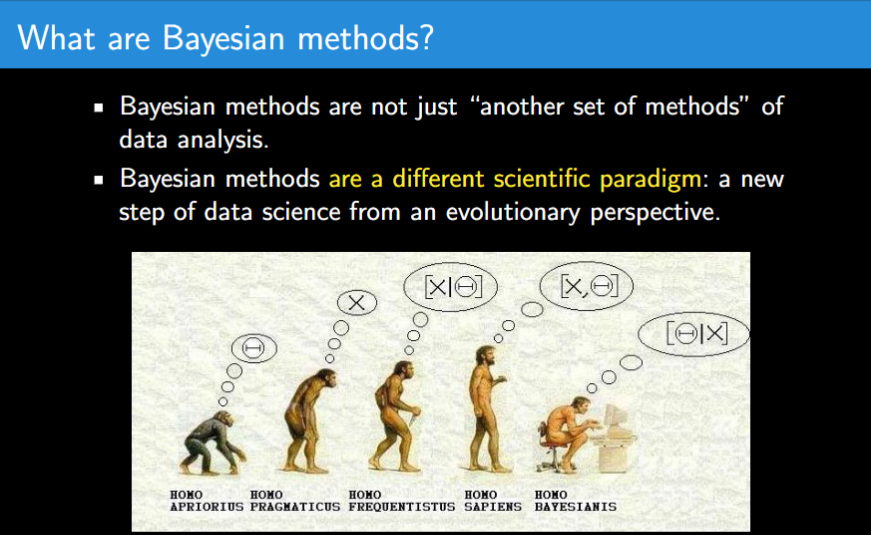
📢 Exciting opportunity for #PhDresearchers & academic staff in Groningen interested in #BayesianMethods
Join our colleague Rolando Gonzales Martinez on 📅April 16th: 12 PM (Room: 5416.0163) to delve into the history & practical applications of Bayesian Methods 🤓
2
8
450


18 Apr 2023
📢New #SpecialIssue "#MaximumEntropy and #BayesianMethods for Image and #SpatialAnalysis" is open for submission!
Guest Editor: Prof. Dr. Volker J Schmid and Prof. Dr. Zahra Amini Farsani
Special Issue Website: mdpi.com/journal/entropy/spe…
1
439

24 Jan 2023
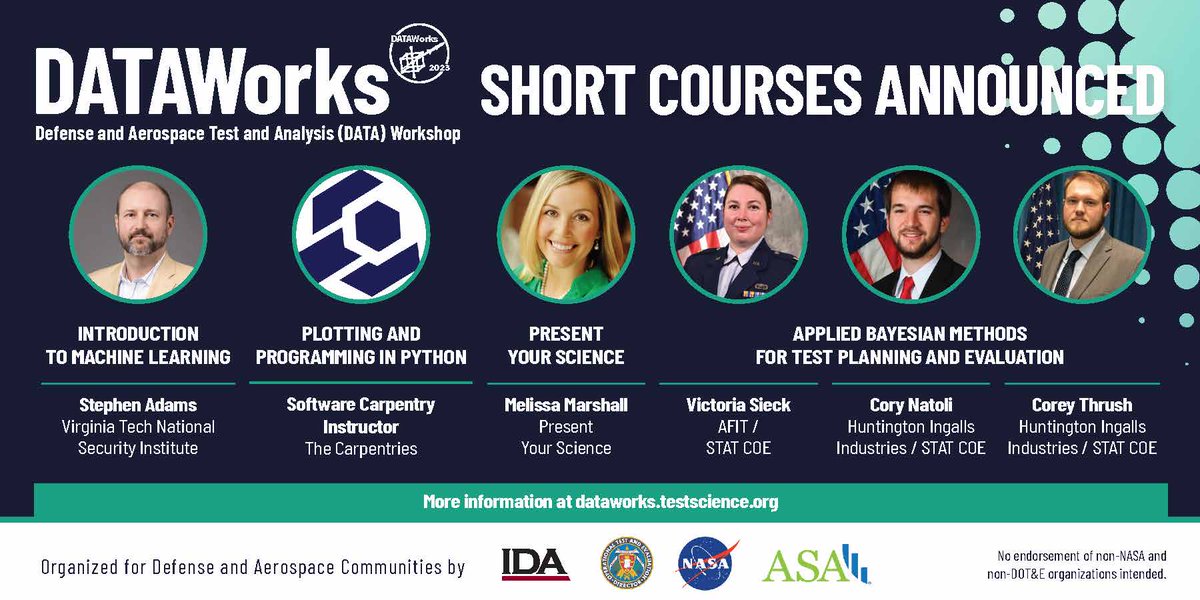
Mark your calendars for #DATAWorks23 and check out the exciting line-up of short course instructors from @HumeVT, @swcarpentry, @MMarshallSpeaks and U.S. Air Force Institute of Technology! Learn more: idalink.org/DATAWorks23 #DataViz #BayesianMethods #AI #RStudio
1
1
549
11 Jan 2023
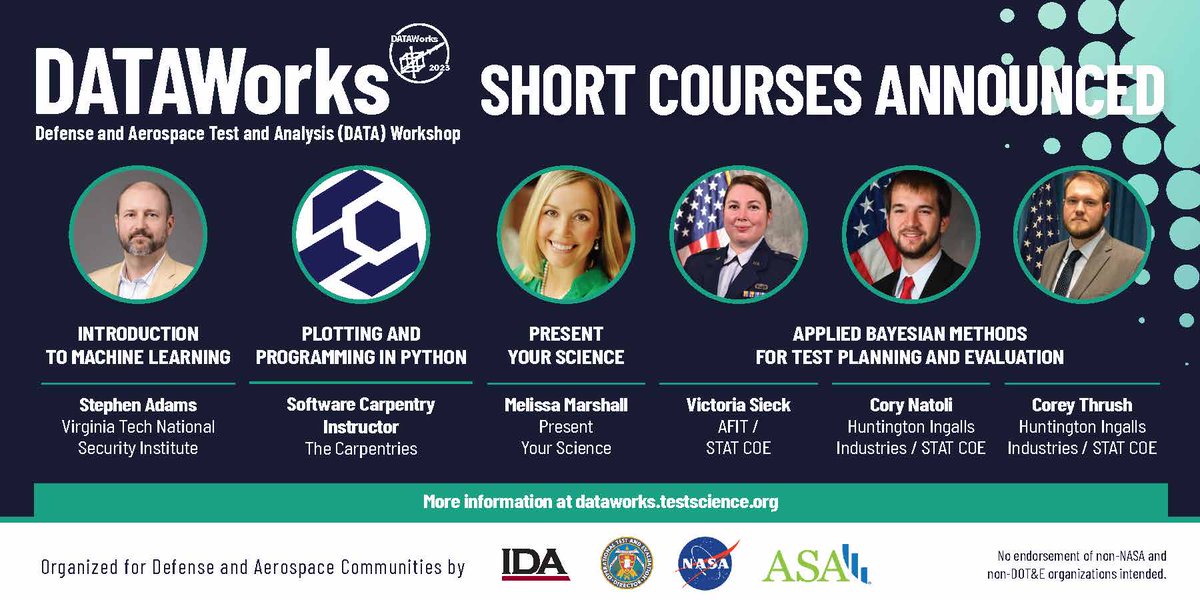
Explore the exciting line-up of #DATAWorks23 instructors from @HumeVT, @swcarpentry, @MMarshallSpeaks and U.S. Air Force Institute of Technology! Learn more and save the date for April 25-27! idalink.org/DATAWorks23 #Python #ML #BayesianMethods #DataViz
2
2
612
6 Jan 2023
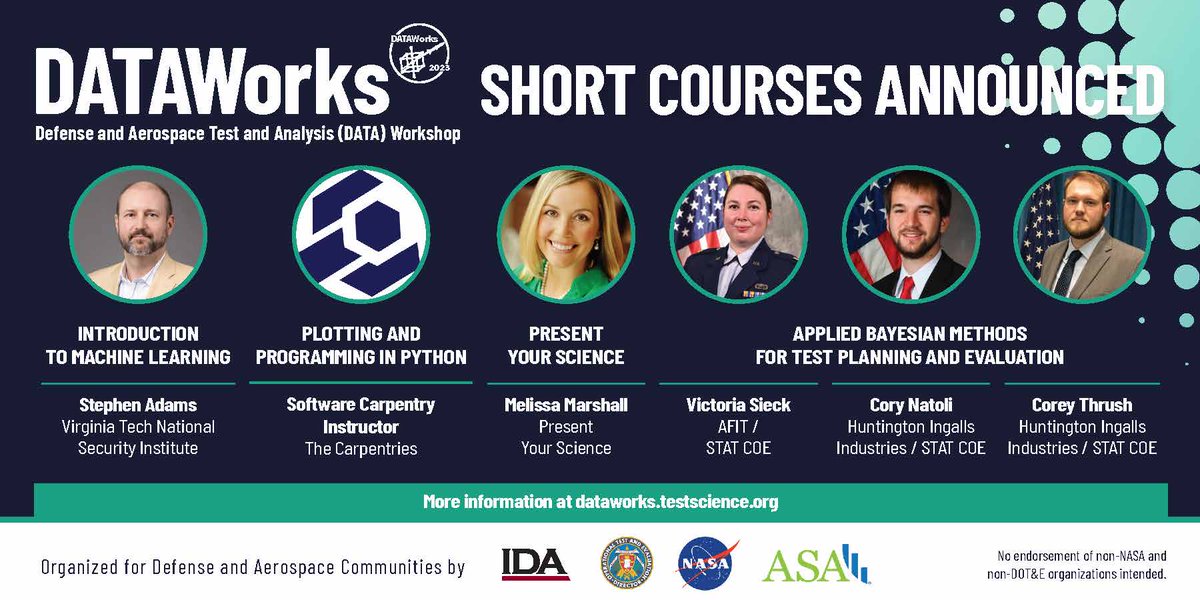
#DATAWorks23 short courses announced! Explore the exciting line-up of instructors from @HumeVT, @swcarpentry, @MMarshallSpeaks and U.S. Air Force Institute of Technology! Learn more and save the date for April 25-27! idalink.org/DATAWorks23 #Python #ML #BayesianMethods #DataViz
1
2
607

31 Oct 2022
Tomorrow I will be presenting #BayesianMethods for incorporating adult clincial trials evidence to maximise our understanding from children's research at the @N8CIR #MachineLearning conference 👩💻📚🧬
1
3
6

We’re looking for presentation abstracts and posters for our #MachineLearning theme launch on 1st Nov. Submit your abstract by the 30th Sept! #BayesianMethods n8cir.org.uk/events/machine-…
3

19 Sep 2022
I was politely insinuating that I need to be left alone. My grandson asks me what I'm busy with. 'The relative plausibility theory of proof in the law of evidence!' I say. 'Interesting, so maths & statistics apply to law then Gran?' #BayesianMethods I'm stunned!
2
4