
When a system issue appears, finding the broken component is usually the easy part. Understanding the root cause is much harder.
Pipe-Flo outlines 11 steps for creating a virtual system model to help teams better understand system interactions, upgrades, and operational changes.
Read more: empoweringpumps.com/engineer…
#PumpSystems #Engineering #SystemModeling #PumpIndustry #Reliability

2
37

Feb 23
This #webinar explores the two fundamental paradigms of system modeling: declarative acausal models for physical plant design and causal models for control systems. Learn how both approaches serve distinct purposes and how they can co-exist effectively within the Dyad modeling environment. Register now to join the session. juliahub.com/events/the-two-…
#JuliaLang #Dyad #ModelBasedDesign #SystemModeling #AcausalModeling #ControlSystems #SystemSimulation #ScientificComputing #EngineeringDesign #TechnicalComputing
1
4
516

Feb 12
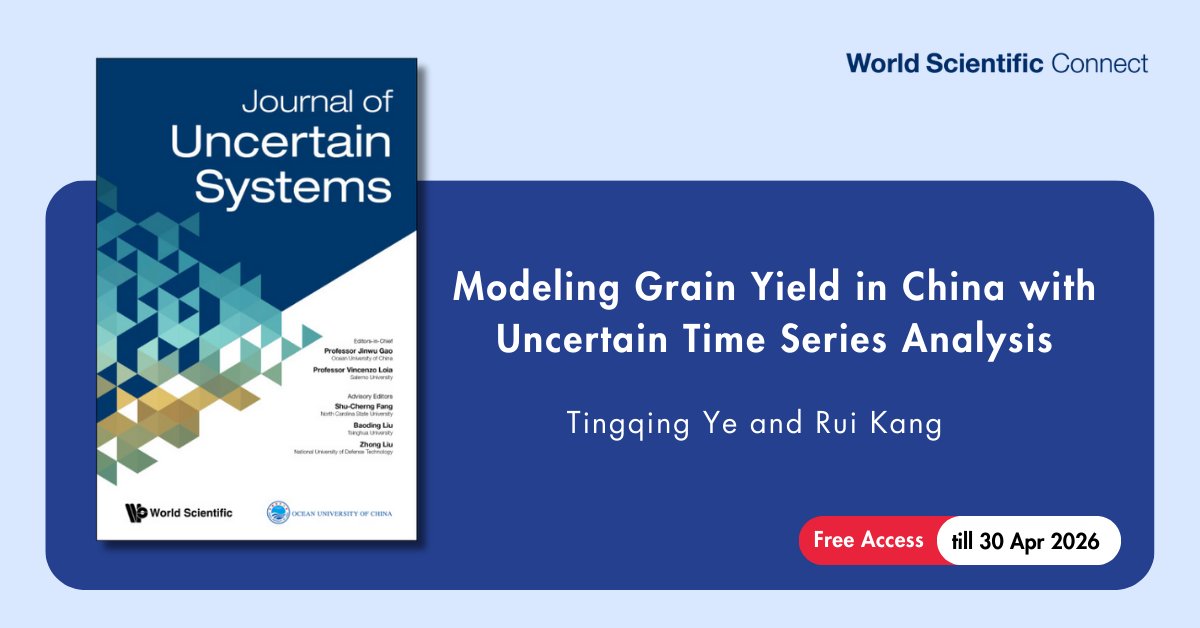
🧵 Modeling China’s Grain Yield through the Lens of Uncertainty 🌾📊
Predicting how much grain a country will produce isn’t just math — it’s national strategy.
Tingqing Ye & Rui Kang apply Uncertain Time Series Analysis (UTSA) to forecast grain yield in China, revealing why uncertainty > probability.
🌾 Why Grain Yield Matters
Grain yield fuels economies and feeds nations.
Accurate forecasts = stable food supply policy resilience.
But real-world data is messy — weather, soil, and market factors introduce uncertainty, not pure randomness. 🌦️
📊 The Breakthrough
The study applies UTSA — Uncertain Time Series Analysis — a model built on uncertainty theory, not probability. It captures structured uncertainty across decades of rice yield data. 🍚
🧮 What’s Inside the Model
🔹Order selection
🔹Parameter estimation
🔹Residual analysis
🔹Uncertain hypothesis testing
⚖️ Why Uncertainty Beats Probability
Traditional probabilistic models assume randomness.
But real agricultural systems aren’t purely random — they’re systematically uncertain.
UTSA models uncertainty directly, leading to more stable and interpretable forecasts. 🧠
🚜 The Results
✅Reliable predictions for rice yield trends
✅Improved understanding of residual patterns
✅Stronger linkage between climate variation and yield outcomes
📘 Read the full study:
👉 doi.org/10.1142/S17528909224…
This model bridges math, environment, and economics — showing how uncertainty theory can drive data-driven sustainability.
From crops to climate, uncertainty may be the key to resilience. 🍃
@Worldscientific @NaturePortfolio @AgriFoodNet @FAO @WFPAsiaPacific @DataScienceCtrl @SpringerNature @ScienceMagazine @OECDagriculture @UNFAO @OpenAI @MIT_CSAIL @AIP_Publishing @NatureComms @MDPIOpenAccess @AgriTechFuture @CIMMYT @WileyGlobal @FAOSDGs @WorldBankData @NatureClimate @CGIAR @StatModeling @econometricsoc
#GrainYield #UncertaintyTheory #TimeSeriesAnalysis #AgriculturalModeling #FoodSecurity #UTSA #StatisticalForecasting #UncertainStatistics #AgriculturalEconomics #ClimateImpact #CropModeling #DataScience #AppliedMathematics #UncertaintyQuantification #AIinAgriculture #RiceProduction #PredictiveModeling #BayesianMethods #SystemModeling #UncertainSystems #SustainableAgriculture #EconomicForecasting #FoodSystems #MathematicalModeling #AgriTech
1
3
217
Feb 2
Meet the Dyad Agent, an #agentic #AI assistant for model-based engineering. See how it interacts with #Dyad models and #simulation results to support model creation, refactoring, debugging, and exploration, with guidance on validation. juliahub.com/videos/meet-the…
#JuliaLang #Dyad #AgenticAI #ModelBasedEngineering #SystemModeling #ScientificComputing #EngineeringWorkflows
5
363
9 Oct 2025
Standard libraries are great, but custom physics is inevitable. Dyad solves the engineer's dilemma by turning domain knowledge into reusable, acausal components.
It allows teams to move beyond rigid, proprietary blocks, demonstrating how to assemble a full RLC circuit from scratch. Since your custom parts integrate seamlessly, you get the flexibility of code with the composability of a GUI. Stop hacking one-off scripts and build truly scalable models. juliahub.com/blog/build-your…
#Dyad #JuliaLang #AcausalModeling #SystemModeling #CustomComponents #OpenSource #Engineering #Simulation
5
434
7 Oct 2025
Stop reinventing the wheel. If you build system models, you know the pain of rewriting the same fundamental equations repeatedly.
This post shows how Dyad’s acausal standard libraries accelerate your workflow with ready-to-use components across electrical, mechanical, thermal, and fluid domains. We demonstrate this by building a DC Motor model and integrating a PID controller.
Because Dyad is Julia-native, you can leverage the SciML ecosystem seamlessly. Stop juggling fragmented tools and find a single, scalable source of truth. juliahub.com/blog/modeling-w…
#JuliaLang #Dyad #SciML #AcausalModeling #SystemModeling #MultiDomain #Engineering #Simulation #ModelBasedDesign #DigitalTwins #ControlSystems #OpenSource
4
348
29 Sep 2025
Building high-fidelity models shouldn't mean reinventing the wheel.
This video explores how #Dyad's standard libraries accelerate your workflow with ready-to-use components across electrical, mechanical, and fluid domains. Using a DC Motor model, you'll see how to select components, combine multiple domains, and analyze results directly in Julia.
Learn to build reliable, reusable models with speed and ease. juliahub.com/events/model-ef…
#Julialang #Engineering #SystemModeling #Modeling #Simulation #Prototyping
1
6
514
25 Sep 2025
We are proud to announce the first stable release of Dyad Studio, version 1.0.0!
This major milestone brings a host of new features that enhance productivity and streamline #modeling workflows. Highlights include a native Model Context Protocol server for AI integration, support for submodules, and syntax improvements like a new ifelse function. This version also utilizes the updated Julia ecosystem and #ModelingToolkit v10. juliahub.com/blog/announcing…
#JuliaLang #SoftwareEngineering #Dyad #SystemModeling #AI #LLM #SciML
1
14
712
18 Sep 2025
Are you frustrated with large, slow model exports?
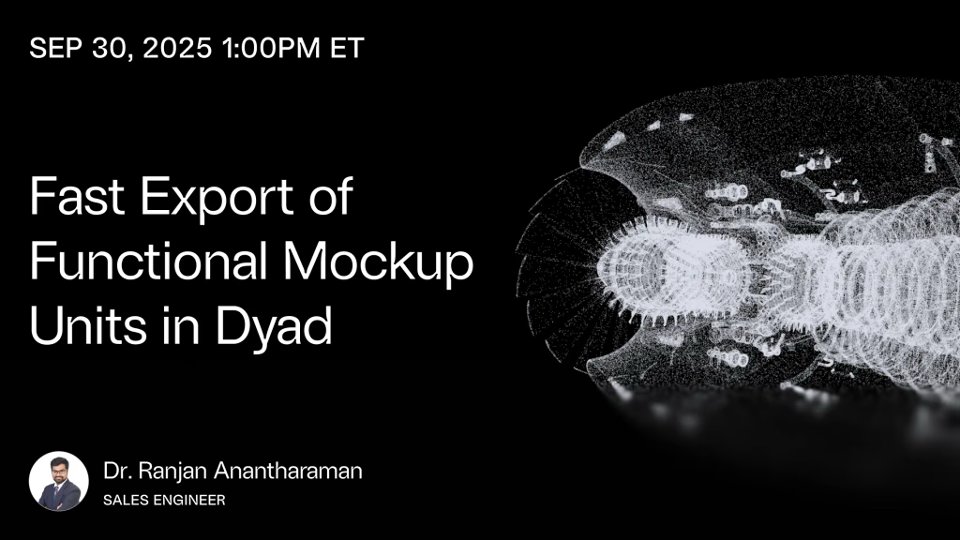
A major improvement to the way Functional Mockup Units (FMUs) are generated has arrived. A new workflow, leveraging Julia 1.12, generates much smaller FMUs (~55 MB) and is significantly faster (~2 min compilation time).
This is a game-changer for engineers who need to export high-fidelity models for use in other simulation environments. Join our #webinar on Tuesday, Sep 30 at 1:00 PM EDT to learn more! juliahub.com/events/fast-exp…
#JuliaLang #Dyad #FMU #Simulation #ModelBasedDesign #SystemModeling #Engineering
5
437
12 Sep 2025
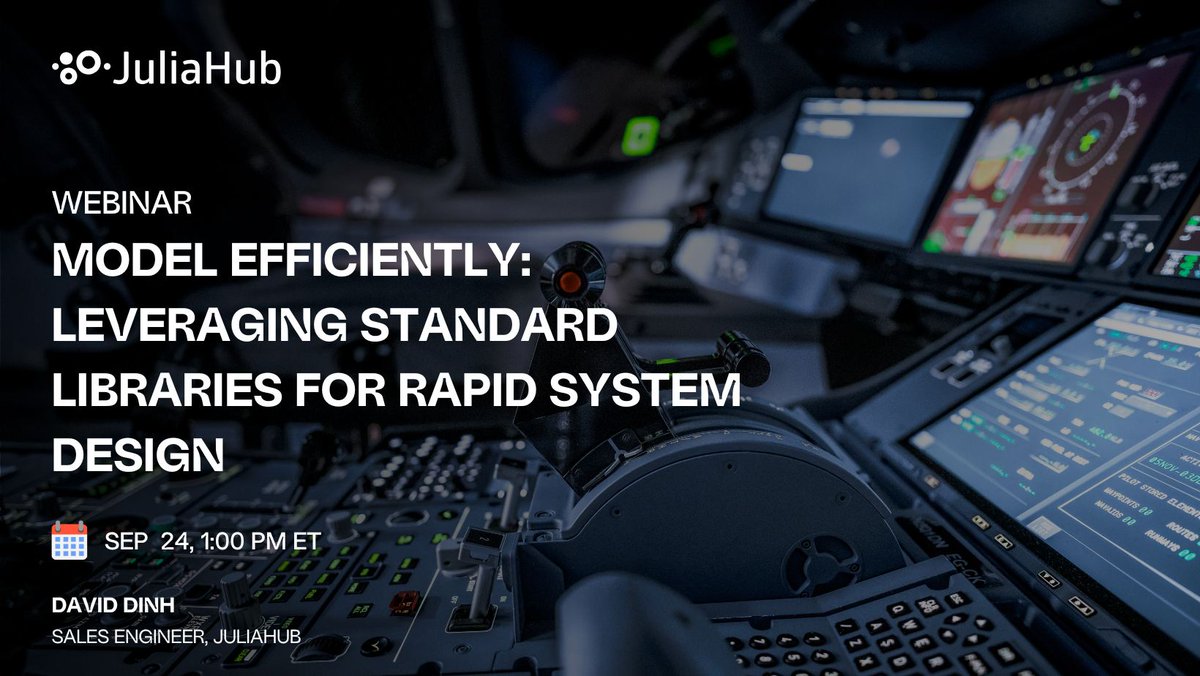
Join our #webinar on Wednesday, September 24 at 1:00 PM ET to learn how to accelerate your workflow with Dyad’s standard libraries. We'll show you how to leverage a rich set of pre-built components to quickly assemble complex systems.
We'll build a DC motor model to demonstrate how to combine multiple physical domains and run simulations directly in Julia. This session is perfect for those looking to create reliable, reusable models with ease. juliahub.com/company/resourc…
#JuliaLang #Dyad #SciML #OpenSource #Engineering #SystemModeling #Modeling #Simulation #Research #Prototyping
1
8
434
10 Sep 2025
Are fragmented workflows and rigid tools holding back your #engineering team?
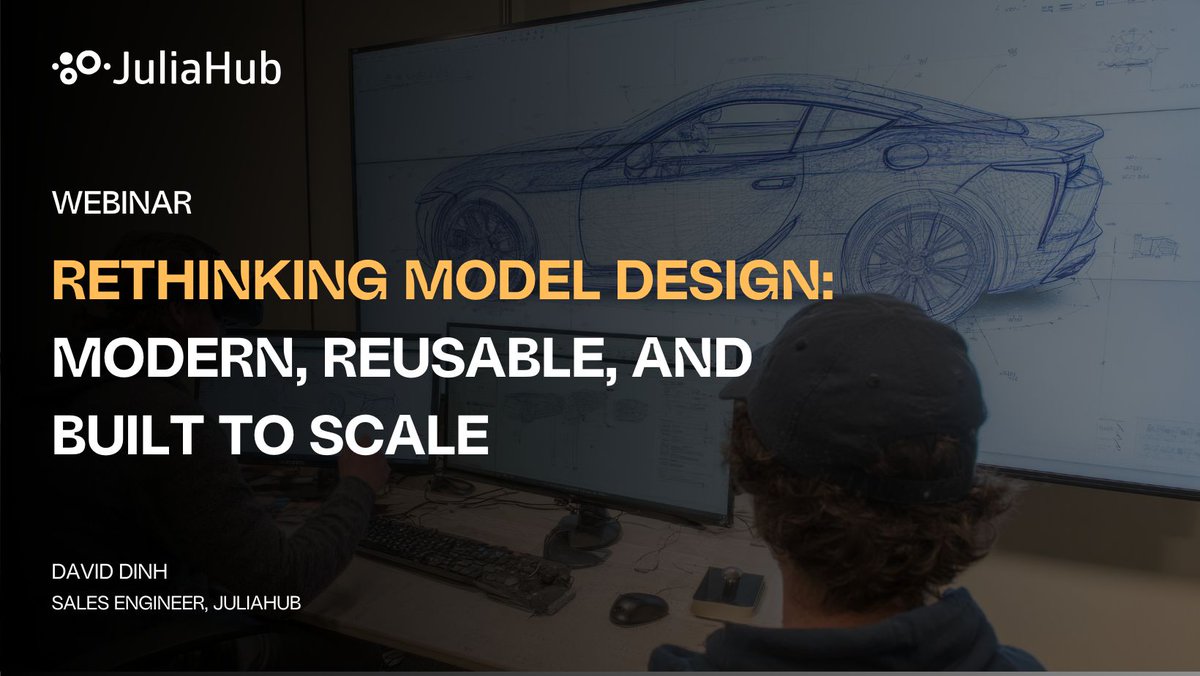
In this video, we introduce a smarter approach to system #modeling. We'll show you how to design reusable, scalable models using #Dyad, a modern and flexible language built on Julia.
You'll see a simple RLC circuit model, learning how acausal modeling brings clarity and flexibility. This approach streamlines your #simulation and #visualization workflow. Perfect for those looking to modernize their modeling stack.
#JuliaLang #SciML #OpenSource #Tech #SystemModeling #SystemsEngineering
1
4
407
9 Sep 2025
The full video of our Workshop, "Julia for Engineers: Modeling Steady-State and Dynamic Systems with Dyad," is now available! It's a great session for engineers and researchers looking to improve their skills.
We dive into how to model a hydraulic actuator, capturing both steady-state and dynamic behavior using Julia and ModelingToolkit.jl. This unified approach lets you efficiently set up, solve, and analyze how your systems perform under varying conditions.
Watch the full video now! juliahub.com/company/resourc…
#JuliaLang #ModelingToolkit #OpenSource #SciML #ModelingAndSimulation #Engineering #SystemModeling
5
426
21 Aug 2025
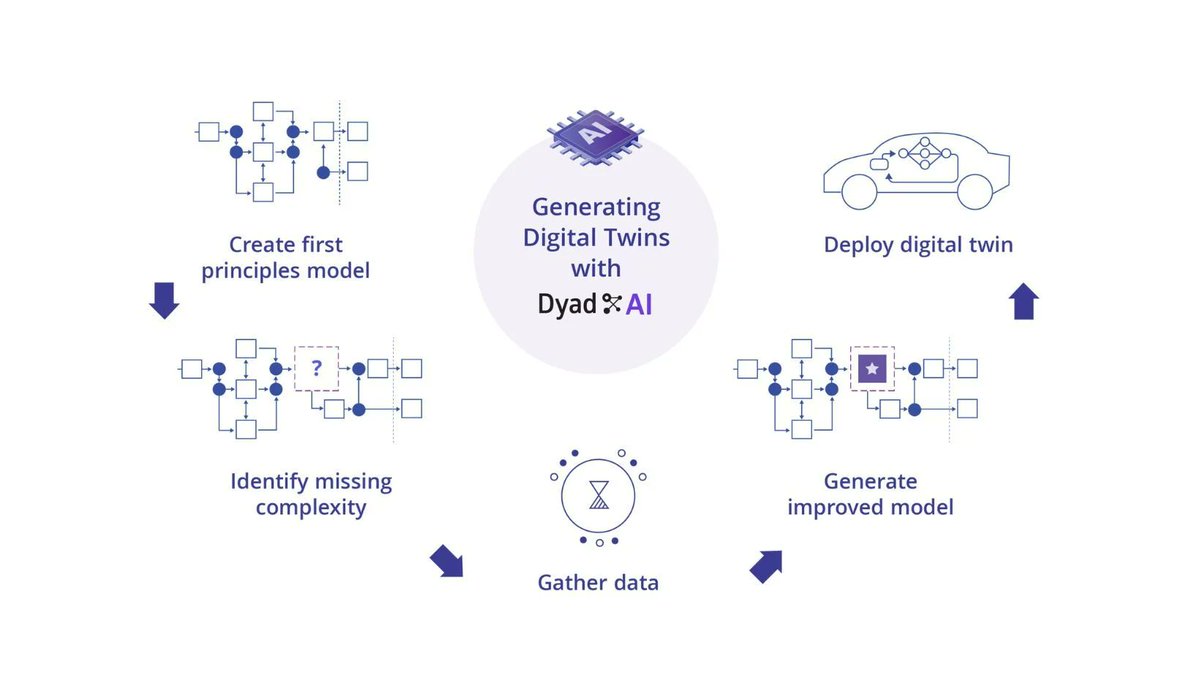
The future of engineering blends agility, accuracy, and intelligence. Dyad, powered by Julia and #SciML, brings together physics-based #modeling, #AI, and cloud-native workflows into a single environment. It bridges engineers and developers, enabling adaptive digital twins, faster design cycles, and trustworthy simulations that evolve with real-world data.
#JuliaLang #JuliaProgramming #Dyad #DigitalTwin #ModelBasedDesign #EngineeringInnovation #Simulation #AIEngineering #SystemModeling #FutureOfEngineering
1
2
11
698
20 Aug 2025
Join us on Aug 27 at 1 PM ET for a free JuliaHub webinar: Julia for Engineers: Modeling Steady-State and Dynamic Systems with Dyad. Learn how Julia and ModelingToolkit.jl streamline the setup, simulation, and analysis of complex systems—capturing both equilibrium and dynamic behavior. No prior Julia experience required, just curiosity to enhance your modeling skills.
#JuliaLang #JuliaProgramming #Engineering #SystemModeling #Simulation #ModelingToolkit #DynamicSystems #ScientificComputing #Webinar
2
4
11
854
30 Jul 2025
Rigid tools and disconnected workflows are holding #engineering teams back. This #webinar shows a smarter approach to system modeling—design reusable components, apply acausal #modeling for flexibility, and streamline #simulation in one integrated environment. Perfect for engineers, systems architects, and technical leaders.
#Julialang #ModelBasedDesign #SystemModeling #EngineeringTools #Simulation #DigitalEngineering
1
6
421
17 Jul 2025
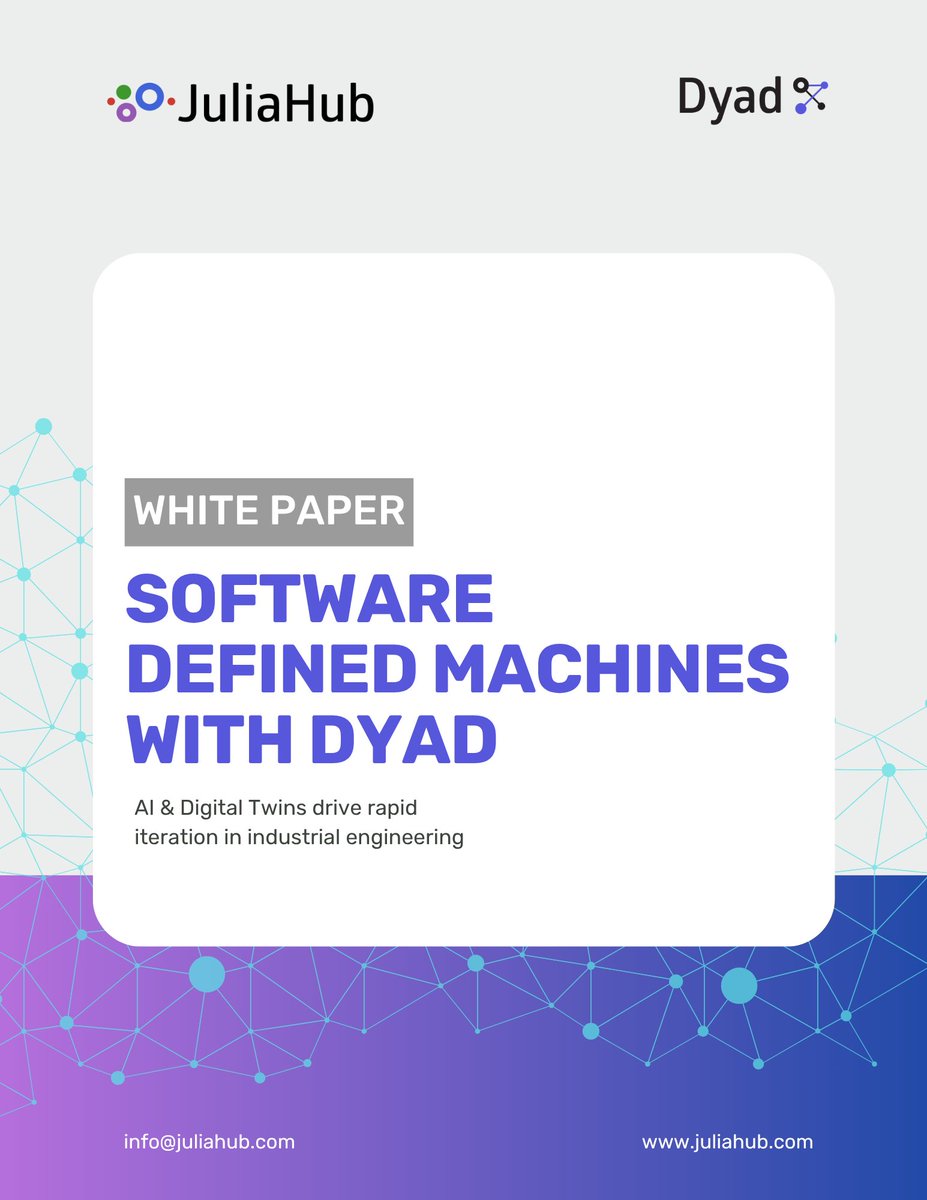
Engineering is being rewritten. Static systems are out. Software-defined machines are in.
Discover how Dyad is changing the game—from modeling and simulation to deployment-ready digital twins—in one powerful, unified workflow.
Whether you're building complex systems, leading engineering teams, or just curious about what’s next in tech, this white paper offers a fresh, actionable perspective.
#JuliaLang #EngineeringInnovation #ModelBasedDesign #SoftwareDefinedMachines #DigitalEngineering #SimulationTools #TechLeadership #SystemModeling #FutureOfEngineering #RethinkDevelopment
2
1
6
597
9 Jun 2025
Curious how Dyad Studio can simplify your model-based workflows?
From #simulation to analysis—all in one streamlined environment.
✅ See real use cases
✅ Learn how engineers are speeding up development
✅ Ask your questions live
📅 Don’t miss out—register now for the #webinar and experience Dyad Studio in action: juliahub.com/company/resourc…
#JuliaLang #EngineeringTools #SystemModeling #ModelBasedDesign #Innovation #Programming
2
469
2 Jun 2025
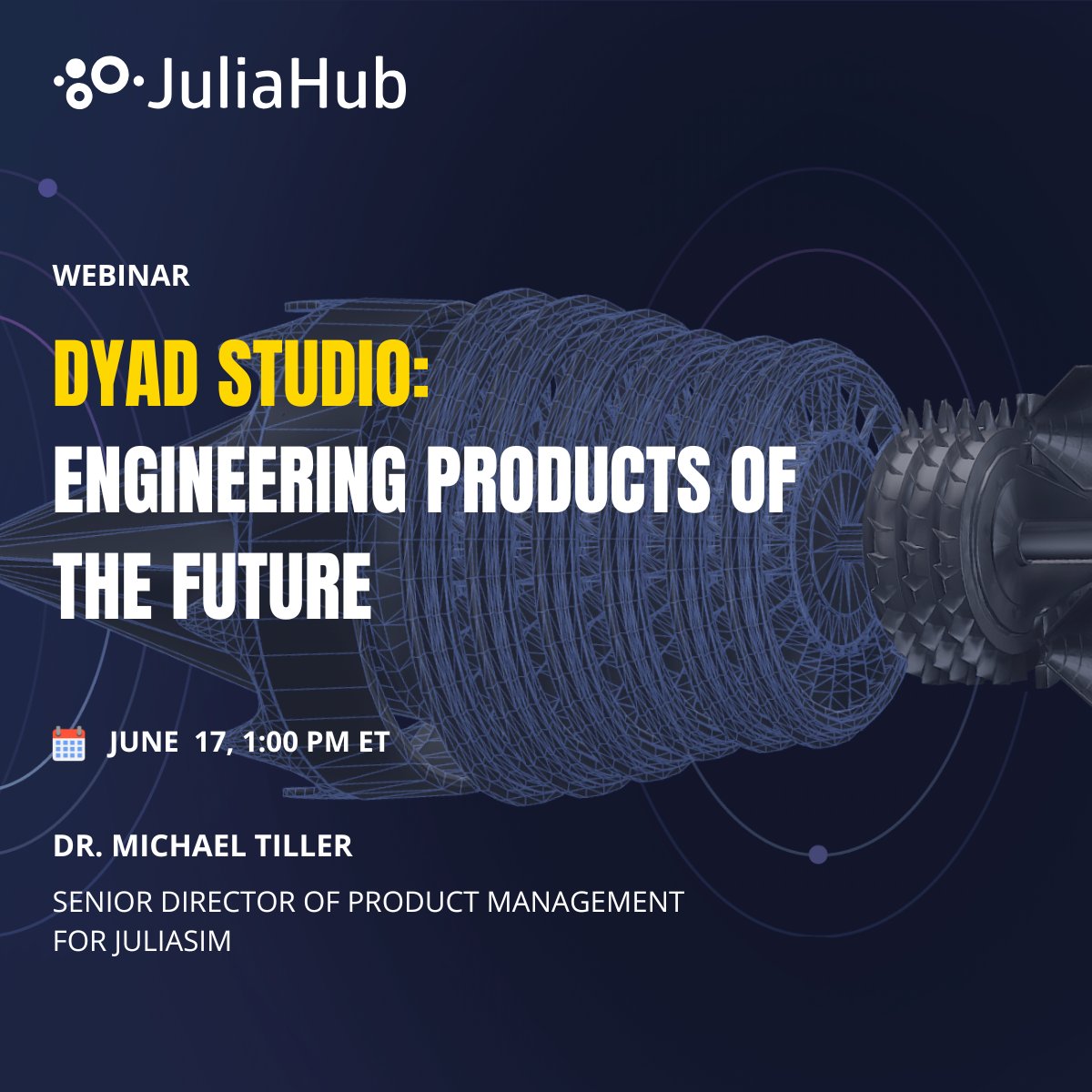
Introducing Dyad Studio—the new tool from JuliaHub that brings #modeling, #Simulation, and #analysis into one powerful interface. Built on VS Code, it streamlines complex #engineering workflows and accelerates model-based development. Join the webinar to see it in action:
#JuliaLang #EngineeringTools #Programming #Innovation #SystemModeling #DevTools #WorkflowOptimization
1
2
10
978

31 Dec 2024
Happy New Year !!!
#stem #OpenSource #Software #Engineering #HPC
#DataScience #DataAnalysis #SystemSimulation #SystemModeling
#programming #scientific #coding #OSS
#Numerical #Computation #Simulation #AltairEDU
#GNUoctave #scilab #Matlab #Python #NelsonLang

1
55

Couldn’t join us live? The SimulationX User Conference is now available On-Demand! 🎯
🌍 Dive into exclusive insights shared by top innovators. 👉 Watch On-Demand Now: bit.ly/49V3rj3
#SystemSimulation #SystemModeling #Aerospace #Automotive #SimulationX

1
4
100